


A house cleaning add-on is an optional task that sits outside your standard or deep clean and is booked, and usually priced, separately. Typical examples are the inside of the oven, the inside of the refrigerator, interior windows, and the inside of cabinets. They’re worth adding when a specific part of your home needs attention that a routine visit isn’t built to give: before guests arrive, at a seasonal change, or when a move or tenant turnover is coming.
This guide explains what separates an add-on from a standard or deep clean, which add-ons people book most, when each one earns its cost, how pricing tends to work, and what to confirm in writing before anyone starts.
TL;DR
- Add-ons are bookable extras for tasks a standard clean leaves out, such as appliance interiors, interior windows, and cabinet interiors.
- A deep clean is a bigger version of the same scope. An add-on introduces a new kind of task.
- Add-ons pay off most before events, at seasonal transitions, and during moves or tenant turnovers.
- Ask for a written task list that separates what’s in the base price from what’s an add-on.
- Octomaids has served Vancouver, WA and Portland, OR since 2006, with the same dedicated team on every visit, so add-ons fit into a routine your team already knows.
Table of Contents
- What counts as an add-on, and what doesn’t
- The add-ons people book most
- When an add-on is worth it
- Add-on or upgrade to a deep clean?
- How add-ons are priced
- What to confirm before you book
- What belongs on the standard list instead
- Add-ons for businesses and rentals
- Our perspective: add-ons work best inside a relationship
- Book add-ons with the same team every visit
- FAQ
- Sources
What counts as an add-on, and what doesn’t
The easiest way to think about it is in three layers.
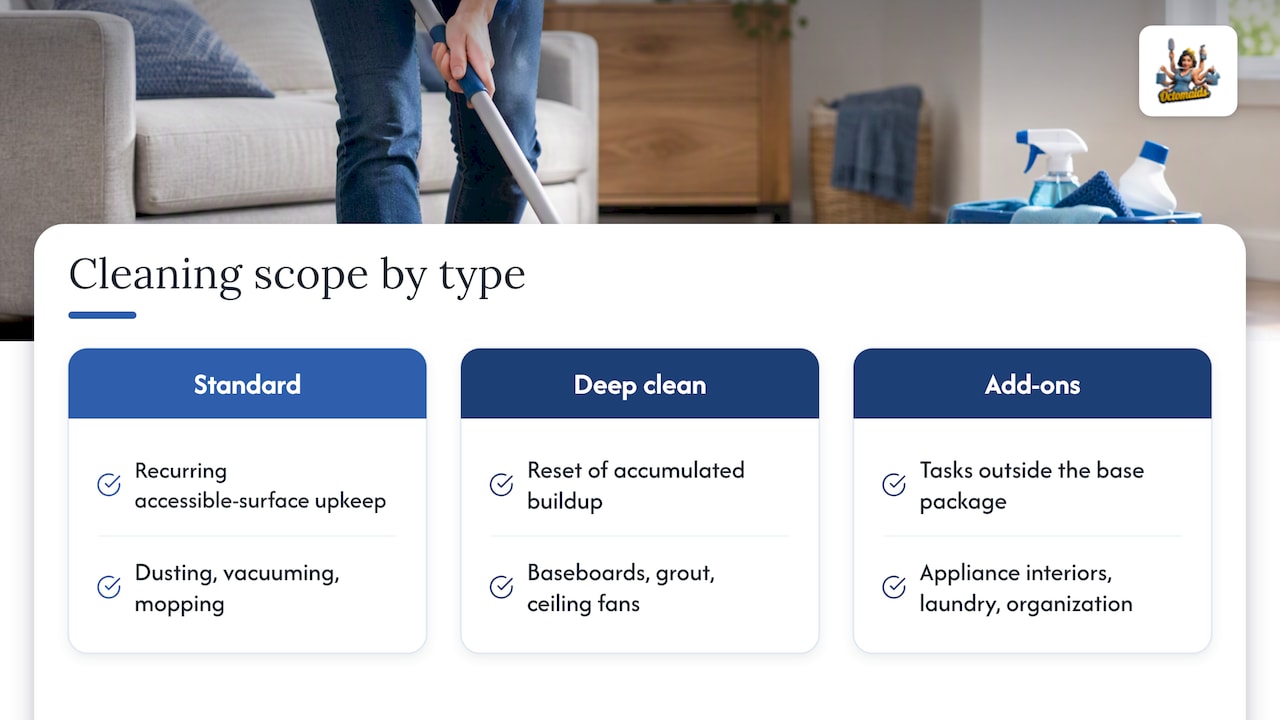
Standard cleaning is recurring maintenance. In the US that generally means the accessible surfaces: dusting, vacuuming, mopping, and wiping kitchen and bathroom counters, sinks, and fixtures. Forbes Home’s guide to what a basic cleaning includes describes it as upkeep, not removal of long-term grime.
Deep cleaning is a reset. It’s labor-intensive and goes after accumulated buildup and neglected areas such as baseboards, grout, and ceiling fans. If you want to see how that differs in practice, our deep clean vs regular clean guide and the room-by-room breakdown of what deep cleaning includes walk through it.
Add-ons are different in kind. A deep clean is a heavier version of the same general scope. An add-on brings in a task category that the base package doesn’t cover at all, such as the inside of an appliance, laundry, or cabinet organization. These tasks take meaningful extra time, which is why they’re priced on their own instead of folded into the visit.
A simple test: if a task is routine maintenance of a surface anyone can see and reach, it belongs on the standard list. If it requires emptying something, opening something, or spending a long stretch on one spot, it’s probably an add-on.
Why this matters for your budget
When the boundary is fuzzy, two things go wrong. You assume the oven interior was included and it wasn’t, or you pay for a deep clean when one or two targeted add-ons would have solved your actual problem. Knowing the layers lets you buy only what you need.
The add-ons people book most
The same handful comes up again and again. Here is what each usually involves and what you should do to prepare.
| Add-on | What it typically covers | Prep that saves time |
|---|---|---|
| Inside the oven | Racks, walls, door glass, and the cavity floor | Remove racks you want soaked; clear the stovetop |
| Inside the refrigerator | Shelves, drawers, door bins, and seals | Toss expired food and empty perishables into a cooler |
| Interior windows | Glass, sills, and often the tracks | Clear sills of plants and décor; open blinds |
| Inside cabinets and drawers | Wiping shelves and drawer bottoms | Empty them before the visit |
| Laundry | Washing, drying, and folding, usually priced by the load | Gather loads and note any fabric care needs |
| Garage sweeping | Sweeping floors and clearing cobwebs | Move vehicles and bins out of the way |
Two details are worth underlining. Cabinets and drawers need to be emptied first, because a cleaner can’t responsibly wipe around your dishes and pantry goods and shouldn’t be moving them for you. And laundry is almost always priced per load, so a quick count of how many loads you realistically need keeps the estimate honest.
If you’re moving out, appliance work is a special case. Our post on what appliance cleaning includes during move-out explains how it’s usually scoped when the home is empty.
Less common, still useful
Some households also ask for:
- Carpet and upholstery cleaning, often a separate specialty service because it uses different equipment.
- Hard floor care, such as extra attention on tile, grout, or wood.
- Organization help, like sorting a pantry, closet, or garage shelf.
- Allergy-minded upgrades, such as HEPA vacuuming, vent cleaning, or fragrance-free product substitutions for people managing respiratory conditions.
Not every cleaning company offers every item on that list. When you’re planning one, ask your provider directly which of these they perform, since availability differs from company to company.
When an add-on is worth it
Add-ons aren’t something to stack onto every visit. They make the most sense in a few recurring situations.
Before guests or an event
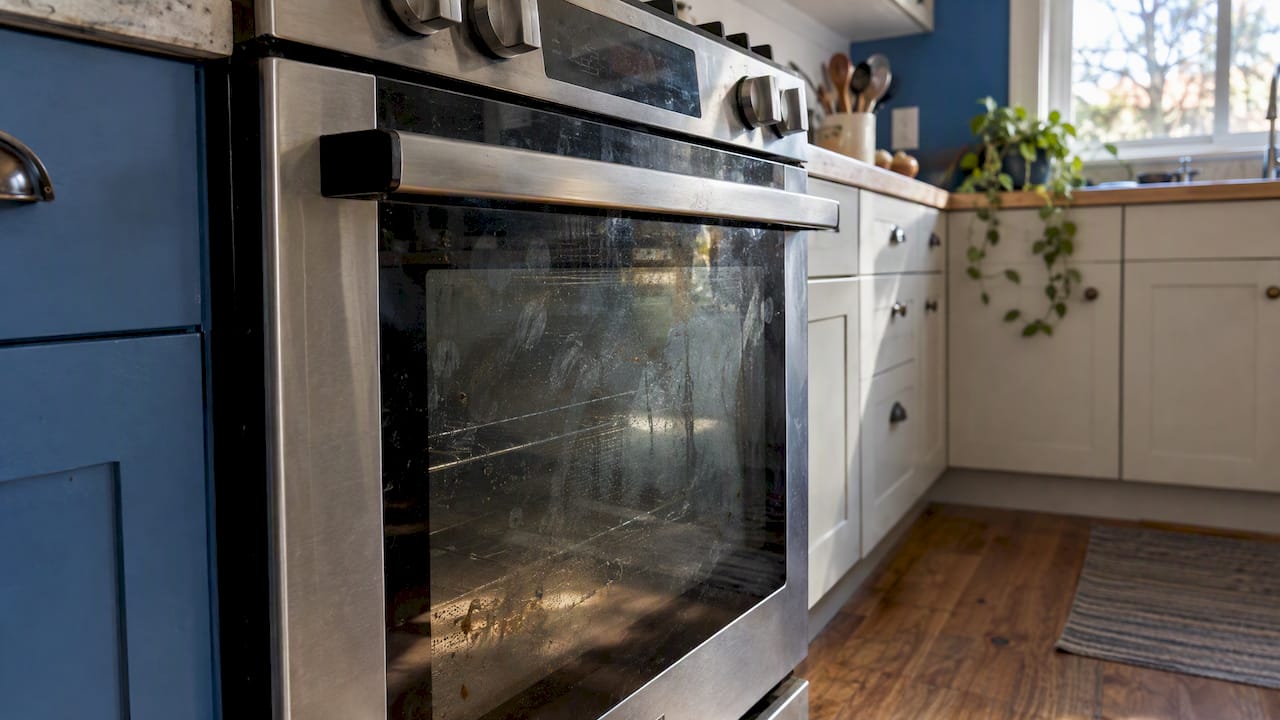
Hosting changes what you see. You notice the smudged oven door when family is standing in the kitchen, and the film on the windows when afternoon light hits them. Booking interior windows and the oven or refrigerator a few days ahead means the visible, hard-to-fake areas look right while your regular clean handles the rest.
At a seasonal transition
Spring and fall are natural reset points. Windows get opened after winter, and refrigerators and ovens accumulate a season of spills. In the Pacific Northwest, where the rainy months keep windows shut and kitchens busy, a seasonal add-on can be a better use of money than upgrading every regular visit to a deep clean. Our home cleaning frequency guide can help you decide which tasks deserve a regular rhythm and which belong on a seasonal list.
Moving in or out
This is where add-ons are almost routine. Refrigerator and oven interiors are high-impact areas: they’re the first places a new resident opens, and the first places a landlord checks when deciding on a deposit. If you’re a renter, our move-out cleaning checklist and the areas to clean before moving out show where inspectors look. Our move-in and move-out cleaning service is built around those handoffs.
If you’re selling instead, add-ons can overlap with presentation work. A home staging checklist for sellers is a useful companion when you’re deciding which rooms deserve extra attention before photos and showings.
Rental turnovers and short-term rentals
Landlords and property managers tend to treat appliance interiors as part of every turnover, because skipped details become the first complaint from a new tenant. Hosts face a similar pressure from reviews. If that’s your situation, see our landlord cleaning checklist between tenants, our short-term rental cleaning checklist, and how cleaning shapes rental reviews and ratings.
When time is the real constraint
Some add-ons are simply tasks you can do but keep postponing. Cabinet interiors, laundry, and refrigerator cleaning are classic examples. If you’re weighing what to hand off, cleaning tasks worth hiring out for busy homeowners covers how to sort the tasks that cost you the most time and goodwill.
Add-on or upgrade to a deep clean?
This is the decision most people actually face. Here’s a way to choose.
- List what bothers you. If it’s two or three specific spots, such as the oven and the windows, add-ons are likely the cheaper, more targeted answer.
- Look at the rest of the house. If baseboards, grout, vents, and fixtures are all showing buildup, a deep clean is more efficient than paying for each item separately.
- Consider timing. If your home has been on a regular schedule, add-ons keep it there. If it has been months or years since a thorough visit, start with a one-time deep cleaning and then settle into a recurring home cleaning plan.
- Think about the next visit. Many add-ons don’t need repeating monthly. An oven interior twice a year may be plenty, while fresh laundry or fridge wipe-downs might suit a more frequent pattern.
The pricing logic points the same way. Add-ons are usually quoted as discrete line items, while deep cleans are often priced as a step up from the standard rate. That means a handful of well-chosen add-ons can cost less than a deep clean, but a long list of them can quietly exceed it. Add up the line items before you commit.
How add-ons are priced
Cleaning companies generally price add-ons one of two ways: a fixed price per item (an oven, a refrigerator, a set of windows) or an hourly surcharge for tasks that vary in size. Either way, a few factors move the total.
- Size and layout. A larger home with more windows or multiple refrigerators takes longer.
- Condition. Heavy, baked-on buildup takes more time than a recent spill. Set-in messes can need more aggressive treatment and sometimes don’t fully come out, while fresh ones release easily.
- Number of rooms. Bathrooms and bedrooms affect both the base clean and the scope of extras.
- Access. Cabinets that aren’t emptied, or an oven full of stored pans, add time.
We don’t publish fixed add-on prices, because the right number depends on your home. What we’d suggest instead is asking any provider for a flat-rate quote with the task list attached, so you know the total before work starts. This is also why property managers tend to prefer flat rates: they know the cost upfront, can document charges accurately, and avoid arguments about how long a job took.
From the provider’s side, pricing guidance for cleaning businesses recommends offering add-ons in bundles or tiered packages, which gives customers a few clear choices. As a customer, that’s good news: ask whether a bundle of two or three add-ons costs less than the items booked individually.
What to confirm before you book
Most disappointments with add-ons are scope misunderstandings, not poor work. Before you say yes, get answers to these:
- What exactly is included in the base price, and what is an add-on? Ask for it in writing.
- What does each add-on cover? “Oven cleaning” might mean racks and door glass, or it might not. “Windows” might mean glass only, or tracks and sills too.
- What do you need to do beforehand? Emptying cabinets, removing refrigerator contents, and clearing sills are common requests.
- Who brings supplies and equipment? Some specialty tasks need particular products or tools. Our guide on whether cleaners bring supplies lists three booking questions worth asking.
- Is there a time estimate? Add-ons extend the visit. Knowing by how much affects access, pets, and your schedule.
- Is there any exclusion? Delicate surfaces, self-cleaning ovens with damaged seals, or items too fragile to move may be left alone. Better to hear that now.
- For rentals, is the task list documented? If charges might be deducted from a security deposit, a written task list is your protection on both sides.
That list takes five minutes and prevents most of the frustration people describe afterward.
What belongs on the standard list instead
It’s also fair to push back when something that should be routine gets billed as extra. Dusting, vacuuming, mopping, and cleaning accessible kitchen and bathroom surfaces are normally part of a standard visit. If a provider lists those as add-ons, compare quotes. If you’re unsure what a good baseline looks like, our guide on home cleaning best practices and how to maintain a clean home between visits are good references for what a well-run routine covers.
Between visits, small habits reduce how often you need add-ons at all: wiping oven spills once they’ve cooled, clearing the refrigerator before trash day, and wiping window sills when you notice condensation. They won’t replace a professional visit, but they stretch the time between them.
Add-ons for businesses and rentals
Homeowners aren’t the only ones who book extras. Office managers sometimes add tasks like break-room appliance cleaning, and property owners add turnover extras for vacancies. Our services page lists the commercial, office, Airbnb and vacation rental, post-construction, and janitorial work we handle. If you’re comparing packages for a workplace, types of cleaning packages for professionals explains how scope is usually organized.
Our perspective: add-ons work best inside a relationship
We’ve cleaned homes in Vancouver, WA and Portland, OR since 2006, and one pattern repeats: add-ons go better when the people doing them already know the house. Because we send the same dedicated team to your home every visit, they know which oven door needs a longer soak, where the cabinet above the refrigerator collects dust, and which windows stick. That knowledge makes an add-on quicker and more consistent than a one-off by someone seeing your home for the first time.
We’d also tell you not to buy everything on a menu. A good add-on solves a specific problem: an event, a move, a season, an allergy, or a task you’ve dreaded for a year. If it doesn’t, skip it. We would rather you spend on two things that make your home feel different than ten that you’ll never notice.
Our team is family-owned, locally operated, background-checked, professionally trained, and insured, and our work is satisfaction guaranteed. That matters most when you’re asking someone to open your cabinets, appliances, and closets. Trust isn’t a bonus there, it’s the requirement.
So our advice is to start with a clear baseline, add one or two targeted extras that match your situation, and revisit the list each season. Your home changes, and your list should too.
— Steven
Book add-ons with the same team every visit
If you’re thinking about a few extras on top of your regular visit, a move, or a rental turnover, we can help you scope it. Tell us what you need and ask for a written quote that separates the base clean from each add-on. Start with recurring home cleaning if you want a steady schedule, or contact us through our site to talk through a one-time job.
We serve homeowners, landlords, short-term rental hosts, and businesses throughout Clark County, WA and the Portland metro area.
FAQ
Are add-ons the same thing as a deep clean?
No. A deep clean is a more thorough version of the same general scope, covering buildup in places like baseboards, grout, and ceiling fans. Add-ons are specific extra tasks, such as oven or refrigerator interiors, that a standard package leaves out. Some people book a deep clean once and add-ons afterward as needed.
Which add-ons are the most popular?
Inside-oven and inside-refrigerator cleaning lead the list, followed by interior windows, cabinet interiors, and laundry priced by the load. Move-outs and rental turnovers use appliance add-ons most often. Ask your provider which extras they actually perform before planning around one.
How should I prepare for an add-on?
Clear whatever the cleaner needs to reach. Empty cabinets and drawers, remove perishables from the refrigerator, take out oven racks if asked, and clear window sills. Confirm the list when you book so there are no surprises on the day.
Will I pay for add-ons every visit?
Usually not. Many add-ons are periodic, like an oven interior once or twice a year. Others, such as laundry, may suit a regular schedule. You can adjust the list at any point.
Sources
- Everything Included In A Basic Cleaning Service, Forbes Home
- How Much to Charge for House Cleaning, Jobber
Recommended
- Cleaning Tasks Worth Hiring Out for Busy Homeowners
- How Cleaning Services Handle Special Requests
- Home Cleaning Time Cost Analysis: 2026 Guide
- Cleaning Services and Work-Life Balance for Busy Pros
About Octomaids
Octomaids is a locally operated professional cleaning company serving Vancouver, Clark County, and the surrounding Portland metro area. Since 2006, our cleaning teams have helped homeowners, renters, property managers, and businesses with recurring cleaning, deep cleaning, move-in/move-out cleaning, and commercial cleaning.
Our cleaning articles are reviewed to ensure the information reflects our real-world experience and professional cleaning practices.