


Cleanliness is the single most influential factor in short-term rental guest reviews, and the data makes that impossible to ignore. Properties with high cleanliness ratings increase revenue by approximately 17.5% and occupancy by 16.5%, while listings that fall below 4.7 stars in cleanliness can lose up to 30% of revenue. Guests hold short-term rentals to hotel standards, and a single missed detail — a hair on a pillow, a faint odor from the AC unit, soap scum on a shower door — can cost you a five-star rating before the guest has even unpacked.
The role of cleaning in rental reviews goes well beyond aesthetics. It shapes guest health, platform search visibility, repeat booking rates, and your ability to command premium pricing. Here is what that means in practice:
- Guest satisfaction: Cleanliness ranks as the top satisfaction driver, with 81% of guests considering it the most important factor, above décor, amenities, and location.
- Booking frequency: Listings below 4.8 stars see approximately 20% fewer bookings than cleaner-rated competitors.
- Repeat guests: Guests who experience a health-adjacent issue at a property almost never rebook, regardless of how good everything else was.
- Algorithm ranking: Cleanliness scores are among the most heavily weighted inputs to platform search visibility on Airbnb and VRBO.
- Revenue protection: A single hygiene complaint can suppress your listing for months, requiring a long streak of perfect reviews to recover.
How does cleanliness affect guest satisfaction and reviews?
Cleanliness outranks every other variable when guests decide how many stars to leave. Décor can be forgiven as a matter of taste. A slow Wi-Fi connection gets a shrug. But a bathroom that smells musty or sheets that feel less than fresh? That goes straight into the review body, in detail.
Stat to know: 81% of guests consider cleanliness the top satisfaction driver, and up to 87% of negative reviews are related to sanitation issues, making cleanliness the most influential factor in guest feedback.
Guests compare short-term rentals to hotel standards, and minor oversights read as professionalism failures. Sand on furniture or soap scum in a bathroom that “looks” clean still generates a complaint, because experienced travelers know what a genuinely clean space feels like. The psychological effect is real: a spotless presentation signals care, and guests who feel cared for tend to treat the property with more respect in return.
There is also a critical distinction between clean and sanitized that many owners miss. Visible cleaning removes dirt and debris. Sanitization kills pathogens on contact surfaces using EPA-registered disinfectants at documented dwell times. A property can pass a visual inspection and still carry flu virus or norovirus on faucet handles, remote controls, and light switches from the previous guest. That exposure is what generates the most damaging reviews: illness complaints, which platforms treat far more seriously than any staging issue.
Key cleanliness factors that guests mention most in reviews
Guests do not evaluate your property the way you do after living in it for a week. They walk in fresh, and their senses are on high alert. The areas that generate the most review mentions are often the ones that get the least attention during a rushed turnover.
- Odors: Smell is the first impression. A musty AC unit, mildew in grout, or a lingering food smell from the previous guest triggers an immediate negative reaction before the guest has looked at anything else.
- High-touch surfaces: Light switches, door handles, TV remotes, and faucets carry fingerprints and pathogen loads that guests subconsciously detect and consciously mention.
- Bathroom details: Grout lines, behind the toilet, the shower drain, and the underside of the toilet seat lid are inspected more carefully than any other room in the property.
- Linen freshness: Stained sheets, mismatched pillowcases, or towels with detergent residue are among the most common one-star complaints in vacation rental reviews.
- Hair and food residue: A single hair on a pillow or crumbs in a microwave signals that the previous guest’s presence was not fully erased.
- Baseboards and dust lines: Guests who have stayed in mediocre rentals know exactly where lazy cleaners cut corners, and baseboards are always on that list.
- Air quality: Stale or perfumed air is almost as bad as a bad smell. The goal is neutral, not masked.
The psychological effect of a spotless presentation extends beyond the guest’s comfort. When a property looks and feels genuinely cared for, guests are more likely to treat it with care themselves, which reduces wear, damage, and the kind of mess that makes the next turnover harder.
Best practices for maintaining hotel-grade cleanliness in your rental
Consistency is the word that separates hosts who hold a 4.9 rating from those who bounce between 4.5 and 5.0. A single great clean means nothing if the next turnover misses three things. The hosts who protect their ratings treat cleaning as a documented system, not a task they hand off and hope for the best.
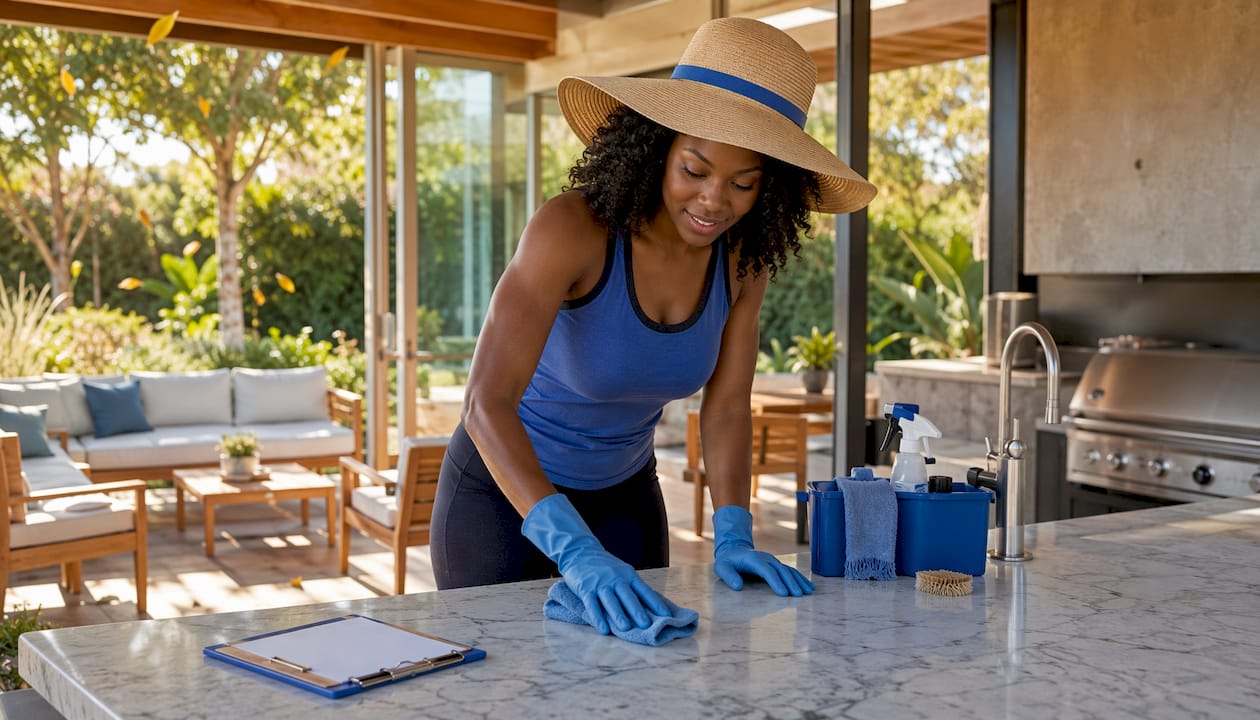
Build documented protocols. Hotel-level cleanliness requires written sanitization procedures that specify EPA-registered products and correct dwell times for each surface category. Without documentation, you have no defense in a hygiene dispute, and you have no way to train a replacement cleaner to the same standard.
Use automated checklists and photo verification. Lack of structured cleaning systems causes most turnover failures and rating drops. Photo verification creates a timestamped record that protects you in disputes and gives you quality control without being physically present at every turnover.
Schedule deep cleans 3–4 times per year. Standard turnovers maintain the surface. Deep cleans address tile and grout, appliances, carpet, and the AC system. For humid climates, mold and mildew in grout and drain pans accelerate faster than most owners expect.
- Use a detailed turnover checklist that covers every room, surface category, and restocking item.
- Train cleaners specifically for short-term rental turnovers, not standard residential cleaning.
- Coordinate supply restocking as part of every turnover, not as a separate task.
- Keep a backup cleaner identified and briefed before you need one.
- Communicate guest-specific notes (pets, late checkout, extra guests) to your cleaning team before every visit.
Pro Tip: Walk through your property the way a guest does: open the front door and stop. What do you smell? Then check the three spots guests inspect most: under the toilet rim, the shower drain hair trap, and the dust line on baseboards. If those three pass, your cleaner is doing the job right.
How professional cleaning services improve your ratings and protect your income
Professional turnover cleaning delivers something DIY cleaning almost never can: the same standard, every single time, regardless of how busy the week is or how tight the turnover window gets. That consistency is what builds a 4.9 rating and keeps it there.
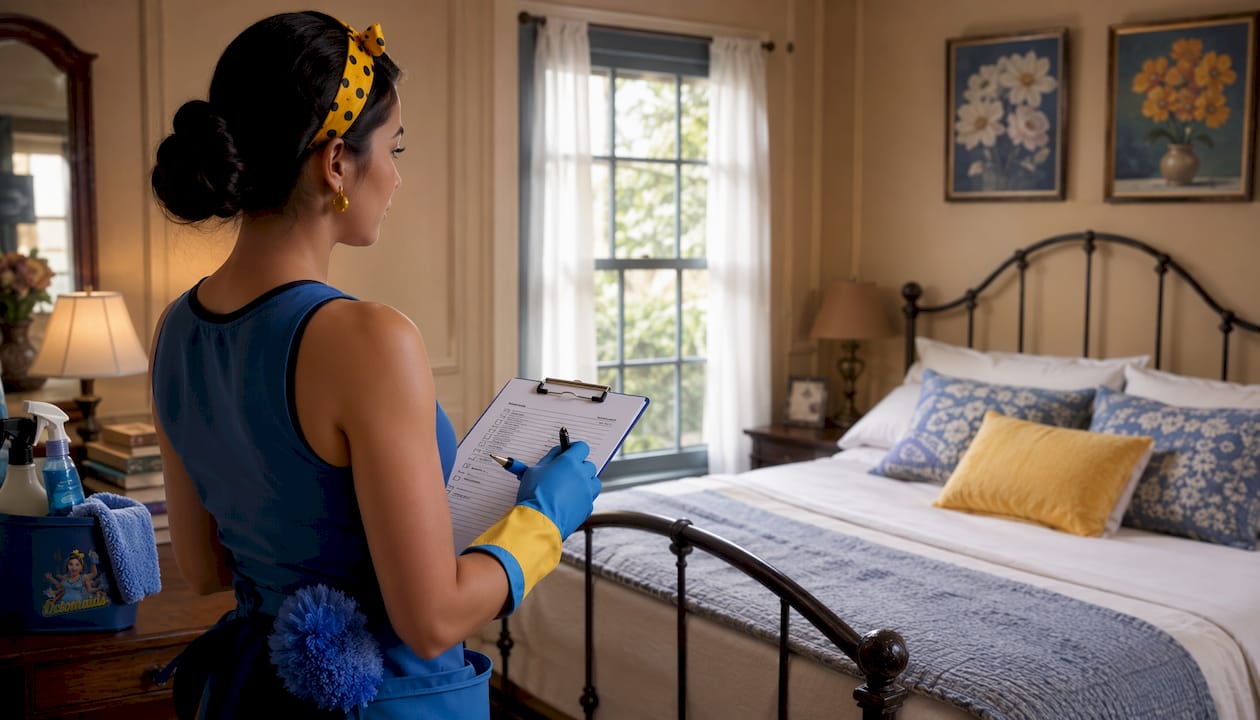
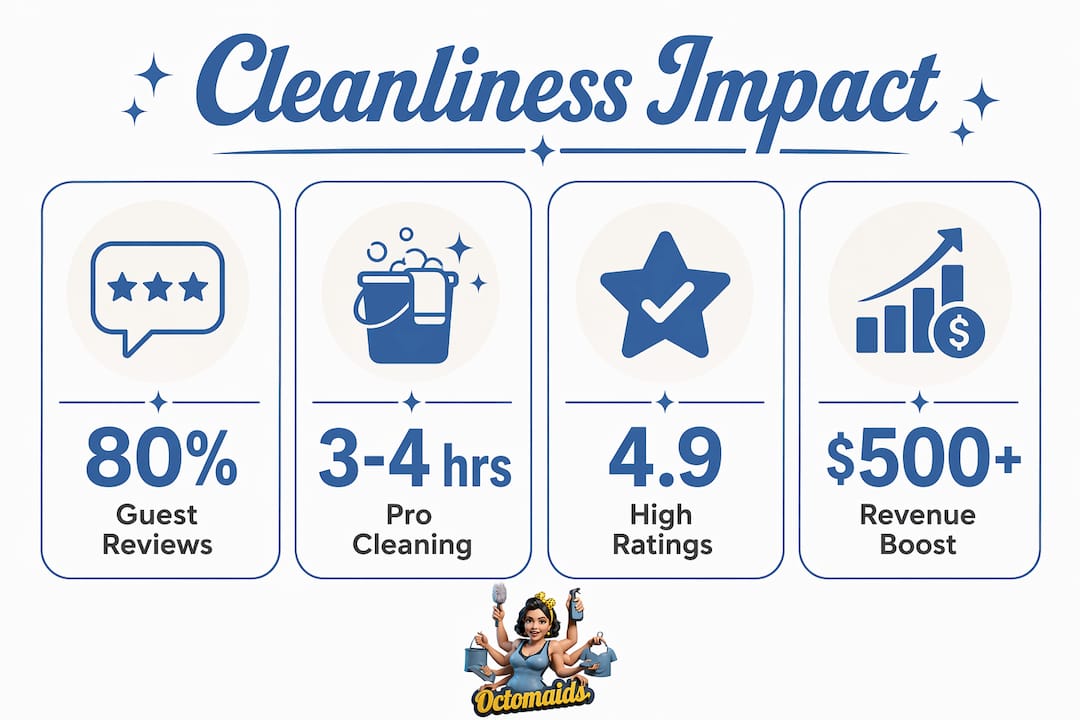
Professional turnover cleaning typically takes 3–4 hours per turnover compared to 5–6 hours for owners doing it themselves, and it covers the deeper areas that self-cleaners routinely miss: grout, appliances, high-touch disinfection, and damage inspection. Professionals also flag maintenance issues early, before a guest discovers them and writes about it.
| Factor | DIY turnover | Professional cleaning |
|---|---|---|
| Time per turnover | 5–6 hours of owner time | 3–4 hours, zero owner time |
| Consistency | Varies with schedule and energy | Same standard every visit |
| Deep cleaning included | Rarely | Yes: grout, appliances, high-touch points |
| Issue flagging | Often missed | Damage and supply issues reported each visit |
| Rating impact | Harder to maintain 4.8+ | Consistent 5-star cleanliness scores |
| Scalability | Breaks down at multiple properties | Works for any portfolio size |
The practical benefits extend beyond the rating itself. Photo documentation from a professional team creates dispute protection. Scalability means your second or fifth property gets the same standard as your first. And the role of professional cleaners in protecting listing visibility is direct: a property that consistently earns 5-star cleanliness scores stays visible in platform search results, which is where bookings actually come from.
Treating professional cleaning as a cost rather than an investment is the framing that leads owners to cut corners and then wonder why their ratings drift. The math usually favors hiring out once you factor in rating impact, time recaptured, and the revenue cost of a suppressed listing.
Common cleanliness problems in rentals and how to prevent them
Most cleaning failures are not random. They follow predictable patterns, and once you know what they are, you can build systems that stop them before a guest notices.
- Missing supplies: Guests who run out of soap, paper goods, or coffee write about it. Restocking must be part of every turnover checklist, not an afterthought.
- Rushed cleans: A tight turnover window is the most common reason details get missed. Backup cleaner plans and two-person teams during peak season are the practical fix.
- No photo verification: Without timestamped photos, you have no record of what was done and no defense if a guest claims the property was dirty at check-in.
- Odors from AC units and mold: In humid climates, the AC drain pan and washer drum are the two most common odor sources. Both need attention every turnover, not just during deep cleans.
- Hair and residue on linens: A linen rotation system with hospital-grade washing prevents the staining and residue that generate one-star complaints.
- Scheduling conflicts: A missed turnover is not just one bad review. It triggers a cascade of complaints from subsequent guests who find signs of the previous stay.
- Repeated missed details: Baseboards, shower drains, and the inside of the microwave are the three spots that show up most often in negative review text. If they keep appearing in your feedback, the checklist needs a revision, not just a conversation with the cleaner.
The root cause of most of these issues is the same: a lack of clear systems. A missing turnover or communication breakdown is not usually the cleaner’s fault. It is a systems failure, and systems failures are fixable.
What the data and industry experts say about cleanliness as a business strategy
Leading hosts do not think about cleaning as a line item. They think about it as the operational foundation that everything else rests on. The research backs that framing completely.
Key finding: An estimated 8% of turnovers experience a disruption due to scheduling errors, no-shows, or communication breakdowns, each one triggering a cascade of refunds, emergency fees, and review damage that can take months to recover from.
The American Hotel & Lodging Association and the Vacation Rental Housekeeping Professionals program both emphasize documented cleaning protocols as the baseline standard for any property competing at a professional level. The IICRC (Institute of Inspection, Cleaning and Restoration Certification) sets the technical standards for sanitization that separate a defensible protocol from a guess.
A drop from a 5.0 to a 4.8 cleanliness rating can suppress listing visibility for months, costing thousands in lost bookings. That is not a hypothetical. Platform algorithms weight cleanliness scores heavily, and the recovery timeline after a hygiene complaint is long because it requires a sustained streak of perfect reviews to move the average back up.
Here is what the data and expert practice converge on:
- Cleanliness is an algorithmic factor, not just a guest preference. A lower score means fewer impressions, fewer clicks, and fewer bookings, independent of price or location.
- Spotless presentation reduces property damage. Guests who walk into a genuinely clean space treat it with more care, which lowers wear and reduces the cost of repairs between stays.
- Illness-linked complaints trigger platform interventions that are harder to resolve than any other complaint category. Documented sanitization protocols are the only reliable defense.
- Repeat bookings correlate directly with cleanliness reputation. Guests who trust that a property will be clean book earlier, complain less, and cost less to acquire than first-time guests sourced through search.
- 91% of property managers believe timely communication directly impacts their reviews, yet most still coordinate cleaning through text messages and group chats, which is exactly where critical information gets lost.
Octomaids has worked with short-term rental owners in the Vancouver, WA and Portland, OR area since 2006, and the pattern we see consistently is this: owners who invest in a documented, professional cleaning system early protect their ratings through the inevitable busy seasons, schedule conflicts, and last-minute bookings that break informal arrangements. Those who wait until a bad review forces the issue spend months recovering ground they did not need to lose.
Ready to protect your ratings with a professional cleaning system?
If your rental’s cleanliness score is holding your listing back, or if you are managing multiple properties and the DIY approach is starting to crack, Octomaids can help. Our team specializes in short-term rental turnovers in Clark County, WA and the Portland Metro area, delivering the same trusted cleaners every visit with photo verification and a standard built for five-star reviews.
Start with our home cleaning best practices guide, or explore our short-term rental cleaning services to see how we support hosts from single-property owners to growing portfolios.
Key Takeaways
Cleanliness is the primary driver of short-term rental ratings, booking frequency, and platform visibility, making it the single highest-return operational investment a host can make.
| Point | Details |
|---|---|
| Revenue impact of cleanliness | Properties with high cleanliness ratings increase revenue by approximately 17.5% and occupancy by 16.5%. |
| Rating threshold that costs bookings | Listings below 4.8 stars see approximately 20% fewer bookings; below 4.7 stars, up to 30% revenue loss. |
| Algorithm visibility risk | A drop from 5.0 to 4.8 cleanliness can suppress listing search visibility for months. |
| Turnover disruption rate | An estimated 8% of turnovers experience a disruption from scheduling errors or communication failures. |
| Professional vs. DIY time | Professional turnover cleaning takes 3–4 hours per visit versus 5–6 hours for owners cleaning themselves. |
FAQ
How much does cleanliness affect a rental’s star rating?
Cleanliness is the most-reviewed category on major platforms, with 80% of guest reviews directly referencing it. A single hygiene complaint can drop a 5.0 score to 4.8 and suppress listing visibility for months.
What is the difference between cleaning and sanitizing a rental?
Cleaning removes visible dirt and debris; sanitizing kills pathogens on contact surfaces using EPA-registered disinfectants applied at correct dwell times. A property can pass a visual inspection and still carry viruses from the previous guest on high-touch surfaces.
How often should a short-term rental get a deep clean?
Standard turnovers should happen between every guest stay, while a full deep clean covering grout, appliances, carpet, and AC systems is recommended 3–4 times per year, or more frequently in humid climates where mold and mildew accelerate.
Can a bad cleanliness review hurt your Airbnb or VRBO search ranking?
Yes. Cleanliness scores are among the most heavily weighted inputs to platform search algorithms. A drop from 5.0 to 4.8 can reduce listing visibility for months, requiring a sustained streak of perfect reviews to recover the position.
What are the most common cleanliness complaints in rental reviews?
Bathroom issues top the list, specifically grout, behind the toilet, and shower glass. The second most common complaint is odor, particularly from AC units or mildew. Both are preventable with a professional cleaning team using a documented turnover checklist.