


Deep cleaning is defined as an intensive, detail-focused process that targets accumulated grime, hidden allergens, and buildup in areas routine maintenance never reaches. Regular cleaning, by contrast, is the recurring maintenance work that keeps visible surfaces tidy between those deeper sessions. Understanding the difference between cleaning types is not just useful for budgeting your time. It directly affects your family’s health, your home’s long-term condition, and how much effort each visit actually requires. Deep cleaning acts as a baseline reset, while regular cleaning maintains that baseline efficiently over time.
What does regular cleaning cover versus deep cleaning?
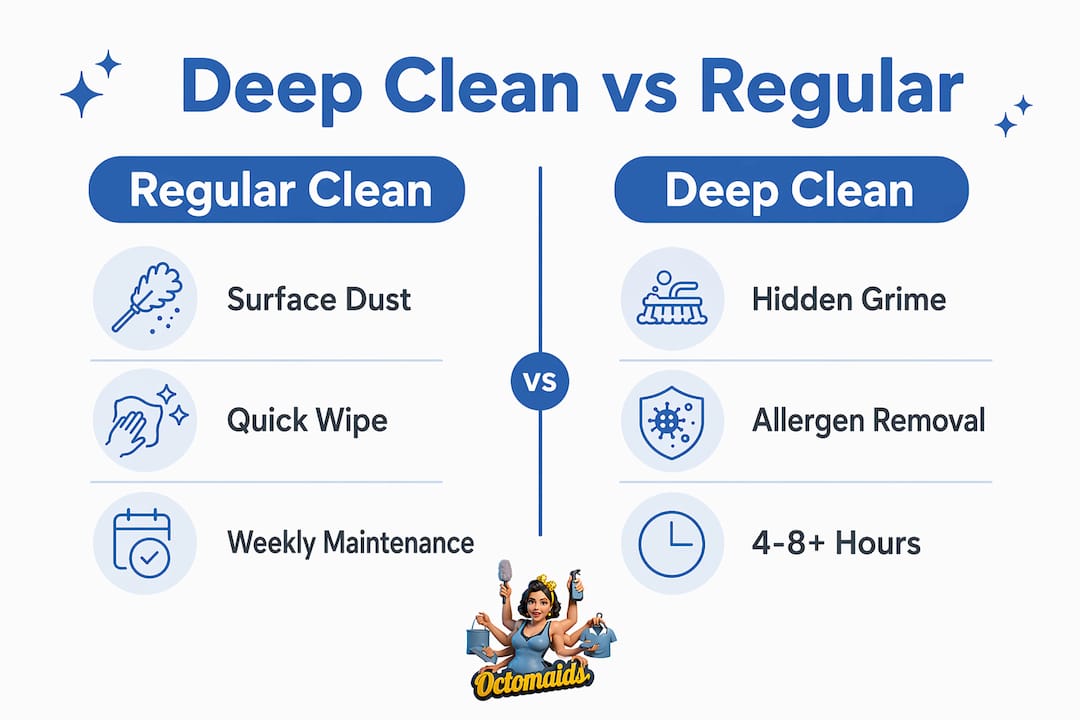
The scope gap between these two services is wider than most homeowners expect. A regular cleaning routine covers the surfaces you see every day: wiping countertops, dusting furniture, vacuuming carpets, mopping hard floors, cleaning bathroom fixtures, and emptying trash. These tasks keep a home looking presentable and prevent light buildup from becoming a bigger problem. A regular cleaning typically takes 1.5–3 hours for an average home. That time reflects its focused, surface-level scope.
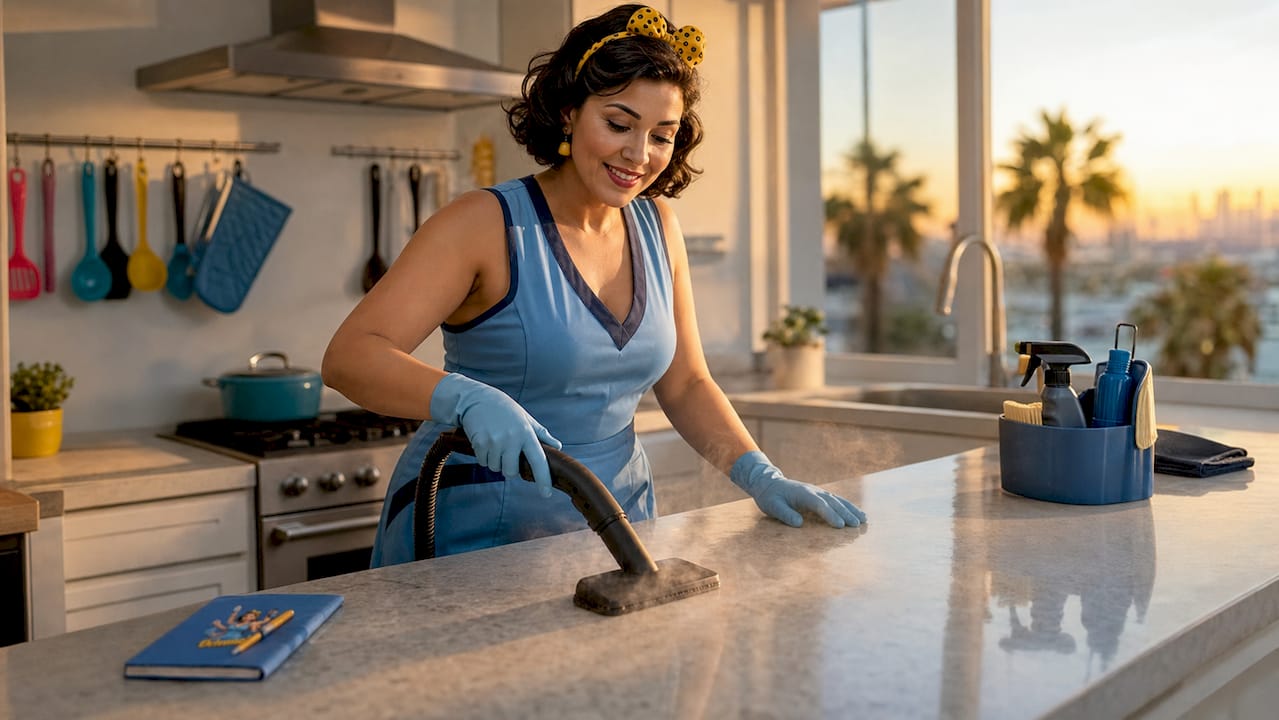
A deep clean goes significantly further. It addresses the areas that accumulate grime over months, not days.
Typical deep cleaning tasks include:
- Scrubbing inside the oven, refrigerator, and dishwasher
- Cleaning behind and under appliances
- Washing baseboards, window sills, and door frames
- Descaling showerheads and scrubbing grout lines
- Wiping down cabinet interiors and light fixtures
- Cleaning inside closets and along ceiling corners
Deep cleaning takes 4–8+ hours depending on property size and current condition. That time difference reflects not just more tasks, but more labor-intensive work. Furniture gets moved. Appliances get pulled out. Every surface gets attention, not just the ones at eye level.
Professional deep cleaning also uses different tools. HEPA vacuums and steam cleaners capture microscopic allergens that standard home vacuums leave behind. Steam extractors penetrate grout and fabric fibers in ways that a mop or cloth cannot. This equipment difference is a major reason why a professional deep clean produces results that a thorough DIY session rarely matches. For a full breakdown of what each room involves, the room-by-room deep clean guide from Octomaids covers the specifics in detail.
Pro Tip: Before any deep clean, do a quick declutter pass. Clearing counters and floors lets cleaners access the surfaces that actually need attention, saving time and improving results.
What are the health benefits of deep cleaning?
The health case for periodic deep cleaning is well supported and often underestimated. Homes with biannual professional deep cleaning see a 40% reduction in dust mite allergens and a 35% decrease in allergy symptoms. Those numbers matter most for households with children, elderly residents, or anyone with asthma or seasonal allergies. Dust mites live in mattresses, upholstered furniture, and carpet fibers, places a regular cleaning routine does not reach.
Hidden pathogens are a separate concern. Mold spores, bacteria, and viruses accumulate in grout lines, under appliances, and inside HVAC vents. Regular deep cleaning reduces illness-related absenteeism by up to 30% by eliminating these hidden sources of contamination. That finding comes from workplace research, but the biology applies equally at home.
“Cleaning physically removes contaminants and soil, a required precursor to effective disinfection. Organic matter can shield pathogens and reduce disinfectant effectiveness, making soil removal the non-negotiable first step in any hygiene protocol.”
This point is worth pausing on. Spraying a disinfectant on a dirty surface does not kill germs effectively. The physical removal of soil has to come first. Deep cleaning handles that removal in areas where regular maintenance simply does not go. That sequence is what makes deep cleaning a genuine health intervention, not just an aesthetic one.
The mental health dimension is real too. Professional deep cleaning improves mental well-being by removing hidden grime that creates low-level anxiety even when you cannot pinpoint the source. Homeowners consistently report less stress and a stronger sense of comfort in their space after a thorough clean. A cluttered, grimy environment functions as subconscious visual noise, and eliminating it has a measurable calming effect. For more on this connection, why professional cleaning creates a healthier home explores the research in depth.
Benefits that regular cleaning alone cannot deliver:
- Allergen reduction in mattresses, upholstery, and carpet fibers
- Mold prevention in grout, caulk, and under-sink areas
- Pathogen elimination from high-touch, low-visibility surfaces
- Improved respiratory health from reduced airborne particulates
- Reduced anxiety and improved perception of home quality
When should you choose deep cleaning over regular cleaning?
The right time for a deep clean is usually tied to a specific trigger, not a vague sense that the house “needs it.” Certain situations call for the intensive approach rather than a standard maintenance visit.
-
Moving in or out. A new home carries the grime of previous occupants. A move-out clean protects your security deposit. Both situations require the full scope of a deep clean, not a surface wipe-down. Octomaids offers move-in and move-out cleaning services designed specifically for these transitions.
-
After a renovation. Construction dust penetrates every surface, including inside cabinets, HVAC vents, and light fixtures. Regular cleaning tools cannot handle that level of particulate buildup.
-
First-time professional cleaning. Most homeowners attempting deep cleaning without prior maintenance face frustration. Professionals recommend a reset deep clean first to establish a clean baseline. Without that foundation, recurring visits take longer and cost more.
-
Pet ownership or allergy management. Pet dander embeds in carpet fibers and upholstery. Allergy sufferers benefit most from the HEPA-level extraction that deep cleaning provides.
-
Seasonal resets. Quarterly or biannual deep cleans prevent the slow accumulation of grime that makes regular cleaning less effective over time. The seasonal deep clean guide from Octomaids explains why timing matters.
The most common misconception is that a very thorough regular cleaning equals a deep clean. It does not. The difference lies in the areas addressed, the tools used, and the time invested. Regular cleaning sustains a clean home. Deep cleaning restores one.
Pro Tip: Schedule your first professional visit as a deep clean even if your home feels reasonably tidy. It creates a clean starting point that makes every subsequent regular visit faster, easier, and more effective.
How to integrate both cleaning types into your home maintenance
A practical cleaning schedule combines both services at different intervals. The goal is to use each type where it delivers the most value, not to choose one over the other permanently.
Recommended frequency framework:
- Weekly or biweekly: Regular cleaning covering visible surfaces, floors, bathrooms, and kitchen counters
- Quarterly: Deep cleaning targeting appliances, baseboards, grout, and upholstery
- Biannually: Full deep clean including inside cabinets, behind furniture, and HVAC vents
- As needed: Deep clean after illness, renovation, move-in, or extended absence
Between professional visits, a few consistent habits protect the results. Wiping down stovetops after cooking, running the bathroom fan during showers, and doing a quick vacuum pass weekly all slow the rate of buildup. Octomaids has a practical resource on maintaining cleanliness between visits that covers these habits in detail.
When communicating with a cleaning provider, be specific about your home’s current condition. A home that has not had a professional clean in over a year almost always needs a deep clean first, regardless of how often you clean yourself. That transparency helps the provider allocate the right time and tools, and it prevents the frustration of a maintenance visit that cannot address the actual problem.
Cost-wise, deep cleaning costs more per visit because it takes more time and labor. But it reduces the total effort required for every regular cleaning that follows. Think of it as paying more once to spend less consistently. The home cleaning frequency guide from Octomaids can help you build a schedule that fits your budget and household needs. For additional tips on getting better results from your cleaning routine, 10 ways to improve cleaning results offers practical, field-tested advice.
Key Takeaways
Deep cleaning and regular cleaning are not interchangeable services. They serve distinct roles, and using both at the right intervals produces better health outcomes and lower long-term cleaning costs than relying on either one alone.
| Point | Details |
|---|---|
| Scope difference is significant | Regular cleaning covers visible surfaces; deep cleaning targets hidden grime, appliances, and inaccessible areas. |
| Time reflects intensity | Regular cleaning takes 1.5–3 hours; deep cleaning takes 4–8+ hours for the same home. |
| Health benefits are measurable | Biannual deep cleaning reduces dust mite allergens by 40% and allergy symptoms by 35%. |
| Sequence matters for hygiene | Physical soil removal must precede disinfection; deep cleaning handles what regular maintenance cannot reach. |
| Start with a deep clean | A reset deep clean first creates a baseline that makes every subsequent regular visit faster and more effective. |
What I’ve learned from years of watching homes get cleaned
The most consistent mistake I see is homeowners treating deep cleaning as a luxury rather than a foundation. They schedule regular maintenance visits on a home that has never had a proper reset, then wonder why the results feel underwhelming. Regular cleaning is excellent at maintaining a clean home. It cannot create one from scratch.
The second misconception is frequency. Many people assume deep cleaning is a once-a-year event at most. The research and our team’s direct experience both point to quarterly or biannual deep cleans as the threshold where health benefits actually accumulate. Once a year is better than never, but it leaves a long window for allergens and hidden pathogens to rebuild.
What surprises clients most is the emotional shift after a genuine deep clean. People describe it as the home feeling “lighter” or “different.” That is not imagination. Removing the grime you cannot see but your brain registers as disorder produces a real reduction in background stress. A home that has been properly deep cleaned and then maintained with regular visits is a genuinely different environment to live in. That combination is the standard I think every household deserves, and it is the one our team at Octomaids works toward on every job.
— Steven
Octomaids cleaning services for every stage of home care
Octomaids has served homeowners and renters across Vancouver, WA and the Portland, OR metro area since 2006. Whether your home needs a thorough reset or consistent upkeep, the same trusted team shows up every visit.
For homeowners ready to establish a clean baseline, Octomaids offers one-time deep cleaning services built around the full scope that a reset requires. For ongoing maintenance, recurring cleaning plans keep that baseline intact without the effort of starting over each time. Not sure which tasks are worth handing off? The guide to cleaning tasks worth hiring out breaks it down clearly. You can explore all service options at Octomaids services and book directly online.
FAQ
What is the main difference between deep cleaning and regular cleaning?
Deep cleaning targets accumulated grime in hidden and hard-to-reach areas using specialized tools, while regular cleaning maintains visible surfaces on a routine schedule. The two services are complementary, not interchangeable.
How often should you deep clean your home?
Most households benefit from a deep clean every three to six months, with regular cleaning weekly or biweekly in between. Homes with pets, allergy sufferers, or recent renovations may need deep cleaning more frequently.
Does regular cleaning improve indoor air quality?
Regular cleaning reduces surface dust but does not address allergens embedded in carpet fibers, upholstery, or HVAC vents. Biannual deep cleaning reduces dust mite allergens by 40%, which regular maintenance alone cannot achieve.
Should you deep clean before starting a regular cleaning schedule?
Yes. Professionals recommend a reset deep clean first to establish a clean baseline. Without it, regular cleaning visits take longer and deliver less consistent results.
Is deep cleaning worth the extra cost?
Deep cleaning costs more per visit but reduces the time and effort required for every regular cleaning that follows. The measurable health benefits, including reduced allergens and fewer hidden pathogens, add further long-term value.