



Home cleaning frequency refers to the recommended intervals at which specific household tasks should be completed to keep your living space genuinely healthy and comfortable. A structured approach, what professionals call a tiered cleaning schedule, divides chores into daily, weekly, monthly, seasonal, and annual layers. The American Cleaning Institute assigns each tier based on how quickly dirt, bacteria, and allergens accumulate in high-use versus low-use areas. Authorities like Martha Stewart and Clean Mama have built widely followed systems on exactly this framework. This home cleaning frequency guide walks you through each tier so you can build a routine that protects your health without taking over your life.
What does a home cleaning frequency guide actually cover?
A tiered cleaning schedule is the backbone of any effective housekeeping routine. The tiered frequency approach works because different surfaces accumulate grime, bacteria, and allergens at very different rates. Kitchen counters touched dozens of times a day need daily attention. Ceiling fans that spin quietly for months need cleaning only once or twice a year. Matching the cleaning interval to the accumulation rate is what keeps a home healthy without turning maintenance into a second job.
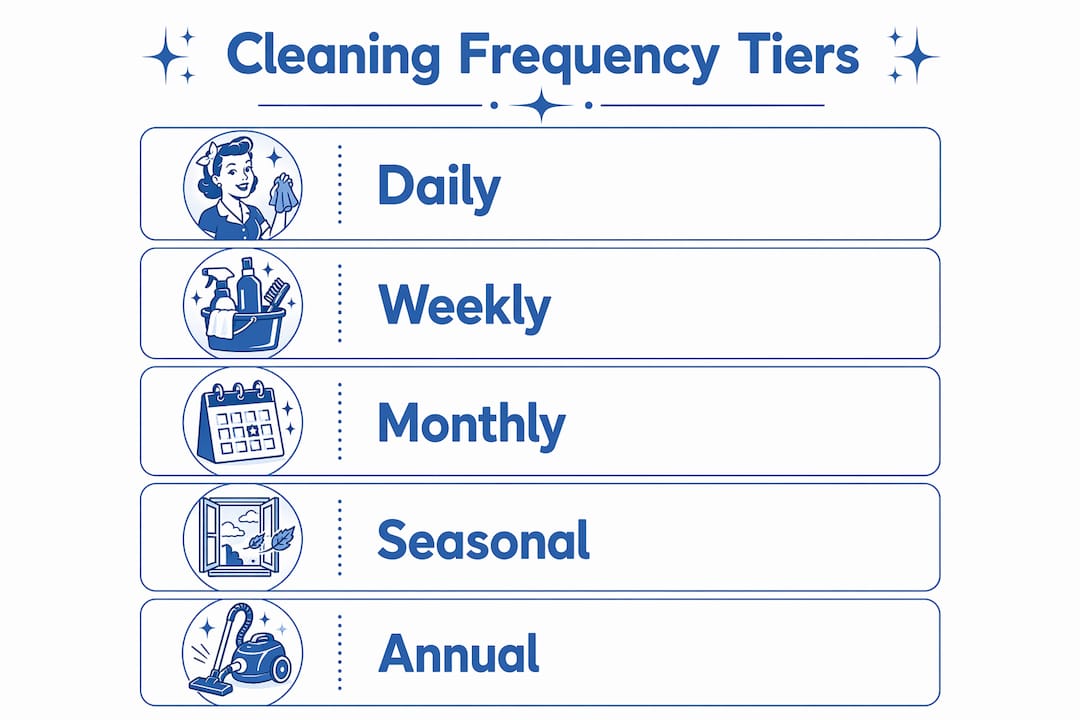
The five tiers are daily, weekly, monthly, seasonal, and annual. Each tier serves a distinct purpose. Daily tasks prevent buildup before it starts. Weekly tasks address the dirt that slips past daily efforts. Monthly and seasonal tasks tackle slower accumulation that you simply cannot see until it becomes a problem. Annual tasks protect the structural and mechanical health of your home. Understanding where each chore belongs in this hierarchy is the first step toward a cleaning routine that actually holds together over time.
What cleaning tasks should be done every day?
Daily cleaning tasks are the ones that prevent small messes from becoming large ones. The ACI’s daily task list includes vacuuming or mopping high-traffic floors, dusting frequently touched surfaces, and wiping down bathroom sinks, counters, and toilets. These are not deep-cleaning tasks. They are maintenance tasks, the equivalent of brushing your teeth rather than visiting the dentist.
Here are the core daily tasks most homes require:
- Wipe kitchen counters and stovetop after cooking to prevent grease and bacteria buildup
- Sweep or vacuum high-traffic floors in entryways, kitchens, and living areas
- Wipe bathroom sink and faucet handles, which are among the most bacteria-dense surfaces in any home
- Spot-clean toilet seat and rim to prevent odor and staining
- Wash or load dishes rather than leaving them to sit overnight
- Tidy clutter from common areas to reduce visual stress and prevent dust traps
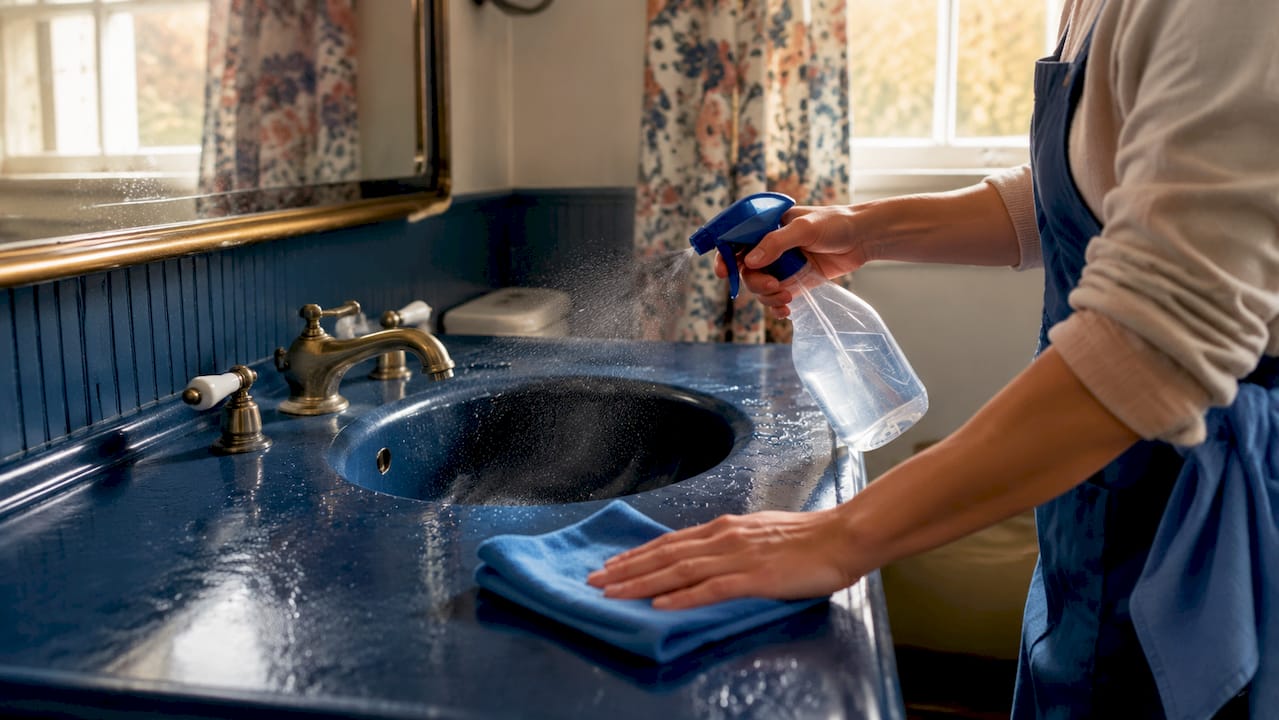
One detail most homeowners miss is disinfection technique. Spraying a surface and immediately wiping it does almost nothing. EPA-registered disinfectants require a contact time of 3 to 10 minutes to actually kill pathogens. A practical workflow is to spray one section, move to the next task, then return to wipe. That dwell time is what separates cleaning from actual disinfecting.
Pro Tip: Apply your disinfectant spray to all bathroom surfaces first, then wipe down the kitchen counter, then return to the bathroom to wipe. You get full contact time on every surface without adding a single extra minute to your routine.
Which cleaning chores work best on a weekly schedule?
Weekly cleaning tasks address the dirt that daily maintenance cannot fully catch. Dust settles on shelves, soap scum builds in showers, and bed linens accumulate sweat and skin cells throughout the week. The Clean Mama rotation system assigns specific rooms or task categories to specific days, which prevents the paralysis of facing an entire house at once on a Saturday morning.
A standard weekly cleaning checklist covers:
- Thorough bathroom cleaning: scrub toilet bowl, clean shower walls and tub, mop bathroom floor
- Change bed linens and towels: fresh sheets weekly reduce allergen load significantly, and proper towel hygiene prevents bacterial and mold growth
- Dust all shelves, furniture, and baseboards at eye level and below
- Vacuum all carpets and upholstery, paying attention to edges and under furniture
- Clean out the refrigerator of expired items and wipe interior shelves
- Mop hard-surface floors throughout the home
For households with pets or allergy sufferers, vacuuming frequency deserves special attention. Slow, deliberate vacuuming removes significantly more allergens than quick passes, and allergy-sensitive homes benefit from vacuuming carpets and upholstery at least twice per week. Moving the vacuum at roughly half your normal walking pace allows the suction to pull embedded particles from carpet fibers rather than just skimming the surface.
Predictable weekly routines also reduce decision fatigue. When Tuesday is always bathroom day, you stop spending mental energy deciding what to clean. That consistency is what makes a cleaning routine sustainable rather than something you abandon after three weeks.
How do monthly and seasonal cleaning tasks differ?
Monthly and seasonal tasks target the slower accumulation that weekly routines simply cannot address. Think of monthly cleaning as the layer between your weekly maintenance and the major seasonal overhaul. These tasks take longer per session but happen infrequently enough that they never dominate your schedule.
The ACI explicitly separates monthly and yearly deep tasks from routine cleaning, recognizing that some surfaces and systems accumulate grime on a longer cycle. Here is how the two tiers compare:
| Task | Monthly | Seasonal (Every 3 Months) |
|---|---|---|
| Windows and glass | Wipe interior glass | Wash exterior windows |
| Kitchen appliances | Clean microwave and dishwasher filter | Deep clean oven and refrigerator coils |
| Bedding and mattress | Wash duvet covers and pillowcases | Flip or rotate mattress |
| Ventilation | Wipe range hood filter | Clean ceiling fans and HVAC vents |
| Decluttering | Organize one room or closet | Full seasonal declutter |
Monthly tasks like washing windows and cleaning appliances preserve both hygiene and the lifespan of your equipment. A clogged dishwasher filter, for example, recirculates food particles onto your dishes. Cleaning it monthly takes under five minutes and extends the appliance’s life by years.
Seasonal tasks, done roughly four times per year, address the deeper accumulation that monthly cleaning misses. Flipping a mattress distributes wear evenly and reduces the dust mite population that builds up on one side over months. Cleaning ceiling fan blades prevents the thick layer of dust that gets redistributed into the air every time the fan turns on. These tasks protect your home investment as much as they protect your health.
- Spring: Deep clean oven, wash windows inside and out, flip mattress, declutter storage areas
- Summer: Clean refrigerator coils, wash outdoor furniture, inspect and clean window screens
- Fall: Clean HVAC vents and replace air filters, clean dryer vent, wash heavy blankets before storing
- Winter: Deep clean carpets and upholstery, organize closets, clean behind large appliances
What annual cleaning tasks protect your home long-term?
Annual cleaning tasks are the most intensive on the calendar, but they are also the ones most directly tied to your home’s structural health and indoor air quality. These are the tasks where skipping a year starts to show real consequences.
The core annual cleaning responsibilities include:
- Professional rug and upholstery cleaning: removes embedded allergens, bacteria, and odors that vacuuming cannot reach
- Baseboard and trim cleaning: dust and grime accumulate in grooves and corners over months
- Air filter replacement: HVAC filters should be replaced at least annually, and more often in homes with pets or allergy sufferers
- Gutter cleaning: blocked gutters cause water damage to fascia, siding, and foundations
- Behind and under large appliances: refrigerators, washing machines, and dryers accumulate lint, dust, and moisture that create fire and mold risks
The deep cleaning tasks in this annual tier are the ones most homeowners either forget or postpone indefinitely. The problem is that postponing them compounds. A dryer vent clogged with lint is a fire hazard. An air filter that has not been changed in two years circulates dust and allergens through every room in the house.
Pro Tip: Schedule annual tasks at the same time each year, ideally tied to a recurring event like a birthday or tax season. Add them to your calendar in January so they do not get lost in the daily rhythm of life. For tasks like rug cleaning or gutter clearing, booking a professional service in advance prevents the “I’ll get to it eventually” delay.
How do you build a personalized cleaning schedule?
A personalized cleaning schedule accounts for the specific variables in your home and life. The Martha Stewart cleaning schedule uses daily, weekly, monthly, seasonal, and annual checklists to eliminate guesswork, and that structure works precisely because it removes the need to make decisions in the moment.
Several factors should shape how you adapt a standard framework:
- Household size: more people means more foot traffic, more dishes, and faster accumulation on all surfaces
- Pets: dogs and cats shed dander and hair that require more frequent vacuuming and more frequent laundering of soft furnishings
- Allergies: allergy-sensitive households need HEPA-filter vacuuming at least twice weekly and more frequent bedding laundering to control allergen reservoirs
- Lifestyle: a household where everyone works long hours needs a schedule weighted toward quick daily tasks rather than long weekend sessions
- Seasonal changes: pollen season increases the frequency of dusting and vacuuming; winter increases indoor moisture and the need for mold-prone area attention
For scheduling tools, a simple printed weekly planner works well for visual learners. Digital options like Google Calendar or dedicated apps allow recurring reminders that trigger automatically. The Clean Mama approach assigns one focus area per day, Monday through Friday, so the full home cycles through attention each week without any single session becoming overwhelming.
The goal of layering daily, weekly, monthly, and annual tasks is to make cleaning an automatic habit rather than a reactive crisis response. When you know Tuesday is bathroom day and the first Saturday of each month is appliance day, the decision is already made. You just execute. That predictability is what separates homes that stay clean from homes that oscillate between spotless and chaotic.
For maintaining cleanliness between professional visits, the home maintenance tips from Octomaids offer practical strategies that slot directly into this layered framework.
Key takeaways
A tiered cleaning schedule, dividing tasks into daily, weekly, monthly, seasonal, and annual layers, is the most effective way to maintain a healthy home without overwhelming your schedule.
| Point | Details |
|---|---|
| Match frequency to accumulation rate | High-use surfaces need daily attention; low-use areas need only monthly or annual care. |
| Disinfection requires contact time | Leave EPA-registered disinfectants on surfaces for 3 to 10 minutes before wiping for real effectiveness. |
| Allergy households need stricter frequency | Vacuum carpets and upholstery at least twice weekly with a HEPA filter to control allergen buildup. |
| Predictable routines reduce decision fatigue | Assigning specific tasks to specific days removes the mental load of deciding what to clean each session. |
| Annual tasks protect home investment | Skipping gutter cleaning, air filter replacement, and dryer vent clearing creates compounding structural and health risks. |
What I’ve learned from watching cleaning routines succeed and fail
After years of working with homeowners across Vancouver, WA and Portland, OR, I have noticed one pattern that separates people who maintain clean homes from those who feel perpetually behind. It is not motivation. It is not even time. It is the absence of a system.
The most common mistake I see is treating cleaning as a single event rather than a layered rhythm. People let things accumulate for two weeks, then spend an entire Saturday trying to restore order, feel exhausted, and repeat the cycle. That approach is physically and mentally draining, and it means your home spends most of its time in a state of partial disorder.
The second mistake is perfectionism at the wrong tier. Spending forty-five minutes scrubbing a bathroom that only needed a ten-minute weekly wipe-down is a sign that daily and weekly tasks were skipped. When you maintain the lower tiers consistently, the deeper tiers become genuinely manageable rather than daunting.
My honest recommendation is to start with just the daily tier for two weeks. Build that habit before adding the weekly layer. Trying to implement all five tiers at once is how people burn out and abandon the whole system by week three. Consistency at a modest level beats intensity that collapses. A home that gets a ten-minute daily wipe-down every day is cleaner than one that gets a three-hour deep clean once a month.
Flexibility matters too. Life happens. A sick week, a busy work sprint, or a family visit will disrupt any schedule. The goal is not perfection. The goal is a default rhythm you return to quickly after disruptions, because the system is simple enough to restart without guilt.
— Steven
Let Octomaids handle the heavy lifting
Even the best personal cleaning schedule has limits. Seasonal deep cleans, annual upholstery cleaning, and move-in or move-out scrubs are the tasks where professional support pays for itself in time, thoroughness, and peace of mind. Octomaids has served homeowners and renters across Clark County, WA and the Portland Metro area since 2006, providing recurring cleaning, one-time deep cleaning, and specialized services with the same trusted cleaners every visit.
Whether you need a one-time reset to get your home back to baseline or a recurring service that handles the weekly layer for you, Octomaids fits into your cleaning frequency plan at whatever tier makes sense. Explore the full range of home cleaning services and find the option that matches your schedule and your home.
FAQ
How often should you clean your bathroom?
Bathroom sinks, counters, and toilet exteriors should be wiped daily in high-use homes. A thorough scrub of the toilet bowl, shower, and floor is recommended weekly.
What is the most important daily cleaning task?
Wiping kitchen counters and high-contact bathroom surfaces daily prevents bacterial buildup most effectively. Disinfectants must remain on surfaces for 3 to 10 minutes to work properly.
How often should carpets be vacuumed?
Most homes benefit from weekly vacuuming. Households with pets or allergy sufferers should vacuum carpets and upholstery at least twice per week using a HEPA-filter vacuum for maximum allergen removal.
When should you do a deep clean of your home?
Deep cleaning tasks like oven scrubbing, mattress flipping, and appliance cleaning are best done seasonally, roughly four times per year. Annual tasks like rug cleaning and air filter replacement should be scheduled once per year.
How do you build a cleaning schedule that you will actually stick to?
Assign specific tasks to specific days rather than cleaning reactively. The Clean Mama and Martha Stewart frameworks both use this day-based rotation to make cleaning automatic and prevent any single session from becoming overwhelming.