
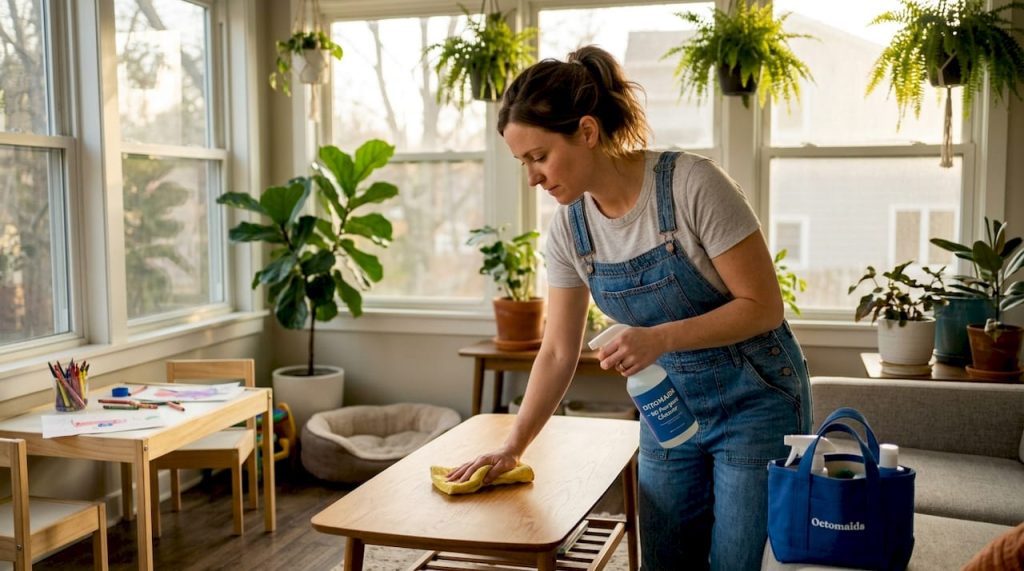


Most people spend more time cleaning than they need to, not because their home is dirtier than average, but because they clean in the wrong order with the wrong plan. Adopting proven home cleaning best practices changes that dynamic completely. Instead of re-wiping surfaces you already cleaned or chasing dirt from room to room, you work through a system that compounds your effort at every step. This guide gives you that system: a practical, room-by-room framework built around the effective home cleaning tips professionals actually use.
Table of Contents
- Key takeaways
- 1. Start with planning and preparation
- 2. Follow the four phases of effective cleaning
- 3. Room-specific best practices and weekly routines
- 4. Time-saving cleaning hacks and schedule strategies
- 5. DIY routines versus professional cleaning services
- My take on cleaning that actually works
- When Octomaids can take cleaning off your plate
- FAQ
Key takeaways
| Point | Details |
|---|---|
| Sequence matters most | Cleaning top-to-bottom and dry-before-wet can cut cleaning time by up to 30%. |
| Declutter before you clean | Clutter adds 15 to 20 minutes to every session and blocks access to the surfaces you need to reach. |
| Dwell time is non-negotiable | Disinfectants need 3 to 10 minutes of contact time on a surface before wiping to actually kill pathogens. |
| Consistency beats intensity | Short 15 to 20 minute daily sessions reduce the need for exhausting deep cleans and maintain hygiene continuously. |
| Know when to call in help | Recurring professional cleaning fills the gaps that busy schedules and daily routines miss. |
1. Start with planning and preparation
Before you touch a single surface, spend five minutes setting yourself up. Cleaning without a plan is the fastest way to waste an hour feeling busy while accomplishing very little.
The most underestimated preparation step is decluttering first. Clutter adds 15 to 20 minutes to a typical cleaning session because you keep moving objects out of the way rather than cleaning underneath them. Walk through each room and return items to their correct place before you pick up a single cloth.
Once surfaces are cleared, gather everything you need into one portable caddy: your all-purpose spray, glass cleaner, disinfectant, microfiber cloths, scrubber, and trash bags. Hauling supplies back and forth between rooms burns time and momentum. Having everything in one carrier keeps you moving.
Here is a quick preparation checklist to work through before every session:
- Remove clutter from all surfaces and floors in each room
- Load your caddy with all supplies so nothing is forgotten mid-session
- Identify your highest priority rooms (kitchen and bathrooms first)
- Set a timer for your session to stay focused and avoid fatigue
- Open windows or run ventilation so cleaning products work properly
Pro Tip: Set a 20-minute timer before you start. The time constraint sharpens your focus and prevents the common trap of perfecting one small area while the rest of the home sits untouched.
2. Follow the four phases of effective cleaning
The single biggest upgrade most homeowners can make is adopting a four-phase sequence. This is not a preference. It is a practical dirt-management strategy that eliminates rework and cuts total cleaning time significantly.
-
Declutter all surfaces and floors. This phase comes before any cleaning product touches anything. Dishes go to the sink, mail goes to the desk, toys go to the bin. Think of it as resetting the room to its clean state before you actually clean it.
-
Dry cleaning: dust top to bottom. Dust ceiling fans, high shelves, and light fixtures before touching anything at counter height. Gravity works against you if you dust in the wrong order. Particles you knock loose from a high shelf will resettle on the surfaces you already wiped below. Always move from ceiling to floor, from far corners to the doorway.
-
Wet cleaning: apply and wait. Spray your surfaces and let products dwell. Most homeowners spray and immediately wipe, which is one of the most common mistakes in home cleaning. Disinfectants require 3 to 10 minutes of contact time to effectively kill pathogens. Spray the bathroom counter, walk to the kitchen to wipe those surfaces, and come back. The product does its work while you do yours elsewhere.
-
Floor cleaning last. Vacuuming and mopping always close out a room. Anything that fell from higher surfaces during the previous phases gets collected at this final step. Mop only after vacuuming, since pushing wet dirt across a dusty floor just creates mud.
Pro Tip: Cleaning top-to-bottom and dry-before-wet sequencing consistently saves up to 30% of total cleaning time in a standard home. For a 3-bedroom house, that can mean finishing in 90 minutes instead of two-plus hours.
3. Room-specific best practices and weekly routines
Every room has its own rhythm. The kitchen and bathroom are your highest-frequency zones because they accumulate bacteria, grease, and moisture faster than any other space in the home. Plan to touch these rooms at least twice a week even when everything else gets a lighter pass.
Here are the weekly maintenance habits that professional cleaners recommend for keeping your home in consistently good shape:
- Change bed linens every 7 days
- Vacuum all floors and upholstered furniture
- Wipe down kitchen appliances and counters after each heavy cooking session
- Scrub the shower and toilet at least once per week
- Wipe bathroom mirrors and faucet handles with a microfiber cloth
- Check and rotate or replace kitchen sponges and dish brushes
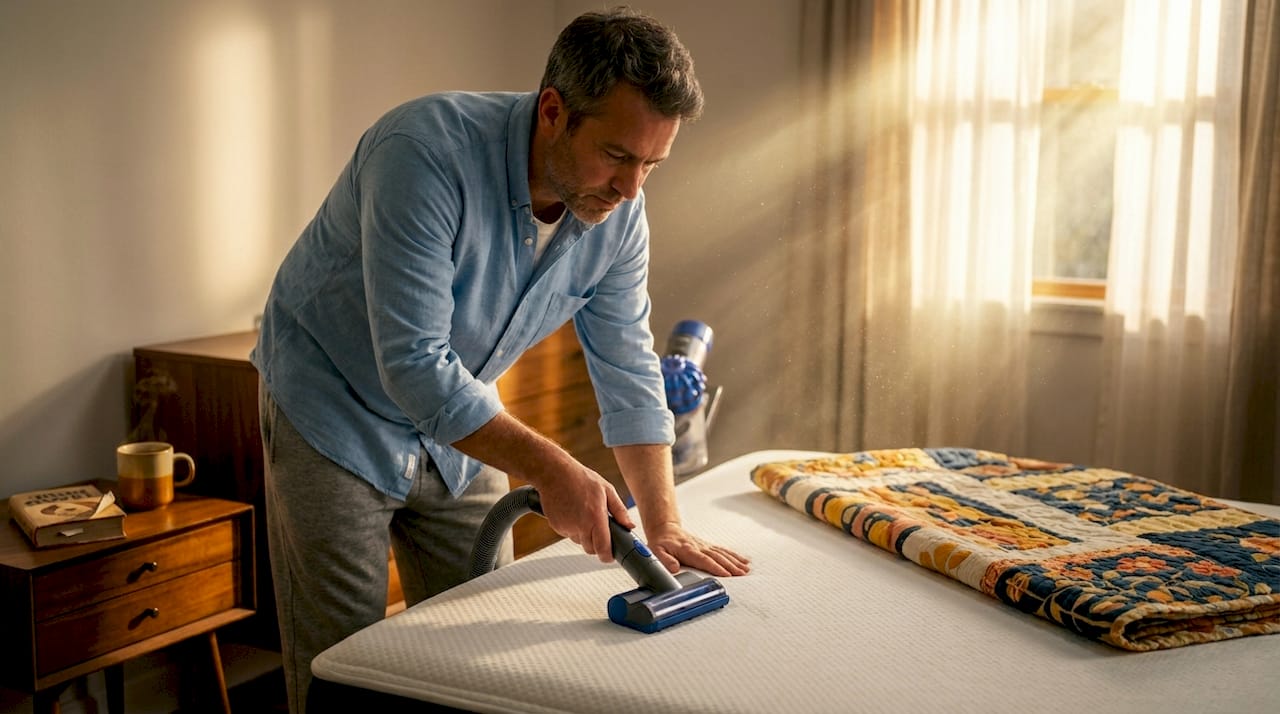
Mattress care is one area most homeowners skip until there is a visible problem. Vacuuming your mattress every three months removes accumulated dust mites and allergens. If you have pets or seasonal allergies, vacuum mattresses monthly using an upholstery attachment, and consider a vacuum with HEPA filtration. Washing bedding at 130°F or above reliably kills dust mites. Proper towel hygiene follows the same principle: replace and wash towels regularly to prevent bacterial growth that plain air-drying does not eliminate.
The table below outlines a simple weekly cleaning schedule by room type:
| Room | Weekly priority task | Frequency |
|---|---|---|
| Kitchen | Counter wipe, appliance clean, sink scrub | 2x per week |
| Bathroom | Toilet, shower, mirror, faucet wipe | 1 to 2x per week |
| Bedroom | Linen change, dust surfaces, vacuum floor | 1x per week |
| Living room | Vacuum upholstery and floor, dust shelves | 1x per week |
| Entryway | Sweep or vacuum, wipe door handles | 2x per week |
4. Time-saving cleaning hacks and schedule strategies
Consistency is the real secret of a clean home. Most people do not struggle with the actual cleaning. They struggle with starting, staying focused, and showing up regularly. A schedule removes that friction by turning cleaning into a habit rather than a decision.
The most effective approach is to assign specific tasks to specific days rather than trying to clean everything at once. Monday might be bathrooms. Wednesday might be floors. Friday might be kitchen surfaces and laundry. When you know what you are doing before you start, you spend zero mental energy figuring it out.
Time-boxing your sessions to 15 to 20 minute focused bursts also changes how cleaning feels. Rather than dreading an open-ended Saturday morning of scrubbing, you commit to 20 minutes on one task and stop. Over a full week, these short sessions accumulate into a genuinely clean home without any single day feeling like a burden.
A few tools that make a real difference:
- A robot vacuum running on a daily schedule keeps floors manageable between sessions
- Multi-surface cleaners reduce the number of products you need to carry and switch between
- Microfiber cloths outperform paper towels on most surfaces and reduce waste
- Labeled storage bins near each room’s exit speed up daily tidying significantly
Pro Tip: Keep a small cleaning caddy under each bathroom sink. A quick 5-minute wipe during a natural pause in your day, like before bed, prevents the kind of grime that later requires 30 minutes of scrubbing.
5. DIY routines versus professional cleaning services
Even the most disciplined home cleaner hits limits. Life gets busy, seasons change, and some tasks simply exceed what a standard weekly routine can address. Knowing when to rely on your own habits and when to bring in professional help is part of having a realistic cleaning strategy.
Here is a direct comparison of the two approaches:
| Factor | DIY routine | Professional service |
|---|---|---|
| Cost | Low ongoing cost | Higher per-visit cost |
| Time investment | 1 to 3 hours per week | Minimal homeowner time |
| Consistency | Depends on schedule discipline | Reliable and scheduled |
| Deep cleaning quality | Limited by tools and access | Professional-grade results |
| Best use case | Daily and weekly maintenance | Deep cleans, move-in/out, recurring care |
Deep cleaning once or twice a year alongside regular upkeep keeps a home genuinely clean rather than just visually tidy. The challenge is that deep cleaning requires more time, better equipment, and staging across rooms to avoid cross-contamination between areas. That is where recurring professional cleaning consistently earns its value for busy households.
One-time deep cleans work best before or after significant events, seasonal transitions, or any move. Move-in and move-out situations are especially suited to professional help because the standard of cleanliness required goes well beyond what a weekly wipe-down achieves.
My take on cleaning that actually works
I have worked alongside homeowners and professional cleaning teams long enough to see one pattern repeat constantly: people are busy cleaning without actually getting cleaner homes. They scrub the same visible counter while ignoring the refrigerator handle, the light switch plates, and the baseboards. The problem is not effort. It is order.
What I have found actually works is treating cleaning less like a chore and more like a system with defined phases. When you declutter first, dust top-to-bottom, let disinfectants sit, and finish with floors, you stop wasting effort. Your results feel more satisfying because the method matches how dirt actually moves through a home.
I have also seen how much simpler cleaning becomes when you stop expecting one heroic weekend session to carry the week. Daily tidying for five minutes, combined with a focused 20-minute task each weekday, does more for long-term cleanliness than a single exhausting Saturday blitz.
The other honest truth is this: what professional cleaners notice in the first minutes of your home reveals exactly which areas your routine is missing. Bringing in professional help a few times a year does not signal failure. It signals that you understand maintenance. The best home cleaning routines combine consistent personal habits with strategic outside support.
— Steven
When Octomaids can take cleaning off your plate
If you are building solid cleaning habits but find that deep cleans, seasonal refreshes, or the demands of a move keep slipping through the cracks, Octomaids is here to help fill those gaps.
Octomaids has served homeowners and renters across Vancouver, WA and Portland, OR since 2006. Whether you need recurring cleaning services to keep your home consistently maintained, a one-time deep clean before a special event, or move-in/move-out cleaning during a transition, the same trusted team shows up every visit. Explore the full range of home cleaning services and find the right option for your home and schedule.
FAQ
What is the most effective home cleaning sequence?
The most effective sequence is: declutter first, then dust top-to-bottom, then wet clean with proper dwell time, then vacuum and mop floors last. This order prevents rework and can reduce total cleaning time by up to 30%.
How often should I deep clean my home?
Deep cleaning once or twice per year is the standard recommendation, with weekly maintenance tasks like vacuuming, linen changes, and appliance wipes keeping the home in good condition between those sessions.
How long should I leave disinfectant on a surface?
Most disinfectants need 3 to 10 minutes of contact time on a surface before you wipe them away. Wiping immediately after spraying significantly reduces how many pathogens the product actually kills.
How do I clean more efficiently if I have a busy schedule?
Assign specific tasks to specific days and use 15 to 20 minute timed sessions rather than trying to clean everything at once. This reduces decision fatigue and builds a sustainable, low-stress cleaning habit.
When does it make sense to hire a professional cleaner?
Professional cleaning makes the most sense for deep cleans, move-in or move-out transitions, and busy households that want consistent results without sacrificing personal time. Recurring professional services also address hard-to-reach areas that standard DIY routines tend to miss.