
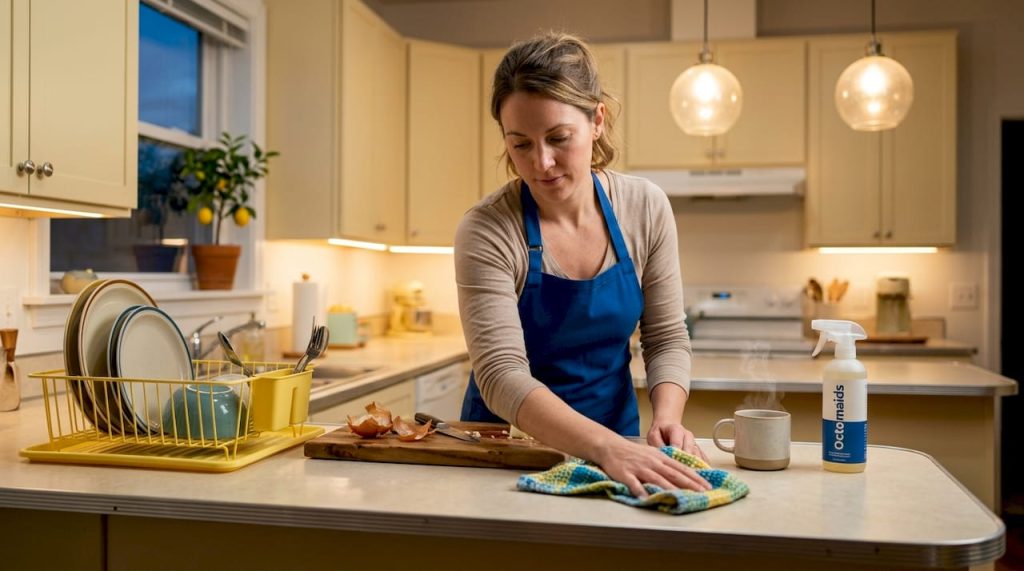


Maintaining a clean home between professional visits is defined as the practice of using consistent daily and weekly habits to preserve the results of a professional clean until your next scheduled service. The American Cleaning Institute calls this routine upkeep, and it covers everything from wiping counters after meals to managing clutter before it compounds. Done right, it reduces the workload on your professional cleaners, keeps allergens lower, and means you never dread an unexpected guest. Tools like Clorox wipes, a portable cleaning caddy, and a simple nightly reset are the building blocks of a system that actually holds.
What are the best daily habits to maintain a clean home between visits?
The most effective way to maintain home cleanliness day to day is to focus on high-touch surfaces and visible clutter before they accumulate. According to the American Cleaning Institute, wiping kitchen counters after every meal and running the dishwasher daily prevents the kind of buildup that turns a 10-minute job into an hour-long project. This single habit does more for your kitchen’s cleanliness than any weekend scrub session.
Here are the core daily habits that make the biggest difference:
- Wipe high-touch surfaces every day. Door handles, light switches, faucet handles, and countertops collect bacteria and grime faster than any other surface. A Clorox wipe or damp microfiber cloth takes under two minutes per room.
- Load and run the dishwasher nightly. Dishes left in the sink overnight attract fruit flies, create odors, and make the kitchen feel chaotic. Running the dishwasher before bed resets the kitchen for the morning.
- Do a clutter sweep with a basket. Keep one designated basket per floor of your home. At the end of the day, drop anything out of place into the basket and redistribute items during your nightly reset.
- Keep a portable cleaning caddy stocked. The American Cleaning Institute recommends keeping supplies in an accessible caddy to reduce task friction and support spontaneous spot cleaning. When supplies are within reach, you actually use them.
- Run a 5 to 10 minute nightly reset. A nightly reset routine clears the most visible mess, handles dishes and trash, and prepares one small area for the next day. It is not deep cleaning. It is maintenance.
The psychological benefit of the nightly reset is real and worth naming. Walking into a tidy kitchen in the morning lowers stress before the day has even started. Research from BetterHomeHabits confirms that regular nightly resets prevent small messes from compounding into large cleaning projects. Starting the reset in the kitchen, then moving to the living room, creates a consistent sequence that eventually becomes automatic.
Pro Tip: Set a timer for 10 minutes when you start your nightly reset. The time constraint keeps you moving and prevents the reset from expanding into a full cleaning session.
How to organize weekly cleaning tasks to sustain home cleanliness efficiently
A structured weekly schedule is the backbone of home upkeep between visits. The Clean Mama method, developed by Becky Rapinchuk, assigns specific tasks to specific days so that decision fatigue is eliminated and the work stays manageable. Spreading tasks across the week means no single day feels overwhelming.
A practical weekly schedule looks like this:
- Monday: Bathrooms. Wipe sinks, scrub toilets, clean mirrors, and replace hand towels. This takes 20 to 30 minutes across all bathrooms.
- Tuesday: Dusting. Dust furniture, shelves, ceiling fans, and light fixtures. Use a microfiber duster to trap particles rather than redistribute them.
- Wednesday: Floors. Vacuum carpets and rugs, then mop hard floors. Doing floors mid-week catches the debris from the first half of the week before it grinds into surfaces.
- Thursday: Kitchen appliances and fridge. Wipe down the stovetop, microwave exterior, and refrigerator shelves. Toss expired food while you are in the fridge.
- Friday: Laundry. Wash bed linens and towels. Fresh linens at the end of the week make the weekend feel like a reset.
The task layering approach from Clean Mama pairs this weekly schedule with daily habits and monthly rotating tasks. The result is a system where grime never gets a chance to build up because each layer addresses a different accumulation timeline.
| Frequency | Task examples | Time required |
|---|---|---|
| Daily | Counter wipes, dishes, clutter sweep | 10 to 15 minutes |
| Weekly | Bathrooms, floors, dusting, laundry | 30 to 60 minutes |
| Monthly | Oven interior, baseboards, window sills | 60 to 90 minutes |
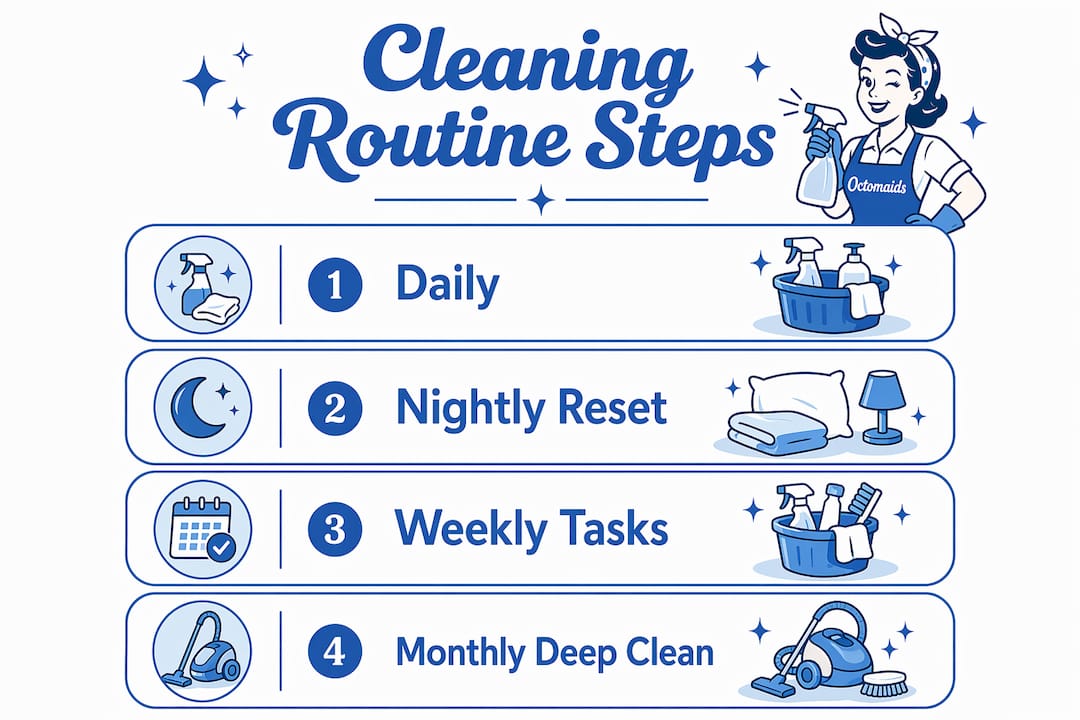
This table reflects what professional cleaners at Octomaids see most often. Homes that follow a layered schedule like this are noticeably easier to deep clean because the baseline is already high.
What practical strategies help manage clutter and maintain order between visits?
Clutter is the single biggest obstacle to keeping a home tidy between professional cleanings. The American Cleaning Institute notes that clutter creates more places for dust and allergens to collect, which makes every cleaning task harder and less effective. Clutter is not just a visual problem. It is a hygiene problem.
The most effective clutter control strategies target specific hotspots:
- Entryways. This is where shoes, bags, mail, and coats pile up within minutes of arriving home. Install hooks, a shoe rack, and a small tray for keys and mail. A no-shoes-inside policy, or at minimum wiping shoes on a quality mat, dramatically reduces the dirt tracked through the rest of the home.
- Kitchen counters. Counters attract appliances, mail, snacks, and random objects that have no designated home. The rule is simple: if it does not belong in the kitchen, it does not live on the counter. Use a small decorative bowl for items that genuinely need to be accessible.
- Paper clutter. Mail and paperwork are among the most common sources of visual disorder in a home. Sort mail the day it arrives: recycle junk immediately, file bills, and place action items in one designated spot.
- Donation boxes. Keep a box in a closet at all times. When something no longer serves a purpose, it goes in the box immediately rather than sitting on a surface for weeks.
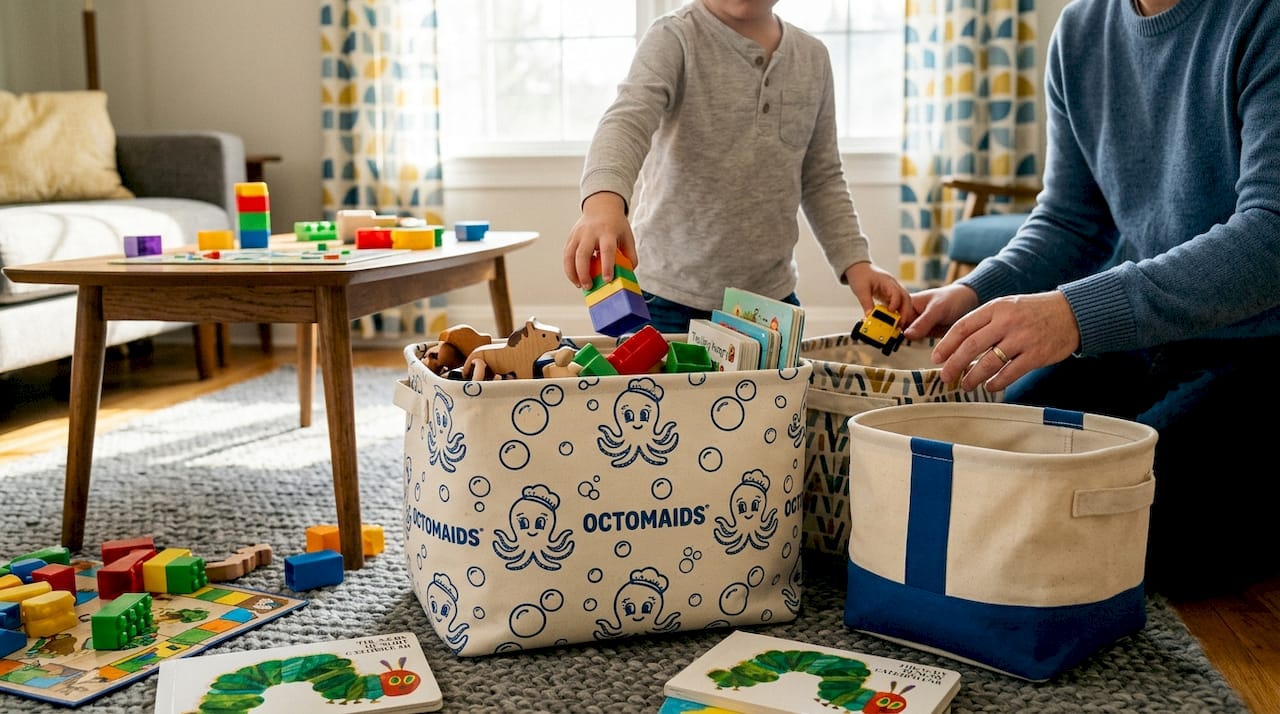
Pro Tip: In shared homes or homes with children, assign every family member one basket or bin. Each person is responsible for clearing their own bin during the nightly reset. This distributes the workload and removes the resentment that builds when one person manages all the tidying.
For busy families, the goal is not a perfectly minimalist home. The goal is a home where every object has a place, and returning things to that place takes seconds rather than minutes.
Which cleaning actions reduce allergens and improve hygiene between professional cleans?
Hygiene maintenance between professional visits focuses on two categories: germ control on high-touch surfaces and allergen reduction in the air and on soft surfaces. These are not the same problem and they require different approaches.
For germ control, the guidance from CVS Health’s wellness resources is clear: cleaning with soap and detergent removes the majority of germs from surfaces, and disinfecting with products like Lysol or Clorox disinfecting spray should be reserved for situations involving illness or immunocompromised household members. Over-disinfecting is not more effective. It is unnecessary chemical exposure.
| Situation | Recommended approach | Products to use |
|---|---|---|
| Everyday maintenance | Clean with soap or all-purpose cleaner | Method All-Purpose, dish soap |
| After illness in the home | Disinfect high-touch surfaces | Lysol Disinfecting Spray, Clorox wipes |
| Bathroom weekly clean | Clean surfaces, disinfect toilet | Scrubbing Bubbles, Clorox toilet cleaner |
| Kitchen after raw meat | Disinfect cutting boards and sink | Bleach solution or Lysol spray |
For allergen reduction, two actions deliver the most impact. First, vacuuming with HEPA filters removes soil, food particles, and pet dander from carpets and upholstery that a standard vacuum redistributes into the air. Brands like Dyson, Miele, and Shark all offer HEPA-certified models at various price points. Second, replacing HVAC air filters on schedule, typically every 60 to 90 days for standard filters or every 30 days in homes with pets, directly improves indoor air quality.
Moisture control is the third pillar of hygiene maintenance. Leaving shower doors open after use allows surfaces to dry and limits the conditions that mold and mildew need to grow. A squeegee on the shower wall takes 30 seconds and extends the time between bathroom deep cleans significantly.
“The homes that stay cleanest between our visits are not the ones where people clean the most. They are the ones where moisture is controlled, clutter is minimal, and high-touch surfaces get a quick wipe every day.” — Octomaids cleaning team
Key takeaways
Consistent daily habits, a structured weekly schedule, and targeted allergen control are the three pillars that keep a home clean and healthy between professional cleaning visits.
| Point | Details |
|---|---|
| Daily habits are the foundation | Wiping counters, running the dishwasher, and a nightly reset prevent buildup before it starts. |
| Weekly task assignment reduces overwhelm | Assigning specific tasks to set days eliminates decision fatigue and keeps upkeep manageable. |
| Clutter control is a hygiene issue | Minimizing clutter reduces dust and allergen accumulation, making every cleaning task faster. |
| Clean first, disinfect selectively | Use soap and detergent daily; reserve disinfectants like Lysol for illness or high-risk situations. |
| HEPA vacuuming and filter changes matter | These two actions deliver the most measurable improvement in indoor air quality between visits. |
What I’ve learned after years of watching how homes hold up between cleans
I have been in hundreds of homes across Vancouver, WA and Portland, OR, and the pattern is consistent. The homes that look the best when our team arrives are not the ones where the owners spent hours cleaning the day before. They are the ones where small habits run quietly in the background every day.
The nightly reset is the single habit I recommend most. Not because it is the most thorough, but because it changes your relationship with your home. When you spend 10 minutes each evening returning things to order, the home never reaches the point where cleaning feels like a punishment.
The other thing I have noticed is that people tend to over-invest in products and under-invest in consistency. A $3 bottle of dish soap and a microfiber cloth used daily will outperform a cabinet full of specialty cleaners used once a month. The deep clean house checklist we use at Octomaids is thorough precisely because it builds on a home that has been maintained, not rescued.
One honest challenge: consistency is harder in busy households. If you miss a day or a week, do not try to catch up all at once. Pick the one most visible area, spend 15 minutes, and restart from there. Perfection is not the goal. A home that trends toward clean rather than toward chaos is the goal.
— Steven
How Octomaids supports your home maintenance routine
The habits in this article do the daily and weekly work. Octomaids handles what those habits cannot reach. Our team has served homeowners and renters across Clark County, WA and the Portland Metro area since 2006, delivering the same trusted cleaners every visit so you never have to re-explain your home.
Whether you need recurring service to lock in your maintenance routine or a one-time deep clean to reset your baseline, we bring the tools, the technique, and the consistency. Read through our home cleaning best practices to see how professional service and daily habits work together, or visit our services page to schedule your next clean.
FAQ
What does “maintain a clean home between visits” mean?
It refers to the daily and weekly habits homeowners use to preserve cleanliness between scheduled professional cleaning appointments. The American Cleaning Institute defines this as routine upkeep, including surface wiping, clutter management, and moisture control.
How long should daily home maintenance take?
A daily maintenance routine takes 10 to 15 minutes and covers counter wiping, dishes, and a clutter sweep. The nightly reset, as outlined by BetterHomeHabits, adds another 5 to 10 minutes and handles the most visible mess before the next day.
How often should I vacuum between professional cleans?
Vacuum high-traffic areas and carpets at least twice per week, and use a HEPA filter vacuum to remove allergens and pet dander effectively. In homes with pets, daily vacuuming of furniture and rugs is recommended by the American Cleaning Institute.
Should I disinfect surfaces every day?
Daily disinfecting is not necessary and can be counterproductive. Clean surfaces with soap or an all-purpose cleaner daily, and reserve disinfectants like Lysol for situations involving illness or immunocompromised household members, as recommended by CVS Health’s wellness guidelines.
What is the fastest way to tidy a home quickly before guests arrive?
Focus on the three highest-visibility areas: the entryway, kitchen counters, and the main bathroom. A 15-minute sweep that clears clutter from these three zones, wipes visible surfaces, and replaces hand towels creates the impression of a well-maintained home.