


The most common hardwood floor cleaning mistakes are using too much water, reaching for vinegar, steam mops or oil soap, skipping the dry sweep, and chasing shine with polish. Each one works against the finish, the thin protective layer that keeps moisture and grit away from the wood. Below, we explain why each mistake does harm, what a safer routine looks like, and when it is worth calling in help.
We have cleaned homes across Vancouver, WA and the Portland metro since 2006, and floors are where we see the most well-meant damage. Nobody ruins a floor on purpose. People ruin them with products that sound gentle and habits that feel thorough.
TL;DR
- You are cleaning the finish, not bare wood. Once abrasive cleaners or standing water break the finish, the wood underneath becomes vulnerable to moisture damage that is often permanent.
- Water is the biggest risk. Use a barely damp microfiber pad, never a soaked mop or a steam mop.
- Skip vinegar, oil soap, wax and furniture spray. They dull, streak or leave a film that attracts dirt.
- Dry sweep or vacuum (no beater bar) before any damp cleaning, and check your felt pads every 6 to 12 months.
- A full refinish is far more expensive than a gentle routine, so prevention pays.
Table of Contents
- Why the finish is the thing you are protecting
- Mistake 1: Using too much water
- Mistake 2: Trusting a steam mop
- Mistake 3: Cleaning with vinegar and water
- Mistake 4: Using oil soap, wax, polish or furniture spray
- Mistake 5: Skipping the dry sweep
- Mistake 6: Letting your cleaning tools get dirty
- Mistake 7: Cleaning out of order
- Mistake 8: Cleaning too often, or in the wrong way
- Mistake 9: Forgetting furniture and shoes
- Mistake 10: Trying to fix a bad result with a stronger product
- What a mistake can cost
- Our perspective: consistency beats intensity
- Where professional cleaning fits
- A simple hardwood routine you can start today
- FAQ
- Sources
Why the finish is the thing you are protecting
Most hardwood floors in American homes are sealed with a clear coat such as polyurethane. The wood itself is porous and the seams between boards are not sealed. The coat is what stands between your boards and everyday spills, grit and shoe traffic.
The National Wood Flooring Association (NWFA) makes this point in its consumer guide to wood floors: you are maintaining the finish as much as the wood. Once abrasive cleaners or too much water compromise it, the wood below can take on moisture, and that damage is often irreversible.
Think of it like the glaze on a ceramic mug. A scratched glaze still looks fine for a while, but stains and bacteria creep in where it has worn away. Every mistake below is a way of wearing down that glaze faster than normal living would.
Mistake 1: Using too much water
A soggy mop is the classic error. Water runs into the seams between planks, the board edges swell, and over time the floor can cup, with the edges rising higher than the middle. By the time you see it, moisture may have been getting in for months.
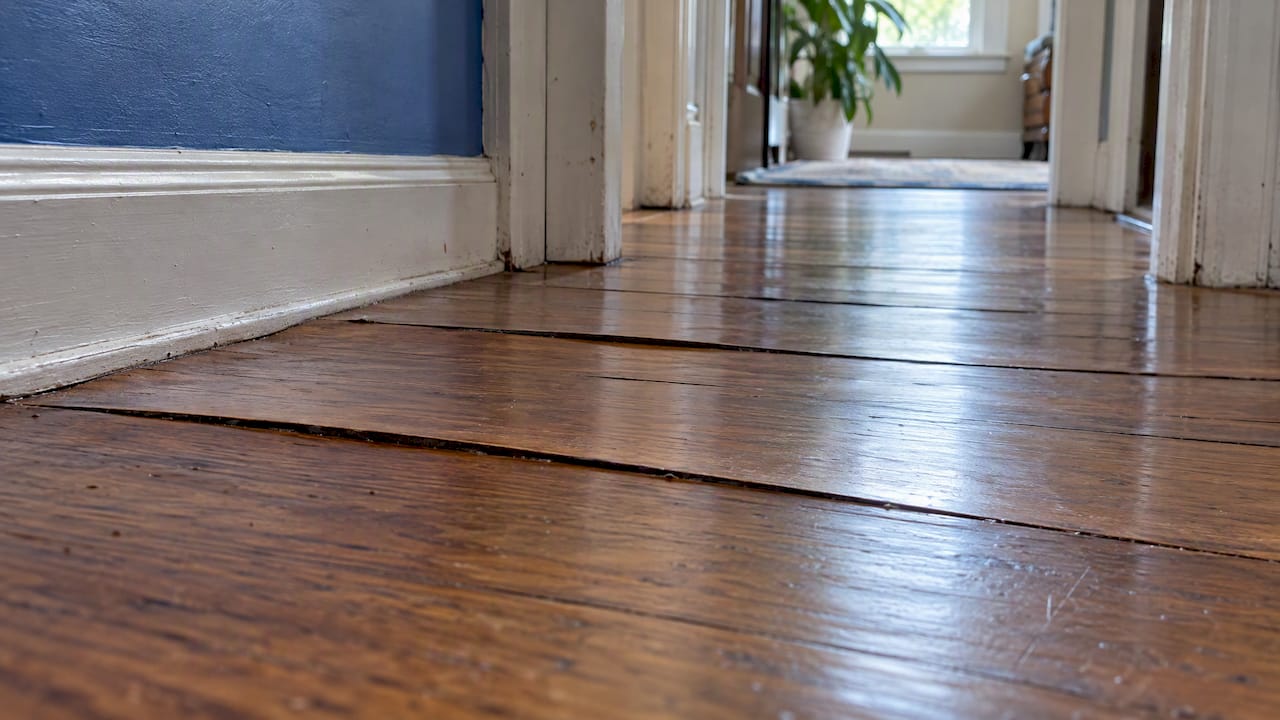
There is a simple test from NWFA maintenance guidance, summarized in its technical publication on floor maintenance: if a cleaned patch takes longer than about a minute to dry, you are using too much liquid. Aim for a surface that looks damp for a few seconds, then is dry.
What to do instead
- Spray cleaner lightly onto a microfiber pad, not onto the floor.
- Wipe along the grain of the boards.
- Wipe up spills right away with a dry or barely damp cloth.
- Never leave puddles from a plant, a pet bowl or a wet umbrella.
Mistake 2: Trusting a steam mop
Steam mops are excellent on tile, which is why people assume they are the “deep clean” option for wood. On hardwood, steam pushes heat and moisture into the seams under pressure. According to a summary of NWFA advice from one flooring retailer’s guide, wet and steam mops can damage both finish and wood over long periods.
The damage is slow, which is what makes it tricky. The first few uses leave a lovely, clean-looking floor. The hazy finish, cupping or separated boards show up later and are blamed on the age of the house.
Mistake 3: Cleaning with vinegar and water
Vinegar is the most repeated home remedy, and you will find it recommended in plenty of forum threads. It is also acidic. Repeated use can dull polyurethane gradually, so the floor looks cloudy and tired even when it is clean. A guide from Sunrise Hardwood on floor lifespan puts it bluntly: use manufacturer-approved hardwood cleaners, with no water mops, no vinegar and no all-purpose sprays.
The tricky part is that a vinegar mix looks harmless on day one. The dulling is cumulative, much like repeatedly washing a good wool sweater in the wrong detergent.
What to do instead: use a cleaner made for your floor’s finish type. If you are unsure what the finish is, check with the installer or the flooring manufacturer’s care sheet before you buy anything.
Mistake 4: Using oil soap, wax, polish or furniture spray
Many of us grew up with a jug of oil soap under the sink. The problem is residue. Oils, waxes and sprays leave a film that gives a temporary glow, then grabs dust and footprints. Urban Floor’s cleaning and care guide notes that polishes, waxes and oil-based soaps can build up a dull, hazy layer that may need aggressive professional cleaning to remove.
This is the “shiny is not clean” trap. A floor that looks slightly cloudy and shows every footprint is often not dirty at all. It is coated. Adding more polish deepens the problem.
There is a second cost. Heavy residue can interfere with recoating later, so a floor that could have had a simple screen-and-recoat may need extra stripping first.
Mistake 5: Skipping the dry sweep
Grit acts like sandpaper under shoes and socks. If you mop over it, you drag it across the finish and leave fine scratches that dull the surface. Cornell Cooperative Extension’s guidance on hardwood floor maintenance says regular upkeep is mostly sweeping with a soft-bristle broom, plus vacuuming with a soft floor attachment when boards have beveled edges that trap debris.
Two details matter here:
- Check your vacuum head. A beater bar can damage floors. A Vancouver, WA refinishing company recommends a soft brush attachment or hardwood setting instead.
- Use microfiber. A dry microfiber dust mop lifts fine dust that a broom pushes around.
Mistake 6: Letting your cleaning tools get dirty
You can use the right cleaner and still end up with streaks. The usual cause is a dirty pad or mop head. When an applicator is not rinsed often, it redistributes the soil it just lifted, and the leftover film makes a floor look dull. The NWFA maintenance publication linked earlier describes this effect, and it is why professionals rinse their applicators in a separate bucket of clean water.
At home, the practical version is simple: keep two or three microfiber pads, swap to a fresh one when the first looks gray, and launder them without fabric softener, which can leave its own film.
Mistake 7: Cleaning out of order
If you wash the floor and then dust the ceiling fan, you have done the floor twice. Cleaning expert Joseph Passalacqua of Maid Sailors, quoted in Good Housekeeping, describes the common error of cleaning out of order, because gravity drops dust onto surfaces you just finished. Professionals work top to bottom and leave floors for last.
Our deep clean checklist for every room follows the same sequence. If you want a fast version, our guide to cleaning baseboards efficiently covers the edges that collect the dust your mop will otherwise push around.
Mistake 8: Cleaning too often, or in the wrong way
More is not always better. Real Simple’s experts flag over-cleaning as a habit that can strip the protective finish and cause early wear. In practice that means frequent dry sweeping is fine, but frequent wet cleaning with strong products is where trouble starts.
A workable rhythm for most homes:
| Task | How often | Notes |
|---|---|---|
| Dry dust mop or sweep | Daily to weekly, depending on traffic | Entryways and kitchens first |
| Vacuum with soft attachment | Weekly | No beater bar |
| Damp microfiber clean | Every few weeks, or as needed | Finish-approved cleaner, lightly applied |
| Spot clean spills | Immediately | Dry or barely damp cloth |
| Check felt pads | Every 6 to 12 months | Replace worn or gritty pads |
For a broader view of how often different rooms need attention, see our home cleaning frequency guide.
Mistake 9: Forgetting furniture and shoes
Not every floor problem comes from cleaning, but prevention is part of the routine. Cornell’s guidance notes that a person in high heels can exert enormous pressure on a small area, and an exposed heel nail more still, enough to dent wood. It also warns that felt pads can compress and collect grit over time, so the protector itself becomes the scratcher unless you inspect and replace pads every 6 to 12 months (see the Cornell page for the figures).
In the Pacific Northwest, wet season means wet shoes. A Vancouver, WA flooring contractor notes that a good doormat at every entrance does more for a hardwood floor than any cleaning product. We agree, and we would add a boot tray or a no-shoes habit during November through March.
Mistake 10: Trying to fix a bad result with a stronger product
When a floor looks streaky after cleaning, the instinct is to scrub harder or add another product. That is how a film becomes a stripped finish. Online threads are full of well-meaning advice to try ammonia, vinegar or aggressive scrubbing. We would pause instead.
If your floor looks hazy after cleaning:
- Stop using the current product.
- Wipe with a clean microfiber pad barely dampened with plain water and dry immediately.
- Check whether the haze is a residue (it smears and feels slightly tacky) or a worn finish (dull patches in traffic lanes).
- If it persists, contact a flooring professional or the floor manufacturer before trying anything stronger.
The last step matters because the right fix depends on the finish, and a wrong guess can be expensive.
What a mistake can cost
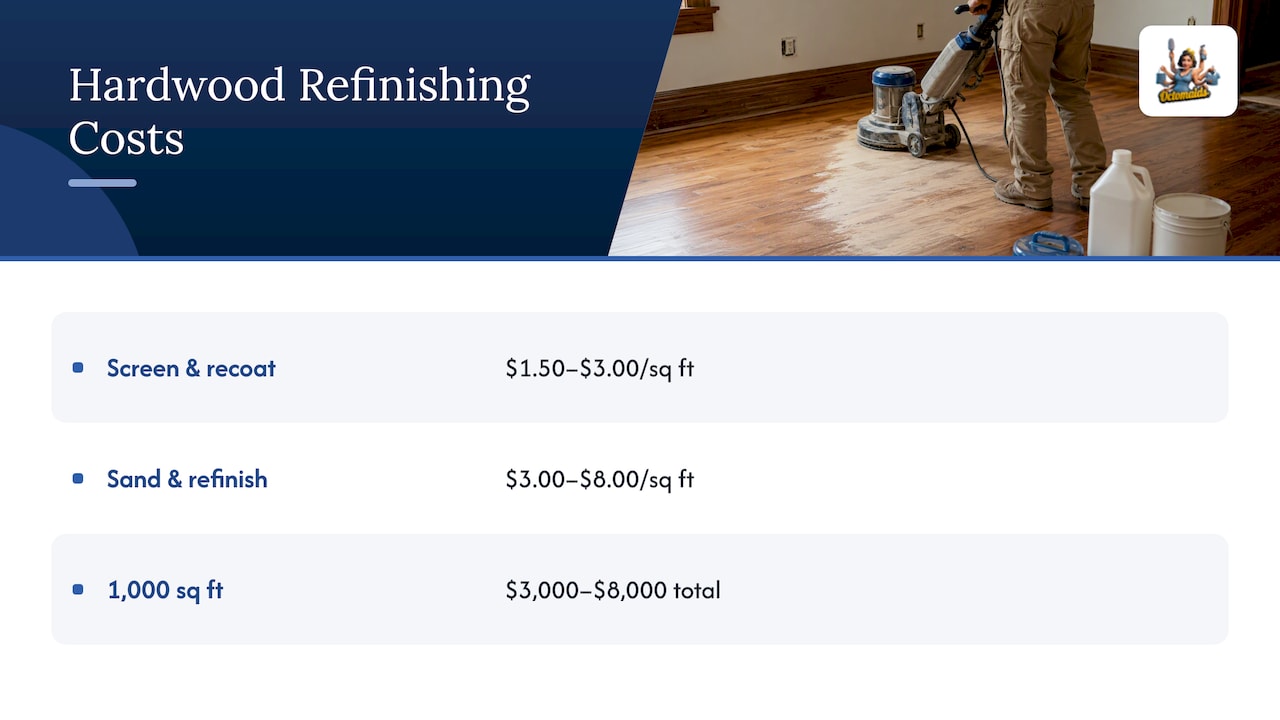
It helps to know the stakes. According to DG Floors’ 2026 refinishing cost guide, the national average to professionally refinish 1,000 square feet runs from $3,000 to $8,000. Screen-and-recoat work is cited at $1.50 to $3.00 per square foot, and a full sand-and-refinish at $3.00 to $8.00 per square foot. Labor is a large share, and expensive metro areas run higher.
The good news is that solid hardwood, properly maintained, is long-lived. Sunrise Hardwood’s guide puts the average lifespan of solid hardwood at 50 to 100 years or more, and engineered hardwood at 20 to 40 years. Solid floors can typically be refinished several times, while engineered floors with a thin veneer may only support a screen and recoat. Knowing which you own is worth ten minutes of checking. Rough numbers like these vary by region and contractor, so get local quotes before planning a project.
Our perspective: consistency beats intensity
We have walked into a lot of homes where the owner has tried everything. The pattern is almost always the same: a cleaner that was too strong, a mop that was too wet, and a floor that looks worse the harder they work at it. Nobody is being careless. They are being conscientious with the wrong tool.
Here is what we have come to believe about floors.
The routine should be boring. A dry pass, a barely damp pass, a fresh pad. Nothing dramatic. The floors we see aging best belong to people who do the small things on schedule rather than the heroic things occasionally.
Same hands, same floor. Our approach is to send the same dedicated team to your home each visit. That matters for floors in a practical way: a cleaner who has seen your floor for months knows where the finish is thin, which boards are near the dishwasher, and which spot by the door gets wet every winter. A rotating crew has to rediscover that every time.
Tell us what you have. If you know your floor is engineered, waxed, or recently refinished, tell us. The finish type decides the method, and we would rather ask than guess. Our team is background-checked, trained and insured, and our work is satisfaction guaranteed.
Know when it is not a cleaning problem. Deep cupping, gaps and worn-through finish need a flooring professional. We will say so honestly rather than pretend a mop can fix it.
— Steven
Where professional cleaning fits
If you would rather not manage pads, products and pass sequences yourself, that is a reasonable call, especially when life is busy or you are preparing a home for sale or for move-out. Our recurring home cleaning keeps floors on a steady, gentle schedule with the same team each visit. For a reset before guests, a sale or a move, a one-time deep cleaning covers floors along with the rest of the home. We serve Vancouver, WA, Clark County and the Portland metro, and you can see everything we offer on our services page.
After a renovation, floors face a different problem: fine construction dust that scratches as it is swept. Our post-renovation dust protocol explains how we handle that without grinding it into the finish.
A simple hardwood routine you can start today
- Find your finish. Check the installer’s paperwork or the manufacturer’s website for the approved cleaner.
- Put mats at every door and a tray for wet shoes.
- Dry sweep or vacuum with a soft brush head, working along the boards.
- Spray a microfiber pad, not the floor, and wipe a small section at a time.
- Watch the clock. If a patch is still wet after about a minute, use less liquid.
- Rotate pads and launder them without fabric softener.
- Inspect felt pads under furniture twice a year and replace any that are worn or gritty.
- Wipe spills right away, including pet accidents and plant runoff.
If you organize the home so furniture is easy to move, floors get cleaned more thoroughly. Our guide to organizing your home for easy cleaning has ideas.
FAQ
How do you clean and take care of hardwood floors?
Dry sweep or vacuum with a soft attachment often, then clean with a barely damp microfiber pad and a cleaner approved for your finish. Wipe spills immediately, use mats at entrances, and keep felt pads fresh. Avoid soaking, steam and anything that leaves a film.
What do professional cleaners say never to do at home?
They warn against soaking floors, using steam mops, and using oil soap, wax or vinegar on finished wood. They also advise against skipping the dry sweep and against using a dirty mop pad. When in doubt, check the floor manufacturer’s care instructions.
What is the average lifespan of hardwood floors?
One flooring lifespan guide gives 50 to 100 years or more for well-maintained solid hardwood and 20 to 40 years for engineered hardwood. Thick wear layers can stretch the engineered range. How you clean is one of the biggest factors you control.
How much does it cost to refinish 1,000 square feet of hardwood?
The same national estimate cited above puts it at $3,000 to $8,000 for 1,000 square feet as of Q2 2026, depending on wood species, floor condition and local labor rates. Screen and recoat sits at the low end. Ask for local written quotes, since prices vary.
Sources
- NWFA consumer guide to wood floors
- NWFA technical publication on maintenance
- How to clean hardwood floors: what the NWFA says (Sampson)
- How long do hardwood floors last? (Sunrise Hardwood)
- Cleaning and care information (Urban Floor)
- Maintenance of hardwood floors (Cornell Cooperative Extension)
- Hardwood refinishing longevity in the PNW (Pomona Hardwood Floors)
- Hardwood floor cleaning in Vancouver, WA (All About Floors NW)
- Common cleaning mistakes (Good Housekeeping)
- The everyday habit ruining your hardwood floors (Real Simple)
- Cost to refinish hardwood floors (DG Floors)
Recommended
- Deep Clean House Checklist for Every Room
- Home Cleaning Best Practices for a Spotless Home
- How to Clean Baseboards Efficiently: Fast Home Routine
About Octomaids
Octomaids is a locally operated professional cleaning company serving Vancouver, Clark County, and the surrounding Portland metro area. Since 2006, our cleaning teams have helped homeowners, renters, property managers, and businesses with recurring cleaning, deep cleaning, move-in/move-out cleaning, and commercial cleaning.
Our cleaning articles are reviewed to ensure the information reflects our real-world experience and professional cleaning practices.