
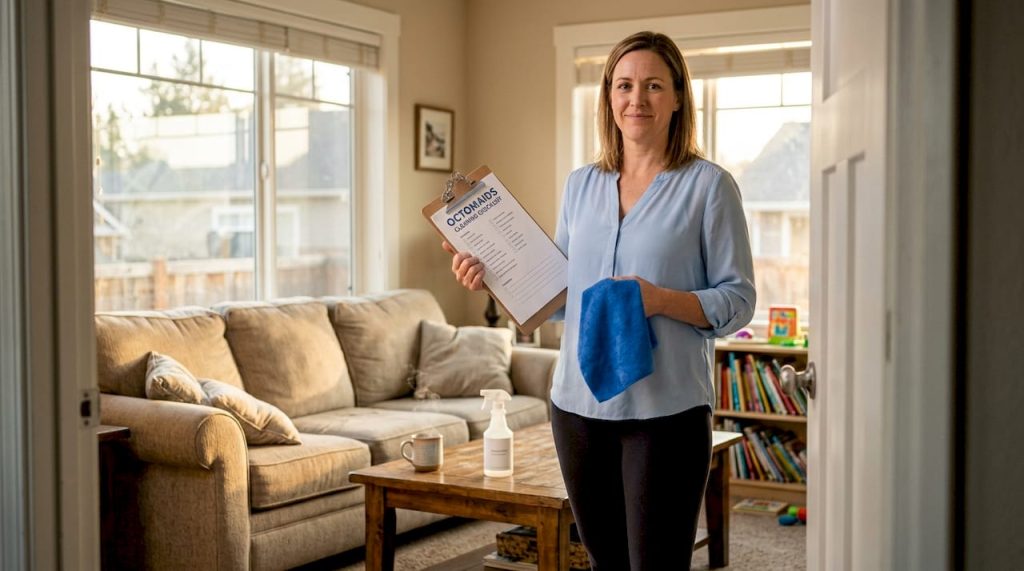
Standing in the middle of your home with a bucket of supplies and no clear plan is one of the most defeating feelings a homeowner can have. A solid deep clean house checklist changes that completely. Instead of wandering from room to room and missing half the spots that actually matter, you work through the home systematically, finish faster, and end up with results that actually last. Whether you are preparing for a move, hosting a major event, or simply doing your annual reset, this guide covers everything from supplies to final verification.
Table of Contents
- Key takeaways
- Getting ready: supplies and setup
- Room-by-room deep cleaning checklist
- Common mistakes that derail a deep clean
- Verifying your deep clean and maintaining results
- My honest take on deep cleaning
- When professional help makes sense
- FAQ
Key takeaways
| Point | Details |
|---|---|
| Declutter before you clean | Removing clutter first speeds up cleaning and prevents you from working around obstacles the entire time. |
| Work top to bottom in every room | Starting at ceiling fans and ending at floors prevents you from re-soiling surfaces you already cleaned. |
| Break sessions into 60-90 minutes | Dividing a deep clean into timed blocks prevents burnout and keeps your focus sharp throughout the day. |
| Verify with a final walkthrough | A structured final check catches missed spots before you call the job done. |
| Schedule maintenance to protect your work | Monthly attention to hidden areas prevents the kind of buildup that makes the next deep clean twice as hard. |
Getting ready: supplies and setup
Before you touch a single surface, gather everything you need. Running back and forth for supplies is one of the biggest time drains in any cleaning session. A well-stocked caddy keeps you moving.
Core supplies to have on hand:
- All-purpose cleaner and disinfectant spray
- Baking soda and white vinegar (for grout, drains, and stubborn buildup)
- Microfiber cloths in multiple colors (color-code by room to avoid cross-contamination)
- Scrub brushes in small and medium sizes
- A grout brush or old toothbrush
- Mop and bucket, plus a vacuum with attachments
- Rubber gloves, a step stool, and trash bags
- Glass cleaner and a squeegee for windows and mirrors
- Oven cleaner and degreaser for kitchen work
Once your supplies are ready, declutter before cleaning. Clearing countertops, picking up items from floors, and removing anything that does not belong in a room takes maybe 20 minutes per space, but it makes the actual cleaning dramatically faster and more thorough.
Pro Tip: A 3-bedroom, 2-bathroom home takes 3 to 6 hours to deep clean solo. Plan your day around that reality. Start early, eat a real breakfast, and set a timer.
| Task type | Recommended tools |
|---|---|
| Dusting high surfaces | Microfiber duster with extension pole |
| Scrubbing tile and grout | Grout brush, baking soda paste |
| Cleaning glass and mirrors | Microfiber cloth, glass cleaner |
| Deep cleaning floors | Vacuum with attachments, mop and bucket |
| Appliance interiors | Degreaser, scrub brush, damp cloths |
Experts recommend 60 to 90 minute sessions rather than trying to power through the entire home in one stretch. Set a timer, take a real break between rooms, and you will finish with better results and less physical fatigue.
Room-by-room deep cleaning checklist
This is the core of your whole home deep clean checklist. Work through each area in order, and use the top-to-bottom rule in every single room. Cleaning top to bottom means dust and debris fall to surfaces you have not cleaned yet, so nothing gets re-soiled.
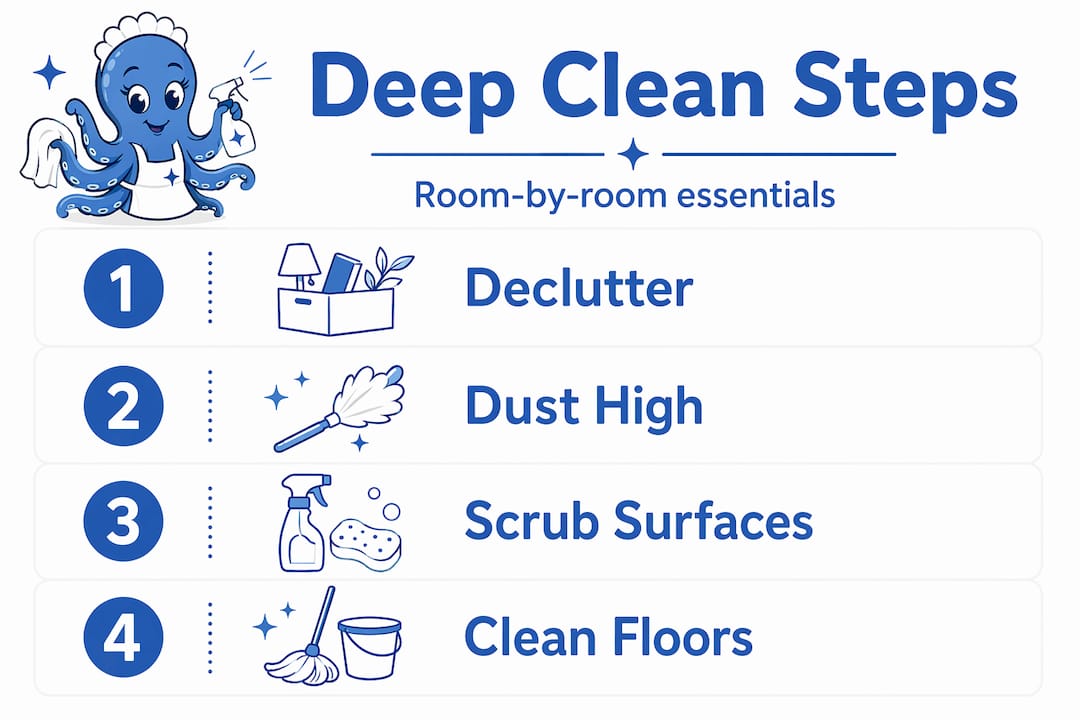
Kitchen
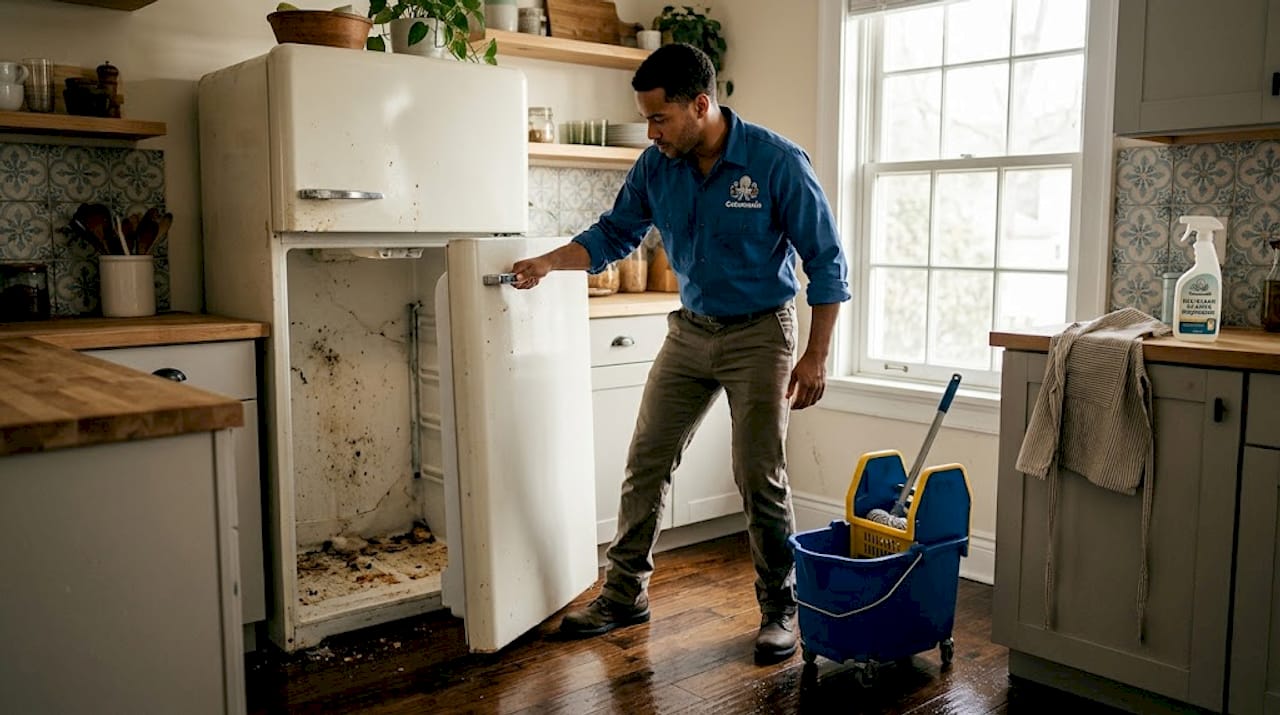
The kitchen accumulates grease, food residue, and bacteria in places most people never think to look. This is where a professional house cleaning checklist really earns its value.
- Wipe down cabinet fronts and handles with a degreaser
- Clean inside the oven using oven cleaner or a baking soda paste, let it sit for 20 minutes, then scrub
- Remove everything from the refrigerator, wipe all shelves and drawers, and check expiration dates
- Run the microwave interior with a bowl of water and lemon juice for 3 minutes, then wipe clean
- Degrease the range hood filter by soaking it in hot water and dish soap
- Scrub the sink, faucet, and drain with baking soda
- Wipe countertops, backsplash, and the tops of appliances
- Clean the dishwasher interior with a dishwasher tablet run on an empty cycle
- Sweep and mop the floor, including under the refrigerator and stove
Pro Tip: Pull the refrigerator and stove out from the wall at least once a year. The buildup of dust and grease behind large appliances is a fire hazard and a significant source of odors.
Bathrooms
Deep cleaning includes scrubbing grout, cleaning inside fixtures, and addressing areas that standard weekly cleaning skips entirely.
- Spray the toilet bowl with disinfectant and let it sit while you work on other surfaces
- Scrub the toilet exterior, tank, base, and hinges with a disinfectant cloth
- Clean the shower or tub with a grout brush and baking soda paste on tile lines
- Wipe down the shower door or curtain, including the track and rings
- Clean the exhaust fan cover by removing it and washing it in warm soapy water
- Wipe down cabinet fronts, the vanity, and all hardware
- Clean the mirror with glass cleaner
- Scrub the sink and faucet, then flush the drain with baking soda and vinegar
- Sweep and mop the floor, including behind the toilet
Bedrooms
Most people vacuum bedrooms regularly but miss the spots that collect the most dust and allergens.
- Strip all bedding and wash sheets, pillowcases, duvet covers, and mattress protectors
- Flip or rotate the mattress and vacuum the surface
- Dust ceiling fan blades, light fixtures, and the tops of furniture
- Wipe down baseboards, window sills, and door frames
- Clean mirrors and any glass surfaces
- Vacuum under the bed and behind furniture
- Wipe down nightstands, dressers, and drawer handles
- Clean windows inside and out if accessible
Living areas
Living rooms and family rooms collect fine dust in ways that are easy to miss because the surfaces look clean from a distance.
- Dust all light fixtures, ceiling fans, and crown molding
- Wipe down walls and switch plates with a damp microfiber cloth
- Clean windows, sills, and blinds or curtains
- Vacuum upholstered furniture, including under cushions and along seams
- Wipe down all hard furniture surfaces
- Clean the television screen with a dry microfiber cloth
- Vacuum all rugs and hard floors, then mop hard surfaces
Entryways, hallways, and laundry
These areas are often skipped on a home cleaning checklist but they carry a disproportionate amount of dirt and grime into the rest of the house.
- Wipe down the front door, doorknob, and any glass panels
- Clean the interior of coat closets, including shelves and the floor
- Scrub the laundry machine drum by running a hot cycle with white vinegar or a washing machine cleaner tablet
- Wipe down the exterior of the washer and dryer, including the lint trap housing
- Clean the dryer vent if you have not done so in the past year
Common mistakes that derail a deep clean
Knowing what not to do is just as useful as knowing the right steps. These are the mistakes that consistently cost people time and leave them frustrated with incomplete results.
- Skipping the declutter phase. Cleaning around clutter is slower and less thorough. Always clear surfaces before you start.
- Using too much product. Excess cleaner leaves residue that attracts dirt faster. Use the recommended amount and wipe thoroughly.
- Mixing cleaning chemicals. Never combine bleach with ammonia or vinegar. The fumes are genuinely hazardous.
- Cleaning floors first. If you vacuum the floor and then dust the ceiling fan, you are doing the floor twice. Always work top to bottom.
- Trying to do everything in one session. Rushing leads to missed spots and physical exhaustion. A room by room cleaning approach with breaks produces far better results.
Tough stains and mineral deposits respond better to dwell time than to scrubbing force. Apply your product, wait 10 to 15 minutes, and then clean. You will use less effort and get a better result every time.
For stubborn grout stains, a paste of baking soda and hydrogen peroxide applied with a grout brush and left for 15 minutes works better than most commercial grout cleaners. For hard water deposits on faucets, wrap the fixture in a vinegar-soaked cloth for 30 minutes before scrubbing.
Verifying your deep clean and maintaining results
Finishing a deep clean feels great. Finishing one that actually holds up over time requires one more step: a structured walkthrough.
- Walk through each room with your checklist and physically check every item
- Look at surfaces from multiple angles, including crouching down to see under furniture and countertops
- Check for missed streaks on mirrors and glass by looking at them from the side
- Smell the space. A clean room should have no noticeable odor beyond any cleaning products used
- Check baseboards, door frames, and light switches, which are the spots most commonly missed in a first pass
Pro Tip: Take a photo of each room when it is at its cleanest. That photo becomes your standard. When things start to drift, you have a clear reference point for what “done” actually looks like.
Neglecting hidden areas monthly makes future deep cleans significantly harder and shortens the life of household items like appliances and grout. After your deep clean, set a simple monthly reminder to address out-of-sight areas: behind the refrigerator, inside the oven, the washing machine drum, and bathroom exhaust fans. Fifteen minutes a month on these areas prevents the kind of buildup that turns a 4-hour job into an 8-hour one.
My honest take on deep cleaning
I have worked with homeowners long enough to know that the biggest obstacle to a successful deep clean is not the dirt. It is the absence of a plan. People start in the kitchen, get distracted by the bathroom, circle back to the living room, and finish three hours later feeling like they cleaned all day but accomplished half of what they intended.
What I have found actually works is treating the checklist like a contract with yourself. You do not move to the next room until the current one is done. That single discipline changes everything. It prevents the scattered, half-finished cleaning session that leaves you more frustrated than when you started.
The other thing I have learned is that a deep clean is not a punishment. It is a reset. When you finish a proper whole home deep clean, the house feels different. Not just visually cleaner, but lighter somehow. That feeling is worth protecting, which is why the maintenance schedule matters as much as the deep clean itself. Consistent cleaning systems produce consistent results, regardless of who is doing the cleaning.
If deep cleaning feels like a mountain every time you face it, that is a signal to build better habits between sessions, not to clean harder when you finally do it.
— Steven
When professional help makes sense
There are moments when a deep clean house checklist in your hands is exactly what you need, and moments when handing that list to a professional team is the smarter call. Moving out of a rental, preparing a home for sale, hosting a major family gathering, or recovering from a renovation are all situations where the stakes are high enough that professional results genuinely matter.
Octomaids has been serving homeowners and renters in Vancouver, WA and Portland, OR since 2006. The team handles one-time deep cleaning services for exactly these situations, including move-in and move-out cleans where every surface needs to meet a higher standard. For homeowners who want to protect the results of a deep clean long-term, Octomaids also offers recurring cleaning services on weekly or bi-weekly schedules. Professional house cleaning services in the USA average $120 to $300 per visit, and for a job that takes a solo cleaner 3 to 6 hours, that investment often makes real sense.
FAQ
What does a deep clean house checklist include?
A deep clean house checklist covers all major rooms with tasks that go beyond routine cleaning, including scrubbing grout, cleaning inside appliances, wiping baseboards, and addressing areas behind and beneath furniture. It is designed to reset the home to a thorough standard rather than maintain surface-level cleanliness.
How long does it take to deep clean a house?
A 3-bedroom, 2-bathroom home takes 3 to 6 hours to deep clean when working solo, depending on the home’s condition and how thorough the process is. Breaking the work into 60 to 90 minute sessions helps manage the time without burning out.
What order should you deep clean a house?
Start with decluttering, then work room by room from the top of each space down to the floor. Most professionals recommend starting with the kitchen and bathrooms since those areas require the most dwell time for cleaning products to work.
How often should you deep clean your home?
Most homes benefit from a full deep clean two to four times per year, with monthly attention to hidden areas like behind appliances, inside the oven, and bathroom exhaust fans. Regular upkeep of neglected areas prevents buildup that makes future deep cleans much harder.
When should you hire a professional for a deep clean?
Hiring a professional makes the most sense before or after a move, before a major event, or when the home has gone several months without a thorough cleaning. A professional team brings a structured housekeeper checklist and the right tools to deliver consistent results in less time than a solo effort.

