



The fastest reliable way to clean baseboards efficiently is a two-step sequence: dust first with a standing tool, then wipe in sections using warm water and a few drops of mild dish soap, and dry immediately. For a typical two-bedroom home, a maintenance clean takes a short amount of time. A full deep clean of every room runs closer to 1–2 hours, according to Architectural Digest. The payoff for doing it right the first time: no muddy residue embedded in paint, no swollen MDF trim, and no second pass.
Here is what you need to get started:
- Standing dust tool: a Swiffer extendable duster or vacuum with a soft-bristle brush attachment
- Wash supplies: warm water, a few drops of dish soap, two microfiber cloths (one damp, one dry)
- Scuff tool: Mr. Clean Magic Eraser for stubborn marks (test on a hidden spot first)
- Professional option: Octomaids for whole-home deep cleans, rental turnovers, or when you simply do not have the time
Key Takeaways
The most reliable way to clean baseboards efficiently is a three-step sequence: dust with a standing tool, wipe in sections with warm water and dish soap, and dry immediately before moving on.
| Point | Details |
|---|---|
| Dust before any wet step | Vacuuming or dusting first prevents muddy residue that embeds in paint and doubles your scrubbing time. |
| Work in 3–4 foot sections | A barely damp microfiber in short sections prevents oversaturation and protects MDF and painted wood from swelling. |
| Match cleaner to material | Use Murphy’s Oil Soap on natural wood, dish soap on painted trim, and mild detergent on vinyl; avoid vinegar on unsealed wood. |
| Follow a weekly/monthly schedule | A weekly duster sweep and monthly sectioned wash keeps deep cleans under 30 minutes instead of 90. |
| Octomaids for whole-home deep cleans | Octomaids covers baseboards in every deep clean, move-in/move-out, and recurring service across Vancouver, WA and the Portland metro. |
Table of Contents
- What are the three fastest baseboard upkeep hacks?
- How do you deep clean baseboards step by step?
- Which tools and cleaners actually save you time?
- How do you clean painted, wood, and vinyl baseboards safely?
- How do you remove scuffs, shoe marks, and stubborn stains?
- How do you keep baseboards clean with less effort over time?
- When is hiring a professional cleaner the most efficient choice?
- Why the “dust first, wash, dry” sequence is the right default
- Octomaids handles the deep cleaning so you do not have to
- Sources
- FAQ
What are the three fastest baseboard upkeep hacks?
Between deep cleans, the goal is preventing buildup, not eliminating it. These three methods each take under 20 minutes and require no kneeling.
- Swiffer or extendable duster sweep. Walk each room and run the duster head along the top edge and face of every baseboard. A full apartment takes less than a minute. Clean Mama recommends putting baseboards on a monthly cleaning calendar and using barely damp microfiber for the follow-up wipe.
- Vacuum with a soft-bristle brush attachment. This is the better choice for pet hair and allergy households. The suction captures debris rather than redistributing it, and the soft bristles protect painted surfaces. Charlie’s Soap specifically recommends vacuuming first and avoiding harsh chemicals to protect finishes.
- Broom wrapped with a damp microfiber cloth. Secure a damp microfiber cloth to a broom head with a rubber band and run it along baseboards while standing. TheKitchn tested this method and confirmed it removes trapped dust and pet hair effectively without kneeling. It works especially well for long hallways.
Pro Tip: After vacuuming, buff baseboards lightly with a dryer sheet. Apartment Therapy’s method testing found this creates a temporary anti-static coating that repels dust for days, reducing how often you need to repeat the process.
How do you deep clean baseboards step by step?
A thorough clean addresses scuffs, grooves, and finish safety in a defined sequence. Skipping the dust-first step is the most common mistake: wet cloth on dry dust creates a muddy paste that embeds in paint texture and requires extra scrubbing to remove.
- Clear the area. Move furniture, rugs, or anything sitting against the baseboards.
- Vacuum the baseboards and adjacent floor. Use the soft-bristle brush attachment along the top edge, face, and base. This is non-negotiable before any wet step.
- Mix your cleaning solution. Fill a bucket with warm water and add a few drops of dish soap. This is the default for painted and most composite trim.
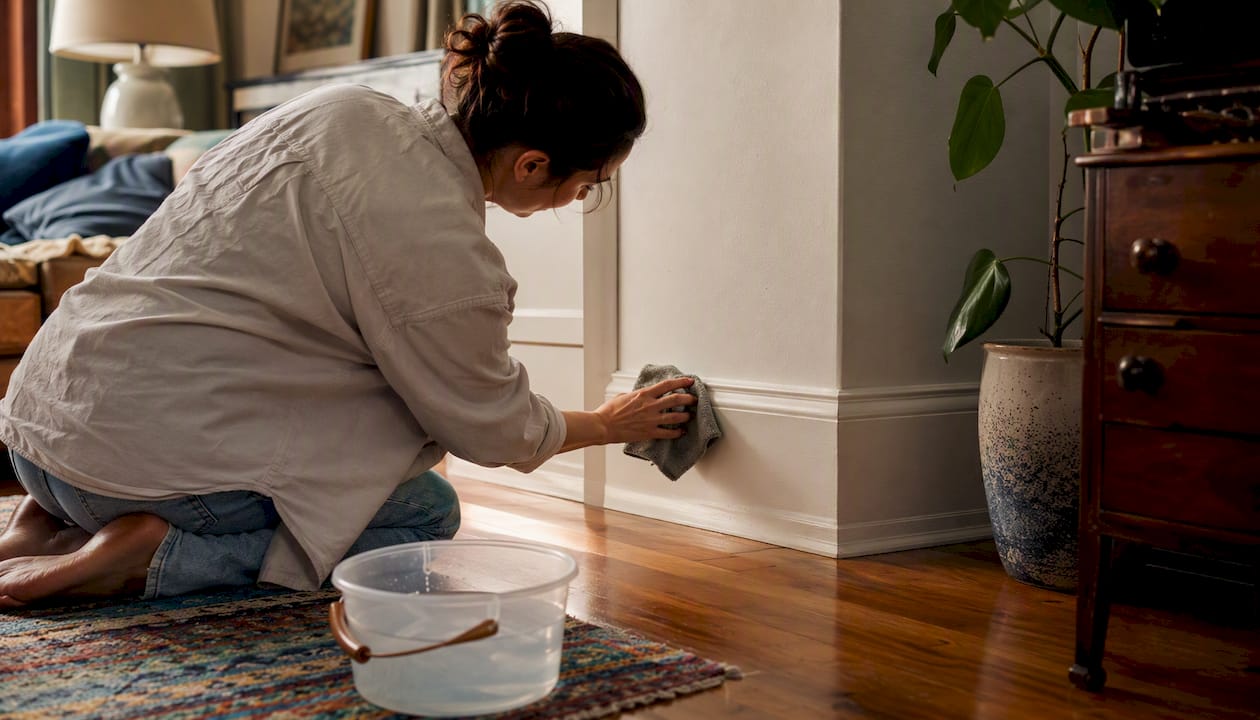
- Work in 3–4 foot sections. Dip a microfiber cloth, wring it until barely damp, and wipe one section at a time. A barely damp cloth is the operative phrase: saturating seams on MDF or painted wood risks swelling and paint peeling.
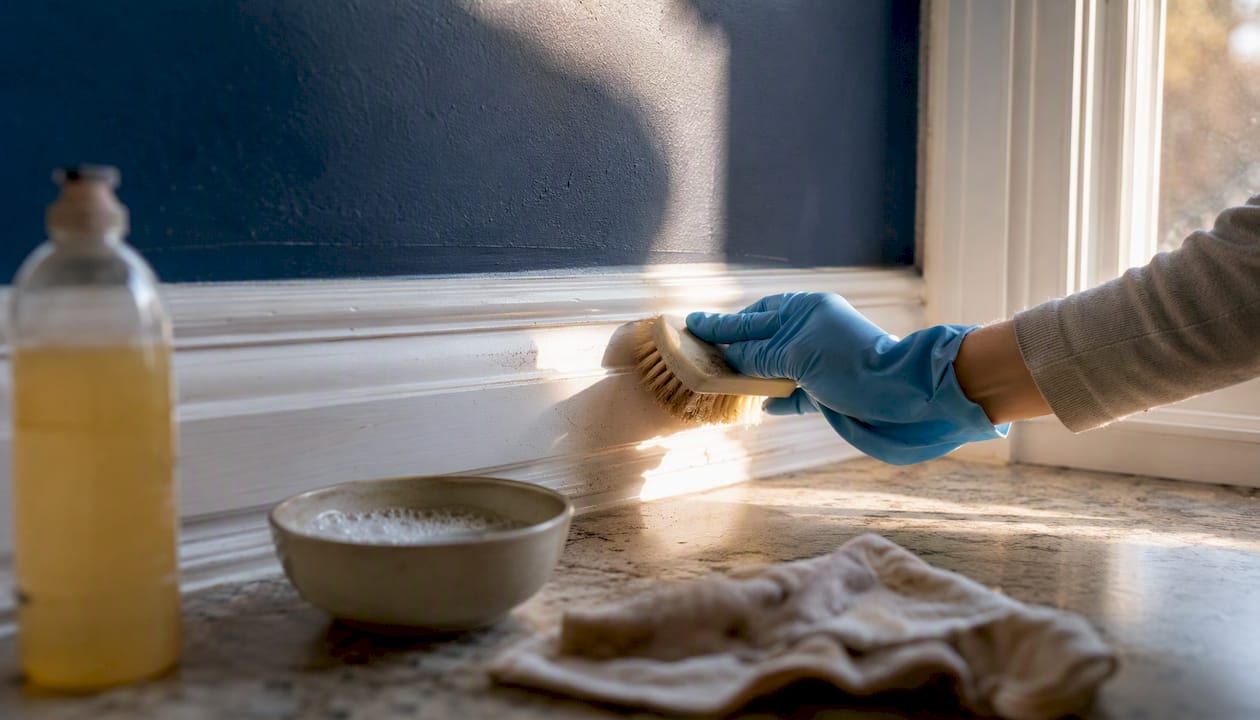
- Use detail tools for grooves and corners. A soft-bristle detail brush loosens grime in decorative grooves. Cotton swabs reach tight corners and the seam where baseboard meets wall.
- Treat scuffs and stubborn marks. Apply a Mr. Clean Magic Eraser with light pressure on painted surfaces, or mix a small baking-soda paste for greasy marks. See the cautions in the scuff-removal section below before using either on delicate finishes.
- Dry immediately. Buff each section with a clean, dry microfiber cloth before moving to the next. Moisture trapped in seams causes swelling; immediate drying prevents it.
Apartment Therapy’s multi-method test confirmed that this combined workflow (dust, wipe, spot-treat, detail) produced the cleanest results compared to single-step approaches.
Tools you will use during this process:
- Microfiber cloths (damp and dry)
- Soft-bristle vacuum brush attachment
- Soft-bristle detail brush or old toothbrush
- Cotton swabs for corners
- Mr. Clean Magic Eraser (scuffs only, tested first)
- Bucket, warm water, dish soap
Time estimate: A whole-home deep clean typically takes 1–2 hours. For larger homes or heavily soiled trim, splitting the job by room across two sessions prevents fatigue and keeps quality consistent.
Pro Tip: Start at the room farthest from your exit and work toward the door. You avoid stepping on freshly cleaned sections and the workflow stays linear.
Which tools and cleaners actually save you time?
The right tool eliminates a step; the wrong one creates one. Here is what earns its place in the kit and why.
Standing tools
- Swiffer extendable duster: Reaches baseboards without bending and covers large areas fast. Best for weekly dust maintenance.
- Vacuum with soft-bristle brush attachment: Lowe’s recommends vacuum attachments and pivoting dusting wands as the most versatile options for different grime levels. The brush attachment is the most useful single tool in this routine.
- Broom + microfiber cloth: The standing hack for longer runs. Inexpensive and effective.
- Handheld steam cleaner: Useful for heavy grime on tile or vinyl baseboards, but use cautiously on painted wood or MDF. Steam forces moisture into seams and can lift paint if held too close.
Cleaners and consumables
- Dish soap + warm water: The default for painted and composite trim. Cuts grease without stripping finish.
- Murphy’s Oil Soap: Martha Stewart recommends Murphy’s Oil Soap specifically for wood-finished baseboards, alongside microfiber cloths and vacuum brush attachments as the core toolkit.
- Distilled white vinegar: Useful for mineral deposits and some stains. Spot-test on painted surfaces first; avoid on unsealed wood.
- Mr. Clean Magic Eraser: Effective on scuffs but mildly abrasive. Use with light pressure and always test in a hidden area.
- Microfiber cloths: High-quality cloths (at least 300 GSM) trap debris rather than pushing it. Keep two on hand: one damp for washing, one dry for buffing.
- Melamine sponge: Similar to Magic Eraser in composition. Works well on vinyl and laminate scuffs.
Usage rules that prevent damage: Wring microfiber cloths until barely damp. Never pour cleaner directly onto baseboards. Always have a dry cloth ready for immediate buffing after each section.
How do you clean painted, wood, and vinyl baseboards safely?
Material determines method. Using the wrong cleaner on the wrong surface is how paint strips, wood swells, or vinyl dulls.
Painted baseboards (latex or enamel finish)
- Dish soap and warm water is the correct default. It cuts grime without attacking the finish.
- Avoid abrasive scrubbing pads, steel wool, or solvent-based cleaners. They scuff or dissolve the paint layer.
- Use Mr. Clean Magic Eraser sparingly and test first. Its micro-abrasive surface can dull a semi-gloss finish with repeated use.
Stained or natural wood baseboards
- Murphy’s Oil Soap or a dedicated wood cleaner preserves the finish while cleaning. Apply with a barely damp cloth, never a soaking one.
- Avoid vinegar on unsealed wood without a spot test. Acetic acid can raise the grain and dull natural finishes over time.
- Dry immediately and thoroughly. Wood absorbs moisture faster than painted surfaces.
Vinyl or laminate baseboards
- A mild detergent solution or diluted all-purpose cleaner works well. These surfaces are more water-tolerant than wood or MDF.
- A melamine sponge removes scuffs effectively. Test in an inconspicuous spot first, since some vinyl finishes are thinner than they appear.
MDF or composite trim
- This is the most moisture-sensitive material. Use the least water possible and dry each section within seconds of wiping. Swollen MDF is difficult to repair without repainting. When cleaning interior doors and trim made from similar composite materials, the same minimal-moisture rule applies.
How do you remove scuffs, shoe marks, and stubborn stains?
Scuffs and greasy marks need targeted treatment, not harder scrubbing with the same damp cloth. Here is what works for each type.
- Scuffs and shoe marks: Apply a Mr. Clean Magic Eraser with light, circular pressure. The eraser’s melamine foam works like ultra-fine sandpaper, so use it only on the mark itself. MovingHelp cautions against overusing Magic Erasers on painted surfaces, particularly on flat or matte finishes where the micro-abrasion shows.
- Greasy marks (kitchen baseboards especially): Mix a small baking-soda paste with water, apply it to the mark, let it sit for two minutes, then gently rub with a soft cloth and rinse with a barely damp microfiber. For heavier grease, a diluted kitchen degreaser works faster. Follow product directions, rinse the area, and dry immediately.
- Grooves and corners: Use a cotton swab or an old toothbrush dipped in your soap solution. These reach the recessed channels in decorative trim that a flat cloth skips entirely.
- Cautions: Avoid bleach or strong solvents on colored or finished trim. They strip pigment and dull sheen. Never leave any wet cleaner sitting on the surface. Dry immediately after every treatment.
How do you keep baseboards clean with less effort over time?
The most time-efficient approach to baseboard maintenance is frequency, not intensity. Short weekly dusting prevents the buildup that turns a 20-minute wipe into a two-hour scrubbing session. Think of it like dental hygiene: daily brushing prevents the deep cleaning that takes far longer.
Ergonomic tools that keep you standing
- Extendable duster or Swiffer head for weekly sweeps
- Vacuum brush attachment for pet-hair households
- Broom + microfiber cloth for hallways and long runs
A simple maintenance schedule
- Weekly: Quick standing sweep with an extendable duster or Swiffer. Under 10 minutes for most homes.
- Monthly: Sectioned wipe-down with warm water and dish soap. Martha Stewart recommends monthly cleaning as the right cadence for most households, with more frequent attention for pet owners or allergy sufferers.
- Quarterly: Full deep clean with detail brushes, cotton swabs, and scuff treatment as needed.
Attaching baseboard cleaning to a task you already do reduces the mental friction of starting. Run the duster along baseboards while you vacuum floors. Wipe them down on the same day you mop. The habit stacks onto an existing routine rather than requiring a separate decision.
Pro Tip: Whenever you move furniture or open large delivery boxes, do a quick baseboard sweep in that area. Furniture movement stirs settled dust directly onto baseboards, and catching it immediately takes 60 seconds rather than 10 minutes later.
Better Homes & Gardens notes that integrating wall and baseboard dusting into regular maintenance reduces how quickly surfaces re-soil, making each cleaning session shorter than the last.
When is hiring a professional cleaner the most efficient choice?
There are situations where the most time-efficient decision is not doing it yourself. Recognizing them saves hours of labor and protects finishes you cannot easily repair.
Hire a professional when:
- The home is large (three or more bedrooms) and baseboards have not been deep cleaned in six months or more
- You are preparing a rental for turnover and need the job done fast and documented
- Trim is older, painted multiple times, or shows signs of swelling or fragile paint
- You are staging a home for sale and need every surface to look its best
- Time constraints make a multi-hour DIY session impractical
What professionals do differently:
- Industrial-grade vacuums with HEPA filtration capture fine dust that consumer vacuums leave behind
- Finish-safe degreasers formulated for painted trim remove grease without stripping paint
- Trained crews know which surfaces need minimal moisture and which can tolerate more
- A two-person team can complete what takes a homeowner a full afternoon in a single focused appointment
Professional cleaning crews approach baseboards systematically: vacuum first, wipe in sections with finish-appropriate cleaners, detail corners with brushes, and dry immediately. The result is a clean that protects the trim rather than just removing surface dirt. For rental turnovers and move-out scenarios in particular, this sequence also reduces the risk of damage claims.
For a clear breakdown of which tasks are genuinely worth outsourcing, the cleaning tasks worth hiring out guide covers the time-versus-effort math in detail.
Why the “dust first, wash, dry” sequence is the right default
The three-step sequence in this guide is not arbitrary. It reflects what our team at Octomaids has seen repeatedly across hundreds of homes in Vancouver, WA and the Portland metro area: when homeowners skip the dust step and go straight to a wet cloth, they create a muddy paste that embeds in paint texture and requires twice the effort to remove. The wash step then becomes remediation rather than maintenance.
Drying immediately is equally non-negotiable. MDF trim, which is standard in most Pacific Northwest homes built in the last 30 years, absorbs moisture at the seams faster than solid wood. A cloth left damp on MDF for even a few minutes can cause micro-swelling that shows up as bubbled paint weeks later. Immediate buffing with a dry microfiber closes that window entirely.
The maintenance-over-intensity principle is what I find most homeowners underestimate. A weekly five-minute duster sweep genuinely reduces the quarterly deep clean from 90 minutes to 30. The role of cleaning in home maintenance is cumulative: small consistent actions protect surfaces and reduce total labor over the year far more than infrequent heavy cleans.
Octomaids handles the deep cleaning so you do not have to
Baseboards are one of the most skipped surfaces in a home clean, and one of the first things a landlord, buyer, or guest notices. If your schedule does not allow for a full deep clean, or if your trim is older and you would rather not risk damage, Octomaids is the practical alternative.

Octomaids has served homeowners and rental property owners across Vancouver, WA and the Portland metro area since 2006. Our recurring cleaning, one-time deep cleaning services, and move-in/move-out cleaning all include baseboards as part of a thorough room-by-room process. We use finish-safe products, trained crews, and the same trusted cleaners every visit so you are not explaining your home to a stranger each time. For rental turnovers, staging, or simply reclaiming a Saturday afternoon, book a cleaning with Octomaids and let us handle the details.
Sources
The following sources provided testing-based comparisons, product-safe recommendations, and practical how-to guidance used throughout this guide. Consult the material-specific sections above before trying stronger cleaners on your trim.
- How to Clean Baseboards So Your Whole Floor Shines | Architectural Digest
- How to Clean Baseboards
- How to Clean Baseboards
- How to Clean White Baseboards – Clean Mama
- Easy method to clean baseboards (broom + microfiber) | TheKitchn
- The best way to clean baseboards — Apartment Therapy
- How to Clean Baseboards The Most Overlooked Part of Your Cleaning Routine | Charlie’s Soap
- How to Clean Baseboards | MovingHelp
FAQ
What is the 7 rule for baseboards?
The “7 rule” is not a formally defined cleaning standard. In practice, many professional cleaners follow a similar principle: if baseboards have not been cleaned in seven days, a quick dust pass is overdue. Weekly dusting prevents the buildup that requires a full wet clean.
Why do my baseboards get so dirty so fast?
Baseboards sit at floor level where air currents deposit dust, pet hair, and shoe scuffs continuously. Foot traffic stirs debris upward, and the horizontal top edge of a baseboard acts as a ledge that collects settling particles. Homes with pets, forced-air heating, or high foot traffic accumulate grime noticeably faster.
Is Murphy’s Oil Soap good for cleaning baseboards?
Murphy’s Oil Soap is a good choice specifically for natural wood or stained wood baseboards. Martha Stewart recommends it for wood-finished trim. For painted, vinyl, or MDF baseboards, plain dish soap and warm water is the safer and equally effective default.
Is it better to dust or vacuum baseboards?
Both work, and the best approach depends on your situation. Vacuuming with a soft-bristle brush attachment captures debris rather than redistributing it, making it the better choice for pet hair and allergy households. Dusting with a Swiffer or extendable duster is faster for a quick weekly pass. Either way, Charlie’s Soap and Architectural Digest both recommend completing the dry step before any wet wiping.