
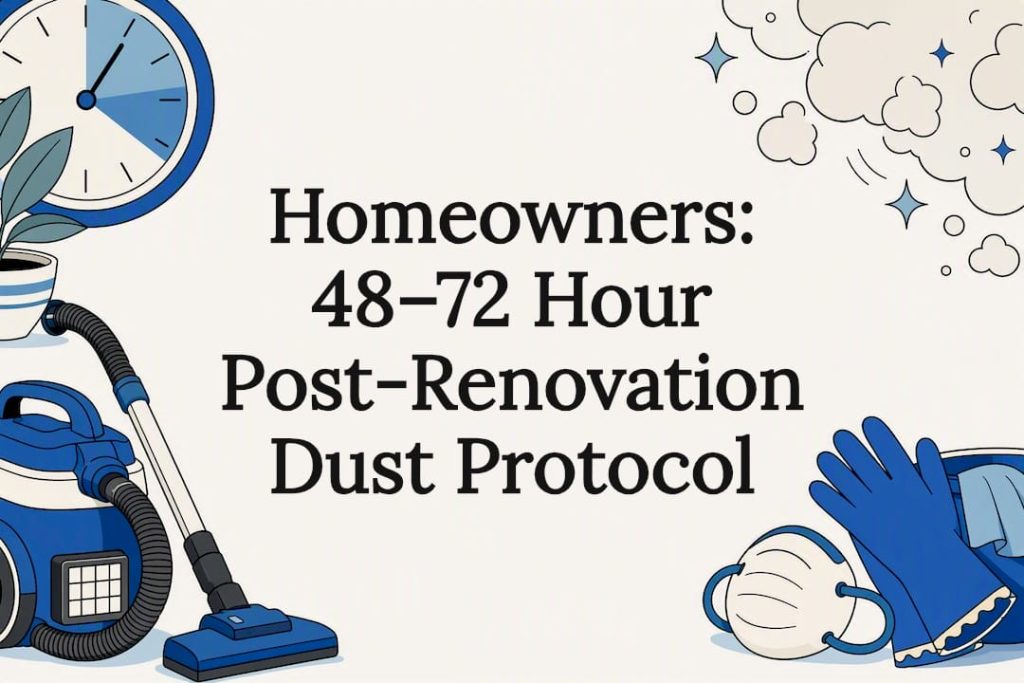


The fastest safe method is a phased protocol: control the air first with a HEPA purifier, then HEPA-vacuum every surface, then damp-wipe and mop last. Wear at least an N95 respirator, or a P100 if drywall or concrete cutting was involved. Small, single-room jobs without hazardous materials may be manageable to tackle yourself; for best results and to reduce dust during installation, consider the low-dust door replacement process for homeowners; whole-house work, concrete or drywall cutting, or a household with kids, seniors, or anyone with respiratory issues, call for a professional crew.
TL;DR:
- True HEPA vacuums with sealed canisters help prevent reintroducing dust into the air during cleanup.
- Construction dust can stay suspended and resettle for up to 72 hours after work ends, requiring staged cleaning.
- Proper PPE, including N95 or P100 respirators, is essential when working with drywall or concrete dust to prevent health risks.
- Sealing the work zone and using a HEPA air scrubber before cleaning surfaces minimizes dust spreading to other rooms.
- Large-scale renovations or homes with vulnerable occupants should hire professionals equipped with industrial-grade tools and follow OSHA standards.
Table of Contents
- Construction Dust Removal at Home: Your First 72 Hours
- What Tools and PPE Actually Get the Job Done?
- How Do You Clean Construction Dust Step by Step?
- Should You Run Your HVAC During Cleanup?
- Room-by-Room: Cleaning Different Surfaces Without Damage
- What Are the Real Health Risks From Construction Dust?
- When Does a Renovation Cleanup Need a Professional?
- Octomaids Handles the Cleanup So You Don’t Inhale It
- Sources
- FAQ
Construction Dust Removal at Home: Your First 72 Hours
The first three days after work stops decide whether you clean the dust once or chase it around your house for weeks. Dust that gets stirred up before the air settles just resettles somewhere new, often somewhere harder to reach.
- Seal the work zone. Close doors, hang plastic sheeting over openings, and shut off your HVAC system so the blower doesn’t carry dust into other rooms.
- Run a portable HEPA air scrubber or purifier in the sealed space for at least 24 hours before you touch a single surface.
- Bag dusty clothing and remove loose debris immediately, rather than carrying it through the house to a laundry room or trash can.
- Follow the timeline: hours 0 to 24 for air control, hours 24 to 48 for HEPA vacuuming, and hours 48 to 72 for damp wiping and mopping.
Construction dust can stay suspended and keep resettling for 48 to 72 hours after work ends, which is exactly why the checklist above is staged instead of done in one afternoon.
What Tools and PPE Actually Get the Job Done?
Not every vacuum marketed as “HEPA” actually is one. True HEPA means a sealed system that traps nearly all particles down to about 0.3 microns, and if the housing leaks air around the filter, fine dust blows right back into the room instead of staying trapped. A regular household vacuum without a sealed HEPA system can reintroduce a large share of that dust into the air, undoing the work you just did.
- A true HEPA vacuum with a sealed canister, ideally with a dedicated fine-dust or drywall attachment.
- A portable HEPA air scrubber sized to your room’s square footage, run continuously during cleanup.
- An N95 respirator for general drywall dust; for concrete cutting or heavy silica exposure, a higher-grade respirator is recommended, and make sure it fits snugly against your face.
- Safety glasses and disposable gloves, since dust irritates eyes and skin as much as lungs.
Renting a commercial-grade HEPA vacuum for a weekend often costs less than buying one outright, and it beats improvising with a shop vac that lacks true filtration.
Pro Tip: Never dry-sweep construction dust. A broom just launches fine particles back into the air where they can hang for hours before settling on a surface you already cleaned.
How Do You Clean Construction Dust Step by Step?
Cleaning dust in the wrong order is the single biggest reason homeowners end up redoing the job. Wipe a shelf before the air has cleared, and you’ll just be wiping it again tomorrow.
- Phase A: air control. Position your HEPA purifier to create slight negative pressure in the room, pulling air away from the rest of the house. Keep the HVAC off and let the unit run for the full recommended window before moving to the next phase.
- Phase B: HEPA extraction. Vacuum ceilings and light fixtures first, then walls, then furniture, then floors, using slow, overlapping passes so you’re not just skimming the surface. Fine dust settles unevenly, and a rushed pass leaves patches behind.
- Phase C: surface decontamination. Follow up with damp microfiber wiping on every hard surface, using a light steam attachment where the material allows it. Mop floors last, and change the mop water often. Dirty water just redeposits dust in a thin film that dries into a haze.
Work high to low and far to near, since gravity and airflow both push settled dust downward and toward the door. This staged approach, air scrubbing before extraction before damp wiping, matters because doing it out of order spreads dust into finishes it never should have touched.
Give the room another look after 24 hours. If you see a fresh film on a windowsill or tabletop you already cleaned, that’s dust that was still airborne during your first pass finally landing, and you’ll want a quick second wipe rather than assuming the job is finished.
Should You Run Your HVAC During Cleanup?
Keep your HVAC system off while dusty work is happening and during the air-control phase that follows. Running it earlier just pulls fine particles into your ductwork, where they’ll recirculate through every vent in the house for months.
- Change your HVAC filter immediately after cleanup, then again about a week later since replacing it twice catches residual dust that the first swap misses.
- Wipe down vent covers and registers with a damp cloth before you turn the system back on.
- If dust made it into the ducts themselves, a professional duct cleaning is worth the cost. Running a system with contaminated ducts undoes days of surface cleaning in a matter of hours.
- A higher MERV-rated filter traps finer particles than a standard filter, so it’s worth the upgrade for at least the first few weeks post-renovation.
Portable HEPA purifiers handle a single room well, but they’re not a substitute for clean ductwork if dust got pulled deep into the system. Combining filtration with real ventilation gets you further than either one alone.
Room-by-Room: Cleaning Different Surfaces Without Damage
Every surface in your home reacts differently to dust and to the cleaning method you throw at it, and using the wrong one can grind fine grit into a finish you’ll be looking at for years.
- Walls: HEPA-vacuum first, then test a damp microfiber wipe in a small spot, especially on fresh paint, flat finishes, or wallpaper, since some of those surfaces mark or streak with water.
- Hardwood and laminate: Vacuum thoroughly, then damp-mop with minimal water. Excessive moisture or repeated scrubbing can leave a dull residue or warp seams over time.
- Tile and grout: Vacuum first, scrub grout lines by hand if dust has packed into them, and steam clean where the tile allows it. Expect to mop and rinse more than once.
- Carpet and upholstery: Multi-directional HEPA vacuuming lifts far more than a single-pass job. For dust embedded deep in carpet fibers, a professional steam clean beats anything you can do with a rented machine.
- Cabinets and drawers: Empty them completely, vacuum the interiors, wipe down, and recheck in 24 hours. Dust often settles into corners you missed the first time.
What Are the Real Health Risks From Construction Dust?
There’s no simple way to flush construction dust out of your lungs once it’s inhaled, which is exactly why prevention carries so much more weight than any home remedy. Fine crystalline silica, common in concrete, drywall compound, and masonry dust, can cause silicosis with prolonged or heavy exposure, and there is no cure for it. That single fact should shape how seriously you treat PPE during any renovation involving concrete or masonry cutting.
- Wear a properly fitted respirator for heavy silica exposure, such as a P100, and consider professional fit testing if you’re doing repeated dusty work.
- Keep children, seniors, and anyone with asthma or a compromised immune system out of the work zone entirely, not just during active cutting.
- Never re-wear clothing that’s been through a dusty job. Bag it and wash it separately.
- If you experience heavy exposure, persistent coughing, or shortness of breath, see a doctor promptly. A baseline pulmonary function test with follow-up monitoring is the right move after serious exposure, not a home remedy.
When Does a Renovation Cleanup Need a Professional?
Some jobs are genuinely manageable on your own. A single-room drywall patch with wet-sanding and a rented HEPA vacuum is a reasonable weekend project, and DIY cleanup with the right equipment is often the more cost-effective call at that scale. The math changes once you’re looking at whole-house renovation, any concrete or drywall cutting done at volume, a hard move-in deadline, or a household with young kids, older adults, or someone with respiratory issues.
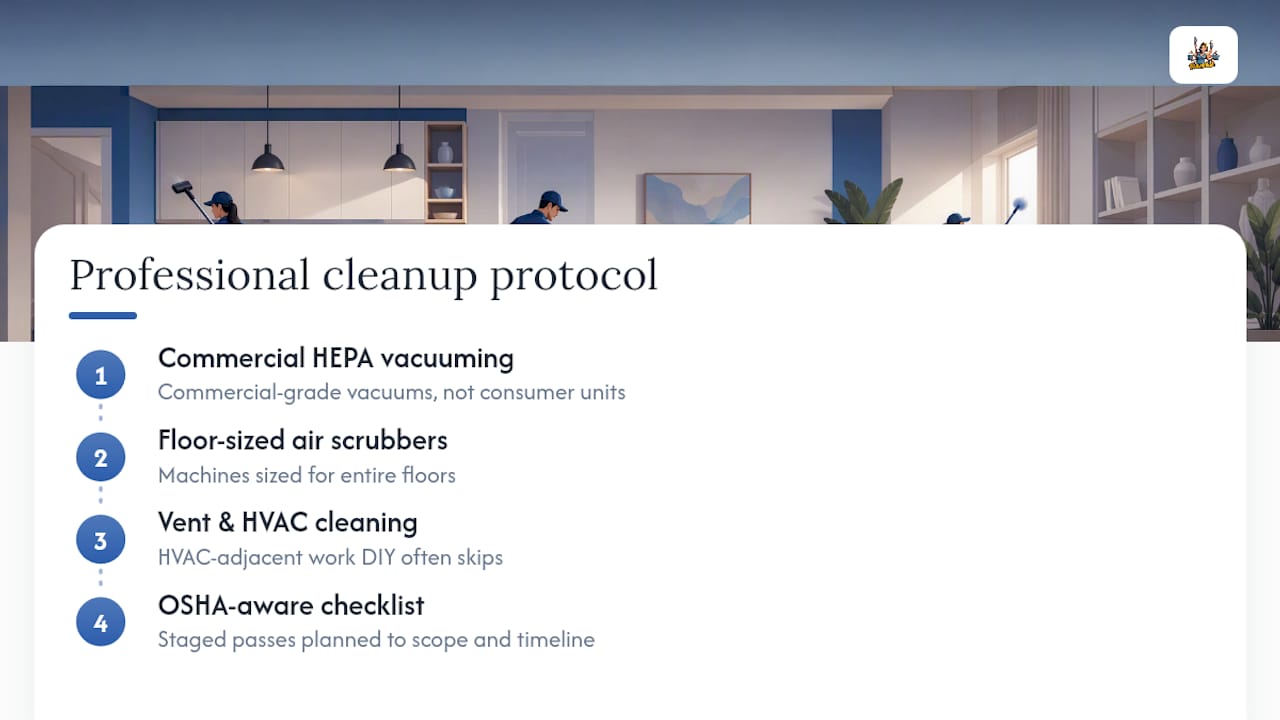
Professional crews bring commercial-grade HEPA vacuums and air scrubbers sized for entire floors, not single rooms, and they run a staged protocol instead of improvising room by room. That usually includes vent and HVAC-adjacent cleaning most DIY jobs skip entirely, plus a checklist built around OSHA-aware post-construction standards rather than guesswork.
If you’re weighing the decision, our guide on which cleaning tasks are worth hiring out walks through the scope questions that matter most: square footage, hazard type, and timeline. Requesting a quote typically means describing the project scope so the crew can plan the right number of passes and equipment for your specific space.
Octomaids Handles the Cleanup So You Don’t Inhale It
Octomaids is the option for homeowners who’d rather not spend a weekend in an N95 chasing dust into every corner of a freshly renovated room. Unlike a rented shop vac and a few hours of guesswork, our post-construction cleaning service runs the same phased, air-first protocol this article describes, with equipment sized for whole floors instead of a single closet.
That matters most for readers juggling a move-in date, a household with kids or older relatives, or a renovation that involved concrete or drywall cutting at scale. Professional teams handle the air control, HEPA extraction, and surface decontamination in one visit, so you’re not redoing a wall you already wiped. If you’re trying to figure out what a job like yours runs, our breakdown of post-renovation cleaning costs is a good place to start, and requesting a quote takes just a few details about your project’s scope.
Sources
- Silicosis — Cleveland Clinic
- Can you detox your lungs? (American Lung Association blog)
- Remove Construction Dust at Home | Bravo Maids
FAQ
What Is the Best Way to Remove Construction Dust From My House?
Run a HEPA air scrubber for 24 hours first, then HEPA-vacuum every surface from ceiling to floor, then finish with damp microfiber wiping and mopping. Doing these steps out of order, especially wiping before the air clears, just spreads dust into surfaces you already cleaned.
How Long Does Construction Dust Stay in the Air?
Fine dust can remain suspended and keep resettling for 48 to 72 hours after work stops, which is why cleaning should happen in phases rather than one immediate pass.
How Do I Clear My Lungs of Construction Dust?
There’s no reliable home method to clear dust from your lungs once inhaled. If you suspect heavy exposure, especially to silica dust, see a doctor for evaluation rather than trying a home remedy, since prevention through PPE and ventilation is the only real protection.
How Long Does It Take Renovation Dust to Settle?
Most dust settles within 24 hours of work stopping if the air isn’t disturbed, but full settling across a room can take up to 72 hours. That’s why the checklist runs air control first, extraction second, and surface work last.
Should I Hire a Professional or Clean Construction Dust Myself?
Small, single-room jobs with no concrete or drywall cutting are usually fine to handle yourself with a true HEPA vacuum and proper respirator. Whole-house renovations, hazardous material cutting, or a household with vulnerable occupants are strong reasons to call in a professional crew.
Recommended
- Avoid Surprise Costs: 2026 Post Renovation Cleaning Rates for Owners
- OSHA Compliant Post Construction Cleaning Checklist for Homeowners
- Home Cleaning Best Practices for a Spotless Home
- Why New Homes Need Professional Cleaning Before Move-In
About Octomaids
Octomaids is a locally operated professional cleaning company serving Vancouver, Clark County, and the surrounding Portland metro area. Since 2006, our cleaning teams have helped homeowners, renters, property managers, and businesses with recurring cleaning, deep cleaning, move-in/move-out cleaning, and commercial cleaning.
Our cleaning articles are reviewed to ensure the information reflects our real-world experience and professional cleaning practices.