


To disinfect your house after the flu, clean visibly dirty surfaces with soap and water first. Then apply an EPA-registered disinfectant (or a freshly mixed bleach solution) to high-touch hard surfaces, and keep them wet for the full time on the label. Wash the bedding and towels, and open the windows. Most of the work is in the details: the order you follow, how long a product stays wet, and which surfaces you can skip. We walk through each one below.
TL;DR
- Clean first, disinfect second. Dirt and grease block disinfectant from reaching the surface underneath.
- Focus on high-touch hard surfaces: doorknobs, light switches, remotes, phones, faucet handles, bedside tables, bathroom fixtures.
- Respect contact time. If the label says the surface must stay wet for a minute and you wipe it dry in ten seconds, it is not disinfected.
- Sick-person laundry can go in with everything else. Use detergent, the warmest water the fabric allows, and dry completely.
- Fresh air matters as much as spraying. Open windows, run an air purifier, and give the house time to clear.
Table of Contents
- First, how much disinfecting does a flu house really need?
- When is the right time to disinfect?
- What you need before you start
- The step-by-step method
- Room-by-room: where the flu virus tends to hide
- Laundry: easier than you think
- Don’t forget the air
- Common mistakes that waste your effort
- Perspective: what we see in homes after a rough flu week
- When a professional deep clean makes sense
- FAQ
- Sources
First, how much disinfecting does a flu house really need?
Less than the product aisle suggests. The CDC says that in most homes, disinfecting is not necessary unless someone is sick or has recently visited, and that cleaning with soap and water physically removes most germs for everyday purposes. A house where someone has had the flu is exactly the exception, so targeted disinfecting makes sense.
It helps to know the difference between the two words, because they are not interchangeable:
- Cleaning uses soap, water and some scrubbing to lift germs, dirt and grime off a surface.
- Disinfecting uses a chemical to kill the germs that remain.
Think of it like painting a wall. You would not roll fresh paint over grease and dust, and a disinfectant behaves the same way. It needs a clean surface to make contact.
The virus is also not as durable as people fear. The CDC notes that flu viruses can survive on hard surfaces such as doorknobs and tables for up to 48 hours. That is long enough to matter, but short enough that you do not need to treat your home like a laboratory.
When is the right time to disinfect?
Timing is the question we hear most often. You have two reasonable windows.
During the illness. If you are caring for someone, wipe the high-touch surfaces in shared spaces daily. The CDC’s older guidance on cleaning a sick room suggests doing this each day, covering doorknobs, bedside tables, bathroom sinks, toilets, counters, phones and toys.
After recovery. Do the bigger reset once the person is clearly on the mend. The CDC says someone with flu can return to normal activities after at least 24 hours without a fever (and without fever-reducing medicine) and with symptoms improving. The same page recommends added precautions, such as cleaner air, good hygiene and masking, for the following 5 days, because people can still be contagious. Flu patients are most contagious in the first three days, and young children and people with weakened immune systems may stay contagious longer.
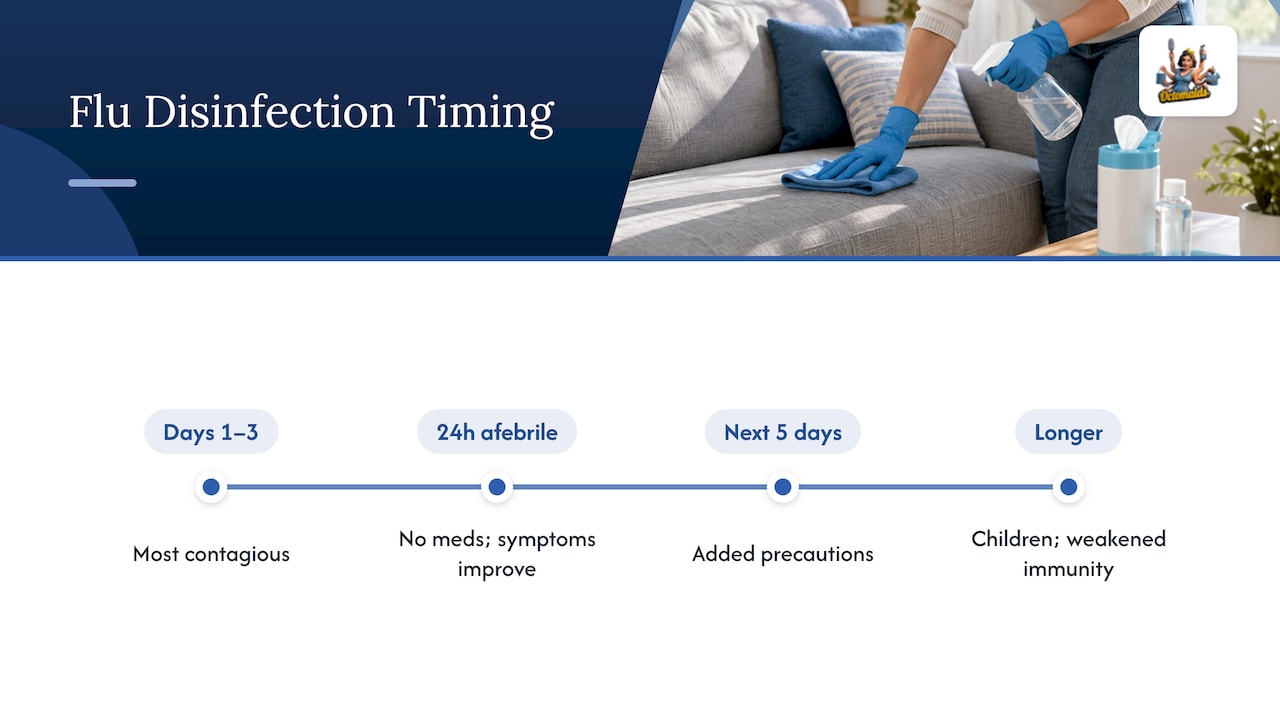
So a sensible rhythm is a daily wipe-down while someone is sick, and one thorough pass at the turning point, when the fever has been gone for a full day and the household is back to normal. If a child or an immunocompromised person lives in the home, lean toward doing the thorough pass and continuing the daily wipe-down a little longer. Your pediatrician or family doctor can tell you how long to keep extra precautions in place for that person.
What you need before you start
Gather everything first, so you are not walking back and forth with dirty hands.
- Disposable gloves
- Dish soap or an all-purpose cleaner, plus warm water
- A disinfectant with an EPA registration number on the label, or unscented household bleach
- Microfiber cloths or paper towels (use a fresh cloth for each room)
- A trash bag for tissues, wipes and used paper towels
- A timer on your phone
Choosing a disinfectant that actually works on flu
Look for two things on the label: an EPA registration number and a claim against influenza A virus. The EPA cautions consumers to be wary of products that make unverifiable claims about killing viruses, and says that using registered products according to the label is how you get the effect the product promises. The EPA’s List N lets you search registered disinfectants and shows the surface types and contact times for each.
Two cautions on popular home remedies. Vinegar and essential oils are not EPA-registered disinfectants, so we would not rely on them after the flu. And for any product, the label is the rule, not the ad copy.
Mixing bleach safely, if you use it
Bleach is cheap and effective on hard, non-porous surfaces when used correctly. According to the CDC, the mix is 5 tablespoons (1/3 cup) of unscented household bleach per gallon of room-temperature water, or 4 teaspoons per quart. Three rules go with it:
- Never mix bleach with another cleaner. The combination can release dangerous gases.
- Mix a fresh batch daily. The solution loses strength, so throw out yesterday’s spray bottle.
- Ventilate and wear gloves. Open a window while you work.
Bleach is also wrong for some surfaces, including many finished woods, natural stone and electronics. For those, use a product whose label lists the surface.
The step-by-step method
Step 1: Ventilate and remove the trash
Open windows before you touch anything. Bag the tissues, wipes and paper towels, tie the bag, and take it out. Wash your hands afterward.
Step 2: Clean the surfaces with soap and water
Work from cleaner areas to dirtier ones, and from top to bottom. Wipe away visible dust, fingerprints and sticky spots. This is the step most people skip, and it is the one that makes the next step work. Disinfectant cannot do its job through a film of grease or grime.
Step 3: Apply disinfectant to high-touch surfaces
Spray or wipe the surface so it is visibly wet. Then leave it alone. The contact time is the stretch the surface must stay wet for the product to kill what the label says it kills. It varies by product, and the CDC says to allow the product’s designated contact time, at least 1 minute for bleach if no specific instructions are given. Some products require several minutes. Set a timer for the longest surface you are treating, and do not wipe early.
Step 4: Let it air dry, or wipe once the time is up
If the label allows, let the surface air dry. If you need to wipe, do it only after the contact time has passed. Rinse food-contact surfaces such as counters and high chair trays with water after disinfecting, as many labels require.
Step 5: Wash hands and change cloths
Discard gloves, wash your hands with soap and water, and put used cloths straight into the laundry.
Room-by-room: where the flu virus tends to hide
Focus your effort where hands go. The checklist below follows the path a sick person takes through a home.
| Area | What to disinfect | Notes |
|---|---|---|
| Bedroom (sick person) | Bedside table, lamp switch, phone, tissue box, headboard, doorknob | Strip the bed before wiping the nightstand |
| Bathroom | Faucet handles, toilet flush handle, sink, counter, towel bar, light switch | Replace the hand towel and toothbrush cup contents if they were shared |
| Kitchen | Refrigerator handle, cabinet pulls, faucet, counters, microwave buttons, coffee maker | Wash dishes in hot soapy water or the dishwasher |
| Living areas | Remotes, game controllers, tablet and phone cases, doorknobs, light switches, stair railings | Use a product labeled safe for electronics, or a damp microfiber cloth per the device maker |
| Entryway | Door handles, keys, car door handles | Easy to forget |
| Kids’ spaces | Hard toys, door handles, changing surfaces | Wash soft toys in the washing machine |
A few of these deserve a closer look.
Remotes, phones and keyboards. They are touched constantly and are the most commonly missed items. Follow the manufacturer’s care instructions, and avoid soaking them. Our own habit is to treat these first, since they travel from room to room.
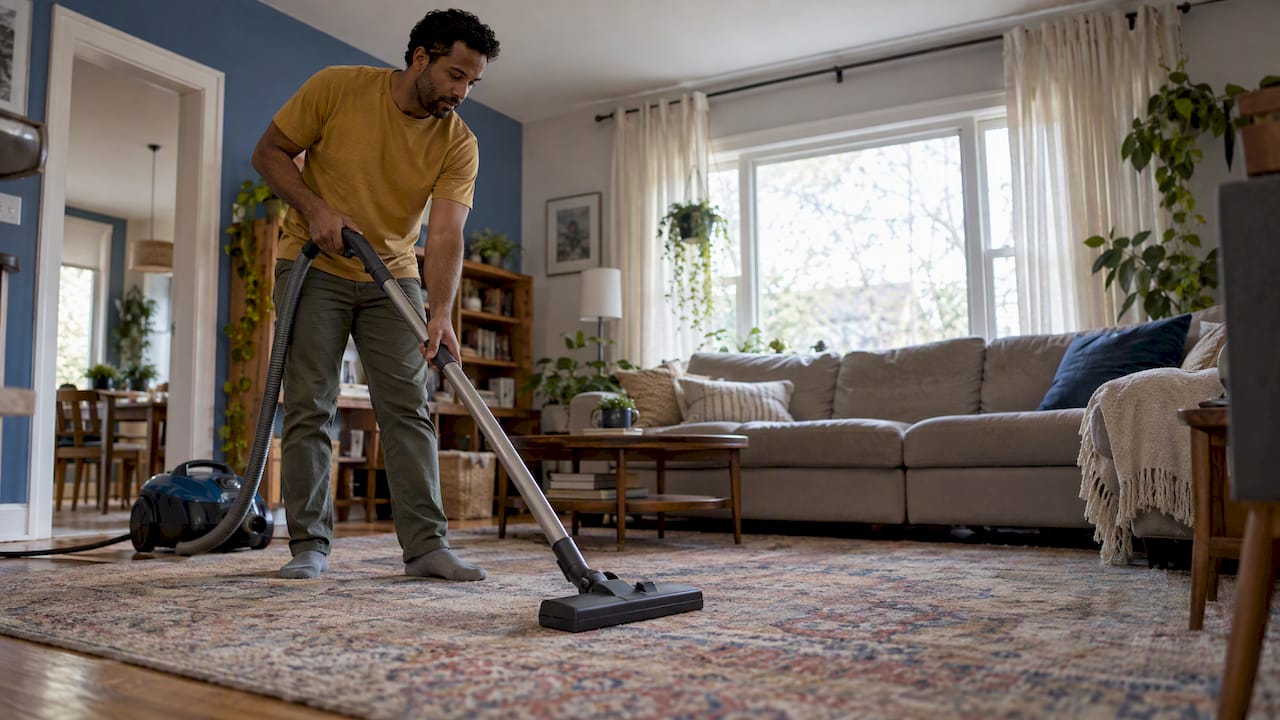
Soft surfaces. Disinfectant sprays are meant mostly for hard, non-porous surfaces. For couches, rugs and curtains that a sick person used, vacuum, then wash anything washable. If a soft item is not washable, choose a product whose label lists porous or soft surfaces.
Toothbrushes. Many families replace a toothbrush once recovery is complete. It is a small cost for peace of mind, and you can ask your dentist if you want a firm answer.
Laundry: easier than you think
You do not need a separate laundry cycle or to hold the bedding at arm’s length. The CDC says it is safe to wash a sick person’s laundry with other items, as long as you use detergent and the warmest water setting that is appropriate for the items, and dry them completely. Wash your hands right after handling it.
A few practical touches:
- Do not hug the laundry basket against your chest. Carry it away from your face.
- Wash sheets, pillowcases, towels and pajamas first. Pillows and comforters can go in the machine if the care label allows.
- Wipe down the hamper or the basket itself, or use a washable liner.
Don’t forget the air
Surfaces are only part of the story. The flu mostly spreads through droplets when people cough, sneeze or talk, and the CDC points out that people with flu can spread it to others up to about 6 feet away, with surface contact the less common route. That is why the CDC lists better indoor air as a prevention strategy alongside hygiene: bring in outdoor air by opening windows, use air purifiers, or gather outdoors where you can.
In practice, that means:
- Open windows in the sick room for a while each day, weather permitting, and for a longer stretch when you do the final clean.
- Run a HEPA air purifier in the room where the person spent the most time.
- Keep bathroom fans and kitchen hoods on while you work.
If you want to go deeper on how rooms, finishes and ventilation affect what you breathe, these indoor air quality tips cover ventilation and air cleaning alongside routine cleaning.
Common mistakes that waste your effort
- Spraying a dirty surface. Clean first, then disinfect.
- Wiping too soon. Ten seconds is not a minute.
- Reusing old bleach solution. Mix it fresh each day.
- Mixing products. Never combine bleach with other cleaners.
- Disinfecting everything. Floors, walls and windows rarely need it. Hands, handles and shared objects do.
- Skipping the hands. Washing your hands with soap and water for 20 seconds is still the best defense, and it protects you while you clean.
If you want a general routine for keeping the home in good shape afterward, our guide on how to maintain a clean home between visits fits in well here.
Perspective: what we see in homes after a rough flu week
We have cleaned homes in Vancouver, WA and Portland, OR since 2006, and the pattern after an illness is predictable. The household is exhausted, there is a pile of laundry, a bedside table full of cups and tissues, and a vague worry that the germs are still everywhere. People tend to respond by buying every spray in the store.
What helps more is order and patience. Clean, then disinfect, then wait out the contact time. Handle the touchpoints that matter, and let the windows do their share. None of it requires special skill, but it does require a free hour or two at the moment when nobody has the energy for it.
That is where a dedicated team helps. Because we send the same cleaners to your home each visit, they already know which rooms get the most use, which finishes are delicate, and where the family keeps its supplies. Our staff are background-checked, trained and insured, and our work is satisfaction guaranteed. If you are a busy parent, a senior, or someone who simply cannot face another chore after being sick, handing the reset to people you trust is a legitimate choice, not a luxury.
We would also say this plainly: you do not need a professional to follow the steps above. If you are well enough and have the time, they work. Call us when the time or the energy is not there.
— Steven
When a professional deep clean makes sense
Consider help if:
- Several people were sick at once, and the house has not been cleaned in days.
- You have a newborn, a person with a weakened immune system, or an older relative moving in or visiting, and you want a thorough reset.
- You are a landlord or a short-term rental host turning over a unit after a sick guest.
- You run a small office where several coworkers were out, and shared desks, kitchens and break rooms need attention. Our guides on shared workspace sanitation and why shared desks need regular disinfection cover that setting.
A reset is different from regular upkeep. If you are unsure which service you need, our deep clean vs regular clean guide explains the difference, and the deep clean checklist for every room shows what a thorough visit covers.
If you want us to take it on, our one-time deep cleaning is built for exactly this kind of reset. If you would rather keep the house on a steady schedule through flu season, we also offer recurring home cleaning with the same team each visit. Ask us about your situation when you book, and mention that you are disinfecting after an illness so we can plan for the high-touch areas. If you want to know what we bring, our page on whether cleaners bring supplies lists the questions to ask any company.
FAQ
How long after the flu should I disinfect?
Do a thorough pass once the person has gone at least 24 hours without a fever (without fever-reducing medicine) and symptoms are improving, which is the CDC’s standard for returning to normal activities. While they are still sick, wipe high-touch surfaces in shared rooms daily. If someone in the home is very young, older or immunocompromised, ask their doctor how long to keep extra precautions in place.
Can I use vinegar or essential oils instead of disinfectant?
We would not rely on them after the flu. Vinegar and essential oils are not EPA-registered disinfectants, and the EPA advises checking for a registration number and a specific virus claim on the label. Use a registered product on List N, or a properly mixed bleach solution on surfaces that can take it.
Do I need to wash the sick person’s clothes and bedding separately?
No. The CDC says you can wash them with other laundry using detergent and the warmest water that is safe for the fabric, then dry everything completely. Wash your hands after handling the dirty laundry.
How long does the flu virus live on surfaces?
The CDC says flu viruses can survive on hard surfaces such as doorknobs and tables for up to 48 hours. That is why daily wipe-downs during the illness make sense, and why a thorough clean at recovery is enough for most households.
Do I need to disinfect the whole house?
Usually not. Concentrate on high-touch hard surfaces and the rooms the sick person used most, and clean other surfaces as you normally would. Fresh air and good handwashing do a great deal of the rest.
Sources
- CDC: When and How to Clean and Disinfect Your Home
- CDC: Cleaning and Disinfecting with Bleach
- CDC: Preventing Spread of Respiratory Viruses When You’re Sick
- CDC: Caring for Someone Sick
- CDC: How to Clean the Sick Room (archive)
- EPA: Antimicrobial Products Registered for Use Against Influenza A Viruses
- EPA: List N Advanced Search Page
- Norton Healthcare: How long flu virus lives on surfaces
Recommended
- How to Maintain a Clean Home Between Visits
- Cleaning Priorities for Small Urban Homes That Work
- Why Move-In Cleaning Is Essential for Your New Home
- How to Deodorize a Room and Keep It Fresh for Good
About Octomaids
Octomaids is a locally operated professional cleaning company serving Vancouver, Clark County, and the surrounding Portland metro area. Since 2006, our cleaning teams have helped homeowners, renters, property managers, and businesses with recurring cleaning, deep cleaning, move-in/move-out cleaning, and commercial cleaning.
Our cleaning articles are reviewed to ensure the information reflects our real-world experience and professional cleaning practices.