


Yes, you can wash bathroom rugs at home, and most of them belong in your regular laundry rotation, not the trash. The trick is matching your method to the rug’s material and backing so you clean it without wrecking it. Here’s the fastest safe plan:
- Check the care label for temperature, dryer, and bleach limits
- Shake or vacuum, then spot-treat any stains or mildew
- Wash on gentle (machine or by hand, depending on type)
- Dry completely before it touches the floor again
Bath mats sit in a warm, damp environment every day, which makes them one of the more overlooked breeding grounds for bacteria and fungus in the house. Skipping a wash cycle doesn’t just mean a dingy-looking mat. It means standing on one.
Key Takeaways
Washing bathroom rugs safely comes down to matching cold water, a gentle cycle, and full drying to the specific backing and material of each rug.
| Point | Details |
|---|---|
| Wash frequency | Clean fabric mats every 1 to 2 weeks, or every 3 to 4 days in high-traffic or humid bathrooms. |
| Read the label first | Temperature, dryer, and bleach warnings determine whether a rug can go in the machine at all. |
| Protect the backing | Rubber-backed and foam mats need cold water, gentle cycles, and air-drying instead of heat. |
| Dry completely before reuse | A damp rug left on the floor invites mildew and undoes the entire wash. |
| Know when to replace | Cracking backing, permanent odor, or collapsed foam mean it’s time for a new rug, not another wash. |
| Consider a professional for heavy jobs | Octomaids handles deep cleans and recurring service for oversized, heavily soiled, or rental-turnover rugs. |
Table of Contents
- Washing Bathroom Rugs: How Often Should You Actually Do It
- How Do You Identify Your Rug Type Before Washing It?
- Pre-Wash Steps: Shake, Vacuum, and Spot-Treat First
- Machine-Washing Fabric Bathroom Rugs Step by Step
- Rubber-Backed, Memory Foam, and Padded Mats Need Gentler Treatment
- Hand-Washing Method for Delicate or Oversized Rugs
- Drying Bathroom Rugs the Right Way
- How Do You Get Rid of Mildew and Odors Without Ruining the Rug?
- When to Replace Your Bathroom Rug Instead of Washing It
- Common Mistakes That Shorten a Bath Mat’s Life
- Professional Tips From Octomaids for Longer-Lasting Bath Mats
- If You’d Rather Not DIY: Professional Cleaning Options
- Sources
- FAQ
Washing Bathroom Rugs: How Often Should You Actually Do It
Fabric bath mats generally need to be washed regularly, with more frequent washing advised for high-traffic bathrooms, homes with pets, or poorly ventilated spaces. Mats in standard main bathrooms should be washed regularly, while those in guest bathrooms used infrequently can be cleaned less often.
Newsweek’s reporting on bath mat hygiene puts the 1 to 2 week window as the standard recommendation, bumping to every 3 to 4 days once humidity or foot traffic climbs. Family size and shower frequency matter just as much as the calendar. A household of five sharing one bathroom generates a lot more moisture and skin oil than a single occupant with a mat that mostly just looks nice.
How Do You Identify Your Rug Type Before Washing It?
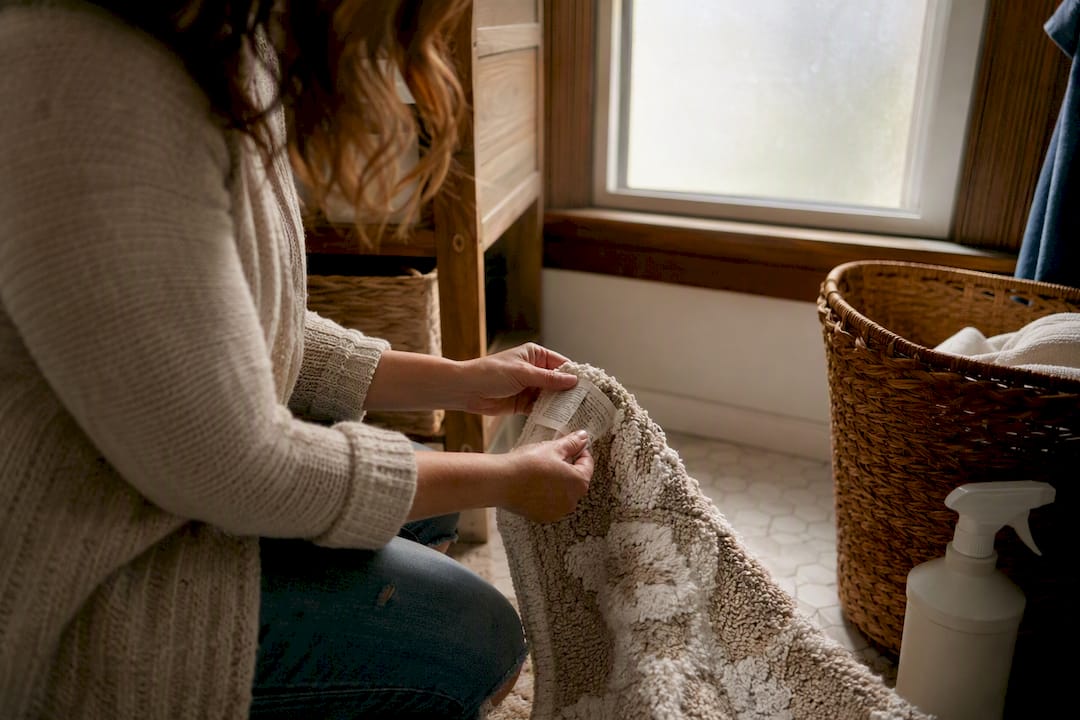
Flip the rug over and find the tag. It will tell you the safe water temperature, whether the dryer is allowed, and if bleach is off-limits, and skipping this step is where most washing mistakes start.
Bathroom rugs generally fall into a handful of categories, and each one tolerates the washer differently.
| Rug type | Wash risk | Washer-safe? |
|---|---|---|
| Cotton or microfiber fabric | Shrinking if hot water is used | Usually yes, gentle cycle |
| Rubber-backed fabric | Backing cracking or peeling | Often yes, cold water only |
| Memory foam or padded | Foam collapse under agitation | Rarely, hand-wash preferred |
| Bamboo or wood slat | Warping, glue failure | No |
| Full rubber shower mat | Material breakdown | No, wipe or soak instead |
Skip the washer entirely if there’s no label, the backing already feels brittle or is visibly glued rather than bonded, or the rug has decorative trim that could unravel.
Pre-Wash Steps: Shake, Vacuum, and Spot-Treat First
Sand and grit trapped in the pile act like sandpaper against the washer drum and against the rug’s own fibers, so getting rid of it first protects both.
- Take the rug outside and shake it hard, or run a vacuum over both sides
- Spot-treat mildew, soap scum, or oily stains with a mild detergent, using an oxygen bleach paste if the label permits it
- Check the backing for loose rubber crumbs and brush them off
- Empty pockets in the washer, fold the rug loosely, and confirm the label’s instructions one more time
Pro Tip: Keep a soft-bristled dish brush in the laundry room just for rugs. Working stains loose before the wash cuts your machine time and spares the fibers a rougher scrub cycle later.
Machine-Washing Fabric Bathroom Rugs Step by Step
Fabric mats made from cotton or microfiber generally hold up fine in a standard machine, provided you keep a few rules in mind.
- Load a small rug alone, or pair it with a couple of towels in a similar color to balance the drum
- Set the cycle to delicate or gentle, using cold or warm water depending on what the label allows (cold is always the safer bet for color and backing)
- Add a mild liquid detergent
- Run a low spin cycle and pull the rug out right away once it finishes
Skip fabric softener. It coats the fibers and cuts down on absorbency, which defeats the entire point of a bath mat, according to The Spruce’s guide to washing bath mats. Powder detergent can also leave residue behind in thicker piles, so liquid is the better call.
A few more things to keep in mind:
- Avoid washing rugs alongside jeans, zippers, or anything heavy that can snag or unbalance the load
- A front-load washer or a top-loader without a center agitator is gentler on the rug overall
- Whirlpool’s washing guidance notes that towels of a similar color work fine as load-balancers, but rubber-backed mats do better in their own load to avoid abrasion
Rubber-Backed, Memory Foam, and Padded Mats Need Gentler Treatment
Non-slip backing and foam cores don’t tolerate the same abuse a plain cotton mat can shrug off, so treat these as a separate category entirely.
- Rubber-backed mats: cold water only, gentle cycle if the label allows it, washed separately or with light items, then air-dried. Heat is the enemy here, since it’s what causes backing to crack and peel over time.
- Memory foam or padded mats: hand-washing is usually the safer route, or a very gentle machine cycle at most. Never tumble-dry these on heat. The foam structure breaks down and won’t spring back.
- Full rubber shower mats and bamboo or wood mats: skip the machine altogether. Soak and scrub, or wipe clean and let them dry fully instead.
Cold water, mild detergent, and the gentlest cycle that still lifts the soil are the difference between a rubber-backed mat lasting years and one that starts flaking after a couple of months, according to The House Mag’s guide on cleaning rubber-backed rugs.
Check the backing before you wash and again after it dries. Cracking, flaking, or a sticky residue means it’s time to replace the mat, not keep laundering it.
Hand-Washing Method for Delicate or Oversized Rugs
Some rugs are too large, too old, or too unlabeled to trust to the machine. A bathtub and a bit of elbow grease handle those cases just fine.
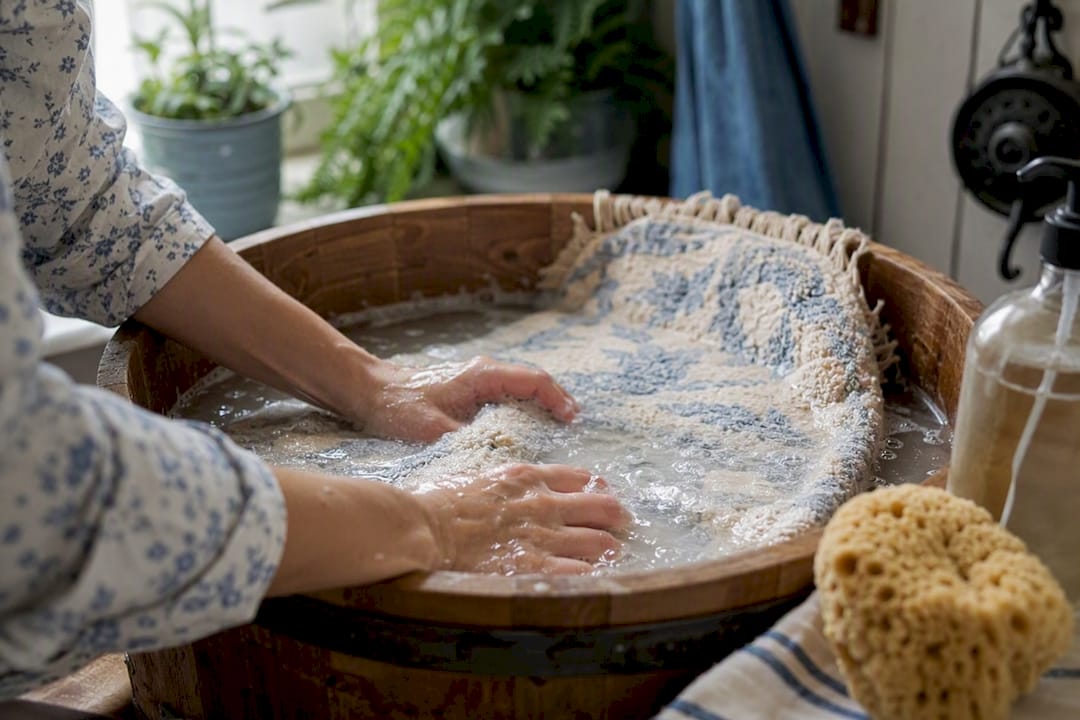
- Fill a tub or large basin with cool or lukewarm water and add a mild detergent or dish soap
- Let the rug soak briefly, then gently scrub the pile side with a soft brush
- Wipe the backing clean with a damp microfiber cloth
- Rinse repeatedly until the water runs clear
- Press out excess water or roll the rug in a dry towel rather than wringing it, then hang or lay it flat to dry
Pro Tip: Wringing is what cracks rubber backing fastest. Rolling the rug tightly in a towel and pressing does almost as good a job of removing water, without the twisting stress.
Hand-washing is the better call whenever the backing feels brittle, there’s no care label at all, or you’re dealing with a vintage rug with trim that a washer would tear apart.
Drying Bathroom Rugs the Right Way
A rug that goes back on the floor even slightly damp is an invitation for mildew, so drying deserves as much attention as the wash itself.
- Air-drying is the safest option for rubber-backed and padded rugs, hung so both sides get airflow, flipped partway through
- If the label permits dryer use, choose tumble-dry low and pull the rug out as soon as the cycle ends
- Sunlight helps knock down odor and bacteria, but keep rubber backing out of direct sun since UV exposure degrades rubber over time, a point The Spruce also flags for fabric care
- A musty smell or a cool, damp spot means it isn’t dry yet. Point a fan at it, move it outside, or flip and press it again before it goes back down
Pro Tip: Drape rugs over a shower rod or two chairs back to back instead of laying them flat on another surface. Airflow underneath is what actually finishes the job.
How Do You Get Rid of Mildew and Odors Without Ruining the Rug?
Mildew and lingering odors need a different approach than routine washing, and reaching for chlorine bleach is usually the wrong instinct.
- Spot-treat with a mild detergent, diluted white distilled vinegar, or an oxygen-based bleach if the label allows it. Skip chlorine bleach on rubber backing and colored fabric.
- For a deeper deodorize, add vinegar to the rinse cycle or pre-soak the rug in it. Enzyme cleaners or oxygen bleach work well on organic stains and set-in odors.
- If mildew keeps coming back after repeated treatments, inspect the backing closely. Persistent mildew that survives a proper wash often means it’s time to replace the mat rather than keep fighting it.
Mild cleaners and a full rinse handle most mildew problems, but a rug that still smells musty after drying completely usually has a deeper issue than surface soil, according to Everyday Health’s guidance on bathroom item cleaning.
Avoid aggressive scrubbing on the pile side, and don’t over-soak rubber-backed rugs. Excess water sitting against the backing for too long speeds up exactly the kind of deterioration you’re trying to prevent.
When to Replace Your Bathroom Rug Instead of Washing It
Some damage doesn’t wash out, and pushing a dying rug through one more cycle can do more harm than good.
- The non-slip backing is flaking, cracking, or shedding a white powdery residue
- The mat still smells musty after repeated washes, or the fibers are permanently matted and thin
- The foam padding has collapsed, or the rug no longer grips the floor, which turns it into a slip hazard rather than a safety feature
Common Mistakes That Shorten a Bath Mat’s Life
A handful of small habits are responsible for most premature rug failures.
- Using fabric softener, which cuts absorbency over time
- Drying on high heat, which cracks rubber and collapses foam
- Washing with heavy items like towels stuffed in alongside jeans or bedding
- Ignoring the care label entirely
- Leaving a damp rug on the floor instead of finishing the dry cycle
Easy upkeep goes a long way toward avoiding all of it: shake or vacuum weekly, hang the mat to dry after each shower, keep a washing schedule instead of waiting for visible grime, and wipe the floor underneath before putting a clean rug back down.
Pro Tip: Use less detergent than you think you need. Excess soap trapped in a thick pile is one of the most common causes of that lingering “clean laundry” smell turning sour within a day.
Professional Tips From Octomaids for Longer-Lasting Bath Mats
After years of cleaning bathrooms across Vancouver, WA and the Portland Metro area, a few habits stand out as the ones that actually extend a rug’s usable life.
- Hang the mat after every use instead of leaving it bunched on the floor. It cuts down on how often a full wash is even needed.
- After heavy soiling, run a quick rinse-only spin first to knock loose grit out before the full wash cycle.
- Keep a second mat in rotation so one is always drying completely while the other is in use.
- Check the backing periodically and note any changes, so you catch a slip hazard before it becomes one.
DIY vs Hiring a Professional: When to Call a Cleaner
DIY washing covers most households just fine, and it’s the cheaper habit to build. Where it gets harder is oversized rugs, delicate heirloom pieces, or mildew that keeps returning no matter how many times you treat it. Professional cleaning can restore heavily soiled or thick rugs and manage rotating schedules for rental turnovers where you don’t have time to babysit a drying cycle. For homeowners and landlords who’d rather hand that off, Octomaids offers recurring and deep-clean options built for exactly that gap.
If You’d Rather Not DIY: Professional Cleaning Options
Washing your own bath mats works well for routine upkeep, but there’s a point where a deeply soiled rug, a rental turnover deadline, or a rug you just don’t want to risk hand-washing makes a professional visit the more practical move.
A professional deep clean typically covers spot treatment for stubborn stains, a full wash cycle matched to the rug’s material, and guidance on drying so nothing goes back on the floor damp. For rubber-backed and padded mats specifically, that means the same backing-safe approach outlined above, just handled for you on a schedule that fits your household or your rental calendar. Octomaids serves homeowners and landlords throughout Clark County and the Portland Metro area with both one-time and recurring cleaning service, and for anyone managing a short-term rental, keeping mats fresh between guests is one of the easier tasks to hand off. If you’re weighing whether a routine visit or a full deep clean makes more sense for your bathroom, that’s a quick conversation to have. Booking a visit takes a few minutes, and it’s one less load of laundry to plan around this week.
Sources
- How often should you wash your bath mat? — Newsweek
- How to wash a bathroom mat — Whirlpool blog
- Yes, You Can (and Should) Wash Your Bath Mat—Here’s How to Do It Right — The Spruce
- How to clean bathroom rugs with rubber backing? — The House Mag
FAQ
Can I Wash a Bathroom Rug in the Washing Machine?
Most fabric bath mats can go in the machine on a gentle cycle with cold or warm water, but always check the care label first for backing-specific restrictions.
What’s the Best Way to Clean Bathroom Rugs?
Shake or vacuum off loose grit, spot-treat stains, wash on gentle with mild detergent (no fabric softener), and dry the rug completely before it touches the floor again.
How Do You Wash Bathroom Rugs With Rubber Backing?
Use cold water and the gentlest cycle the label allows, wash separately or with light items, and always air-dry since heat cracks and peels rubber backing over time.
Is It Okay to Wash Bathroom Rugs With Towels?
You can pair a fabric mat with towels of a similar color to balance the load, but rubber-backed mats do better washed alone to avoid friction damage to the backing.