


The fastest way to clean red wine from carpet is to blot up as much liquid as possible with a clean white cloth, dilute the remaining pigment with a small amount of cold water, and then apply a mild dish-soap solution or oxygen-based cleaner. Do those three things within the first two minutes, and you have a strong chance of removing most or all of the stain before it bonds permanently to the fibers.
- Blot first. Press a clean white cloth or folded paper towel straight down onto the spill. Lift. Repeat with a fresh section. Never slide the cloth sideways.
- Dilute with cold water. Pour or spray a small amount of cold water onto the stain, then blot again. This re-suspends the pigment so you can lift it out rather than let it dry in place.
- Apply a mild cleaner. A few drops of clear dish soap mixed with cold water, or an oxygen-based cleaner like OxiClean, is your first treatment of choice.
Pro Tip: Avoid three things from the start: rubbing the stain, using hot water, and mixing cleaning products together. Rubbing pushes pigment deeper into the pile; hot water sets the stain; and mixing cleaners (like vinegar and bleach) can create harmful fumes or cancel out each other’s chemistry.
Key Takeaways
Acting within the first two minutes gives you the best chance of fully removing a red-wine stain using nothing more than dish soap, cold water, and careful blotting.
| Point | Details |
|---|---|
| Blot immediately | Use vertical pressure with a clean white cloth; never rub or scrub the stain. |
| Dilute with cold water | Add cold water in small amounts and re-blot to lift pigment before it bonds to fibers. |
| Use dish soap or an oxidizer | Dawn with hydrogen peroxide or an OxiClean formula outperforms most specialty products on synthetic carpets. |
| Allow proper dwell time | Oxidizers need 15–25 minutes to break down anthocyanin and tannin bonds; covering the spot helps. |
| Octomaids for set-in stains | When DIY cycles fail or the carpet is delicate, Octomaids provides professional stain treatment in Vancouver, WA and Portland, OR. |
Table of Contents
- How to clean red wine from carpet in the first 10 minutes
- Household methods that actually work on wine stains
- When store-bought removers or a carpet cleaner make sense
- How to treat dried or set-in red-wine stains
- What not to do, and how to spot-test safely
- Why dwell time and pH sequencing matter
- When should you call a professional carpet cleaner?
- A note from our team at Octomaids
- When Octomaids is the right call for your carpet
- Sources
- FAQ
How to clean red wine from carpet in the first 10 minutes
Speed is the single biggest factor in whether a red-wine stain comes out completely. Wine pigments, called anthocyanins, begin binding to carpet fibers almost immediately. The longer they sit, the more they act like a dye.
Blotting technique. Apply firm, vertical pressure with a clean white cloth or thick paper towels. Work from the outer edge of the spill toward the center to avoid spreading it. Rotate to a clean section of cloth every few blots so you are lifting pigment, not redistributing it.
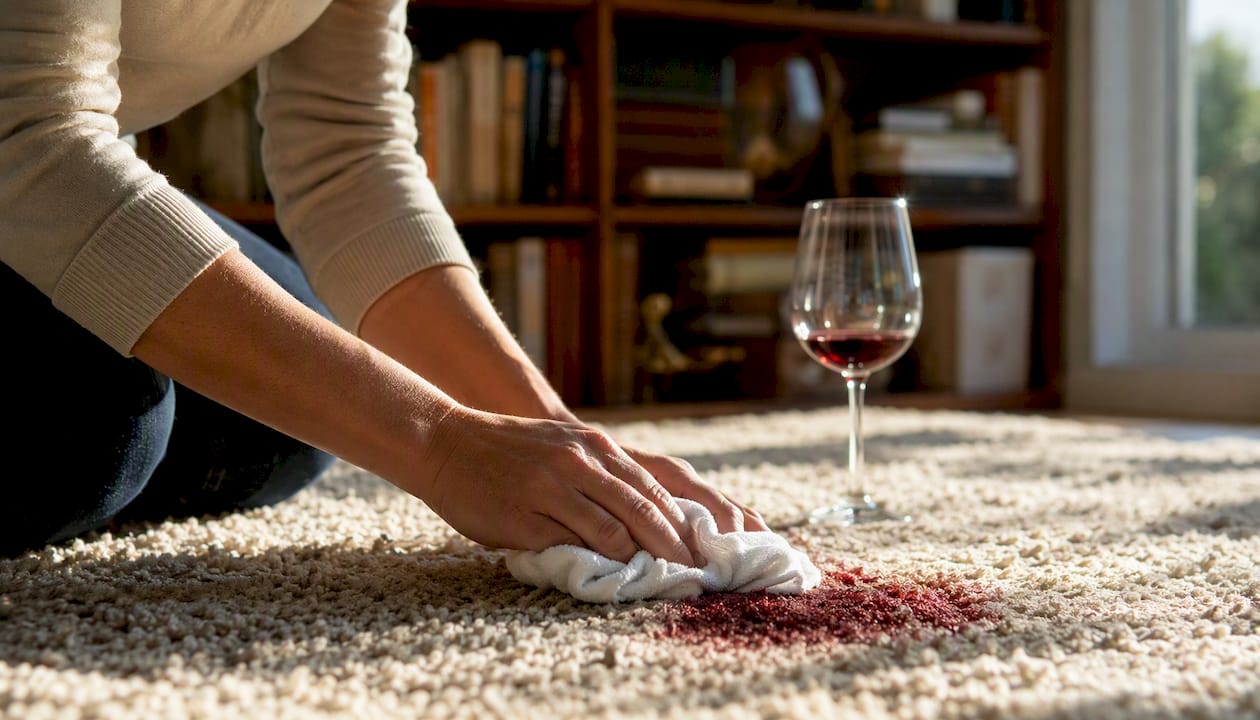
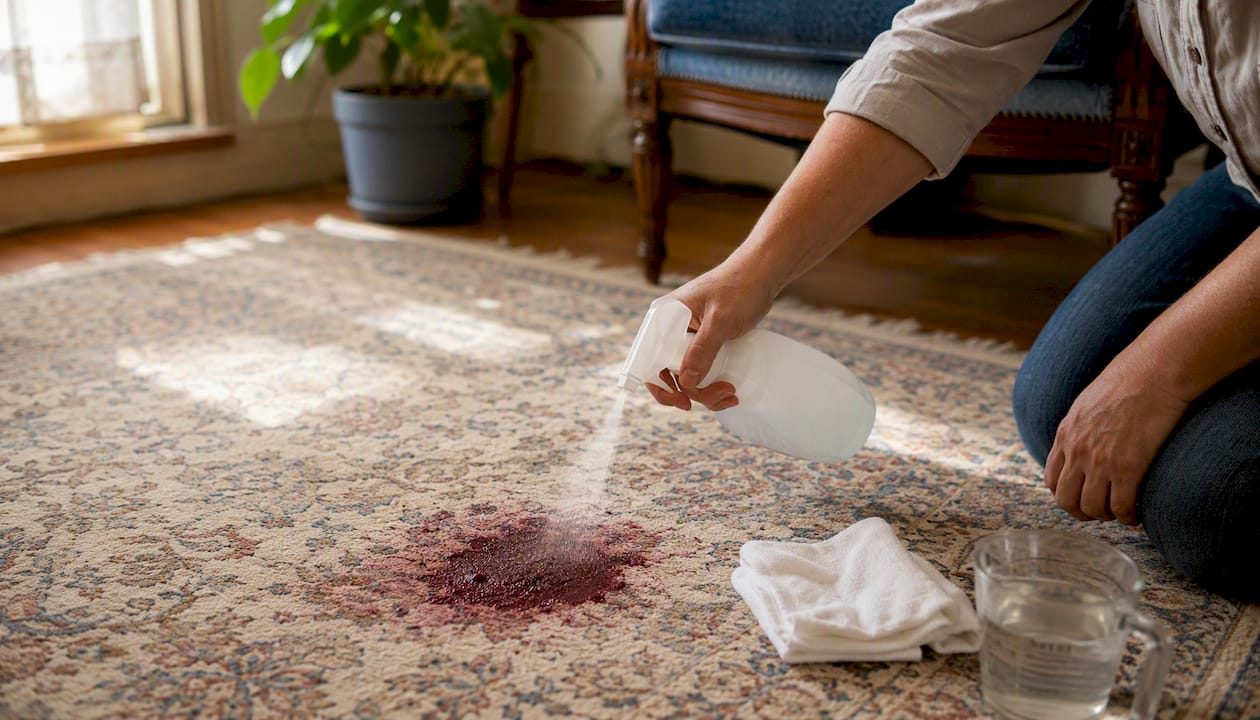
Dilution. Once you have blotted up the bulk of the liquid, add cold water in small amounts, a tablespoon or two at a time, and blot again. This step re-suspends the remaining pigment so it can be absorbed into your cloth rather than drying into the fiber. Repeat two or three times.
Tools to have ready:
- Clean white cloths or white paper towels (colored cloths can transfer dye)
- A spray bottle filled with cold water
- A soft-bristled brush for working cleaner into the pile later
- Salt or baking soda as an emergency absorbent if you have no cloths nearby
When to escalate. If the stain covers more than a few inches, if the carpet is wool or silk, or if more than 10 minutes have passed, move directly to a stronger method rather than continuing to blot plain water.
Household methods that actually work on wine stains
These recipes cover both fresh spills and stains that have had a chance to partially dry. Home Depot’s step-by-step guidance lists all of these household options and stresses blotting and spot-testing before applying anything stronger.
Dish soap and white vinegar
- Mix one tablespoon of clear dish soap (Dawn works well) with one tablespoon of white vinegar and two cups of cold water.
- Apply a small amount to the stain using a clean cloth.
- Let it sit for 3–5 minutes.
- Blot from the outside in, using a fresh cloth section each time.
- Rinse by blotting with plain cold water, then blot dry.
StainRemovalGuides recommends this dish-soap-plus-vinegar approach for most fresh stains, treating baking soda as a supporting absorbent step rather than a standalone solution.
Dish soap and hydrogen peroxide
This is a stronger option for synthetic carpets (nylon, polyester).
Spot-test first. Apply a few drops to a hidden area, wait 5–10 minutes, and blot. If the carpet color lifts or changes, do not use this mixture. Peroxide is a mild oxidizer and can bleach some dyes, particularly on wool or brightly colored carpets.
Once you confirm it is safe:
- Apply the mixture to the stain with a clean cloth.
- Allow it to dwell for 5–10 minutes.
- Blot thoroughly, working inward from the edges.
- Rinse with cold water and blot dry.
A Business Insider test found that Dawn Powerwash performed as well as or better than two specialized red-wine removers on treated fabric and carpet samples, which supports starting with dish soap before reaching for a pricier product.
Oxygen-based cleaners (OxiClean and similar)
OxiClean and comparable oxygen-based formulas are often safer than straight hydrogen peroxide on colored carpets because they are buffered and designed for fabric use. BISSELL recommends OXY-formulated solutions for deep-set wine stains and notes that portable carpet cleaners paired with these formulas improve results significantly.
Club soda, salt, and baking soda
These are best used in the first 60 seconds when you have nothing else nearby. Club soda’s mild carbonation can help lift fresh pigment; salt and baking soda absorb liquid before it penetrates deeper. Pour a generous amount of salt or baking soda onto a fresh spill, let it absorb for 2–3 minutes, then vacuum or scrape it away before moving to a soap-based treatment. None of these alone will fully remove a red-wine stain, but they buy you time.
Do and don’t list:
- Do blot with vertical pressure, working inward
- Do use cold water only
- Do spot-test any cleaner on a hidden area first
- Don’t rub or scrub the stain
- Don’t use hot water
- Don’t mix baking soda and vinegar together (a BISSELL chemist notes this neutralizes both ingredients and can push pigment into the carpet backing)
Pro Tip: Cover the treated area with a damp white cloth weighted by a heavy book after applying your cleaner. This keeps the chemistry working and prevents the spot from drying out before you blot it up.
When store-bought removers or a carpet cleaner make sense
For stains larger than a few inches, stains that have partially dried, or wine that has soaked into the carpet padding, a commercial product or machine will outperform any hand-blotting method.
Product categories to look for:
- Oxygen-based sprays (OxiClean Carpet Spray, similar)
- Enzymatic spotters, which break down organic compounds in the wine
- Peroxide-based spotters formulated for carpet fibers
- General carpet stain sprays with surfactant blends
Always patch-test any commercial product on a hidden area before applying it to the stain, and follow the manufacturer’s dwell-time instructions exactly. Avoid mixing a commercial product with a DIY cleaner you already applied.
Using a portable carpet cleaner. A Bissell Little Green or similar portable machine adds extraction power that hand-blotting cannot match. Fill the clean-water tank with cold water and the appropriate cleaning solution. Work the machine over the stain plus about two inches of surrounding carpet to prevent a visible ring. Extract thoroughly, then do one final pass with plain cold water to rinse out any residual cleaner. Skipping the rinse pass is a common reason stains reappear days later as residue wicks back up through the pile.
How to treat dried or set-in red-wine stains
A stain that has been sitting for hours or days is harder to remove, but not impossible. The goal is to re-mobilize the pigment before applying an oxidizer.
- Rehydrate. Dampen the dried stain with cold water and let it sit for 2–3 minutes. Blot up the loosened material.
- Apply an oxygen-based cleaner or a 3% hydrogen peroxide solution. Work it gently into the pile with a soft brush.
- Allow a full dwell time of 15–25 minutes. Cover the spot with a damp cloth to keep it from drying out. This dwell window is where the oxidizer breaks down the chromophore structures in the anthocyanin pigment.
- Blot thoroughly. Use fresh cloth sections and work from the outside in.
- Rinse with cold water and blot dry. Repeat the treat-dwell-blot-rinse cycle up to three times.
Stop after three cycles if the stain is not visibly improving, or immediately if the carpet color begins to change. At that point, continuing risks fiber or dye damage, and a professional is the safer next step. A carpets-and-floors guide notes that DIY methods are generally effective for stains under a few inches, while professional service is recommended for stains older than 24 hours or on expensive materials.
What not to do, and how to spot-test safely
Some of the most common homeowner mistakes cause permanent damage that no professional can fully reverse. Reviewing common move-out cleaning mistakes shows that using the wrong cleaner on carpet is one of the top reasons tenants lose deposit money.
Avoid these completely:
- Hot water (sets the stain by denaturing proteins and locking pigment)
- Household bleach (destroys carpet dye and fibers)
- Ammonia-based cleaners (can permanently alter carpet color)
- Mixing vinegar and bleach (produces chlorine gas)
- Scrubbing with a stiff brush (breaks fiber tips and spreads pigment)
Spot-test checklist:
- Choose a hidden area: inside a closet, under a piece of furniture.
- Apply a small amount of your chosen cleaner.
- Wait 5–10 minutes.
- Blot with a white cloth and inspect for dye transfer or color change.
- If the cloth picks up carpet color, stop and choose a milder option.
Wool and silk carpets deserve special caution. Both fibers are protein-based and react poorly to peroxide, alkaline cleaners, and aggressive scrubbing. If your carpet is wool or silk and the stain is larger than a coin, the safest move is to call a professional rather than risk permanent damage.
Why dwell time and pH sequencing matter
Red wine leaves two types of compounds in carpet fibers: anthocyanins (the deep-red pigments) and tannins (the astringent plant compounds). Both bond to fibers chemically, which is why plain water alone rarely removes a wine stain fully. Surfactants in dish soap help lift pigment into solution, but oxidizers are what actually break the chromophore structures that give anthocyanins their color.
The professional sequence that carpet cleaners use reflects this chemistry directly:
Alkaline pre-spray loosens surface anthocyanin and lifts it away from the fiber. An oxidizer dwell of 15–25 minutes (using 3–6% hydrogen peroxide or a professional-grade oxidizer) then breaks down the tannin and chromophore bonds. A final acidic rinse neutralizes residual alkalinity, prevents wick-back, and protects the fiber. This pH-sequenced approach is why professional results often outperform even repeated DIY attempts on older stains.
CarpetCleaningDigital’s pro guide explains that dwell time, heat during extraction, and the acid-rinse step are all critical for full removal, not just partial fading.
Always test on a hidden area first, and skip the peroxide step on wool or silk.*
When should you call a professional carpet cleaner?
Some situations genuinely call for professional equipment and chemistry. Knowing the threshold saves you from making a stain worse with repeated DIY attempts.
Call a professional when:
- The stain is 24–48 hours old or older and has not responded to two full DIY treatment cycles
- The stain covers a large area or the wine soaked through to the padding
- The carpet is wool, silk, or a luxury fiber with a high replacement cost
- Previous home treatments have caused color change, fiber damage, or a spreading stain outline
- You are preparing for a move-out inspection and the carpet condition affects your deposit
Professionals typically assess the fiber type and stain age, apply an alkaline pre-spray, allow an oxidizer to dwell, then use hot-water extraction followed by an acid rinse. For older or previously treated stains, more than one visit may be needed. Carpet cleaning costs vary by region, carpet size, and stain severity, so getting a local quote is the most reliable way to set expectations. Carpet cleaning’s role in the move-out process is often underestimated until a landlord’s inspection reveals a stain that DIY methods could not fully lift.
A note from our team at Octomaids
I’ve seen what happens when homeowners wait too long or use the wrong cleaner on a wine stain. The stain that could have come out in 10 minutes with dish soap and cold water becomes a permanent reminder of a dinner party. Fast action is not just advice; it is the difference between a recoverable situation and a carpet replacement conversation.
Our team at Octomaids has been serving Vancouver, WA and Portland, OR since 2006, and wine stains on carpet are among the most common calls we receive after gatherings and move-outs. What we emphasize on every visit is the same thing this guide covers: the chemistry has to be right, the dwell time has to be respected, and the fiber type has to be considered before anything stronger than dish soap touches the carpet.
When Octomaids is the right call for your carpet
DIY methods handle most fresh spills well. But when the stain is set, the carpet is valuable, or you simply do not have the time or equipment to do it right, Octomaids is the faster and safer option for homeowners in Vancouver, WA and the Portland Metro area.

Our residential cleaning services include professional stain treatment and deep cleaning by background-checked technicians who know how to assess fiber type, apply the right chemistry, and extract thoroughly without damaging your carpet. For move-out situations where a stain could cost you your deposit, our team can often address the problem in a single visit. Hosts and rental property owners dealing with post-event stains will find our short-term rental cleaning service covers exactly this kind of situation.
Contact Octomaids to get a quote and book a visit. We have been doing this since 2006, and we know what it takes to get wine out of carpet the right way.
Sources
- We tested 2 red wine stain removers people swear by to see which was best, but neither worked better than dish soap
- Remove red wine stain from carpet
- How to Get Red Wine Out of Carpet
- How to Remove Red Wine from Carpet | Stain Removal Guides
- Red Wine Stain Removal: Pro Carpet Cleaner Guide
FAQ
Are red wine stains permanent?
Not if you act quickly. Fresh stains treated within the first few minutes with cold water and a dish-soap or oxygen-based cleaner can usually be removed completely. Stains older than 24–48 hours are harder to lift and may require professional hot-water extraction.
Does Dawn dish soap remove red wine stains?
Yes, and it performs well. A Business Insider test found Dawn Powerwash matched or outperformed two specialized red-wine removers on fabric and carpet samples.
What is the most effective red-wine stain remover?
For set-in stains, an oxygen-based cleaner like OxiClean with a full 15–25 minute dwell time, or professional hot-water extraction with an oxidizer, tends to produce the best results.
Will vinegar remove red wine stains?
White vinegar alone has limited effect, but a solution of one tablespoon each of dish soap and white vinegar in two cups of cold water works well on many fresh stains. Vinegar is most useful as a final rinse step to neutralize alkaline cleaners and reduce the chance of residue wicking back to the surface.