


An office deep clean covers everything your nightly service does not reach: the tops of cabinets, air vents, carpet edges, the inside of the break-room refrigerator, behind furniture, and the grime that settles into grout and upholstery. This checklist walks you through it area by area, shows how to scale it for a small office, and explains how often to schedule one. You can use it to run the job in-house or to hold a professional crew to a clear scope.
TL;DR
- A deep clean goes above, behind, under and inside surfaces. Routine cleaning keeps what people touch every day presentable.
- Work from the top down: ceiling vents and light fixtures first, floors last, so dust never lands on a surface you already finished.
- Most offices benefit from a deep clean once or twice a year, with a lighter periodic pass every quarter if headcount or foot traffic is high.
- Regular cleaning is enough to prevent most germ spread. Use disinfectant only where it is warranted, and follow the label’s contact time.
- Before anyone starts, settle who clears desks, who empties the refrigerator, and which rooms are off limits.
Table of Contents
- What an office deep clean actually includes
- Before you start: prepare the space
- The top-down order
- Checklist for desks, cubicles, and open workspace
- Checklist for the break room and kitchen
- Checklist for restrooms
- Checklist for reception, conference rooms, and shared areas
- Checklist for floors and carpets
- Checklist for air vents, filters, and the “hidden” list
- Office spring cleaning: what to add
- Small office checklist: how to scale it
- Nightly checklist: what belongs in the daily routine
- How often should you deep clean?
- Cleaning versus disinfecting
- Our perspective: consistency beats the annual blitz
- When to hire a professional crew
- FAQ
- Sources
What an office deep clean actually includes
Think of routine cleaning as the daily surface layer: trash, desks, restrooms, break room, vacuuming. Deep cleaning is the layer underneath. Dust collects on top of door frames and inside vents for months, and because no one looks there, it becomes what we call subconscious visual noise: you stop seeing it, but the room feels a little heavier and a little less fresh.
A deep clean typically adds these tasks that a nightly service skips:
- High dusting of ceiling tiles, light fixtures, and vent covers
- Baseboards, door frames, and the edges of walls
- Carpet extraction (hot-water cleaning that pulls out embedded soil) and hard-floor scrubbing, stripping, or refinishing
- Upholstery and fabric partition cleaning
- Interiors of break-room appliances
- Interior glass, blinds, and window sills
- Detailed restroom work, including grout and fixture bases
- Moving and cleaning behind furniture and equipment
If you want the same distinction explained for a home, our deep clean vs regular clean guide uses the same logic. For offices, the question that matters is scope: what is cleaned every night, and what is saved for the periodic visit.
Before you start: prepare the space
Most deep-clean disappointments are not about effort. They come from unclear handoffs. A day of preparation prevents a day of confusion.
- Decide on desks. Will staff clear their surfaces, or will the crew work around personal items? Cleaners generally should not move papers or devices they cannot identify. A simple rule helps: anything left on a desk gets wiped around, anything cleared gets wiped under.
- Assign the refrigerator. Choose someone to remove expired food and personal containers a day ahead, so the interior can be scrubbed.
- Define access. Note which rooms are off limits: the server closet, the owner’s office, a records room.
- Name an inspector. One person should walk the finished space against this list.
- Pick the timing. Evenings, weekends, and holiday closures keep the work from interrupting people. Carpet extraction needs drying time, so a Friday evening start is often practical.
- Gather supplies. Microfiber cloths, extension duster, HEPA vacuum, scrub brushes, squeegee, bucket, gloves, electronics-safe wipes, a neutral all-purpose cleaner, and an EPA-registered disinfectant if you plan to use one.
If your desks are chronically buried, a short decluttering session first makes every later step faster. This home office organization guide has sensible ideas for clearing surfaces that translate well to a shared workspace.
The top-down order
Gravity does the sorting. Dust you knock loose from a vent falls onto desks, and anything you mop falls behind you if you vacuum afterward. Use this sequence in every room:
- High dusting: vents, light fixtures, ceiling tiles, tops of cabinets
- Walls, door frames, switches, and interior glass
- Furniture and desks, including undersides and chair bases
- Upholstery and partitions
- Floors: vacuum first, then mop or extract
Checklist for desks, cubicles, and open workspace
This is where most of the day’s contact happens, so it is where cleaning is most visible and where care matters most.
- [ ] Dust ceiling vents and diffusers with an extension duster or vacuum attachment
- [ ] Dust light fixtures and any ledges above head height
- [ ] Wipe desk surfaces, drawer fronts, and the sides and undersides of the desktop
- [ ] Clean monitors, keyboards, mice, and phones with electronics-safe wipes, never a soaked cloth or a household spray
- [ ] Vacuum between keyboard keys with a soft brush attachment
- [ ] Wipe chair arms, backs, and the base and casters
- [ ] Clean fabric chairs and cubicle partitions, using vacuum or steam extraction where the fabric allows
- [ ] Dust and wipe shelves, filing cabinet tops, and picture frames
- [ ] Clean baseboards and the edges of carpet where the vacuum does not reach
- [ ] Move light furniture and clean behind it
- [ ] Extract carpet or scrub and refinish hard floors
A note on electronics: check the manufacturer’s care instructions for screens. Coated displays can be damaged by ammonia-based glass cleaners, so a dry microfiber cloth or a wipe made for electronics is the safe default.
Checklist for the break room and kitchen
Break rooms hold the most food residue in the building, which is why they need an inside-and-behind pass.
- [ ] Empty and wipe the refrigerator interior, including shelves, drawers, and door seals
- [ ] Wipe the exterior and handles of the refrigerator, microwave, and dishwasher
- [ ] Clean the microwave interior (steam a bowl of water with lemon for a few minutes to loosen splatter, then wipe)
- [ ] Descale the coffee maker according to its manual and wash the carafe and filter basket
- [ ] Clean the inside of the toaster oven, if there is one
- [ ] Scrub the sink and faucet, and clear the drain strainer
- [ ] Wipe cabinet fronts, handles, and the tops of upper cabinets
- [ ] Clean the trash and recycling bins themselves, not just the liners
- [ ] Wipe tables and chairs, including chair legs and the underside of tabletops
- [ ] Clean behind and beneath the refrigerator if it can be moved safely
- [ ] Mop the floor, including along the baseboards and under the table
Checklist for restrooms
Restrooms are the one place where a deep clean is as much about hygiene as appearance.
- [ ] Dust vents and light fixtures
- [ ] Descale and polish faucets, and wipe around them to remove soap residue
- [ ] Scrub toilets completely: bowl, under the rim, seat hinges, base, and the wall behind
- [ ] Clean urinals, including the flush valve and surrounding wall
- [ ] Scrub grout lines with an oxygenated cleaner and a stiff brush
- [ ] Clean the inside and outside of dispensers, then refill them
- [ ] Wipe partitions, doors, and door handles on both sides
- [ ] Clean mirrors and the edges of frames
- [ ] Wash the trash receptacles
- [ ] Scrub and rinse the floor, including corners and behind the toilet
When you disinfect, follow the product label. The EPA explains that the contact time on a disinfectant label is how long the surface must stay visibly wet for the product to work, which can mean reapplying. Wiping it off after a few seconds is the most common reason disinfecting does nothing.
Checklist for reception, conference rooms, and shared areas
These rooms shape the first impression for clients, so they deserve a deliberate pass.
- [ ] Dust all high surfaces, picture frames, and signage
- [ ] Clean glass doors and interior windows on both sides
- [ ] Wipe the reception desk, pens, and sign-in surfaces
- [ ] Vacuum and clean upholstered seating, including between cushions
- [ ] Wipe conference tables, chair arms, and the edges of whiteboards
- [ ] Clean remotes, speakerphones, and touch panels with electronics-safe wipes
- [ ] Wipe door handles, push plates, light switches, and elevator buttons
- [ ] Spot-treat and extract carpet, paying attention to the entry mat zone
- [ ] Clean and polish hard floors at entrances, where grit does the most damage
- [ ] Wash entry mats or replace them if they are worn
Checklist for floors and carpets
Floors take the most wear, and they hold more soil than they appear to. A deep clean usually treats them as a separate project.
- Carpet: vacuum thoroughly, pre-treat stains and traffic lanes, then use hot-water extraction. Allow drying time before staff return.
- Sealed hard floors (tile, vinyl): sweep, scrub with a machine or deck brush, rinse, and let them dry. Refinish if the finish is dull or worn.
- Stairwells and corridors: vacuum or mop edges and corners where a routine pass skips.
- Under and behind equipment: printers, copiers, and filing cabinets collect dust and cords.
Checklist for air vents, filters, and the “hidden” list
These tasks are easy to forget because nobody sees them, yet they feed the dust you do see.
- [ ] Dust or vacuum HVAC vents and diffusers
- [ ] Check HVAC filters and replace them if they are due (this is often a building-management task, so confirm who owns it)
- [ ] Wipe the tops of door frames and window tracks
- [ ] Dust blinds slat by slat
- [ ] Clean the inside of the supply closet and shelves
- [ ] Wipe light switches, thermostat covers, and wall plates
- [ ] Clean fire extinguisher cabinets and exit signs, where accessible and safe
Accumulated dust on vents and fixtures can settle on surfaces below and cycle through the air, so this part of the job matters more than its low profile suggests.
Office spring cleaning: what to add
Spring is a natural reset point. People are opening windows, winter salt and mud have tracked through entrances, and cold and flu season has just ended. An office spring clean is not a different list. It is this same deep clean, with emphasis on:
- Entrance flooring and mats, after winter grit
- Carpet extraction in traffic lanes
- Interior and exterior glass
- Vents and filters before cooling season
- Break-room appliance interiors
- Sorting and purging: old files, dead equipment, expired supplies
If you only schedule one deep clean a year, spring or early fall both work. Pick the season when your office is quietest, so crews can move furniture without disrupting people.
Small office checklist: how to scale it
A small office needs the same area categories as a large one, only with different frequency and less square footage. A team of ten has fewer people touching surfaces, but it often has a single restroom and a shared kitchen, which means a small amount of neglect becomes noticeable quickly.
Here is a practical way to adapt the list:
| Area | Small office (about 1 to 10 people) | Why |
|---|---|---|
| Trash, restrooms, kitchen surfaces | Several times per week, or nightly if you have client visits | Shared facilities show wear quickly |
| Floors and desks | Weekly to every other week | Lower foot traffic, but dust still builds |
| High dusting, baseboards, vents | Quarterly | Slow-moving buildup |
| Carpet extraction, floor refinishing | Once or twice a year | Heavy equipment, best bundled |
| Appliance interiors, upholstery | Every three to six months | Food and skin cells accumulate |
These ranges are starting points, not rules. Headcount, visitor traffic, the type of business, and the season all push the schedule one way or the other. A dental or medical-adjacent office, for example, needs far more frequent attention than a quiet accounting firm. Hybrid offices can run lighter service on empty days and add attention on peak in-office days.
For help building the rhythm, see our guide on creating an office cleaning schedule that works.
Nightly checklist: what belongs in the daily routine
The deep clean only works if the nightly baseline is solid. Otherwise you are deep cleaning dirt that should have been handled in a day. A good nightly routine includes:
- Empty trash and recycling, and replace liners
- Sanitize high-touch points: door handles, switches, shared equipment, faucets
- Wipe desks that are clear, and reception and conference surfaces
- Clean and restock restrooms
- Clean break-room counters, sink, and tables
- Vacuum carpets and traffic lanes
- Mop hard floors
- Reset conference rooms
If you are unsure how nightly janitorial service differs from a cleaning service, our article on janitorial vs office cleaning explains how to avoid gaps between the two.
How often should you deep clean?
For most offices, a thorough deep clean once or twice a year is a reasonable baseline. Offices with heavy foot traffic, a lot of upholstery, or health-sensitive occupants should add a lighter periodic pass every three to six months. A simple split:
- Weekly: dusting of low surfaces, detailed kitchen wipe-down, floor mopping
- Monthly: vents, baseboards, interior glass, appliance interiors
- Once or twice a year: carpet extraction, floor refinishing, upholstery, full high-dust pass, moving furniture
Add an extra deep clean after construction or renovation, after a move, or after an illness has swept through the team.
Cleaning versus disinfecting
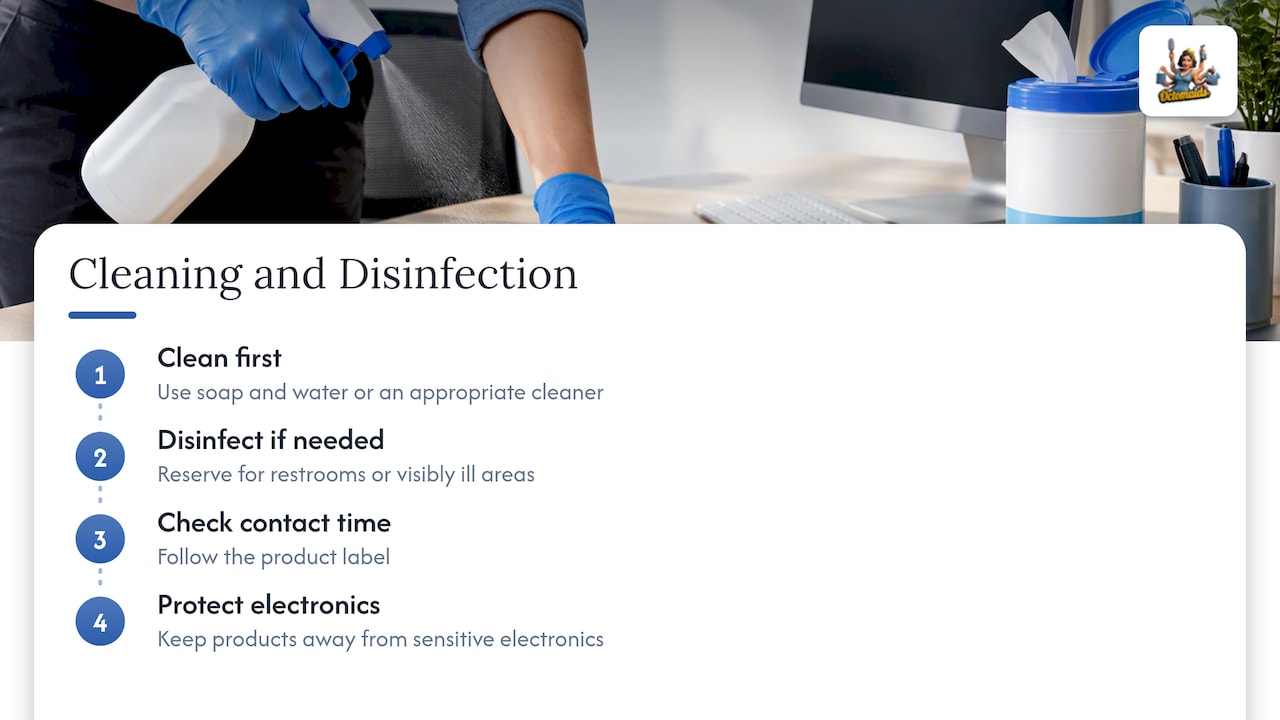
Many offices overspray. According to the CDC, regular cleaning is enough in most situations to prevent the spread of germs, and its guidance puts high-touch surfaces such as desks, door handles, restroom fixtures and touchpads on the list for regular cleaning. Disinfectant is better reserved for restrooms and for areas where people have been visibly ill.
A useful rule: clean first with soap and water or an appropriate cleaner, then disinfect if needed. Visible dirt blocks disinfectants. Always read the label for the required contact time, and keep products away from sensitive electronics.
Our perspective: consistency beats the annual blitz
We have cleaned homes and offices in Vancouver, WA and the Portland area since 2006, and the pattern repeats. Offices that treat deep cleaning as an occasional emergency spend more, and still feel dirty a month later. The ones that feel consistently clean pair a dependable nightly routine with a scheduled deep clean, and keep the same people doing the work.
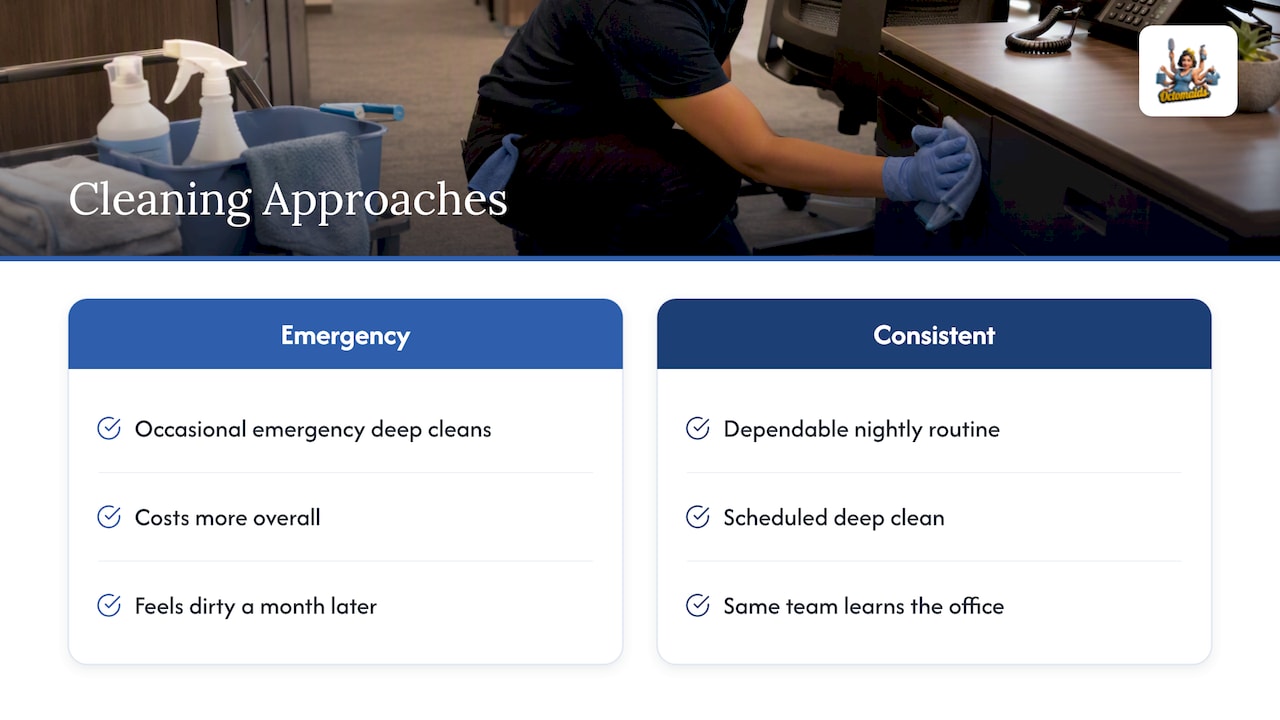
That last part is what we care about most. When the same team arrives each visit, they learn your office: which cabinet always holds dust, which conference room gets used for client meetings, which desk has a sensitive monitor. They stop needing instructions. We are family-owned, not a franchise, and our crews are background-checked, trained, and insured, which matters when people are working in your space after hours.
One honest piece of advice: write down the scope before the first visit. A checklist like this one, shared with whoever cleans for you, is the fastest way to avoid “I thought that was included.” Good cleaners welcome it.
— Steven
When to hire a professional crew
A small office can handle a lot of this with a weekend and a few supplies. Some tasks are better left to professionals:
- Carpet extraction and hard-floor refinishing, which need commercial equipment
- High dusting where ladders are required
- Large offices where a day of lost productivity costs more than the service
- Post-construction dust, which settles everywhere and needs repeated passes
If you are in Clark County or the Portland metro area, we offer office and commercial cleaning, including one-time deep cleans, post-construction cleaning, and recurring janitorial service, delivered by a dedicated team. Pricing depends on square footage, condition, and frequency, so the best next step is to ask us for a quote based on your space and this checklist.
FAQ
What does a deep clean of an office include?
It covers the areas routine service skips: vents, light fixtures, baseboards, carpet edges, upholstery, appliance interiors, restroom grout, and the space behind furniture. It usually also includes carpet extraction and floor scrubbing or refinishing. Think of it as the above, behind, under and inside pass.
How often should a small office be deep cleaned?
Once or twice a year is a common baseline, with a lighter periodic pass every three to six months if traffic is high or the office is health-sensitive. The right cadence depends on headcount, visitors, and season. Pair it with a steady nightly or several-times-weekly routine.
Do we need to disinfect everything during a deep clean?
No. The CDC says regular cleaning is enough in most situations, and disinfectant is best used in restrooms and where people have been ill. If you do disinfect, follow the label directions and keep surfaces wet for the full contact time.
How do I clean computers and keyboards safely?
Power the device down and use electronics-safe wipes or a barely damp microfiber cloth. Avoid household sprays and soaked cloths, which can damage screens and cause short circuits. Check the manufacturer’s instructions if you are unsure.
Sources
Recommended
- 6 Steps to an Audit Ready Office Cleaning Checklist for Managers
- Managers: Audit Ready Office Kitchen Checklist for Passing Inspections
About Octomaids
Octomaids is a locally operated professional cleaning company serving Vancouver, Clark County, and the surrounding Portland metro area. Since 2006, our cleaning teams have helped homeowners, renters, property managers, and businesses with recurring cleaning, deep cleaning, move-in/move-out cleaning, and commercial cleaning.
Our cleaning articles are reviewed to ensure the information reflects our real-world experience and professional cleaning practices.