


An office cleaning schedule is an organized plan that assigns specific cleaning tasks, frequencies, and responsibilities to maintain a hygienic and efficient workplace. Without one, cleaning becomes reactive rather than systematic, and gaps in hygiene build up fast. To create an office cleaning schedule that actually holds up, you need more than a generic template. You need a plan built around your actual office zones, usage patterns, and staffing reality. This guide walks you through every step, from mapping your first task list to verifying completion, using 2026 workplace hygiene standards as the benchmark.
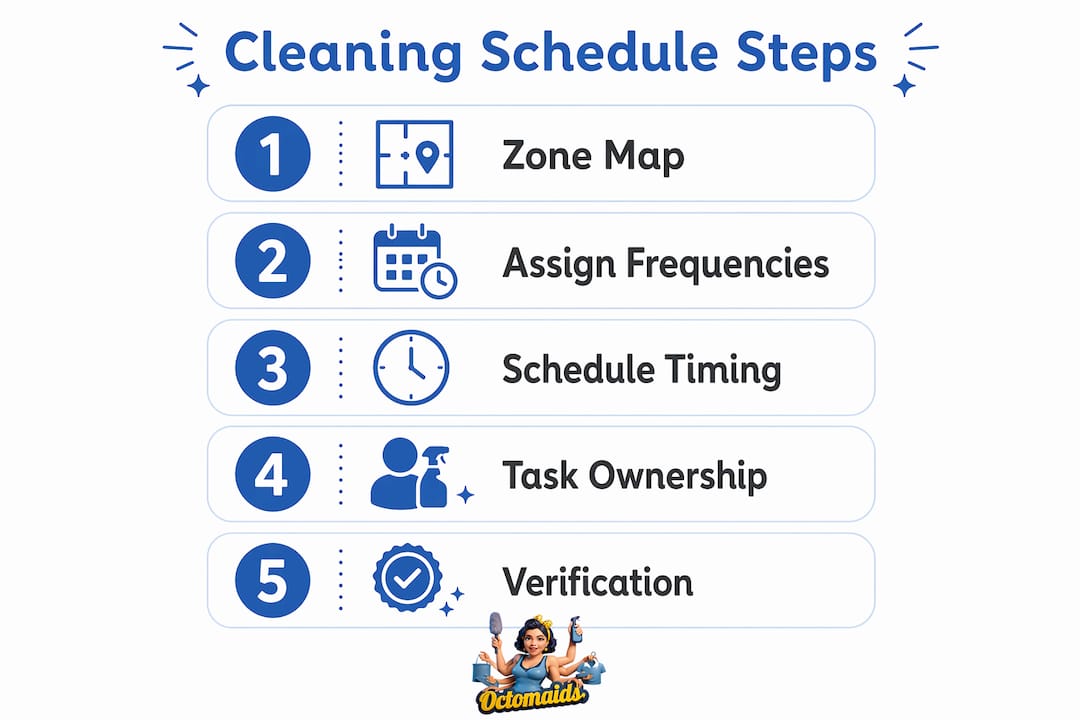
How to create an office cleaning schedule: start with a zone map
The most reliable office cleaning plans begin with a zone map, not a task list. Dividing your office into functional areas first gives every cleaning task a clear home and prevents anything from falling through the cracks.
Standard office zones include:
- Reception and lobby: High foot traffic, first impression area. Tasks include floor vacuuming or mopping, surface wiping, glass door cleaning, and waste removal.
- Open office and workstations: Desk surface wiping, keyboard and phone disinfection, floor vacuuming, and trash emptying.
- Breakroom and kitchen: Countertop disinfection, appliance exterior wiping, sink scrubbing, floor mopping, and refrigerator cleanout.
- Restrooms: Toilet and sink disinfection, mirror cleaning, floor mopping, restocking paper products, and waste removal.
- Meeting rooms: Table and chair surface wiping, whiteboard cleaning, floor vacuuming, and glass surface disinfection.
- Support areas (server rooms, storage, hallways): Dust control, floor care, and periodic deep cleaning of surfaces.
Each zone carries a different hygiene risk level. Restrooms and breakrooms demand daily attention. Server rooms and storage areas may only need weekly or monthly care. Mapping tasks by zone and building a master list from actual facility usage improves schedule accuracy far more than copying a generic template.
Pro Tip: Walk through your office at the end of a busy day before writing a single task. Note every surface that looks touched, every bin that looks full, and every floor that shows wear. That walk is your real master task list.

How are cleaning frequencies assigned in an office plan?
Once you have your zone map and master task list, the next step is assigning a frequency to each task. A tiered frequency approach groups tasks into four categories: daily, weekly, monthly, and quarterly.
- Daily tasks: Waste removal from all zones, restroom disinfection, breakroom countertop wiping, floor vacuuming in high-traffic areas, and glass door cleaning at entry points.
- Weekly tasks: Floor mopping throughout the office, thorough desk and surface disinfection, interior glass cleaning, and breakroom appliance exterior wiping.
- Monthly tasks: Deep carpet cleaning or floor scrubbing, interior window cleaning, light fixture dusting, and HVAC filter replacement every 30–90 days depending on occupancy. Replacing filters on schedule directly protects indoor air quality and reduces allergen buildup.
- Quarterly tasks: Full deep cleaning of all zones, upholstery cleaning, high-surface dusting, and equipment sanitization.
Standard offices require cleaning 2–5 times per week, while high-traffic or customer-facing facilities need daily service. That gap matters because a 20-person office and a 200-person office share the same restrooms in theory but not in practice.
Scheduling the right time window is just as important as frequency. Intensive cleaning tasks perform best when scheduled between 6:00 PM and midnight. That window avoids noise complaints, chemical odor exposure during work hours, and slip hazards from wet floors. High-traffic offices also benefit from midday touch-up shifts for restrooms and breakrooms, which catch the heaviest use period before the afternoon rush.
Pro Tip: Build your schedule around your office’s actual peak hours, not a standard 9-to-5 assumption. A call center running until 10:00 PM needs a completely different cleaning window than a law firm that clears out by 6:00 PM.
For more on planning off-hours cleaning effectively, the after-hours office cleaning guide from Octomaids covers the logistics in detail.
Who owns each task, and how do you verify it got done?
A cleaning schedule without assigned ownership is just a wish list. Effective schedules define the assigned owner, expected result, scope, frequency, and verification method for every task. That structure turns a schedule into an operational control rather than a suggestion.
Common roles in an office cleaning plan include:
- Day porter: Handles midday touch-ups, restroom restocking, and spill response during business hours.
- Evening cleaning crew: Completes the bulk of daily and weekly tasks after hours, including floor care and surface disinfection.
- Vendor specialist: Manages quarterly deep cleaning, carpet extraction, and equipment sanitization that requires professional tools.
- Facilities manager or office manager: Owns schedule oversight, verifies completion, and adjusts the plan as occupancy changes.
Verification is where most schedules break down. Visual inspections, occupant feedback, and periodic surface testing are all proven methods for confirming cleaning quality. A simple paper checklist signed by the cleaner and reviewed by a supervisor works well for smaller offices. Larger facilities benefit from digital tracking tools or Computerized Maintenance Management System (CMMS) software, which automates task logging and flags missed completions. CMMS platforms also make it easier to manage multiple cleaning crews across shifts without losing accountability.
Treat the schedule as a living document. Review it monthly for the first quarter, then quarterly after that. Occupancy changes, seasonal usage spikes, and new equipment all create new cleaning demands that a static list will miss.
What are the most common mistakes in office cleaning schedules?
The biggest mistake office managers make is trying to complete all cleaning tasks at once. Attempting to clean everything in one session leads to burnout among cleaning staff and inconsistent results across zones. Spreading tasks across daily, weekly, and monthly cycles keeps the workload manageable and the quality consistent.
Other common pitfalls include:
- Using a generic template without customizing it. A downloaded cleaning schedule template is a starting point, not a finished plan. Every office has unique traffic patterns, surface types, and risk areas that a one-size-fits-all list cannot capture.
- Ignoring schedule drift. Office usage changes over time. A team that grew from 15 to 40 people in a year needs a fundamentally different cleaning plan, not the same one with a few tasks added.
- Uneven load distribution. Assigning all intensive tasks to one shift or one person creates a bottleneck. Spread the load across roles and time windows to prevent quality drops.
- Skipping a pilot period. Running the schedule for two weeks before full rollout reveals gaps, timing conflicts, and tasks that were missed in the planning phase.
Pro Tip: Pilot your schedule during a normal week, not a holiday week or a slow period. You need to stress-test it against real occupancy to find the weak points.
A cleaning frequency guide can also help you calibrate task intervals if you are building your first plan from scratch.
Key Takeaways
A well-built office cleaning schedule functions as an operational control, not a checklist, and requires zone mapping, tiered frequencies, clear ownership, and verified completion to work.
| Point | Details |
|---|---|
| Start with zone mapping | Divide the office into functional areas before assigning any tasks to prevent gaps. |
| Use tiered frequencies | Assign daily, weekly, monthly, and quarterly tasks based on actual usage and hygiene risk. |
| Schedule intensive tasks after hours | The 6:00 PM to midnight window minimizes noise, odors, and hazards for staff. |
| Assign clear ownership | Every task needs a named role, an expected result, and a verification method. |
| Pilot before full rollout | Test the schedule for two weeks under normal occupancy to catch gaps before they become habits. |
What I’ve learned from building cleaning schedules that actually last
The offices I’ve seen struggle most with cleaning are not the ones with the smallest budgets. They are the ones with the most ambiguous plans. When nobody owns a task, it does not get done. When a schedule is built from a template instead of a real walk-through, it misses the breakroom that gets hammered every afternoon or the restroom that serves twice the traffic it was designed for.
The shift I recommend to every office manager is this: stop thinking of your cleaning schedule as a list and start treating it as an operating standard. That means it has a scope, a frequency, an expected outcome, and a way to confirm it happened. That structure is what separates a clean office from one that looks clean until you check the corners.
I also push back on the idea that more frequent cleaning always means better results. Overloading your cleaning team with tasks they cannot realistically complete in a shift produces worse outcomes than a leaner schedule with clear priorities. Realistic task assignment is not a compromise. It is how you get consistent quality over time.
Digital verification tools have changed what is possible here. Even a simple shared checklist in a project management app gives you a timestamped record of what was done, by whom, and when. That record is worth more than any inspection because it shows patterns over weeks, not just snapshots.
— Steven
Octomaids office cleaning services for Vancouver WA and Portland OR
Building a solid office cleaning plan takes time, and executing it consistently takes the right team. Octomaids has served businesses throughout Clark County, WA and the Portland Metro area since 2006, delivering professional office cleaning with the same trusted cleaners on every visit. Whether your office needs a recurring weekly schedule, a one-time deep clean, or a customized plan built around your specific zones and hours, Octomaids builds the service around your actual needs. Explore commercial cleaning services or contact the team directly to get a plan that fits your office and your schedule.
FAQ
How often should an office be professionally cleaned?
Standard offices need cleaning 2–5 times per week, while high-traffic or customer-facing offices require daily service. The right frequency depends on occupancy, surface types, and hygiene risk level.
What is the best time to schedule office cleaning?
Intensive cleaning works best between 6:00 PM and midnight to avoid disrupting staff and to reduce exposure to cleaning chemicals and wet floors.
What tasks belong on a daily office cleaning checklist?
Daily tasks include waste removal, restroom disinfection, breakroom surface wiping, floor vacuuming in high-traffic areas, and glass door cleaning at entry points.
How do I assign cleaning responsibilities in an office?
Assign each task to a specific role, such as a day porter, evening crew, or vendor specialist, and include an expected result and a verification method for every task.
How often should HVAC filters be replaced in an office?
HVAC filters should be replaced every 30–90 days depending on office occupancy and the sensitivity of occupants to allergens.