


Use a three-phase, room-by-room checklist, rough clean, detail clean, then final clean, and schedule the final pass well before handover to minimize dust resettling prior to the walkthrough. Every phase carries its own tools, hazards, and PPE, and skipping one is the fastest way to fail an inspection or redo work. Compliance controls like OSHA’s silica standard and ISSA-recognized cleaning protocols aren’t optional add-ons; they’re what separates a real post-construction clean from a quick tidy-up.
TL;DR:
- The rough clean phase removes large debris and clears pathways, while the detail clean focuses on wiping surfaces and vacuuming dust, and the final clean polishes all surfaces before handover.
- Different equipment and PPE are required for each stage, with HEPA vacuums and microfiber tools essential for the detail and final cleaning to prevent dust recirculation.
- OSHA’s silica standards demand engineering controls like wet suppression and HEPA vacuums, with respirators chosen based on dust hazard levels during cleaning activities.
- The cleaning process should follow a strict room-by-room ceiling-to-floor sequence to avoid recontamination and ensure a thorough final inspection.
- Scheduling the final clean within 24 to 48 hours prior to handover is crucial to prevent dust resettling and guarantee a clean space for inspection and client walkthroughs.
Table of Contents
- What Are the Three Phases of a Post Construction Cleaning Checklist?
- What Safety Gear and Compliance Steps Does Construction Cleaning Require?
- What Should Be on Your Room-by-Room Cleaning Checklist?
- What Tools and Supplies Do You Need for Post Construction Cleaning?
- How Long Does Post Construction Cleaning Take and What Drives the Cost?
- How Do You Remove Grout Haze, Paint Overspray, and Adhesive Residue?
- What Does a Final Walkthrough and Punch-List Sign-Off Look Like?
- How Does a Professional Crew Scope and Document a Post Construction Clean?
- Primary Sources and Standards Worth Bookmarking
- What the Checklist Gets Wrong If You Follow It Blindly
- Ready for a Final Clean That Holds Up at Handover?
- Sources
- FAQ
What Are the Three Phases of a Post Construction Cleaning Checklist?
A post construction cleaning checklist works because it treats cleanup as three distinct jobs, not one long chore. The rough clean comes first: hauling out debris, sweeping bulk material, and clearing safe walking paths so crews and inspectors can move through the space. The detail clean, sometimes called the light clean, follows once the worst of the dust has had time to settle. This is where every surface gets wiped, vents get vacuumed, and fine construction dust gets pulled off ledges, sills, and fixtures. The final clean is the polish pass: glass, floors, and any punch-list items get resolved right before the client or inspector walks through.
Each phase needs different equipment and different safety gear, which is exactly why contractors separate them instead of trying to clean once and call it done.
- Rough clean: shop vacs, brooms, heavy-duty bags, basic dust masks
- Detail clean: HEPA vacuums, microfiber, damp wiping systems
- Final clean: glass cleaners, floor finishers, white-glove inspection tools
Compressing these phases into one pass is one of the more common reasons projects fail inspection or require a costly re-clean, because dust that hasn’t settled just gets pushed around rather than removed.
What Safety Gear and Compliance Steps Does Construction Cleaning Require?
Construction dust isn’t just messy, it’s regulated. OSHA’s respirable crystalline silica standard, 29 CFR 1926.1153, governs any cleaning activity that disturbs concrete, drywall compound, tile, or masonry dust, and it requires engineering controls before you even think about a respirator. That means wet suppression methods and HEPA-filtered vacuums come first; dry sweeping that kicks dust back into the air is a violation waiting to happen, not a shortcut.
Respirator choice depends on the hazard. N95s handle general nuisance dust, but P100 cartridges are the safer call when silica-generating tasks like grinding or dry sanding are still underway nearby.
- Safety glasses and hi-vis vests on every crew member
- Chemical-resistant gloves rated for the products in use
- Steel-toed boots on any active job site
- Safety Data Sheets (SDS) on hand for every chemical brought on-site
Every site also needs a documented, site-specific hazard assessment before cleaning starts, along with a designated safety lead who signs off on it. This paperwork isn’t bureaucracy; it’s the record that protects your crew and your client if anything goes wrong.
Pro Tip: Walk the site before assigning tasks and flag any area where cleaning could disturb dust from cutting, sanding, or grinding still in progress nearby. That single walk-through often prevents the biggest PPE mistakes.
What Should Be on Your Room-by-Room Cleaning Checklist?
Work top to bottom and back to front in every room. Ceilings, light fixtures, and upper cabinets get cleaned before floors, because gravity will undo any floor work you do first. This ceiling-to-floor sequence is the single biggest reason some crews reclean the same room twice.
- Entrances and exits. Wipe down door frames, clean glass on both sides, vacuum thresholds, and remove any protective film left on hardware.
- Living and common areas. Dust ceiling fans and light fixtures, wipe baseboards, clean windows and sills, and vacuum carpets or mop hard floors depending on surface type.
- Kitchen. Clean cabinet interiors and exteriors, degrease range hoods, wipe down appliance exteriors and interiors, and detail sink fixtures and countertop seams where construction dust settles.
- Bathrooms. Scrub tile and grout, disinfect fixtures, polish mirrors and glass shower doors, and check under sinks for leftover caulk or adhesive residue.
- Bedrooms. Wipe closet shelving, clean window tracks, vacuum carpet edges along baseboards, and check ceiling corners for cobwebs and drywall dust.
- Utility and mechanical spaces. Wipe down water heaters and electrical panels (never spray directly on them), sweep and mop flooring, and clear dust from any exposed ductwork.
- HVAC registers and vents throughout the home. Vacuum every supply and return register before the system runs; contaminated ductwork will recirculate construction dust into every room the moment the blower kicks on.
- Floors, by surface type. Hardwood gets dry microfiber dusting followed by a manufacturer-approved cleaner, tile gets grout-safe scrubbing, and carpet gets a full HEPA vacuum pass, not just a quick run-through.
Windows deserve their own attention here too. Streaks and haze on new glass are one of the fastest ways a final clean looks unfinished, and a methodical approach like the one in this window cleaning guide saves real time on large jobs with dozens of panes. For a broader room-level reference beyond construction cleanup, Octomaids’ deep clean checklist for every room covers the same ceiling-to-floor logic applied to routine home cleaning.
What Tools and Supplies Do You Need for Post Construction Cleaning?
The right equipment determines whether dust actually leaves the building or just moves around it. HEPA-filtered vacuums capture 99.97% of particles down to 0.3 microns, which is why they replace shop vacs and brooms once you move past the rough clean stage.
- HEPA vacuums and a HEPA-equipped shop vac for backup
- Microfiber cloths and mop heads in multiple colors to prevent cross-contamination
- Commercial carpet extractor for construction-heavy flooring
- Floor scrubber for large tile or concrete areas
- Razor scrapers and squeegees for paint, adhesive, and glass work
- Heavy-duty trash bags and a dumpster or hauling plan for debris
Chemical selection matters as much as the tools. Grout haze usually needs a mild acidic cleaner, while general surfaces call for pH-neutral products that won’t etch stone or dull finishes. Keep SDS sheets accessible for every product on-site, and if any hazardous material shows up during teardown, have a disposal manifest ready before you start.
How Long Does Post Construction Cleaning Take and What Drives the Cost?
Timing and price both hinge on the same variables: square footage, finish sensitivity, and how much debris the trades left behind. A small, straightforward space might move through all three phases in a single day with a two-person crew, while a large custom home with natural stone, specialty tile, or extensive glass can stretch into multiple days.
- Square footage and layout complexity
- Finish sensitivity (natural stone, hardwood, specialty glass)
- Debris volume left by other trades
- Whether specialty services like duct cleaning or carpet extraction are needed
- Number of phases required for the scope
Post-construction cleaning costs more per hour than routine janitorial work because of the specialized equipment and PPE involved, not because the labor itself is harder. Schedule the final clean 24 to 48 hours before handover, and build in a joint walkthrough with the contractor so nothing gets missed between the last cleaning pass and the client’s first look. Octomaids’ guide on why new homes need professional cleaning before move-in breaks down that timing window in more detail.
How Do You Remove Grout Haze, Paint Overspray, and Adhesive Residue?
These three problems ruin more final walkthroughs than anything else on a job site, and all three get harder to fix the longer you wait.
- Grout haze bonds to tile the longer it sits, and what’s an easy wipe on day one becomes a labor-intensive scraping job two weeks later.
- Paint overspray on glass or trim needs a test patch first; razor scraping at a low angle usually lifts it without scratching, but always confirm the surface before committing.
- Adhesive residue from protective film or tape responds best to a citrus-based solvent and a plastic scraper rather than metal, which can gouge finished surfaces.
- HVAC ductwork that ran during construction should get inspected and cleaned or filter-swapped before the system runs continuously, or every room will get redusted within days.
What Does a Final Walkthrough and Punch-List Sign-Off Look Like?
A final clean isn’t finished until someone verifies it under the same lighting conditions the client will actually see. Walk each room with a flashlight at a low angle; it reveals streaks, dust, and residue that overhead lighting hides completely.
- Check high-touch and easy-to-miss spots: HVAC registers, top edges of doors and cabinets, and behind large appliances.
- Photograph every room before leaving, both for your own record and as proof of condition at handover.
- Have the contractor or project manager sign a punch-list noting any remaining items and target dates for resolution.
- Keep the SDS binder and final invoice or scope record together as part of the job file.
Contractors and project managers commonly use a simple acceptance standard: no visible dust on any horizontal surface, streak-free glass, and functioning fixtures throughout, before signing off on handover.
How Does a Professional Crew Scope and Document a Post Construction Clean?
A trusted cleaning company serving homeowners and businesses in the Clark County and Portland Metro area since 2006 scopes post-construction jobs phase by phase, with paperwork to match the work.
- A site-specific hazard assessment gets completed before any crew member starts cleaning
- Each phase gets scheduled separately, rough, detail, and final, rather than compressed into one visit
- SDS sheets travel with the crew for every chemical used on-site
- A punch-list gets documented and reviewed with the client or contractor at the final walkthrough
That’s the same structure homeowners and project managers should expect from any post construction cleaning service they hire, phased work, documented safety steps, and a clear sign-off process rather than a single quick pass through the building.
Primary Sources and Standards Worth Bookmarking
A handful of references cover most of what you’ll need beyond this checklist. OSHA’s respirable crystalline silica rule, 29 CFR 1926.1153, remains the baseline for any construction-related cleaning task involving concrete, tile, or drywall dust.
- ISSA’s CIMS and GBAC certification programs define operational and quality standards for cleaning providers, and looking for a certified provider is a reasonable filter when hiring
- The three-phase timeline breakdown for project managers offers a useful scheduling reference for larger builds
- Guides covering process and standards for post-construction cleaning expand on sequencing and timing beyond what fits in a single checklist
Certified providers tend to have documented QA steps built into their process, which correlates with fewer punch-list items surviving the final walkthrough.
What the Checklist Gets Wrong If You Follow It Blindly
The checklist itself isn’t the hard part. Most contractors can find a room-by-room list in five minutes. What trips people up is treating the phases as flexible when they aren’t. I’ve seen the same mistake play out repeatedly in project write-ups: a rough clean and detail clean get merged into one visit to save a day on the schedule, and the final clean ends up fighting dust that never had time to settle.
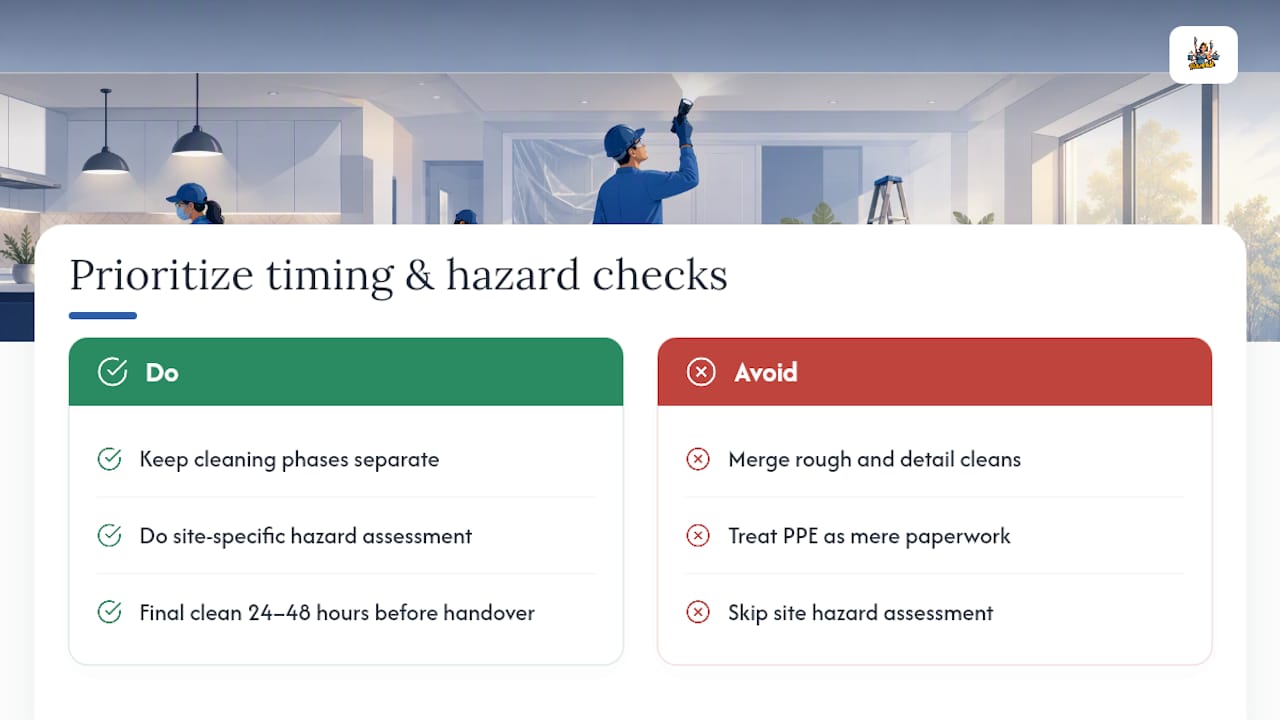
The conventional advice treats PPE and hazard assessments as compliance boxes to check. That undersells them. A documented, site-specific hazard assessment forces someone to actually walk the space and think about what’s still happening nearby, active sanding, wet trades, electrical work, before a crew starts wiping surfaces. Skip that step and you’re guessing at respirator selection instead of matching it to the actual hazard.
If you take one thing from this checklist, prioritize the 24 to 48 hour final-clean window before handover over almost anything else. Get the timing wrong and even a technically perfect clean will look unfinished the moment dust resettles on that first walkthrough.
— Steven
Ready for a Final Clean That Holds Up at Handover?
Getting the phasing, safety controls, and timing right on a post-construction clean takes coordination most homeowners and project managers don’t want to manage on top of everything else a build demands. Octomaids’ team handles the scoping, hazard assessment, and phase-by-phase execution so the final walkthrough goes smoothly instead of turning into a punch-list scramble. Explore Octomaids’ cleaning services to see how a scheduled, documented post-construction clean fits into your project timeline.
Sources
- Post-Construction Cleaning Guide | Modular Concepts
- Post-Construction Cleaning: What contractors leave behind (ServiceMaster)
FAQ
What Do I Need for a Post Construction Clean?
You need a phased plan covering rough, detail, and final cleaning, HEPA vacuums and microfiber tools, PPE matched to OSHA’s silica standard, and a documented hazard assessment before work starts.
What Is a Post Construction Cleaning?
It’s a specialized cleaning process that removes construction dust, debris, and residue in three distinct phases rather than a single pass, preparing a newly built or renovated space for occupancy.
What’s the Going Rate for Post Construction Cleaning?
Pricing varies by square footage, finish sensitivity, and debris volume, and it typically runs higher per hour than routine janitorial work because of the specialized equipment and PPE required.
When Should the Final Clean Happen Relative to Handover?
Schedule the final clean 24 to 48 hours before handover so settled dust doesn’t get disturbed and resettle before the client or inspector walks through.
Why Can’t You Skip the Detail Clean and Go Straight to Final?
Skipping the detail phase leaves fine dust on ledges, vents, and fixtures that the final clean isn’t designed to remove, which often forces a costly re-clean before handover.
Recommended
- Post Construction Cleaning Near Me | Vancouver WA & Portland OR
- Why New Homes Need Professional Cleaning Before Move-In
About Octomaids
Octomaids is a locally operated professional cleaning company serving Vancouver, Clark County, and the surrounding Portland metro area. Since 2006, our cleaning teams have helped homeowners, renters, property managers, and businesses with recurring cleaning, deep cleaning, move-in/move-out cleaning, and commercial cleaning.
Our cleaning articles are reviewed to ensure the information reflects our real-world experience and professional cleaning practices.