
For most businesses and busy households, the right answer is a combined program: recurring janitorial service for daily protection, plus scheduled deep cleaning for periodic restoration. That pairing costs less over time than reactive cleaning alone, keeps facilities consistently presentable, and prevents the kind of surface wear that eventually requires expensive repairs or replacements.
- Choose janitorial only if you run a low-traffic private office, have a tight monthly budget, and your space never accumulates heavy soiling between visits.
- Choose one-time deep cleaning only for post-construction cleanup, move-out situations, or a single heavy-restoration need with no ongoing contract.
- Combine both for retail spaces, medical offices, food-service environments, high-traffic commercial buildings, and short-term rentals where appearance and hygiene directly affect revenue or compliance.
Octomaids serves Vancouver, WA and Portland, OR with both recurring janitorial programs and one-time deep cleans, so you can run a combined program through a single trusted provider.
Table of Contents
- How do janitorial and commercial deep cleaning actually differ?
- When should you pick janitorial, deep cleaning, or both?
- What do these services typically cost, and what drives the price?
- How do you design a combined janitorial and deep-clean program?
- How do you vet a cleaning provider and spot red flags?
- Why Octomaids fits a combined janitorial and deep-clean program
- What does onboarding actually look like for each service type?
- Hidden fees, total costs, and how to save on combined contracts
- Key Takeaways
- Cleaning as a strategic investment, not a line item
- Sources and further reading
- Octomaids: local cleaning built for combined programs
- FAQ
How do janitorial and commercial deep cleaning actually differ?
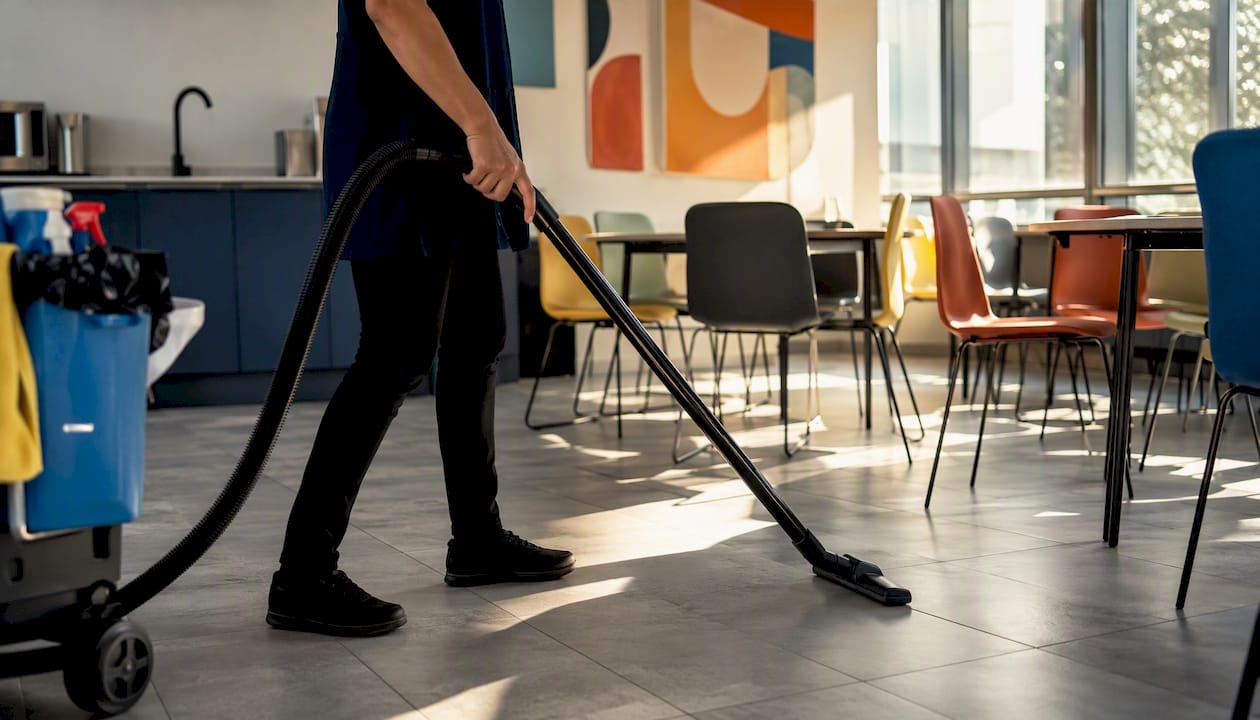
Janitorial service covers daily or high-frequency maintenance — trash removal, restroom restocking, surface wiping, vacuuming, and high-touch sanitation. Commercial or deep cleaning is periodic and intensive: carpet extraction, HVAC vent cleaning, power washing, window washing, and heavy degreasing. The operational differences between the two include frequency, equipment, staffing expectations, and level of detail.
| Dimension | Janitorial (recurring) | Commercial/Deep Cleaning (periodic) |
|---|---|---|
| Best for | Daily operational cleanliness | Restoration, compliance resets, seasonal refresh |
| Frequency | Daily, nightly, or weekly | Monthly, quarterly, semi-annual, or one-time |
| Typical tasks | Trash, restroom restock, dusting, mopping, vacuuming | Carpet extraction, window washing, HVAC vents, grout scrubbing, power washing |
| Pricing model | Flat per-visit or monthly contract | Hourly or flat project rate |
| Pros | Consistent baseline; predictable cost | Removes deep soiling; extends surface life |
| Cons | Does not address embedded grime | Not a substitute for daily upkeep |
| Specialized capabilities | High-touch disinfection protocols | Medical-grade sanitization, post-construction, eco-friendly formulations |
Key tradeoffs to keep in mind:
- Janitorial alone cannot remove embedded carpet stains or restore grout; deep cleaning alone cannot maintain daily hygiene.
- Commercial cleaning handles the technical, periodic tasks that janitorial crews are neither equipped nor scheduled to perform.
- A combined program costs more upfront but prevents the accelerated wear that causes replacement costs to spike.
- Eco-friendly, non-toxic formulations are now a standard differentiator; ask specifically if your team or tenants have chemical sensitivities.
When should you pick janitorial, deep cleaning, or both?
The right choice depends on your facility type, foot traffic, and what happens when cleanliness slips.
Janitorial only makes sense when:
- Your office has fewer than 10 people and low daily traffic.
- No food is prepared or served on-site.
- Budget is the primary constraint and surfaces are in good condition.
Deep cleaning alone works when:
- You need a one-time post-construction or move-out clean with no ongoing contract.
- A space has been vacant and requires restoration before occupancy.
- You are addressing a specific heavy-soiling event (flood remediation, smoke damage).
Both services are necessary when you run a retail store, restaurant, medical office, childcare facility, or short-term rental. Matching service type to foot traffic, square footage, and regulatory requirements is the standard best practice; the wrong choice produces hygiene gaps or unnecessary cost. Specialized environments like medical offices and food service require tailored methods — a standard janitorial checklist applied to a clinical setting is often inadequate.
Pro Tip: Track foot-traffic spikes — back-to-school season, holiday retail surges, post-event periods — and schedule a deep clean within two weeks of each peak. Your surfaces will show it if you wait longer.
What do these services typically cost, and what drives the price?
Typical janitorial tasks: trash removal, restroom restocking, surface disinfection, vacuuming, mopping, glass wiping, and high-touch point sanitation.
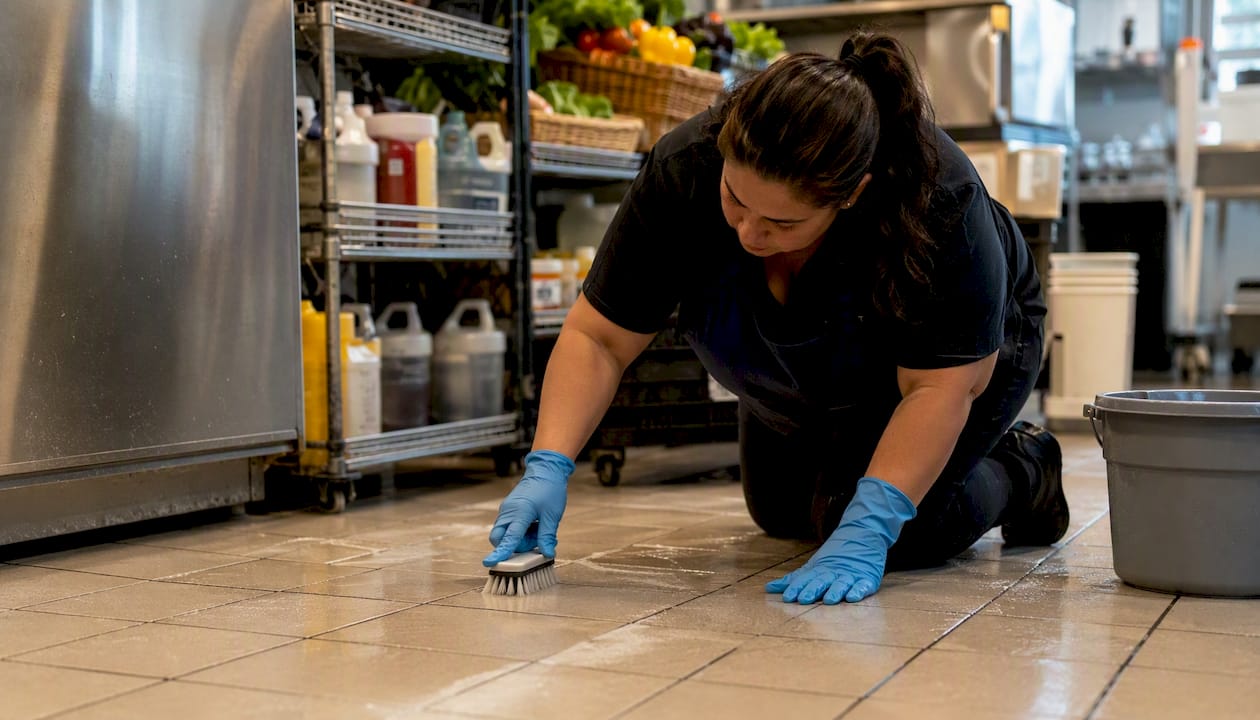
Typical deep-clean tasks: carpet extraction, upholstery cleaning, HVAC vent cleaning, grout scrubbing, window washing, power washing, oven and appliance degreasing, and baseboard/blind detailing. A room-by-room deep-clean breakdown can help you specify exactly what you need before requesting quotes.
| Service type | Typical pricing model | Approximate range (US) |
|---|---|---|
| Janitorial, small office | Flat per-visit or monthly contract | a moderate monthly rate for small offices |
| Janitorial, medium commercial | Square-foot contract | a moderate monthly rate for medium commercial spaces |
| One-time deep clean, residential | Flat or hourly | a moderate per-visit rate for residential deep cleaning |
| One-time deep clean, commercial | Hourly or project flat | a moderate per-visit rate for commercial deep cleaning |
| Combined program (janitorial + quarterly deep clean) | Bundled contract | Varies; bundling typically reduces per-visit cost |
Ranges are general market guidance; actual quotes depend on scope, location, and provider.
Cost signal: Providers offering subscription or recurring-client pricing often reduce per-visit rates by 10–20% compared to one-off bookings — always ask whether a recurring contract lowers your rate before signing a per-visit agreement.
Variables that push prices higher: specialty equipment (carpet extractors, pressure washers), hazardous or biohazard waste, high ceilings or hard-to-reach surfaces, short-notice bookings, and industry-specific compliance requirements.
Before accepting any quote, confirm in writing:
- Exact tasks included per visit
- Supplies and equipment provided vs. client-supplied
- Frequency and scheduling flexibility
- Remediation or re-clean policy if results are unsatisfactory
- Any surcharges for after-hours, holidays, or specialty tasks
Digital-first booking and transparent pricing are now standard expectations; a provider who cannot give you a written scope and a clear price online is already a yellow flag.
How do you design a combined janitorial and deep-clean program?
A layered maintenance strategy uses daily janitorial to preserve surfaces and scheduled deep cleaning to prevent premature wear. Here is a practical framework:
- Define your baseline daily tasks. List every task that must happen at every visit: trash, restrooms, high-touch disinfection, vacuuming traffic areas, and spot mopping.
- Set your deep-clean cadence by surface type and traffic. Carpet in a high-traffic lobby needs extraction quarterly; a low-traffic conference room may only need it semi-annually.
- Document the handoff. The janitorial crew and the deep-clean team need a written scope showing which areas are priority, where equipment is stored, and who has access to locked spaces.
- Build a scheduling matrix. Map recurring visits against deep-clean dates so the two never conflict and surfaces are always in the best possible condition before a deep clean.
Sample schedules:
- Low-traffic office: Weekly janitorial + annual deep clean.
- Medium-traffic retail or office: Nightly or three-times-weekly janitorial + quarterly deep clean.
- High-traffic food service or medical: Nightly janitorial + monthly or semi-annual deep clean, with specialized disinfection protocols per visit.
For recurring schedule examples you can adapt to your own space, Octomaids publishes practical cadence guides built around real facility types.
How do you vet a cleaning provider and spot red flags?
Trust signals to look for:
- Background-checked, consistently assigned crews (same people every visit builds accountability).
- Written scope and checklist provided before the first visit.
- Transparent online pricing and digital booking.
- Clear service guarantee with a defined re-clean or remediation policy.
- Industry-specific certifications where relevant (medical, food service).
- Verifiable local references or published reviews.
Red flags that should stop a conversation:
- Vague scope with no written checklist.
- Large, unexplained price differences between quotes with no justification.
- Pressure to sign a long-term contract before a trial visit.
- No proof of insurance or bonding.
- Inability to name the specific products or disinfectants used.
The highest-rated providers excel at clear communication of priorities and straightforward booking — clients consistently report that time regained and reduced mental load matter more than the lowest hourly rate.
Questions to ask every provider:
- Who specifically will clean my space, and will it be the same person each visit?
- What is your remediation policy if I am not satisfied?
- Are your teams background-checked and insured?
- What cleaning products do you use, and can you accommodate chemical sensitivities?
- How do you handle scope changes or special requests mid-contract?
Pro Tip: Contact at least three providers, send the same written scope to each, and compare line-by-line. A provider who responds with clarifying questions is almost always more reliable than one who quotes immediately without asking anything. Use this vetting guide to build your own checklist before you make calls.
Why Octomaids fits a combined janitorial and deep-clean program
Octomaids has served Vancouver, WA and Portland, OR since 2006, which means the team understands the specific facility types, seasonal patterns, and client expectations of the Clark County and Portland Metro markets. The services map directly onto the combined-program model:
- Recurring cleaning — covers the janitorial layer: consistent visits, same trusted crew, documented scope.
- Office and commercial janitorial services are available for businesses that need a professional, accountable crew on a defined schedule.
Every Octomaids team member is background-checked, and the same-crew model means your space is cleaned by people who know it. Online booking is transparent, and the service guarantee means issues are addressed, not ignored.
Pro Tip: If you are onboarding a recurring program, start with a one-time deep clean first. It sets a clean baseline so your recurring crew maintains a high standard from visit one rather than catching up.
What does onboarding actually look like for each service type?
Janitorial onboarding (recurring): Expect a walkthrough or intake call in week one, a written scope delivered before the first visit, and a trial period of two to four weeks before the schedule locks in. Most providers ask for 48–72 hours’ notice to adjust frequency or add tasks.
Deep-clean onboarding (one-time or periodic): Typically a same-week or next-week booking for standard residential; commercial projects may require a site visit and a written proposal before scheduling. The clean itself runs two to eight hours depending on square footage and scope.
Combined program onboarding: Plan for a deep clean in week one to establish the baseline, followed by the first recurring visit in week two or three. The handoff document (scope, access, priority areas) should be finalized before the deep-clean crew arrives so the recurring team inherits a clear standard.
Hidden fees, total costs, and how to save on combined contracts
Common hidden fees to watch for: supply surcharges (if you expected the provider to bring products), after-hours or weekend premiums, add-on task fees not listed in the base scope, and cancellation penalties on long-term contracts.
Cost-saving strategies for combined contracts:
- Bundle janitorial and deep-clean services with one provider; most will discount the deep-clean rate for recurring clients.
- Lock in a quarterly deep-clean date at contract signing rather than booking ad hoc — providers often charge a premium for unscheduled project work.
- Specify exactly which rooms are priority; paying for full-facility deep cleaning when only high-traffic zones need it wastes budget.
- Ask whether eco-friendly product substitutions affect pricing — some providers charge a premium, others do not.
- Review the difference between deep and regular cleaning before your first quote call so you are not paying deep-clean rates for tasks that belong in a standard recurring visit.
The operational differences between service types — frequency, equipment, and staffing — directly determine total annual cost. Getting those distinctions right before you sign saves money every month.
Key Takeaways
A combined janitorial and periodic deep-clean program delivers better long-term value than either service alone for most businesses and high-traffic homes.
| Point | Details |
|---|---|
| Combined programs win long-term | Pairing recurring janitorial with periodic deep cleaning prevents surface wear and reduces total annual maintenance cost. |
| Match service to traffic and use | Low-traffic private offices may need janitorial only; medical, food service, and retail spaces need both. |
| Vet providers on specifics | Require a written scope, background-checked crews, a remediation policy, and transparent pricing before signing. |
| Bundle to save | Contracting janitorial and deep cleaning through one provider typically lowers the per-visit deep-clean rate. |
| Octomaids covers both layers | Octomaids offers recurring janitorial and one-time deep-clean services in Vancouver, WA and Portland, OR since 2006. |
Cleaning as a strategic investment, not a line item
Most facility managers and homeowners I speak with frame cleaning as an expense to minimize. That framing leads to predictable outcomes: deferred deep cleans, accelerated surface wear, and eventually a restoration bill that dwarfs what a consistent program would have cost. The smarter frame is preventive maintenance. Janitorial service is the daily discipline that keeps a facility functional; deep cleaning is the scheduled intervention that extends the life of floors, carpets, upholstery, and HVAC systems. Skipping either one is not saving money. It is borrowing against future repair costs.
The providers worth hiring are the ones who understand this distinction and can articulate it clearly in their proposals. A vague scope and a low price is almost never the bargain it appears to be.
Sources and further reading
The claims in this article draw on industry reporting, facility management guidance, and cleaning service operational guides. For deeper reading:
- Deep cleaning vs commercial cleaning — Facility Management Insights
- Janitorial and cleaning mid-year trends shaping 2026 — Maintenance Sales News
- Janitorial efficiency insights — NASSCO Inc.
- Is commercial cleaning better for your office building than janitorial services? — R3 Facility Management
- Office cleaning — Pro Shine Professional Cleaning
- My honest Happy Clean review — HomeDoors News
- Office vs industrial vs janitorial — Biowiki
- Office Cleaning vs. Janitorial Services: Which Does Your Business Actually Need? — The Cleaning Concern
When evaluating any source, look for frequency guidance grounded in facility type, pricing indicators tied to specific scope variables, and buyer questions that go beyond generic checklists.
Octomaids: local cleaning built for combined programs
If you are in Vancouver, WA or the Portland Metro area and want a single provider for both recurring maintenance and periodic deep cleaning, Octomaids is the practical choice. The family-owned team has been doing this since 2006, which means consistent crews who know your space, background-checked staff on every visit, and a service model built around showing up reliably rather than just once.
You can book recurring or one-time cleaning services online with transparent pricing, or start with a recurring cleaning plan and add a deep-clean interval that fits your facility’s actual traffic and budget. No pressure to over-schedule, no vague scopes, and no surprises on the invoice.
FAQ
What is the main difference between janitorial and deep cleaning?
Janitorial service covers daily or weekly maintenance tasks like trash removal, restroom restocking, and surface wiping. Deep cleaning is periodic and intensive, addressing carpet extraction, HVAC vents, grout, and heavy degreasing.
How often should a business schedule a deep clean?
Most medium-traffic offices benefit from a quarterly deep clean paired with weekly or nightly janitorial service. High-traffic environments like restaurants or medical offices may need deep cleaning monthly.
Does combining janitorial and deep cleaning actually save money?
Yes, over time. Consistent janitorial service slows surface wear, which reduces how often expensive restoration work is needed. Bundling both services with one provider also typically lowers the per-visit deep-clean rate.
What trust signals should I look for when hiring a cleaning provider?
Background-checked, consistently assigned crews, a written scope and checklist before the first visit, transparent online pricing, and a clear remediation policy are the four non-negotiable signals of a reliable provider.
Does Octomaids offer both janitorial and deep-clean services?
Yes. Octomaids provides recurring janitorial and office cleaning alongside one-time deep cleans for homes and businesses throughout Vancouver, WA and the Portland, OR metro area.

