


Professional cleaning packages are defined as structured service agreements that organize cleaning tasks into tiered bundles, typically labeled basic, standard, and comprehensive, to match the specific maintenance demands of commercial and rental properties. Understanding the types of cleaning packages for professionals is the first decision property managers and business owners face when setting up a facility maintenance plan. The right tier determines your cleaning frequency, task scope, and total cost. Bundled janitorial services with specialty add-ons are increasingly preferred in 2026, with proposals typically delivered within 24–48 hours after an on-site walkthrough.
1. What is typically included in basic cleaning packages for professionals?
Basic cleaning packages cover the routine tasks that keep a facility presentable between deeper service visits. They are best suited for small offices, low-traffic retail spaces, or rental properties that see light daily use. The scope is intentionally narrow, which keeps costs low but also limits what gets addressed each visit.
Standard tasks in a basic package include:
- Dusting surfaces, shelves, and furniture
- Vacuuming carpets and sweeping hard floors
- Emptying trash bins and replacing liners
- Restroom cleaning including toilet, sink, and mirror wipe-down
- Spot-cleaning visible smudges on doors and glass
Basic janitorial packages rarely include deep sanitization or specialty tasks such as wall washing or floor stripping. Those services are typically offered as add-ons or periodic agreements, which means negotiating them upfront is far more economical than ordering them as emergency one-offs.
The main advantage of a basic package is predictable, low-cost coverage. The trade-off is that buildup accumulates faster in high-traffic zones, which can accelerate surface wear and create hygiene gaps. For a small office with fewer than ten people, a basic package scheduled two or three times per week often covers the baseline well.
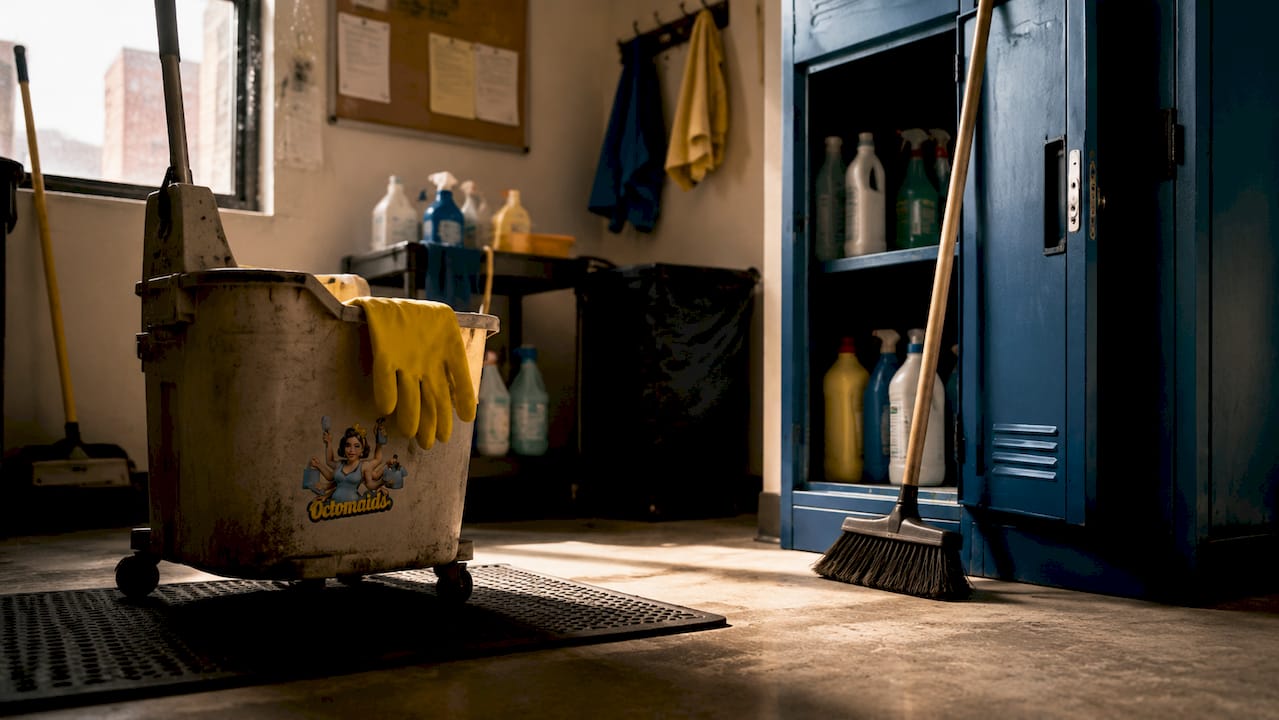
Pro Tip: Ask your provider for a written task list before signing. Generic “light cleaning” language in a contract almost always means different things to the client and the crew.
2. How do standard cleaning packages expand upon basic services?
Standard packages are the most common choice for medium-sized offices, multi-tenant commercial spaces, and short-term rental properties with moderate turnover. They build on the basic tier by adding disinfection steps and addressing shared spaces that basic packages often skip entirely.
Key additions in a standard package typically include:
- High-touch surface disinfection (door handles, light switches, elevator buttons)
- Breakroom cleaning including appliance exteriors, counters, and sink
- Conference and meeting room reset after each use
- More frequent restroom maintenance with restocking of paper and soap
- Increased trash removal frequency to prevent overflow
Office and commercial cleaning rates typically range from $20 to $80 per hour depending on facility size and service complexity. Standard packages generally fall in the middle of that range because they require more time per visit and more specialized products.
The hygiene benefit of a standard package is meaningful for businesses that host clients or operate in regulated industries. A breakroom that gets wiped down daily versus weekly looks and smells different in ways that affect employee morale and client perception. For retail spaces or medical offices, the standard tier is often the minimum that makes practical sense.
Pro Tip: Request that high-touch surface disinfection be listed as a named line item in your contract. If it is not written down, it is easy for crews to skip under time pressure.
3. What defines comprehensive cleaning packages and when are they necessary?
Comprehensive packages combine routine maintenance with scheduled deep-cleaning tasks on a rotating basis. They are the right choice for large office buildings, warehouses, healthcare-adjacent facilities, and any property where surface condition directly affects safety or compliance.
A comprehensive package typically includes everything in the standard tier plus:
- Carpet extraction or steam cleaning on a scheduled cycle
- Upholstery cleaning for chairs and soft furnishings
- Floor scrubbing, stripping, and refinishing
- Interior window cleaning
- Detailed restroom disinfection including grout and fixtures
- Wall washing in high-contact corridors
- Periodic deep sanitization of HVAC vents and baseboards
Comprehensive packages extend the lifespan of facility surfaces more effectively than surface-only cleaning. Industry experts treat comprehensive packages as a maintenance strategy rather than a discretionary expense. That framing matters because deferred deep cleaning accelerates wear on flooring, upholstery, and fixtures, which costs more to replace than to maintain.
| Facility type | Recommended tier | Key driver |
|---|---|---|
| Small private office | Basic | Low traffic, limited shared space |
| Mid-size commercial office | Standard | Client-facing areas, shared amenities |
| Large office or warehouse | Comprehensive | High traffic, regulatory or safety needs |
| Healthcare-adjacent facility | Comprehensive | Infection control and compliance |
| Short-term rental property | Standard or Comprehensive | Turnover frequency and guest expectations |
Post-construction cleaning is one specialty task that falls under the comprehensive umbrella. Specialty services like post-construction cleaning can exceed $1,000 per project, which is why bundling them into a contract at the outset is more cost-effective than booking them separately after a renovation.
4. How do add-ons and specialty services complement main package tiers?
Add-ons are individual services that sit outside the core tier but can be attached to any cleaning service agreement. They give property managers the flexibility to address specific facility needs without upgrading to a higher tier entirely.
Common add-on options include:
- Interior window cleaning
- Appliance deep cleaning (ovens, refrigerators, dishwashers)
- Wall washing and baseboard scrubbing
- Post-construction debris removal and surface cleaning
- Green cleaning protocols using chemical-free or low-VOC products
- Carpet spot treatment between scheduled extractions
Upfront negotiation of add-on services is consistently more economical than ordering them as one-off emergency requests. Providers price emergency add-ons at a premium because they disrupt scheduling. Locking them into a contract cycle gives you a predictable cost and guarantees the work gets done on a schedule rather than when it becomes urgent.
Green cleaning options deserve specific attention. Chemical-free or low-VOC cleaning protocols matter for facilities with sensitive populations, such as schools, medical waiting rooms, or properties where tenants have chemical sensitivities. Requesting this as a named add-on, rather than assuming it is included, is the only way to guarantee it.
Pro Tip: When reviewing a cleaning service agreement, ask for the full add-on menu in writing before you sign the base contract. Providers are far more willing to negotiate bundle pricing before the contract is executed than after.
5. What factors should businesses consider when selecting a professional cleaning package?
Selecting the right cleaning package goes well beyond comparing price per visit. The structure of the contract, the clarity of the scope, and the staffing model all affect whether the service actually delivers what you expect.
“Transparency with itemized, room-by-room checklists is the single most reliable indicator that a provider will deliver consistent results. Generic ‘full service’ claims almost always omit critical details.” — Commercial cleaning industry standard
Key factors to evaluate before signing any cleaning service agreement:
- On-site walkthrough. Providers who conduct on-site walkthroughs before quoting demonstrate professionalism and produce more accurate pricing. Off-the-shelf rates rarely account for high-traffic zones, unusual surface types, or facility-specific challenges.
- Itemized checklists. A room-by-room checklist in the contract removes ambiguity. If a task is not listed, do not assume it is included.
- Satisfaction guarantees. Clear contract terms that include a re-clean within 24 hours for missed areas reduce disputes and build trust over the life of the agreement.
- Staffing model. W-2 employees provide better consistency, training, and accountability than 1099 contractors. Direct company management over cleaning teams produces more reliable service quality.
- Cleaning frequency matched to usage. A property with daily foot traffic needs a different cleaning frequency than one used three days per week. Mismatched frequency is one of the most common sources of dissatisfaction with commercial cleaning bundles.
Understanding how professional cleaning pricing works before you enter negotiations puts you in a much stronger position. Providers set rates based on square footage, task complexity, visit frequency, and staffing costs. Knowing those variables helps you evaluate whether a quote is fair or padded.
Key takeaways
The most effective professional cleaning package is one that matches your facility’s actual traffic, hygiene requirements, and contract terms to a clearly defined tier, with add-ons negotiated upfront rather than ordered reactively.
| Point | Details |
|---|---|
| Three core tiers exist | Basic, standard, and comprehensive packages each serve distinct facility types and traffic levels. |
| Add-ons save money when bundled | Negotiating specialty services into the base contract costs less than ordering them as emergency one-offs. |
| Itemized checklists prevent disputes | Room-by-room task lists in the contract remove ambiguity and hold providers accountable. |
| W-2 staffing improves consistency | Providers using W-2 employees deliver more reliable quality than those relying on independent contractors. |
| On-site walkthroughs signal quality | Providers who assess your facility before quoting produce more accurate scopes and fewer surprises. |
What I have learned about choosing cleaning packages that actually work
After years of working with property managers and business owners across the Vancouver, WA and Portland, OR area, the pattern I see most often is this: businesses choose a package based on price and then feel frustrated when the results do not match their expectations. The problem is almost never the price. It is the gap between what the contract says and what the client assumed was included.
The tier system is genuinely useful, but only when both parties treat it as a starting point for a specific conversation, not a finished product. I have seen comprehensive packages that were vague enough to be useless and basic packages that were so well-defined they outperformed more expensive alternatives. The tier matters less than the clarity of the scope.
The other thing I push hard on is the staffing model. A provider using W-2 employees has skin in the game. They train their people, they carry liability, and they have a direct incentive to fix problems fast. A contractor-based model diffuses that accountability in ways that are hard to see until something goes wrong.
My honest recommendation: treat your cleaning contract the way you treat any other facilities maintenance agreement. Demand a written scope, a satisfaction guarantee with a specific resolution window, and a named contact who owns the relationship. That combination, more than any particular tier or price point, is what separates a cleaning service that works from one that disappoints.
— Steven
Octomaids’ professional cleaning packages for property managers
Octomaids has served property managers and businesses across Clark County, WA and the Portland Metro area since 2006. Every package is built around a detailed scope discussion, not a generic rate sheet, so you know exactly what gets cleaned and how often.
Whether you need recurring office maintenance, a one-time deep clean, or a fully customized commercial cleaning bundle with specialty add-ons, Octomaids deploys W-2 employee teams who show up consistently and deliver the same quality visit after visit. The same trusted cleaners return each time, which means less retraining and fewer surprises. Explore commercial cleaning services from Octomaids and get a custom quote based on your facility’s actual needs.
FAQ
What are the three main types of cleaning packages for professionals?
Professional cleaning packages fall into three tiers: basic maintenance, standard service, and comprehensive deep-cleaning. Each tier differs in task scope, visit frequency, and price.
What does a standard commercial cleaning package typically include?
A standard package adds high-touch surface disinfection, breakroom cleaning, and more frequent restroom maintenance on top of basic vacuuming and trash removal. It suits medium-traffic offices and client-facing spaces.
How much do professional cleaning services cost per hour?
Commercial cleaning rates typically range from $20 to $80 per hour depending on facility size and service complexity. Specialty services such as post-construction cleaning can exceed $1,000 per project.
Why does the staffing model matter when choosing a cleaning provider?
W-2 employees provide better consistency and accountability than independent contractors because the cleaning company directly manages their training and performance. That structure reduces service gaps and makes dispute resolution faster.
What should a cleaning service agreement always include?
A solid cleaning service agreement includes an itemized room-by-room task checklist, visit frequency, and a satisfaction guarantee with a defined resolution window such as a re-clean within 24 hours for missed areas.