


The fix for missing shampoo and thin towels isn’t a longer shopping list. It’s a room-by-room restocking checklist paired with PAR-level reorder rules and a cleaner verification step at every turnover. Set your PAR levels this week, add an inventory sign-off to your cleaner’s routine, and use the room-by-room lists and printable template below to copy directly into your operation.
TL;DR:
- Setting PAR levels based on actual usage data over multiple turnovers minimizes emergency reorders and ensures consistent stock during guest stays.
- The two-bin system, with labeled and color-coded storage, prevents guesswork and reduces restocking errors by separating working stock from reserve inventory.
- Conducting visual checks and photographing consumables at each turnover provides a record to verify fulfillment and helps avoid guest disputes over amenities.
- Regular review of PAR levels for four to eight weeks helps fine-tune inventory thresholds and reduces the likelihood of running out of essential supplies mid-turnover.
- Outsourcing cleaning and inventory checks to trained professional teams enhances consistency and accuracy, especially when personnel follow standardized protocols and sign-offs.
Table of Contents
- Building Your Airbnb Restocking Checklist Room by Room
- What Are PAR Levels and How Do You Set Reorder Points?
- How Should You Organize Supplies for Fast, Error-Free Restocking?
- Turnover Workflow: Who Checks What, and When?
- How Often Should You Restock an Airbnb?
- Sample Turnover Card and Supply-Closet Labels
- How a Professional Cleaning Team Runs This System
- Why Systems Beat Ad-Hoc Restocking
- Get Turnover and Restocking Handled for You
- Sources
- FAQ
Building Your Airbnb Restocking Checklist Room by Room
Guests notice bathrooms first and complain about them most. Bathroom consumables and towel shortages are cited more often than any other issue in negative reviews tied to supply gaps, which makes them the priority tier in any Airbnb inventory list, ahead of kitchen extras or decorative touches.
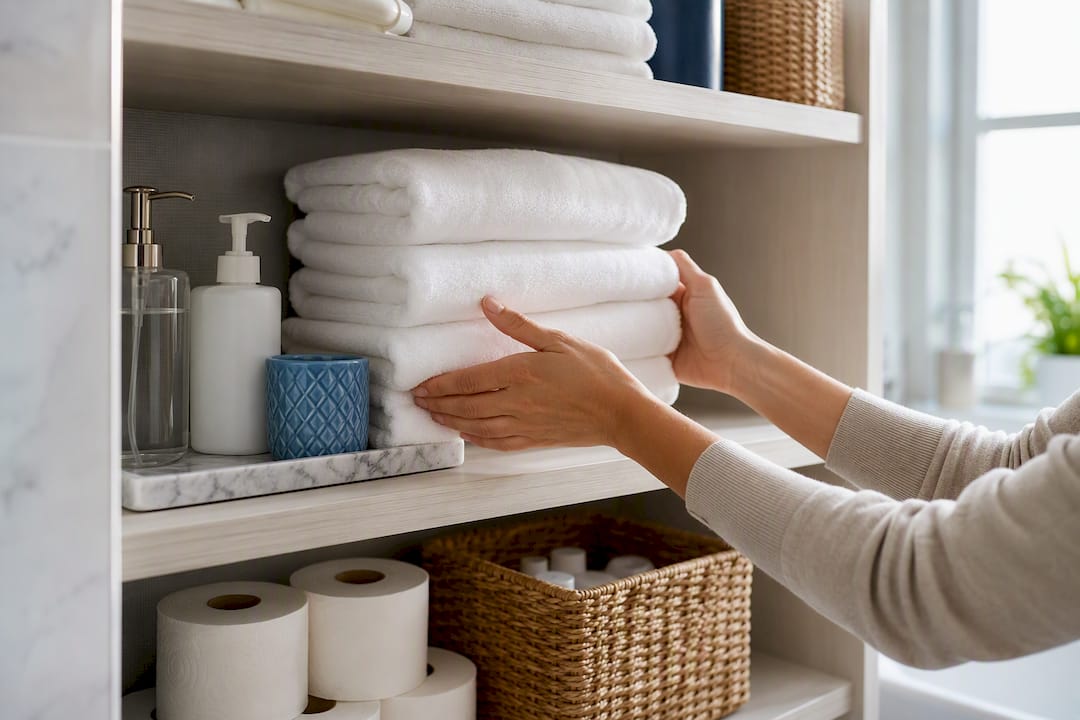
Here’s what belongs in each room, organized by what actually triggers a one-star review versus what’s simply nice to have.
Bathroom (highest priority):
- Toilet paper: at least several rolls per bathroom, with more provided for longer stays
- Bath soap or body wash, shampoo, conditioner (travel size or refillable dispensers both work)
- Towels: enough bath towels, hand towels, and washcloths to cover guests’ needs
- Hair dryer present and functional (check the cord, not just the unit)
- Trash bag lining the bathroom bin
Bedroom:
- Two full sheet sets per bed as the standard baseline, with a third recommended if you run same-day turnovers, according to Airbnb’s own inventory guidance
- Pillows with clean cases, extra blanket in the closet
- Working lamp or accessible light switch, hangers in the closet
Kitchen:
- Dish soap, sponge, and at least one clean dish towel
- Trash bags (2 to 3 extra beyond the one already lining the bin)
- Coffee or tea starter kit if advertised, plus salt and pepper
- Paper towels, one roll minimum
Living room and entry:
- Remote controls with working batteries
- Door lock, lockbox, or smart lock confirmed functional before guests arrive
- Welcome materials or a printed wifi password card if you don’t post it digitally
Check functional items like hair dryers and locks visually every turnover. Count and photograph consumables like toilet paper and toiletries, since a photo is the only record that holds up when a guest disputes what was provided. If a specific brand or SKU is out, the substitution rule is simple: match category and quality tier, never downgrade quantity. A different shampoo brand is fine. One towel instead of two is not.
Airbnb explicitly lists a standard set of essential amenities hosts are expected to provide, and warns that listings claiming amenities they don’t actually stock can face penalties. That’s a good reason to keep your listing description and your actual closet in sync, not just a compliance footnote.
What Are PAR Levels and How Do You Set Reorder Points?
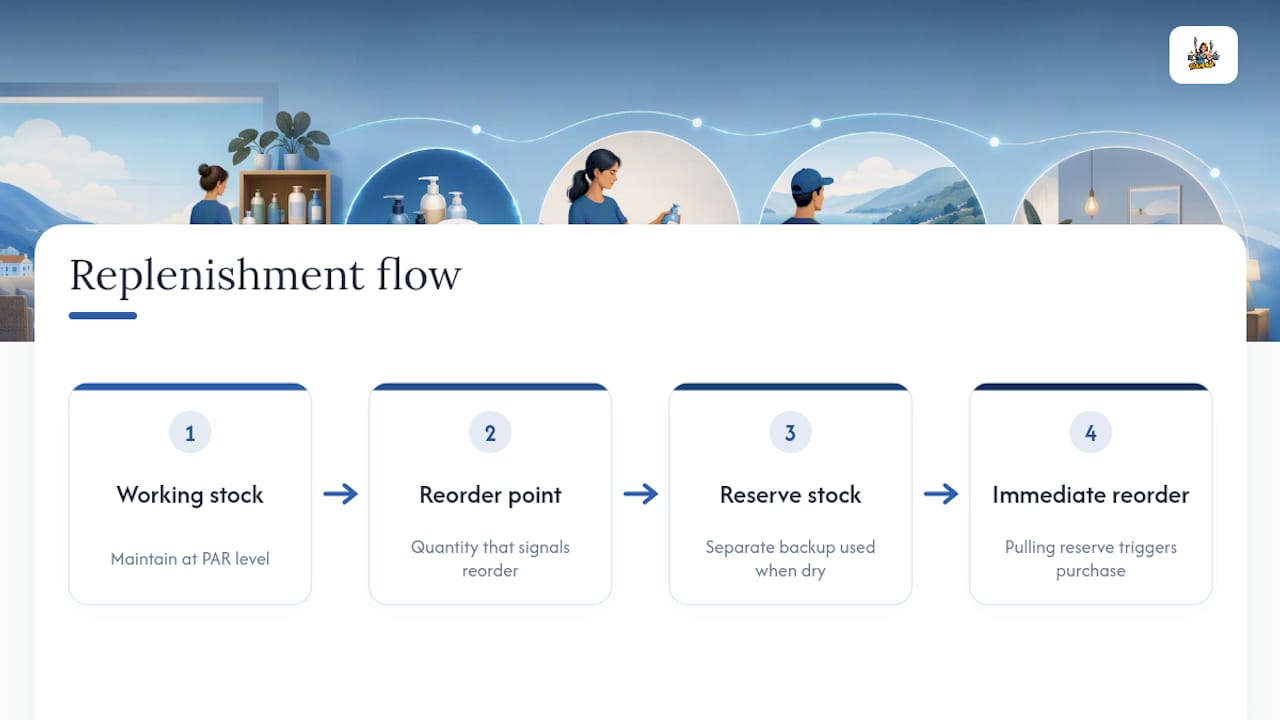
A PAR level is simply the quantity of an item you keep on hand at all times to cover normal usage between restocks. A reorder point is the quantity remaining that tells you it’s time to buy more, set below your PAR so you never hit zero mid-turnover.
Here’s how that looks in practice for a typical two-guest unit on a 3 to 4 night average stay: set PAR levels and reorder points based on actual consumption data to ensure adequate stock without guesswork.
Pro Tip: Calculate your first PAR levels from actual consumption over four turnovers, not guesswork. Hosts who track real usage data cut emergency restocks far more than those who set PARs from intuition alone.
For delivery delays or a distracted cleaner, keep a reserve stock separate from your working stock. Pull from reserve only when the working bin runs dry, then that pull becomes your trigger to reorder immediately rather than wait for a scheduled check.
How Should You Organize Supplies for Fast, Error-Free Restocking?
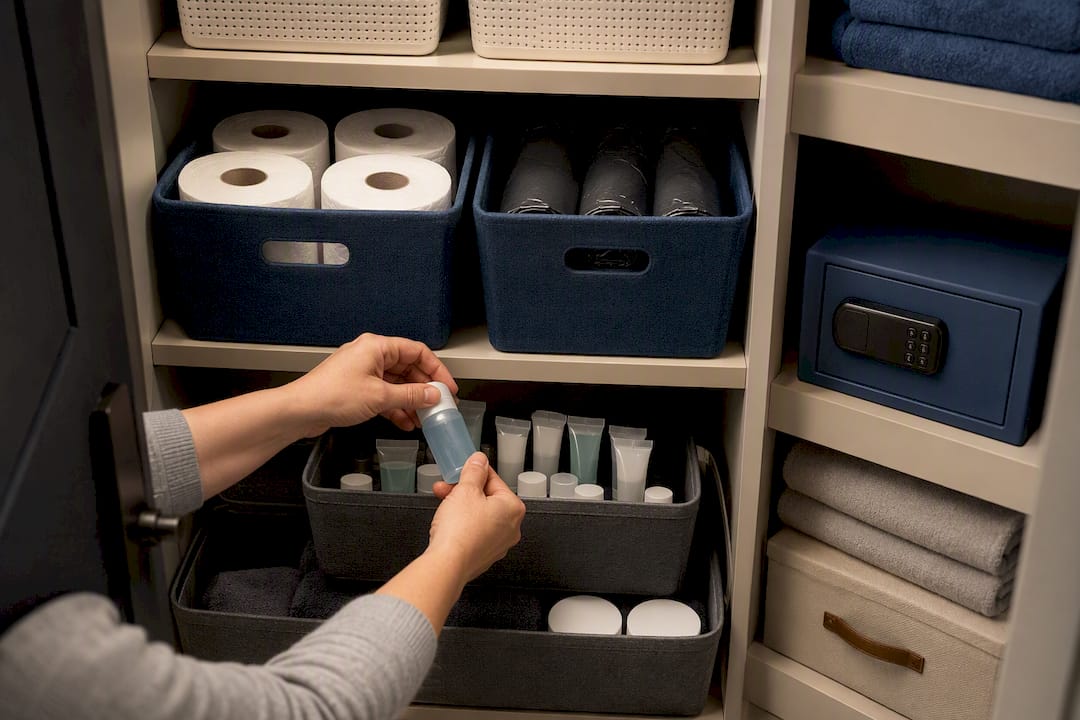
The two-bin system solves the single biggest restocking failure: a cleaner guessing at quantities under time pressure. Bin one holds working stock for the next turnover. Bin two is sealed reserve stock, opened only when bin one runs out, which becomes your signal to reorder.
Color-code or label bins by room, kitchen, bath, bedroom, so a new or substitute cleaner can restock correctly without a training call. Standardizing what goes in each kit matters as much as the bin system itself:
- Bath kit: one bar of soap, one shampoo, one conditioner, two rolls of toilet paper, one trash bag
- Kitchen kit: one dish soap refill, one sponge, three trash bags, coffee filters if applicable
- Welcome kit: local guide card, wifi password, one water bottle per guest
Standardized kits and consistent SKUs let a cleaner grab one bag per kit type instead of hunting through mismatched brands, which cuts turnover time on multi-property operations especially.
Store your supply closet with the highest-turnover items (toilet paper, trash bags) at eye level and label every shelf. Pro Tip: Keep a small lockbox for higher-cost items like specialty toiletries or extra linens if you notice shrink between turnovers. Rotating stock so older inventory gets used first also prevents a drawer full of half-expired travel toiletries nobody remembers buying.
Turnover Workflow: Who Checks What, and When?
The cleaning itself and the inventory check are two separate tasks, and treating them as one is where most restocking checklists fail. Bundling a photo-and-sign-off step into the existing cleaning routine costs a few extra minutes but closes the gap between what you assume is stocked and what’s actually there.
A workable sequence looks like this:
- Cleaner completes the standard clean.
- Cleaner walks the room-by-room checklist, photographs consumable levels, and initials each room on a printed card or shared Google Sheet.
- Any item below PAR gets flagged directly on that sheet, no separate text message required.
- Host or property manager reviews flags within a few hours of checkout, not at the next check-in.
- Restock order goes out same day for anything flagged, so the item is on-site before the next guest.
Who acts on a flag depends on your setup: solo hosts handle their own reorders, while managers with multiple units route flags to whoever handles purchasing. Either way, escalation should never sit longer than 24 hours.
Keep the system honest with a monthly spot-check, either the host or manager physically inspecting one property against the checklist. This catches cleaners who sign off without actually checking, which happens more than most hosts expect once the novelty of a new process wears off. A detailed short-term rental cleaning checklist built around this two-part model gives cleaners a repeatable script instead of a memory test.
How Often Should You Restock an Airbnb?
Restocking frequency depends entirely on stay length, not a fixed calendar.
- Short stays (1 to 3 nights): Full baseline kit every single turnover, no exceptions.
- Medium stays (4 to 10 nights): Baseline kit at check-in, then a mid-stay top-up only if a guest requests it or you offer it proactively around day 5 or 6.
- Long stays (10+ nights): Double the baseline consumables at check-in, then a weekly refresh of towels and trash bags without a full turnover clean.
Offer a paid restock option for stays beyond 7 days rather than assuming guests will replenish their own toilet paper. Adjust bulk purchasing around holidays and peak booking seasons, when back-to-back turnovers can drain a PAR level in half the usual time.
Sample Turnover Card and Supply-Closet Labels
Paste this directly into a laminated card or your cleaner’s app. Top 8 non-negotiables, checked and initialed every turnover:
- Toilet paper stocked to PAR in every bathroom
- Two bath towels, one hand towel, one washcloth per guest
- Two sheet sets confirmed clean and available
- Soap, shampoo, conditioner present
- Trash bags in every bin plus 2 spare
- Coffee/tea kit restocked
- Remote batteries functional
- Door lock or code confirmed working
- Photo taken of each bathroom and kitchen counter, timestamped
- Cleaner initials and date on the card or shared sheet
- Flag box for anything below PAR, routed same day
Label supply-closet shelves by kit name (Bath Kit, Kitchen Kit, Welcome Kit) with contents listed on each label. For digital tracking, save photos with a simple filename convention like unitname_date_room so a manager can scan a folder instead of hunting through a camera roll.
How a Professional Cleaning Team Runs This System
A professional cleaning team with experience in short-term rentals across the Vancouver, WA and Portland, OR metro area since 2006 notes that properties that stay booked without guest complaints are the ones running an actual system, not a mental checklist. Our teams train on photo verification and room-by-room sign-offs as a standard part of the turnover, not an add-on. Because the same cleaners return to the same properties, they learn a host’s specific PAR levels and kit setup instead of relearning it every visit. For hosts managing linen volume, pairing this with a dedicated linen-service plan removes one more variable from the restock equation.
Why Systems Beat Ad-Hoc Restocking
I’ve seen the same failure repeat across dozens of host conversations: a cleaner runs out of toilet paper mid-turnover, buys whatever’s at the nearest store, and the mismatched brand becomes the thing a guest photographs for a review. The fix isn’t a better cleaner. It’s a PAR level that would have flagged the shortage two turnovers earlier.
Test your PAR numbers for four to eight weeks before assuming they’re right. Try the sample checklist above yourself first. Only look at outsourcing once you know exactly what “stocked” is supposed to mean.
— Steven
Get Turnover and Restocking Handled for You
Running this system yourself works, but it takes a dedicated hour or two of setup and ongoing attention every week that most hosts juggling a day job don’t have. Professional short-term rental cleaning teams can handle the clean and the inventory check together, providing hosts with a turnover report rather than a surprise complaint.
Consistent room-by-room verification each visit, ideally delivered by the same trained team rather than different cleaners, helps maintain quality. That consistency is what keeps PAR levels honest, because the person checking your toilet paper supply this week is the same person who checked it last week and knows what normal looks like.
If you’re weighing a DIY checklist against professional support, the honest tradeoff is time versus oversight: DIY costs you nothing but your own hours, while a managed service costs a flat rate but removes the follow-up entirely. Visit our Airbnb cleaning services page to see coverage for Clark County and the Portland metro, or check our full cleaning services menu and request a quote to get your next turnover scheduled.
Sources
Airbnb’s own amenities help article spells out which essentials hosts are expected to provide and the penalties for listing amenities you don’t actually stock. For the operational side, Conduit.ai’s inventory management guide covers the verification step that closes the “documented versus confirmed” gap, while Awning’s supply-standardization piece and STR Specialist’s PAR-and-bin breakdown both offer deeper templates for reorder rules and kit design.
- Airbnb help — Add or edit amenities
- Conduit
- Airbnb inventory management: How top hosts track, replace, and standardize supplies — Awning
FAQ
What Is the 75-55 Rule in Airbnb?
This isn’t a standard, documented Airbnb policy or rule; treat any reference to it with caution and rely instead on Airbnb’s official amenities and cleaning guidance for turnover standards.
Is There a Free PDF Version of an Airbnb Cleaning Checklist?
You can build your own free printable version using the turnover card template in this guide, or adapt a short-term rental cleaning checklist into a one-page PDF for your cleaner.
What Should I Include on My Airbnb Check-Out Checklist?
A check-out checklist should confirm trash is bagged, dishes are started or done, and any obviously used or low consumables are flagged, but the deeper restocking and inventory count belongs to the cleaner’s turnover sign-off, not the departing guest.
How Do I Know If My PAR Levels Are Set Correctly?
Track actual consumption across four to eight turnovers; if you’re placing emergency restock orders more than once a month, your PAR level or reorder point is set too low.
Recommended
- Airbnb Cleaner Didn’t Show Up? Same-Day Help in Vancouver WA
- Professional Cleaning After Hosting: A Host’s 2026 Guide
- When You Hit 300 Pounds/Week: Linen Service Choices for Airbnb Hosts
About Octomaids
Octomaids is a locally operated professional cleaning company serving Vancouver, Clark County, and the surrounding Portland metro area. Since 2006, our cleaning teams have helped homeowners, renters, property managers, and businesses with recurring cleaning, deep cleaning, move-in/move-out cleaning, and commercial cleaning.
Our cleaning articles are reviewed to ensure the information reflects our real-world experience and professional cleaning practices.