


Expect to pay $150 to $500 for a standard professional turnover clean, with most units landing between $200 and $350. Studio and one-bedroom units sit at the low end; three-bedrooms with heavy wear or requested extras like carpet steaming push toward the top. The real caveat: condition at move-out, not square footage, drives the biggest swings in what you’ll actually pay. The rest of this guide breaks down sample budgets and a quoting checklist so you can compare vendors accurately.
TL;DR:
- The typical cost for professional turnover cleaning ranges from $150 to $500, with the highest fees linked to units in poor condition or requiring extras.
- Flat-rate pricing is usually more predictable and cost-effective for landlords managing multiple units, especially when conditions are average or better.
- Major cost drivers include condition at move-out, scheduling urgency, regional wages, and additional services like carpet cleaning or cleaning appliance interiors.
- An itemized quote detailing scope and extras helps prevent surprises, particularly when requesting cleaning for larger or heavily soiled units.
- Delays in scheduling and inconsistent cleaning crews can significantly increase total vacancy costs, which often far exceed the cleaning expenses.
Table of Contents
- What Does Rental Turnover Cleaning Cost by Pricing Model?
- Why Do Turnover Cleaning Quotes Vary So Much?
- What’s Included in a Turnover Clean vs. What Costs Extra?
- Sample Turnover Cleaning Budgets by Unit Size
- How to Get an Accurate Turnover Cleaning Quote
- Should You Hire a Pro or Clean the Unit Yourself?
- Where Landlords Overspend on Turnover Cleaning
- Book a Turnover Clean That Fits Your Schedule, Not the Other Way Around
- Sources
- FAQ
What Does Rental Turnover Cleaning Cost by Pricing Model?
Cleaning companies quote turnover work three different ways, and knowing which model you’re looking at changes how you should read the number. Flat-rate per-unit pricing is the most common approach for rental turnovers, and it’s also the easiest to budget against because you know the total before the crew shows up. Per-square-foot and hourly pricing show up more often with independent cleaners or smaller operations, and they carry more risk of a final bill that doesn’t match your expectations.
Industry data puts standard move-out cleaning at $150 to $400 per turn for most residential units, which lines up with what property managers typically pay for a basic clean between tenants. Here’s how that breaks down by common pricing structure:
- Flat rate by unit size: Studios and one-bedrooms typically run $150 to $280; two-bedrooms fall around $250 to $380; three-bedrooms range from $350 to $650 depending on condition and requested add-ons.
- Per-square-foot: Some vendors charge $0.10 to $0.20 per square foot, which tends to favor larger, less cluttered units and disadvantage smaller units with disproportionate bathroom and kitchen work.
- Hourly: Rates generally track local cleaning wages, so a two-person crew working three hours often lands close to the same total as a flat-rate quote for a comparable unit, but with less price certainty going in.
Flat-rate pricing tends to be cheaper for you when the unit is in average or better condition, because the vendor has already built in a reasonable time estimate and isn’t billing for every extra minute. Hourly pricing can work in your favor for unusually small or straightforward units where a crew might finish faster than a flat quote assumes, but you’re gambling on that outcome. For most landlords managing recurring turnovers, a flat per-unit rate removes the guesswork and makes budgeting across a portfolio far more predictable.
Why Do Turnover Cleaning Quotes Vary So Much?
Two identical two-bedroom units can generate wildly different quotes, and the gap almost always comes down to four factors: condition, timing, location, and what’s included beyond the base clean.
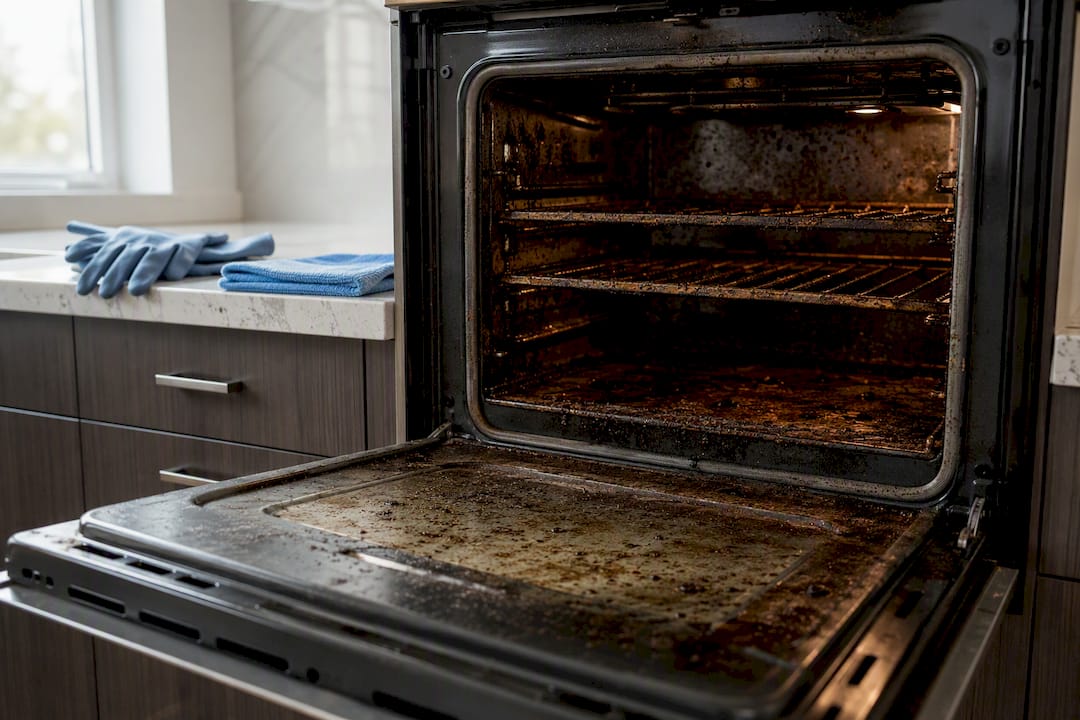
Condition at vacate is the single biggest swing factor. A tenant who left the unit reasonably tidy costs far less to turn than one who left grease-caked appliances, pet hair embedded in carpet, or walls that need scrubbing before painting. Cleaners routinely apply heavy-soil surcharges, sometimes 20% to 50% above the base rate, for units that need more than a standard wipe-down.
Scheduling urgency matters more than most landlords expect. Same-day or next-day requests, common when you’re racing to fill a vacancy, often carry rush premiums because the vendor has to reshuffle crews or pay overtime.
Geography sets the wage floor. Cleaning labor costs vary substantially by metro area, and the Bureau of Labor Statistics’ wage data for janitors and cleaners shows meaningful regional differences that explain why a turnover clean in a high-cost metro runs higher than the same job in a lower-cost market. If a quote feels high relative to what you’ve read online, check whether local wages justify it before assuming you’re being overcharged.
Laundry and supplies add up faster than owners expect. Washing linens, curtains, or shower liners, and restocking basic supplies like trash bags, all get folded into the final number.
A useful gut check: if your quote is well above $400 for a standard-condition one or two-bedroom, ask specifically what’s driving the premium before you sign off.
What’s Included in a Turnover Clean vs. What Costs Extra?
Most confusion between landlords and cleaning vendors comes down to scope. A “standard” turnover clean and a “deep” turnover clean are not the same job, and providers don’t always define the difference the same way.
Typically included in a standard turnover clean:
- Kitchen counters, sink, exterior of appliances, and cabinet fronts wiped down.
- Bathroom scrubbing: toilet, tub or shower, sink, mirror, and floor.
- Vacuuming and mopping all floors, plus dusting surfaces and baseboards.
- Interior window cleaning and wiping down light switches, doorknobs, and vents.
- Trash removal and a final walkthrough check.
Common extras and their typical price bands:
- Oven interior deep clean: $25 to $60.
- Refrigerator interior clean: $20 to $50.
- Carpet steam cleaning: $50 to $150 depending on square footage.
- Exterior window washing: $75 to $150 for a typical unit.
- Heavy-soil or biohazard surcharge: often 20% to 50% above base price.
Some cleaning checklists bundle appliance interiors into the base price, while others treat them strictly as add-ons. That inconsistency is exactly why comparing two quotes line by line matters more than comparing bottom-line totals.
Pro Tip: Ask every vendor to send an itemized quote, not just a flat number. A $280 quote that includes oven and fridge interiors is a better deal than a $220 quote that doesn’t.
Sample Turnover Cleaning Budgets by Unit Size
Real numbers help more than ranges when you’re setting internal budget expectations. These examples assume average condition, a professional crew, and standard scheduling, not rush service.
These figures cover cleaning only. Cleaning is consistently the most predictable line item in a turnover budget. The total turnover cost, including lost rent, repairs, painting, and junk removal, commonly falls between $1,000 and $5,000 per unit. Lost rent during vacancy is typically the largest single expense in that total, which is worth remembering before you shop too aggressively on the cleaning line and let the unit sit empty longer than it needs to.
How to Get an Accurate Turnover Cleaning Quote
Vague requests generate vague quotes, and vague quotes are how landlords end up disputing a final bill. The fix is sending vendors enough information up front that they can price the job with confidence instead of padding for the unknown.
Before you request a quote, send:
- Photos of every room, including closets, under sinks, and appliance interiors if visible.
- Square footage and bedroom/bathroom count.
- A short written note on known problem areas: pet stains, grease buildup, damaged flooring.
- Your preferred timeline and whether the unit is currently vacant.
Combining a photo-based scope with a written description is consistently how vendors produce their most accurate flat quotes, because it removes the guesswork that leads to on-site upcharges.
When you tour the unit or review the quote, ask directly:
- Is this a flat rate, and does it include a re-clean guarantee if something’s missed?
- Are oven, fridge, and carpet cleaning included, or billed separately?
- What’s your rate for recurring turnovers across multiple units?
Pro Tip: If you manage more than one property, ask every vendor for a multi-unit discount up front. Bundling recurring turnover work with a fixed schedule is one of the easiest ways to shave 10% to 15% off your per-unit rate.
Should You Hire a Pro or Clean the Unit Yourself?
For a single small unit in decent condition, DIY cleaning can work; a weekend and $40 to $80 in supplies covers most of it. But your time has a cost too, and most landlords underestimate how many hours a genuinely thorough clean takes.

For anything beyond one unit, or a unit with real wear and tear, hiring a professional crew usually pays for itself. A documented, guaranteed clean gives you a paper trail if a new tenant disputes the unit’s starting condition, and a re-clean guarantee means missed spots get fixed without renegotiating the whole job. That documentation matters more than most landlords expect once a security deposit dispute lands in front of a judge.
Where Landlords Overspend on Turnover Cleaning
Some cleaning companies see the same expensive mistakes repeat across property owners. The biggest one: scheduling the clean too late, which turns a routine job into a rush job with rush pricing attached. Book the crew the moment you know the move-out date, not after.
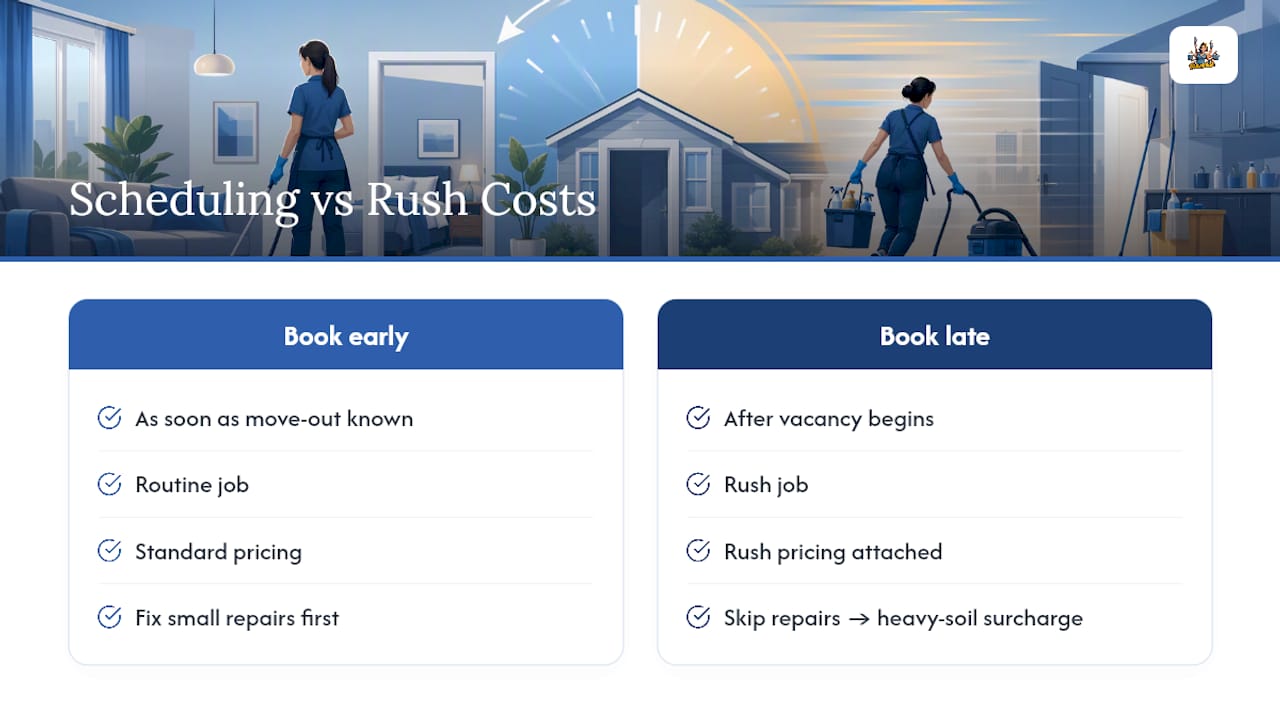
The second mistake is inconsistency. Owners who rotate between different cleaners for each turnover get uneven results and lose the efficiency a dedicated crew builds over repeat visits. A flat per-unit rate with the same crew every time tends to run cheaper and faster than shopping around each vacancy.
The third: skipping small repairs before the clean. A loose cabinet door or a stained grout line doesn’t cost much to fix, but it can turn a standard clean into a heavy-soil surcharge if left for the crew to work around.
— Steven
Book a Turnover Clean That Fits Your Schedule, Not the Other Way Around
Some cleaning companies handle move-in and move-out turnovers, often providing consistent crews rather than a rotating cast of strangers. That consistency is the real advantage over piecing together one-off cleaners for each vacancy: you get a crew that already knows your units, your standards, and your timeline.
A professional cleaning quote typically includes a clear scope, itemized add-ons like oven and carpet work, and a scheduling window built around your actual move-out date, not whatever slot happens to be open. For hosts managing short-term rentals between guests, the same turnover checklist approach applies on a faster cycle. If you manage multiple units, ask about recurring turnover pricing when you request a quote. Start by visiting Octomaids’ move-in and move-out cleaning page to see service details and request a quote for your next vacancy.
Sources
- Apartment Turnover Cost Statistics (2026) | RapidEye
- Apartment Turnover Cost: $1,000–$5,000 Breakdown 2026 | Dropcurb
- Bureau of Labor Statistics — Janitors and Cleaners: May 2024 OES data
FAQ
How Much Should You Charge for a Turnover Clean?
Most professional turnover cleans run $150 to $500 per unit, with $200 to $350 covering a standard one or two-bedroom in average condition; heavier soiling or add-ons push costs toward the top of that range.
What’s the Average Cost to Clean a 2,000 Square Foot House?
A house that size typically falls into the three-bedroom range for pricing purposes, commonly running $350 to $650 for a standard turnover clean, more with carpet steaming or heavy-soil surcharges.
Is $20 an Hour a Fair Rate for a Cleaner?
It depends on your metro area. BLS wage data shows cleaning wages vary meaningfully by region, so $20 an hour is reasonable in some markets and below typical rates in higher-cost metros.
What Is the 20/10 Rule for Cleaning?
The 20/10 rule is a time-management technique where you clean for 20 minutes, then rest for 10, and it’s mainly used for personal home upkeep rather than professional turnover cleaning, where crews work straight through on a scoped job.
How Do Vacancy Days Affect Total Turnover Cost?
Cleaning itself is usually the fastest part of a turnover, but delays in scheduling it extend vacancy, and lost rent is typically the largest expense in the full turnover budget, often outweighing the cleaning bill several times over.
Recommended
- Cleaning Services for Landlords: Benefits That Pay Off
- Short Term Rental Cleaning Checklist: Host’s Guide
- Why Rental Properties Need Deep Cleans: 2026 Guide
- The Role of Professional Cleaners in Rental Management
About Octomaids
Octomaids is a locally operated professional cleaning company serving Vancouver, Clark County, and the surrounding Portland metro area. Since 2006, our cleaning teams have helped homeowners, renters, property managers, and businesses with recurring cleaning, deep cleaning, move-in/move-out cleaning, and commercial cleaning.
Our cleaning articles are reviewed to ensure the information reflects our real-world experience and professional cleaning practices.