


Professional cleaning in rental management is the structured use of trained cleaning crews to maintain property hygiene, safety, and appeal across routine maintenance cycles and tenant turnovers. Property managers who treat cleaning as a core operational function, rather than an afterthought, see measurable gains in tenant retention, fewer maintenance complaints, and stronger long-term asset value. The role of professional cleaners in rental management spans two distinct service types: scheduled upkeep and intensive restoration between tenancies. Understanding both is the starting point for any property manager who wants to protect their investment and keep good tenants.
What is the role of professional cleaners in rental management?
Professional cleaners fill two separate functions in rental properties: routine maintenance and turnover deep cleaning. Each has a different scope, timeline, and purpose.
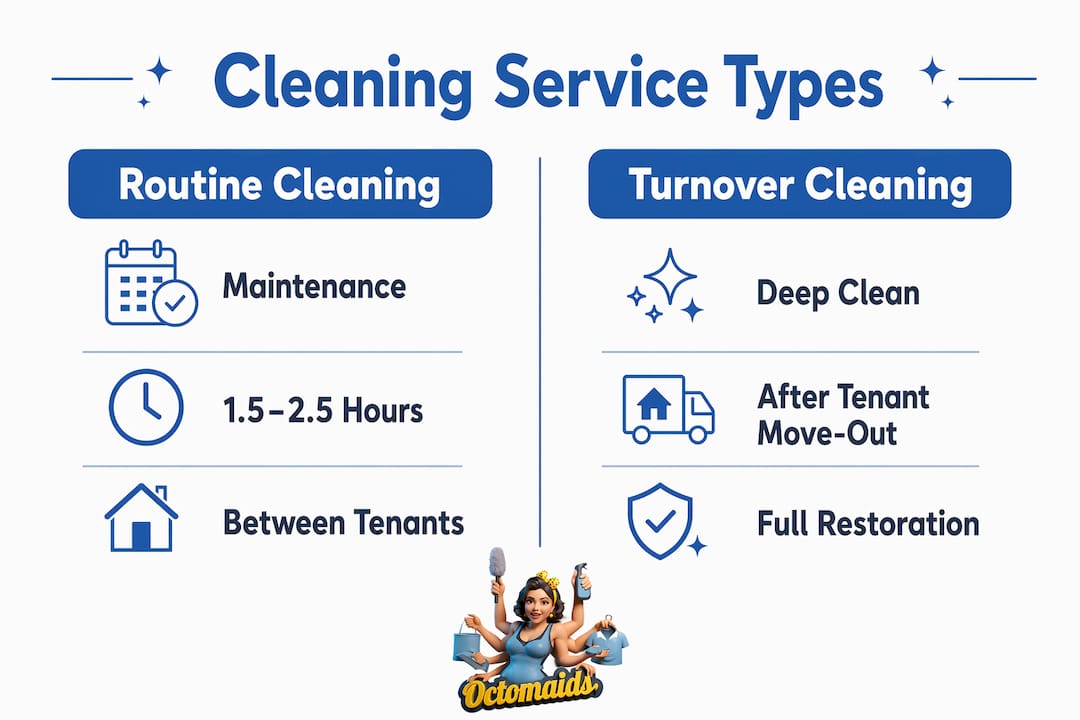
Routine maintenance cleaning keeps a property presentable between tenant visits or during active tenancies. Routine maintenance typically takes 1.5–2.5 hours per session. That time covers surface wiping, vacuuming, bathroom sanitation, and kitchen spot cleaning. It prevents buildup but does not restore a unit to move-in condition.

Turnover deep cleaning is a different process entirely. It is a full restoration of the unit after a tenant leaves, and it requires 3–6 hours to complete properly. That time difference reflects a fundamentally different scope of work.
What turnover cleaning covers that routine cleaning does not
Turnover cleaning addresses interior restoration tasks that routine sessions skip entirely. These include:
- Cleaning inside appliances: oven interiors, refrigerator drawers, and microwave cavities
- Wiping cabinet interiors and drawer tracks
- Scrubbing window tracks and sill channels
- Cleaning baseboards, door frames, and light switch plates
- Odor treatments for carpets, upholstery, and enclosed spaces
A routine clean will not catch grease baked onto an oven rack or mildew forming in a window track. Those are the details that trigger post-move-in complaints and damage deposit disputes. Skipping turnover cleaning to save money almost always costs more in maintenance calls and tenant friction later.
Pro Tip: Schedule the turnover deep clean the same day a tenant vacates. Waiting even 48 hours allows odors to set and surfaces to oxidize, which adds time and cost to the restoration.
The distinction between these two service types matters because property managers who treat them as interchangeable end up with units that look clean but are not truly ready for the next tenant. Knowing which service to deploy, and when, is the foundation of effective cleaning management.
How does professional cleaning deliver ROI for property managers?
Cleaning is not an operating expense. It is a performance investment with a documented return. Professional cleaning interventions show an ROI tendency of 1.92, meaning every dollar spent on cleaning generates nearly two dollars in recovered value through reduced vacancy, fewer repairs, and lower tenant turnover costs. That figure reframes the entire conversation about cleaning budgets.
The financial case rests on three pillars.
Reduced vacancy days. A unit that is cleaned and ready within 24 hours of a tenant vacating can be listed and shown immediately. A unit that sits dirty for a week loses rental income every day. Professional crews with established turnover protocols accelerate the leasing cycle in ways that ad-hoc cleaning cannot match.
Lower maintenance costs. Professional cleaning preserves surfaces by reducing wear, moisture damage, and mold risks. Grout that is cleaned regularly does not need to be replaced. Appliances that are degreased regularly last longer. The cost of a cleaning session is a fraction of the cost of a repair or replacement.
Reduced safety liability. Slips, trips, and falls account for 20% of all reported nonfatal workplace injuries. In rental properties, wet floors, cluttered common areas, and poorly maintained entryways create the same risk. Professional cleaners address these hazards as part of their standard protocol. That reduces liability exposure for property owners in ways that are difficult to quantify but very real.
Pro Tip: Reframe cleaning in your operating budget as preventive maintenance, not a service fee. Budget it alongside HVAC filter changes and gutter cleaning. Properties managed this way consistently outperform those where cleaning is treated as optional.
Understanding why professional cleaners use specific chemicals and methods also matters here. The right products remove biofilm, neutralize odors, and protect surfaces in ways that general-purpose sprays do not. That science-backed approach is part of what separates professional service from a tenant doing a quick wipe-down before leaving.
How do professional cleaners improve tenant experience and retention?
Tenant retention starts before a lease is signed. Properties professionally cleaned before listing command higher rents and attract higher-quality tenants. Cleanliness signals that a landlord takes care of their property. That signal shapes a prospective tenant’s first impression and their ongoing perception of the landlord throughout the tenancy.
The connection between cleaning and tenant experience runs deeper than aesthetics. Clean common areas, fresh-smelling hallways, and spotless unit interiors communicate respect. Tenants who feel respected by their landlord are more likely to renew leases, report maintenance issues promptly, and treat the property with care. The professional cleaning benefits extend to both sides of the landlord-tenant relationship.
Specific cleaning touches that directly improve tenant experience include:
- Freshly cleaned carpets at move-in, which eliminate odors from previous occupants
- Sanitized bathrooms with no soap scum or mildew, which set a hygiene standard tenants maintain
- Clean appliance interiors, which prevent odors from activating during first use
- Polished windows and clean window tracks, which improve natural light and air quality
The contrast between professional and ad-hoc cleaning approaches shows up clearly in tenant reviews and renewal rates. Properties where cleaning is handled by whoever is available tend to generate complaints within the first 30 days of a tenancy. Properties with a consistent professional cleaning protocol rarely do. Retaining tenants through consistent service quality is one of the most cost-effective strategies a property manager can deploy.
What are best practices for integrating professional cleaning into rental workflows?
The most effective approach combines scheduled routine cleaning with flexible on-call turnover service. A hybrid cleaning strategy that pairs regular maintenance for common areas with responsive turnover cleaning for individual units keeps hygiene consistent without overspending on services that are not needed.
A practical workflow looks like this:
- Schedule routine cleaning for common areas on a fixed weekly or biweekly cycle. Hallways, laundry rooms, lobbies, and shared bathrooms need consistent attention regardless of tenant turnover.
- Trigger turnover cleaning the day a tenant vacates. Coordinate directly with your cleaning crew so they can enter the unit within hours of key return.
- Document everything. Timestamped cleaning photos and checklists taken immediately before move-in create an objective baseline for deposit disputes. This documentation is your legal protection if a tenant disputes deductions.
- Sequence cleaning before inspection. The property manager’s move-in inspection should happen after the cleaning crew has finished and before the new tenant receives keys. This order ensures the inspection reflects the true move-in condition.
- Build cleaning into the lease cycle. Include cleaning requirements in your lease agreement and communicate your cleaning standards to tenants at move-in. Tenants who understand the standard are more likely to meet it at move-out.
Communication between property managers and cleaning crews is the variable that most often breaks down. A cleaning crew that does not know a tenant vacated early cannot respond in time. Property managers who share their leasing calendar with their cleaning service, and who designate a single point of contact for scheduling, consistently achieve faster turnovers and fewer scheduling gaps.
Pro Tip: Build your cleaning vendor into your property management software as a recurring contact. Automate a notification to your cleaning crew the moment a move-out date is confirmed. That single workflow change can cut your average vacancy by several days.
The move-out cleaning checklist your cleaning crew uses should align with your lease agreement’s cleaning expectations. When those two documents match, deposit disputes become straightforward to resolve.
Key Takeaways
Professional cleaning is the single most cost-effective operational investment a property manager can make, delivering measurable returns through reduced vacancy, lower maintenance costs, and stronger tenant retention.
| Point | Details |
|---|---|
| Two distinct service types | Routine maintenance takes 1.5–2.5 hours; turnover deep cleaning requires 3–6 hours and covers tasks routine cleans skip. |
| Documented ROI | Professional cleaning shows an ROI tendency of 1.92, recovering value through reduced vacancy and fewer repairs. |
| Safety and liability | Slips, trips, and falls cause 20% of nonfatal injuries; professional cleaning directly reduces this risk in rental properties. |
| Tenant attraction and retention | Professionally cleaned properties command higher rents and attract higher-quality tenants by signaling landlord care. |
| Workflow integration | A hybrid strategy combining scheduled routine and on-call turnover cleaning, with documented checklists, protects managers in deposit disputes. |
Why most property managers undervalue their cleaning service
I have worked with property managers across the Pacific Northwest for years, and the pattern I see most often is this: cleaning is the first line item cut when budgets tighten, and it is the last thing anyone thinks about until something goes wrong. A tenant complains about a smell on day three. A deposit dispute drags on because there is no documentation. A unit sits vacant for two extra weeks because no one scheduled the turnover clean in time.
The uncomfortable truth is that most property managers do not undervalue cleaning because they are careless. They undervalue it because the damage from poor cleaning is slow and diffuse. A mold problem that starts in a poorly maintained bathroom does not show up as a repair bill for six months. A tenant who leaves because the property feels neglected does not write “cleaning” in their exit survey. The connection between cleaning quality and financial outcomes is real, but it is not always immediate.
What I have found actually works is treating your cleaning vendor the way you treat your maintenance contractor: with a standing relationship, clear expectations, and a seat at the operational table. Property managers who share their leasing calendar with their cleaning crew, who use documented checklists, and who schedule turnover cleans as automatically as they schedule inspections consistently outperform those who call a cleaner only when they remember to. Cleaning is not a task you outsource and forget. It is a system you build and maintain.
— Steven
How Octomaids supports rental property managers in Vancouver WA and Portland OR
Octomaids has served rental property managers throughout Clark County, WA and the Portland Metro area since 2006. The team handles both routine maintenance cleaning and full move-in and move-out cleaning services designed specifically for rental turnovers. Every visit uses the same trusted cleaners, which means consistent results and no retraining between appointments.
For property managers coordinating deposit disputes, Octomaids provides documented cleaning records that serve as a clear move-in condition baseline. The team also offers short-term rental and Airbnb cleaning for managers running vacation rental portfolios alongside traditional leases. Whether you need a one-time turnover or a recurring maintenance schedule, Octomaids builds the service around your leasing calendar, not the other way around.
FAQ
What is the difference between routine and turnover cleaning?
Routine cleaning maintains a property during an active tenancy and typically takes 1.5–2.5 hours. Turnover cleaning is a full restoration after a tenant vacates, requiring 3–6 hours and covering tasks like appliance interiors, cabinet drawers, and odor treatments.
How does professional cleaning reduce vacancy time?
Professional cleaning crews with established turnover protocols can prepare a unit for listing within 24 hours of a tenant vacating. That speed directly reduces the number of days a unit sits empty between tenancies.
Can cleaning documentation help with deposit disputes?
Timestamped cleaning photos and checklists taken immediately before move-in create an objective record of the unit’s condition. This documentation gives property managers a defensible baseline if a tenant disputes deposit deductions.
How do professional cleaners affect tenant retention?
Properties that are professionally cleaned before listing attract higher-quality tenants and command higher rents. Tenants who move into a visibly well-maintained unit are more likely to renew their lease and treat the property with care.
What is a hybrid cleaning strategy for rental properties?
A hybrid strategy combines scheduled routine cleaning for common areas with flexible on-call turnover cleaning for individual units. This approach maintains consistent hygiene across the property while responding efficiently to tenant move-outs.