



To meet Portland’s move-out cleaning requirements, return your unit to the same condition it was in when you moved in, minus ordinary wear and tear, and back up that work with documentation. Keep your move-in condition report and photos on hand, work through a room-by-room cleaning routine, and bring in a professional for tasks like oven or carpet cleaning when your lease calls for it. These three habits prevent most deposit disputes before they start.
TL;DR:
- Oregon allows deductions for damage beyond ordinary wear, unpaid rent, and cleaning permitted by your lease; carpet cleaning requires an explicit clause.
- Portland landlords must document damage at move out with photos, itemize every deposit deduction, and inspect within a week after lease termination.
- If 31 days pass without a deposit return or itemized accounting, renters can send a demand letter or pursue small claims.
- Professional cleaning before moving out in Portland costs $120–$420, depending on unit size and deep cleaning; keep an invoice with the address and service date.
Table of Contents
- What Portland landlords expect at move-out
- Kitchen move-out checklist
- Bathroom move-out checklist
- Living room, bedroom, and storage checklist
- Final touches before you hand over the keys
- Portland and Oregon deposit rules renters must know
- What move-out cleaning costs in Portland and when to hire help
- Cleaning products and methods that meet Portland standards
- Separating repairs from cleaning to protect your deposit
- Talking to your landlord before you move out
- Short-term rentals versus standard move-out cleaning
- A local cleaner’s take on move-out expectations
- How we help Portland and Vancouver renters protect their deposit
- FAQ
- Sources
What Portland landlords expect at move-out
Oregon law sets the baseline standard: you owe your landlord a unit in the condition you received it, accounting for ordinary wear and tear. Carpet that has faded from years of foot traffic falls under wear and tear. A wine stain soaked into that same carpet does not, and Oregon statutes allow landlords to charge for damage that crosses that line.
Portland adds its own layer of accountability on top of the state rule. Under PCC 30.01.087, landlords must give tenants a move-in condition report, document any visual damage with photos at move-out, and provide an itemized accounting for every deduction they take from a deposit. If repairs happen between tenants and the landlord wants to charge a future tenant for them, an updated condition report has to go out within 15 business days.
That paperwork trail works in your favor. A landlord who skips the photos or the itemized list has a weaker case for keeping part of your deposit, and you have grounds to push back.
Kitchen move-out checklist
Kitchens collect grease and buildup faster than any other room, and landlords inspect them closely because of it. Working through this list before your final walk-through covers the spots that most often trigger a charge:
- Wipe down cabinet fronts, interiors, and drawers, including handles where grease accumulates.
- Scrub countertops and backsplash, paying attention to grout lines near the stove.
- Clean the stovetop, burners, and range hood filter.
- Deep-clean the oven if it has heavy buildup. Our oven cleaning checklist walks through the process step by step.
- Defrost and wipe out the refrigerator, run the dishwasher empty with a cleaning cycle, and sanitize the sink and garbage disposal.
If an appliance already had scratches, dents, or stains when you moved in, check your original condition report. That documentation protects you if the landlord tries to attribute pre-existing wear to your tenancy.
Bathroom move-out checklist
Bathrooms show neglect quickly, and soap scum or mildew left behind is one of the most common reasons landlords withhold cleaning fees from a deposit. A thorough pass covers:
- Scrub soap scum and mildew from tile, grout, and shower tracks.
- Sanitize the sink, toilet, mirrors, and all fixtures until they shine.
- Check the bathroom fan and vents for dust buildup, since poor ventilation often gets flagged during inspection.
- Replace any burned-out light bulbs and wipe down switch plates.
If a fixture was chipped, rusted, or already stained on move-in day, note it against your original report so it does not get pinned on you during the final inspection.
Living room, bedroom, and storage checklist
Floors, walls, and closets get less daily attention than kitchens and bathrooms, but they carry just as much weight in a landlord’s assessment. Carpets in particular draw scrutiny: ordinary foot traffic is expected, but stains, pet odor, or embedded dirt usually are not. If your lease includes a carpet-cleaning clause, Oregon law permits the landlord to charge for it under specific conditions, as outlined in state statutes on deposit deductions.
Work through these areas before your walk-through:
- Vacuum thoroughly or shampoo carpets if stains go beyond normal wear or your lease requires professional cleaning.
- Mop or sweep all hard flooring, wipe baseboards and window sills, and dust window blinds.
- Patch small nail holes if your lease allows it, and photograph wall condition against your move-in report.
For a fuller walkthrough of every room, our room-by-room move-out guide breaks down additional details.
Final touches before you hand over the keys
The days before you turn in your keys matter as much as the cleaning itself. Documentation is what turns a clean apartment into a protected deposit.
- Photograph every room from multiple angles, including close-ups of any areas that could be disputed, and keep your original move-in condition report nearby for comparison.
- Request or attend the final inspection in person. Portland code gives landlords up to a week after lease termination to conduct it, and being there lets you address concerns on the spot.
- Collect any written notes or photos the landlord takes during that inspection for your own records.
- Remove all belongings, dispose of trash properly, and give your landlord a forwarding address in writing so deposit correspondence does not get delayed.
Pro Tip: Place a dated item, like your phone showing the date, in at least one photo per room. It settles any argument about when the picture was taken.
Portland and Oregon deposit rules renters must know
Two layers of law protect your deposit: Oregon state statute and Portland’s own code. Knowing both means you know exactly what a landlord can and cannot charge for.
PCC 30.01.087 requires a written move-in condition report, photo documentation of any damage at move-out, and a final inspection scheduled within a week of lease termination. Landlords must also provide an itemized accounting for any amount withheld from your deposit, not a vague lump-sum deduction.
At the state level, Oregon law limits deductions to damage beyond ordinary wear and tear, unpaid rent, and cleaning costs the lease specifically allows. Carpet cleaning can only be charged if your rental agreement contains an explicit clause permitting it. Labor charges for cleaning or repairs have to be reasonable and backed by documentation, not an estimate pulled from thin air.
On timing, OregonLawHelp confirms landlords must return your deposit or send a written accounting within 31 days of move-out. If that deadline passes with no response, or the accounting lacks the photos and itemization Portland code requires, you have grounds to send a demand letter or pursue a small-claims case.
What move-out cleaning costs in Portland and when to hire help
Move-out cleaning in Portland typically runs $120 to $420, according to our local pricing guide, with the range depending on unit size, how much deep cleaning is needed, and whether extras like oven or carpet cleaning are included.
Some tasks are worth outsourcing even if you plan to handle the rest yourself. Ovens with months of baked-on grease, carpets that need shampooing rather than vacuuming, and bathrooms with heavy mineral buildup all take specialized equipment or products to get right on the first try. A rushed attempt the night before your walk-through often costs more in deposit deductions than hiring help would have.
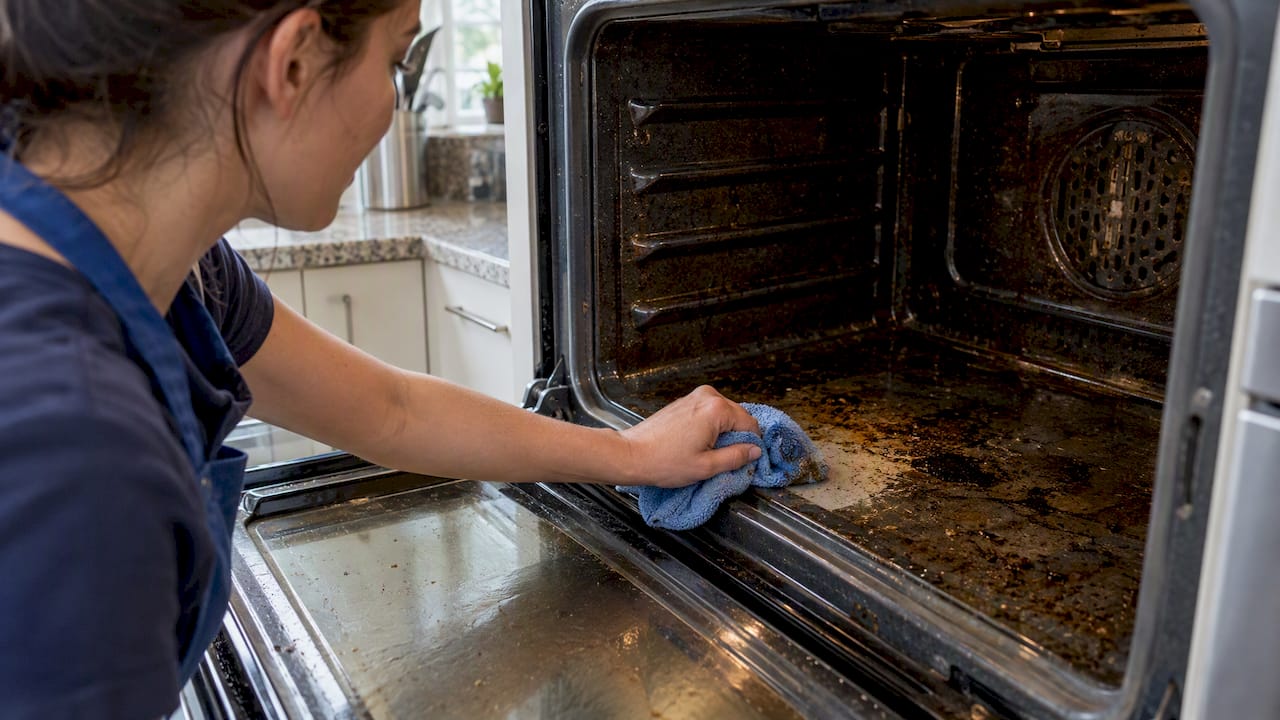
If you do hire a cleaning service, keep the invoice. It should reference your rental address and the date of service, which gives you a paper trail if your landlord questions whether the cleaning happened or disputes the scope of work.
Cleaning products and methods that meet Portland standards
Portland does not mandate a specific brand or formula for move-out cleaning, but a few practical considerations help you avoid problems. Harsh abrasive cleaners or undiluted bleach can damage finishes on countertops, tubs, and flooring, and that kind of damage shifts you from “cleaning” into “repair” territory, which means a bigger deduction risk. Stick to products suited to each surface: a non-abrasive cleaner for countertops, a mild degreaser for stovetops, and a dedicated grout cleaner for tile.
Many renters prefer eco-friendly or low-fume products, especially in units with limited ventilation or for households with children or pets. Vinegar-and-water solutions handle glass and some surfaces well, while baking soda works as a gentle abrasive for sinks and tubs. These options reduce chemical exposure without sacrificing results on most standard move-out tasks.
Whatever products you choose, test them on a small, hidden area first if you are unsure how a surface will react. A cleaning method that strips a finish or discolors grout can turn a routine clean into a chargeable repair, which defeats the purpose of cleaning carefully in the first place. When in doubt, a plain, pH-neutral cleaner is the safest default across most kitchen and bathroom surfaces.
Separating repairs from cleaning to protect your deposit
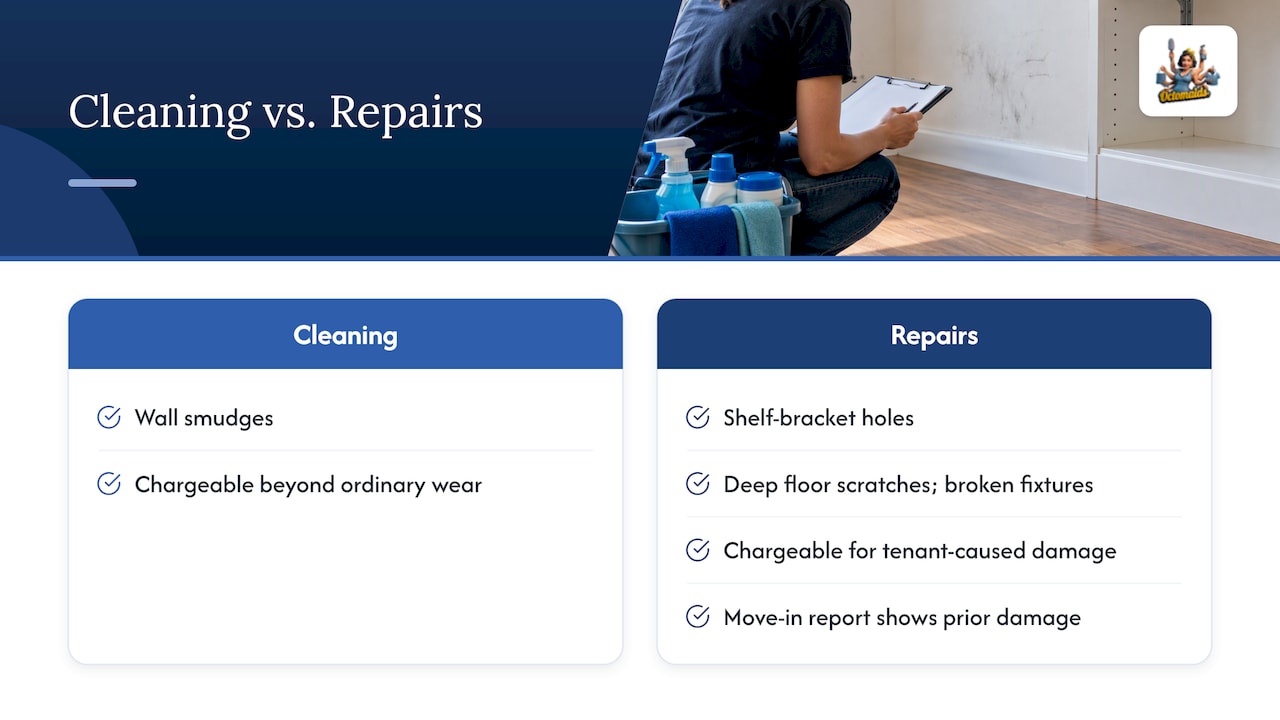
Cleaning and repairs are two different categories under Oregon law, and conflating them is a common mistake that costs renters money. A smudge on the wall is a cleaning issue. A hole from a shelf bracket is a repair issue. Landlords can charge for both, but only cleaning charges that go beyond ordinary wear and tear and repair charges for damage you actually caused, not for pre-existing conditions documented on your original move-in report.
Before you move out, walk through your unit and separate your to-do list into two columns: what needs cleaning and what needs repair. For repairs, check your lease to see if patching nail holes or touching up paint is something you are responsible for or something your landlord typically handles as routine turnover maintenance. Many leases allow small nail holes as ordinary wear, but larger holes, deep scratches in flooring, or broken fixtures usually fall on the tenant unless they existed before you moved in.
If you are unsure whether something counts as damage or wear and tear, compare it directly against your original condition report and photos. That comparison is your strongest evidence either way. When a repair is genuinely your responsibility and you are not confident doing it yourself, it is often worth hiring a handyman rather than attempting a fix that could make the problem worse and increase the eventual charge.
Talking to your landlord before you move out
A short conversation before move-out day can prevent a lot of back-and-forth after you hand in your keys. Ask your landlord directly what condition they expect the unit to be in, whether they have a written move-out checklist, and whether any lease clauses, like carpet cleaning, apply to your situation. Getting this in writing, even as a quick email, gives you something to point back to if a dispute comes up later.
It also helps to ask when the final inspection will happen and whether you can attend. Portland code gives landlords up to a week after lease termination to conduct that inspection, and being present lets you address any concerns in real time instead of finding out about them through a deduction notice weeks later.
If you disagree with something your landlord flags during the inspection, say so on the spot and follow up in writing. A calm, documented disagreement carries more weight than a dispute raised for the first time after the deposit accounting arrives.
Short-term rentals versus standard move-out cleaning
Short-term rental cleaning in the Portland Metro area operates under a different standard than a standard lease move-out. Airbnb and vacation rental hosts clean between every guest stay, often using a checklist built around guest-ready presentation rather than the ordinary-wear-and-tear standard that governs tenant deposits. There is no deposit at stake and no condition report comparison, just a fast turnaround that needs to meet guest expectations every time.
For renters turning in a long-term lease, the standard is different: you are being measured against your own move-in condition, not against a hospitality benchmark. That said, hosts and renters share one thing in common, the need for a thorough, repeatable checklist. Our short-term rental cleaning guide covers the host side of that process in detail, while the checklists throughout this article are built specifically for lease move-outs.
A local cleaner’s take on move-out expectations
In years of cleaning Portland and Vancouver rentals, the pattern holds steady: renters who lose deposit money almost always skip the same two things, photo documentation and the oven. Photos take five minutes and settle disputes instantly. The oven takes longer, but it is the single item landlords flag most often during inspection.
My practical advice: build a photo habit on day one of your tenancy, not the day you move out, and schedule your final walk-through as early as your lease allows so you have time to fix anything flagged.
— Steven
How we help Portland and Vancouver renters protect their deposit
Cleaning an entire apartment to inspection-ready standard while packing boxes and coordinating a move is a lot to take on alone, which is why so many renters in Portland and Vancouver, WA call us before handing in their keys. Our Move In / Out Cleaning service follows the same room-by-room priorities covered in this article, and local move-out cleaning typically runs $120 to $420 depending on the size of your unit and what needs deep attention.
Before you hire anyone for move-out cleaning, ask a few direct questions:
- Are the cleaners background-checked and insured?
- Does the checklist match what your lease and condition report require?
- Is the work backed by a satisfaction guarantee?
We bring a background-checked, dedicated team to every job, and we are family-owned and locally operated in the Portland Metro area. If you want your move-out cleaning handled by people who know exactly what Portland landlords look for, book your move-out cleaning and walk into your final inspection with one less thing to worry about.
FAQ
Do I need a license to clean houses in Oregon?
Oregon does not require an individual license to perform residential cleaning work, though cleaning businesses typically need standard business registration and, often, liability insurance. If you are hiring a cleaner rather than doing it yourself, ask whether the company carries insurance and background-checks its staff for added protection.
What is included in a standard move-out clean?
A standard move-out clean covers the kitchen (cabinets, appliances, countertops), the bathroom (fixtures, tile, grout), and living spaces (floors, baseboards, windows, closets). It also includes spot-checking for damage beyond ordinary wear and tear, since that distinction determines what a landlord can legally deduct under Oregon law.
Is $50 an hour good for house cleaning?
Hourly rates vary by region and the scope of work involved, so there is no single rate that applies everywhere. For Portland move-out cleaning specifically, total project pricing of $120 to $420 is a more useful benchmark than an hourly figure, since it reflects the full job rather than time alone.
What is the 5-5-5 rule for cleaning?
There is no official rule recognized in Portland or Oregon tenant law, and definitions of terms vary across informal cleaning guides. For move-out purposes, the standard that actually matters legally is restoring the unit to its move-in condition minus ordinary wear and tear, as defined under state statute.
How long does a landlord have to return my deposit in Portland?
Oregon law gives landlords 31 days after move-out to return your deposit or send a written, itemized accounting of any deductions, according to OregonLawHelp. If that deadline passes without a response, you have the right to follow up in writing and pursue further action if needed.
Sources
- Portland Code 30.01.087 — Security deposits
- Chapter 0042 — Oregon statutes on landlord remedies and deposit deductions
- Getting your security deposit back after you move — OregonLawHelp
Recommended
- $120–$420: Portland Move Out Cleaning Costs That Protect Your Deposit
- Move Out Cleaning Room by Room Guide for Renters
- High-Traffic Rental Areas to Deep Clean: A Room-by-Room Guide
- What Does Deep Cleaning Include? a Room-by-Room Guide
About Octomaids
Octomaids is a locally operated professional cleaning company serving Vancouver, Clark County, and the surrounding Portland metro area. Since 2006, our cleaning teams have helped homeowners, renters, property managers, and businesses with recurring cleaning, deep cleaning, move-in/move-out cleaning, and commercial cleaning.
Our cleaning articles are reviewed to ensure the information reflects our real-world experience and professional cleaning practices.