


Yes, white distilled vinegar can kill many common household molds, but it won’t handle every species and it isn’t a substitute for full remediation. Vinegar works well on small, contained patches on hard, non-porous surfaces. It struggles with certain resilient strains, porous materials, and anything larger than a dinner plate.
Here’s the short version before you grab a spray bottle:
- Small visible patch, hard surface: Undiluted white vinegar, full PPE, good ventilation, and patience will usually do the job.
- Bigger problem: If the affected area is larger than 10 square feet, or the mold is inside your HVAC system or ductwork, the EPA recommends calling a professional rather than tackling it yourself.
- Not sure which category you’re in? Treat any ambiguity as a sign to get an inspection before you start scrubbing.
Key Takeaways
Vinegar kills many common household molds through acetic acid but fails against certain resilient species, and effective mold removal always requires physical cleanup, not disinfection alone.
| Point | Details |
|---|---|
| Vinegar works on some species | Undiluted white vinegar kills molds like Penicillium chrysogenum but not all strains, including some Aspergillus. |
| Dwell time is non-negotiable | Let vinegar sit on the moldy surface for at least 60 minutes before scrubbing for real results. |
| Know the 10 square foot rule | The EPA recommends professional remediation for mold patches larger than 10 square feet or growth inside HVAC systems. |
| Match cleaner to surface | Vinegar suits porous grout, bleach suits non-porous stains, and peroxide works broadly, but never mix vinegar with peroxide. |
| Octomaids handles the bigger jobs | Octomaids offers deep cleaning and move-in/move-out service throughout Vancouver, WA and Portland, OR for homeowners who’d rather not DIY it. |
Table of Contents
- Does Vinegar Kill Mold? What the Evidence Shows
- How to Use Vinegar to Kill Mold Safely
- When Vinegar Isn’t Enough: Limits and Red Flags
- Vinegar vs. Bleach vs. Hydrogen Peroxide
- Stopping Mold Before It Comes Back
- My Take: When DIY Makes Sense and When It Doesn’t
- Considering Professional Help for Mold-Related Cleaning?
- Sources
- FAQ
Does Vinegar Kill Mold? What the Evidence Shows
Vinegar’s mold-killing power comes down to acetic acid. At the roughly 5% concentration found in household white vinegar, that acid disrupts the cell structure of many fungi and drops the surface pH low enough to stop growth. It’s a genuinely useful tool, not a folk remedy.
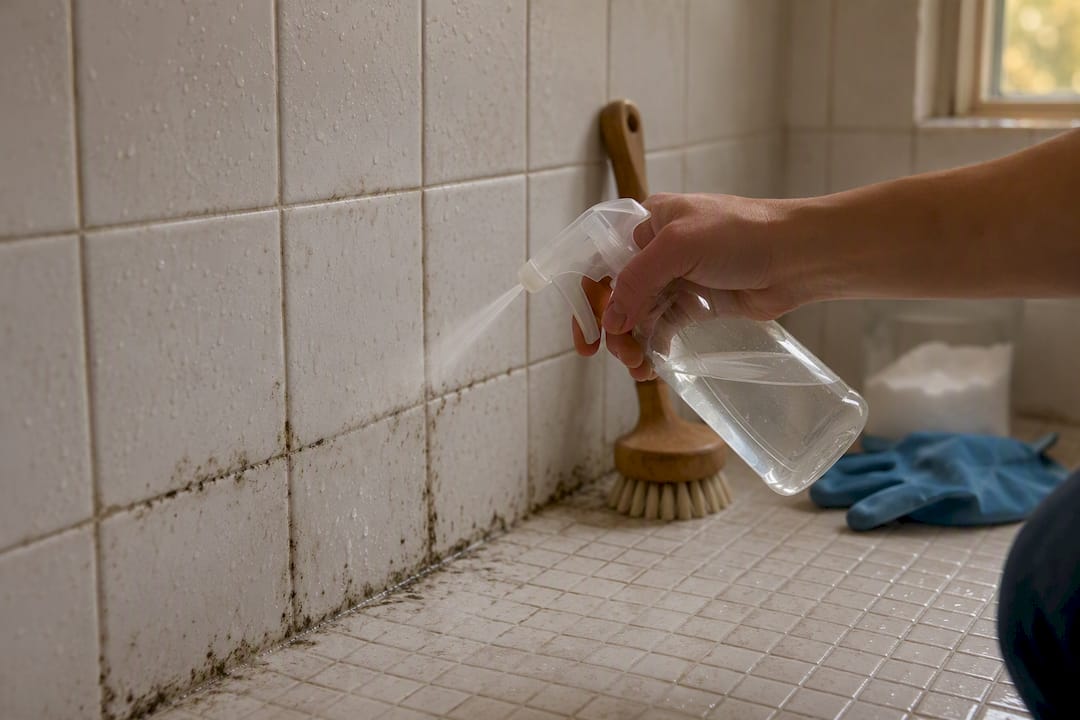
But “kills mold” isn’t a blanket statement, and this is where a lot of cleaning advice oversimplifies things. A peer-reviewed study on household antifungal products found that vinegar inhibited growth of Penicillium chrysogenum but had no measurable effect on Aspergillus fumigatus, a mold species that shows up often in damp homes. In plain terms: vinegar can be highly effective against one common household mold and nearly useless against another growing three feet away.
The species gap matters more than most people realize. A few practical limits worth knowing before you rely on vinegar alone:
- Killing mold spores doesn’t remove them. Dead spores can still trigger allergic reactions, so cleanup has to include physical removal, not just disinfection.
- Staining often survives even a successful treatment. Expect some discoloration to remain on grout, drywall, and wood even after the mold itself is gone.
- Porous materials like drywall, carpet padding, and ceiling tile frequently need replacement, not cleaning, because mold roots into the material itself.
How to Use Vinegar to Kill Mold Safely
Vinegar mold removal works best as a targeted tool for small, visible patches on surfaces that can tolerate acid, think tile, sealed grout, glass, and most plastics. Skip it on anything you’re not sure about until you’ve read the surface cautions below.
- Put on PPE and open a window. Gloves and an N95 mask keep you from inhaling disturbed spores; a fan or open window keeps fumes from building up.
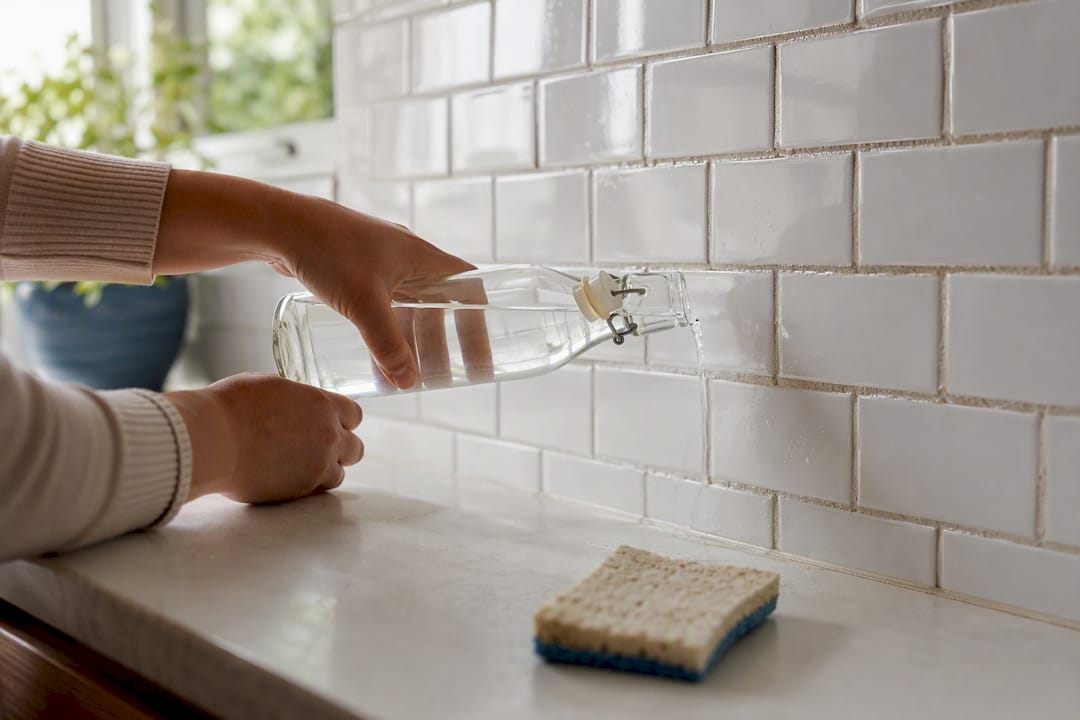
- Pour undiluted white vinegar into a spray bottle and saturate the moldy surface completely. Diluting it weakens the acetic acid concentration and slows things down further.
- Let it sit for at least 60 minutes. This dwell time is where most DIY attempts fail, people wipe it off after five minutes and wonder why the mold comes back within a week.
- Scrub with a stiff brush to lift dead mold and debris, then wipe the area clean with a damp cloth.
- Dry the surface completely. Leftover moisture is an open invitation for the same mold to return within days.
Always test an inconspicuous spot first. Consumer Reports warns against using vinegar on marble, limestone, and certain wood finishes, since the acid can etch stone and strip protective coatings. The same caution applies to delicate fabrics; if you’re dealing with mold on upholstery or carpet, check how you’d handle a stain like red wine on carpet for a sense of how test-spotting protects the material underneath.
Pro Tip: Don’t rush the dwell time. Letting vinegar soak into porous grout or wood for the full hour, instead of scrubbing right away, gives the acetic acid time to actually penetrate the surface rather than simply sitting on top of it.
When Vinegar Isn’t Enough: Limits and Red Flags
Killing mold and remediating mold are two different jobs, and conflating them is the most common DIY mistake homeowners make. The EPA’s guidance on mold remediation is blunt about this: physical removal and moisture control matter more than any single cleaning product, because dead mold material left in place still triggers allergic and respiratory symptoms in sensitive people.
The EPA sets a clear line at 10 square feet, roughly the size of a small bathroom wall. Past that threshold, containment and specialized equipment become necessary to keep spores from spreading through the rest of the house during cleanup.
Mold growing inside HVAC systems or ductwork should never be treated as a DIY project. Airflow spreads spores through every room the system serves, turning a contained problem into a house-wide one.
Watch for these signs that a professional needs to step in:
- Mold keeps returning in the same spot within weeks of cleaning, which usually means a moisture source hasn’t been fixed.
- You see structural warping, soft drywall, or a musty odor that persists after visible mold is gone.
- Anyone in the household has asthma, a compromised immune system, or chronic respiratory issues.
- Staining or growth covers a wide area even if no single patch tops 10 square feet.
The CDC’s mold guidance echoes this same threshold logic: small, contained areas are reasonable for homeowners to handle, but persistent or widespread problems call for trained remediation.
Vinegar vs. Bleach vs. Hydrogen Peroxide
Each cleaner has a real use case, and picking the wrong one either wastes your afternoon or damages your surfaces.
- Vinegar penetrates porous materials better than bleach and produces safer fumes, but it works slowly (that 60 minute dwell time isn’t optional) and won’t lift deep staining.
- Bleach kills surface mold fast and removes stains well on non-porous surfaces like tile and sealed countertops, but its fumes are harsh and it doesn’t penetrate porous materials the way vinegar does.
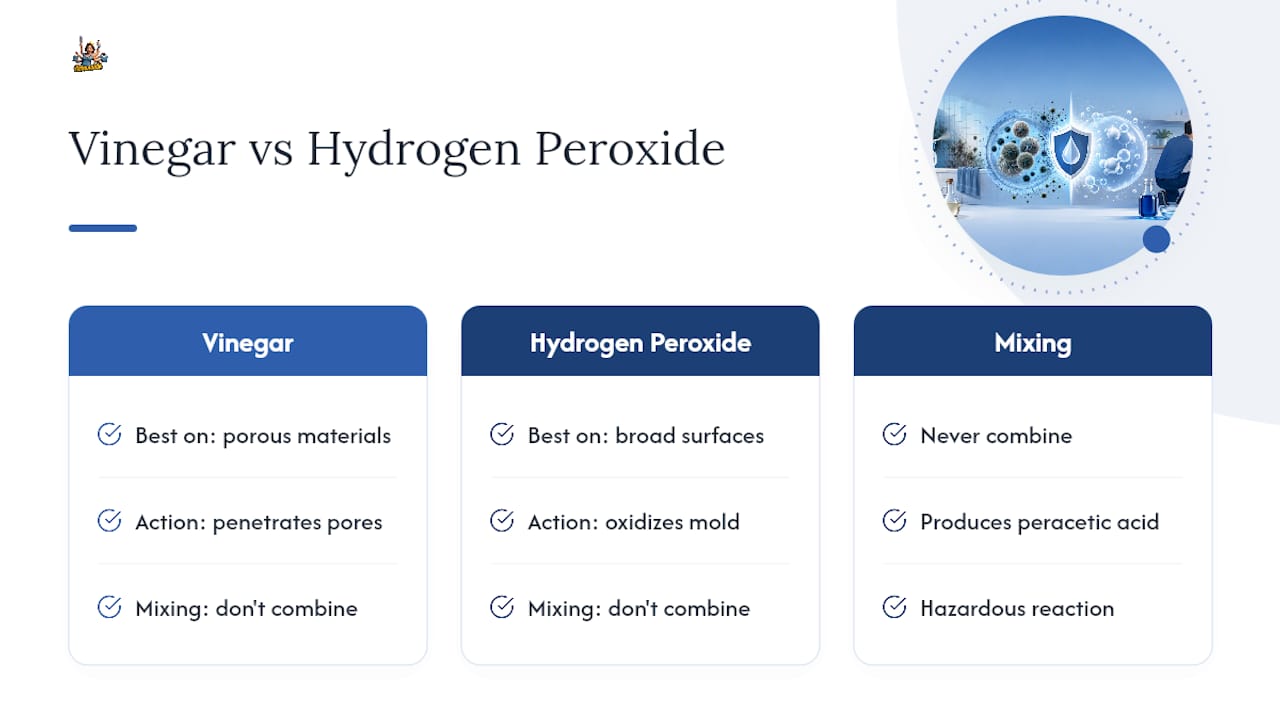
- Hydrogen peroxide oxidizes mold effectively across a range of surfaces and is gentler than bleach, but it must never be mixed with vinegar, the combination forms peracetic acid, a corrosive compound that irritates skin, eyes, and lungs.
Match the agent to the surface and the people living in the space: porous grout leans toward vinegar, a stained non-porous countertop leans toward bleach, and households with kids or pets often do better with peroxide’s milder profile.
Stopping Mold Before It Comes Back
Killing the mold you can see solves today’s problem. Keeping it from coming back means dealing with the moisture that fed it in the first place, and that’s a habit, not a one-time task.
- Fix leaks and plumbing issues as soon as you spot them; even a slow drip under a sink can sustain mold growth for months.
- Keep indoor humidity between 30 and 50%, using exhaust fans in bathrooms and kitchens and a dehumidifier in damp basements or crawl spaces.
- Wipe down wet surfaces (shower walls, window sills, laundry areas) instead of letting them air dry on their own.
- Inspect hidden spaces, under sinks, behind appliances, in closets against exterior walls, every few months for early signs of dampness.
- Use diluted vinegar as a light preventive spray on grout and tile between deep cleans; it’s a maintenance habit, not a treatment for active growth.
- Replace materials that have absorbed moisture repeatedly, like old carpet padding or water-stained ceiling tiles, rather than cleaning them again and again.
Building these checks into your regular routine matters more than any single product. Our guide on maintaining a clean home between visits covers the humidity and drying habits that keep mold from getting a foothold in the first place.
What Professional Cleaners Notice That Homeowners Miss
Octomaids has cleaned homes throughout Vancouver, WA and the Portland Metro area since 2006, and mold shows up in patterns most homeowners don’t expect, behind furniture pushed against exterior walls, inside closets that share a wall with a bathroom, under window sills with failed seals. Scraped mold debris needs to be bagged and disposed of immediately, not left on a nearby towel where spores can resettle.
Always test a finish before treating the whole surface. A five minute test spot on an inconspicuous corner has saved more wood floors and stone counters than any product label ever will.
My Take: When DIY Makes Sense and When It Doesn’t
Steven’s honest read: vinegar earns its place under the sink for small, contained patches on tile, glass, or sealed grout. Past that, on porous drywall, recurring damp spots, or anywhere a household member has respiratory sensitivities, hiring help stops being a luxury and starts being the practical choice. If you’re leaning toward a professional visit, clear the area and note when the moisture problem started; it speeds up the inspection considerably.
Considering Professional Help for Mold-Related Cleaning?
If you’ve read this far and you’re staring at a bathroom ceiling with more than a 10 square foot problem, or you just don’t want to spend your Saturday scrubbing grout in an N95 mask, Octomaids handles the deep cleaning work that mold cleanup demands. Our teams throughout Vancouver, WA and the Portland Metro area bring the same background-checked crew to every visit, so you’re not explaining your home’s quirks to a new face each time.
A deep clean targets the buildup and grime that ordinary cleaning misses, exactly the conditions that let mold take hold in bathrooms, kitchens, and basements. If you’re moving into a home with a prior mold issue or preparing to sell one, our move-in and move-out cleaning service gets the space genuinely clean before you unpack a single box. Book a visit and we’ll walk the affected areas with you, flag what needs professional remediation versus a thorough clean, and give you a straight answer either way.
Sources
FAQ
How long does it take vinegar to kill mold?
Vinegar needs at least 60 minutes of contact time on the moldy surface to work effectively; wiping it off sooner reduces its ability to penetrate and disrupt the mold.
What kills mold completely?
No single household product guarantees complete mold elimination on every surface and species; effective remediation combines the right cleaning agent with physical removal of contaminated material and fixing the moisture source, as the EPA outlines.
Which is better for killing mold, vinegar or hydrogen peroxide?
Both are effective on different surfaces. Vinegar penetrates porous materials better, while hydrogen peroxide oxidizes mold across a broader range of surfaces; never combine the two, since mixing them produces hazardous peracetic acid.
What kind of mold does vinegar not kill?
Studies show vinegar does not reliably kill Aspergillus fumigatus, a mold species common in damp indoor environments, even though it’s effective against other species like Penicillium chrysogenum.
When should I hire a professional instead of using vinegar?
Call a professional if the moldy area exceeds 10 square feet, if mold is growing inside HVAC ductwork, or if it keeps returning despite repeated cleaning, per EPA guidance.
Recommended
- Clean Red Wine from Carpet: A Step-by-Step Guide
- How to Clean White Grout: Fast DIY Steps for Homeowners
- How to Clean Rental Appliances Professionally
About Octomaids
Octomaids is a locally operated professional cleaning company serving Vancouver, Clark County, and the surrounding Portland metro area. Since 2006, our cleaning teams have helped homeowners, renters, property managers, and businesses with recurring cleaning, deep cleaning, move-in/move-out cleaning, and commercial cleaning.
Our cleaning articles are reviewed to ensure the information reflects our real-world experience and professional cleaning practices.