


Most professional cleaners will not clean up blood or bodily fluids, handle major mold remediation, move heavy furniture, work from tall ladders, deep shampoo carpets and upholstery, manage large pest or rodent infestations, or launder your personal clothing. These limits exist because of safety training, insurance coverage, and equipment requirements, not a lack of willingness to help. Once you know where the line sits, it becomes much easier to plan for specialists and avoid surprises on cleaning day.
TL;DR:
- Most professional cleaners will not handle biohazard cleanup, major mold remediation, or large pest infestations due to training, safety, and insurance requirements.
- Tasks like heavy furniture moving, high ladder work, deep carpet shampooing, or laundry are typically outside standard scope and should be referred to specialists.
- Mixing bleach with ammonia or acids is strictly prohibited because it produces toxic gases that can cause severe respiratory harm.
- Preparing for cleaning involves clearing clutter, disclosing hazards, and scheduling specialists first for tasks like mold or pest issues to ensure safety and efficiency.
- Reputable cleaners clearly communicate their limits upfront, reflecting their commitment to safety and proper training, which indicates professionalism and trustworthiness.
Table of Contents
- Tasks professional cleaners typically decline to perform
- Why cleaners refuse: OSHA, insurance, and safety rules
- What to do instead: who to call and how to prepare
- Chemical and biohazard safety rules every homeowner should know
- How Octomaids sets boundaries with clients
- Why these limits are a sign of a trustworthy cleaner
- Sources
- FAQ
Tasks professional cleaners typically decline to perform
Every reputable cleaning company draws its boundaries a little differently, but a few categories show up again and again. Knowing these ahead of time helps you set the right scope before your appointment.
- Biohazard and bodily fluid cleanup: Blood, vomit, or significant bodily waste requires specialized training and PPE that most residential crews don’t carry.
- Major mold remediation: A small spot on a shower curtain might get wiped down, but widespread mold growth behind walls or under flooring calls for a licensed remediation team.
- Heavy furniture moving: Shifting a couch or refrigerator to clean behind it risks injury and property damage, so most cleaners will clean around large pieces instead.
- Exterior high-window or ladder work: Cleaners generally handle interior windows and reachable surfaces, not second-story exteriors or anything requiring an extension ladder.
- Whole-room carpet or upholstery shampooing: Standard visits usually cover vacuuming and light spot treatment, not deep-extraction shampooing, which needs dedicated machines.
- Large-scale pest, rodent, or animal waste cleanup: Widespread droppings, infestations, or heavy pet accidents typically fall outside a routine cleaning scope.
- Laundry and personal clothing: Most services stick to surfaces, floors, and fixtures rather than washing, folding, or ironing clothes.
- Decluttering or organizing: Cleaners can tidy visible surfaces, but sorting through personal belongings or organizing closets is usually a separate request, if it’s offered at all.
- Mixing or substituting chemicals: A trained cleaner won’t combine cleaning products on request, even if a client asks for a stronger mix, because certain combinations are dangerous.
A cleaner might make an exception for a smaller version of a task, spot-treating one stained cushion instead of shampooing an entire sectional, for example, but the larger or riskier version of that same job usually gets referred out.
Why cleaners refuse: OSHA, insurance, and safety rules
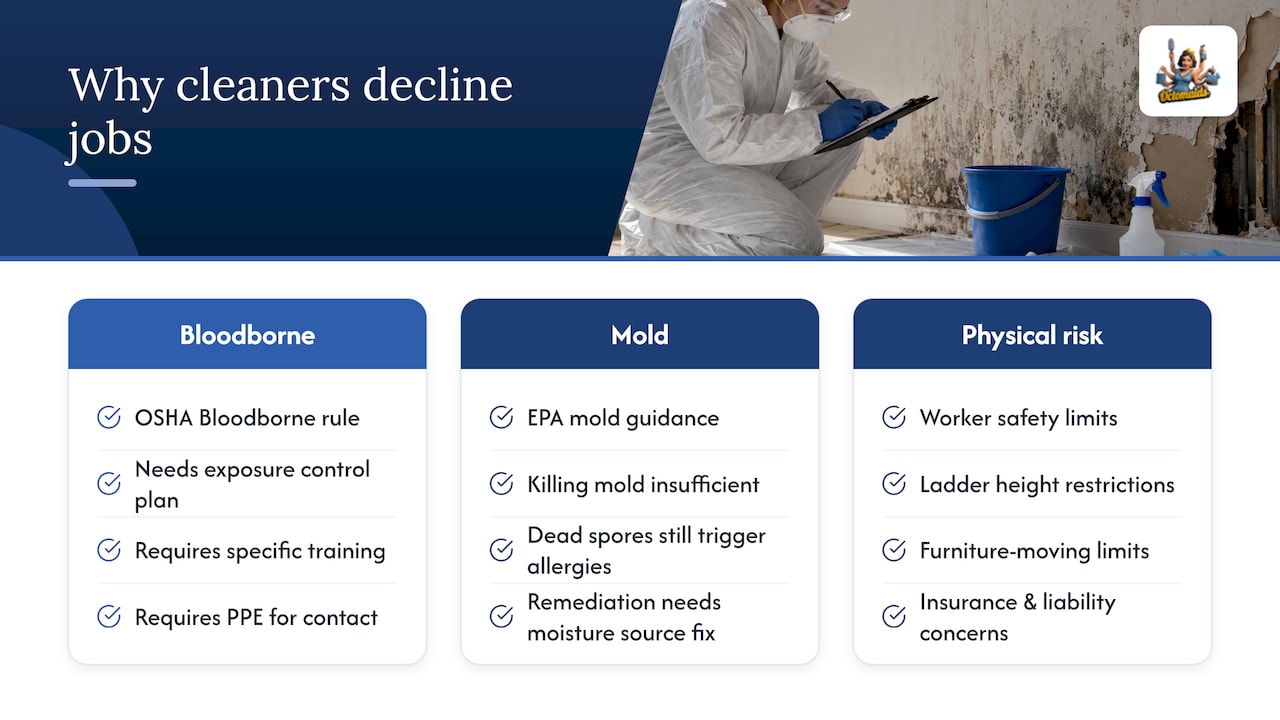
These exclusions aren’t arbitrary. Blood and bodily fluid cleanup falls under OSHA’s Bloodborne Pathogens standard, which requires an exposure control plan, specific training, and PPE for anyone who might contact blood or other potentially infectious materials. Most house cleaning crews aren’t equipped or certified for that exposure, so the safest and most compliant choice is to decline.
Mold works similarly. EPA guidance on mold cleanup explains that killing visible mold with a disinfectant doesn’t solve the underlying problem. Dead spores can still trigger allergic reactions, and real remediation means finding the moisture source, containing the area, and removing the material properly, work that calls for training a standard cleaning visit doesn’t include.
Ladder height limits and furniture-moving restrictions come from a simpler source: worker safety. A cleaner falling off a ladder or straining a back moving a dresser is bad for the worker and bad for the company’s insurance. A provider that draws these lines clearly is usually signaling that it takes safety and liability seriously, not that it’s cutting corners.
What to do instead: who to call and how to prepare
When a task falls outside a cleaner’s scope, the fix is usually a quick call to the right specialist rather than a lot of extra effort on your part.
- Biohazard or bodily fluid cleanup: Call a certified biohazard remediation company trained under bloodborne pathogen rules.
- Significant mold growth: Contact a licensed mold remediation specialist who can address the moisture source, not just the visible spots.
- Heavy furniture or appliance moving: Book a licensed moving crew that carries the right equipment and insurance for large or awkward items.
- Deep carpet or upholstery cleaning: Schedule a professional carpet cleaning service with truck-mounted or industrial extraction equipment.
- Pest or rodent infestations: Bring in a licensed pest control company before your cleaning appointment so the cleaner isn’t working around an active problem.
Before your cleaner arrives, a short prep checklist saves time and avoids extra fees: pick up clothing and personal items, isolate anything hazardous, disclose pet stains or odors in advance, and clear a path to the rooms being cleaned. When you book, ask about insurance coverage, the company’s ladder and furniture policy, pricing for add-on requests, and whether you need to disclose specific hazards ahead of time. Our guide on what professional cleaners do differently covers more of these standard scope questions.
Pro Tip: If you’re coordinating a specialist and a cleaning team for the same space, schedule the specialist first and give the area at least a full day to settle before the cleaning crew arrives.
Chemical and biohazard safety rules every homeowner should know
A few safety rules matter more than most people realize, and they apply whether a professional or a homeowner is doing the cleaning.
Never mix bleach with ammonia or acids. The Washington State Department of Health warns that combining these products creates toxic chloramine or chlorine gas, which can cause serious respiratory harm in a closed room. This single rule prevents more emergency room visits than almost any other cleaning mistake, and it’s worth posting near your cleaning supplies.
Beyond that, the CDC’s guidance on cleaning with bleach recommends ventilating the room, wearing gloves, mixing a fresh solution rather than storing one, and following label instructions for dilution and contact time. Regulated bloodborne waste, meanwhile, often needs specific packaging and labeling under OSHA rules, which is another reason cleanup gets handed to certified specialists rather than a general cleaning crew.
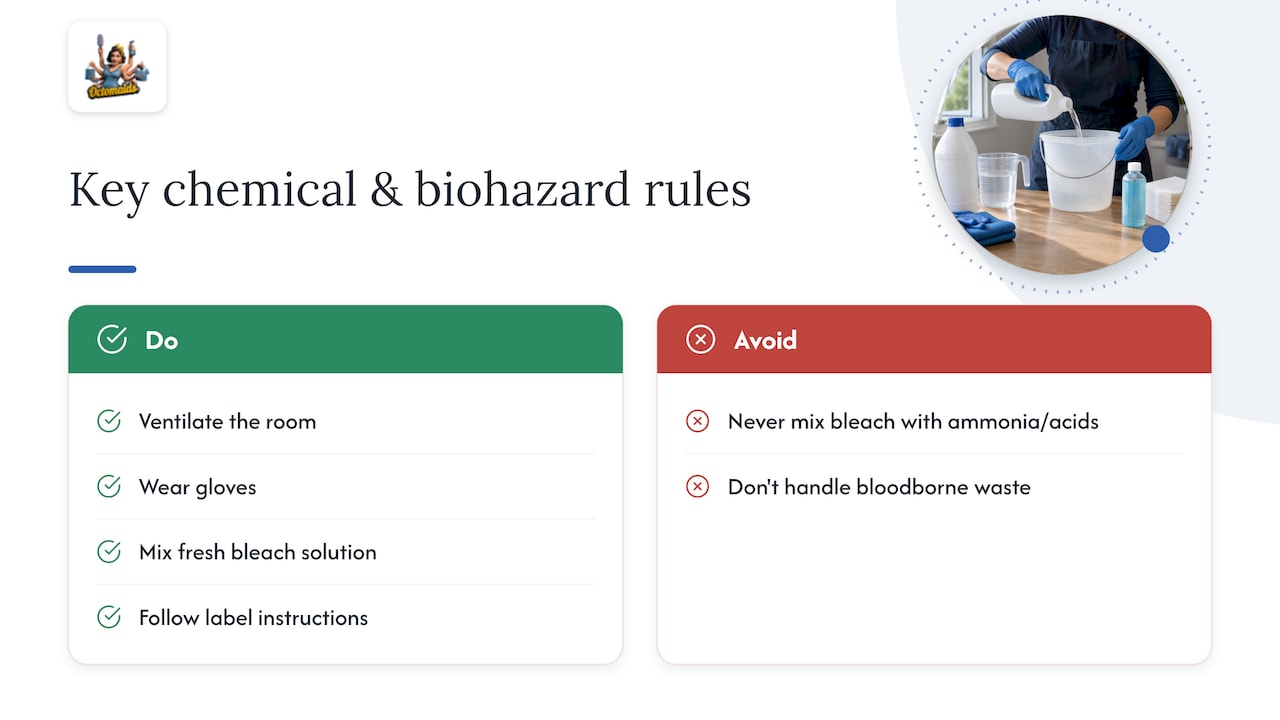
At home, your job is simple: ventilate when you clean, never combine products, and set aside anything hazardous for a specialist instead of asking your cleaner to handle it.
How Octomaids sets boundaries with clients
Octomaids provides recurring home cleaning, one-time deep cleans, move-in and move-out cleaning, Airbnb turnovers, and commercial cleaning across our service area, and like most reputable providers, we hold the same safety-driven boundaries covered above. Biohazards, major mold, heavy lifting, and ladder work above a safe reach all fall outside a standard visit.
When you book a cleaning service, a quick prep checklist helps things go smoothly: clear clutter from surfaces, disclose pets or specific stains, point out anything fragile, and confirm the furniture and ladder policy ahead of time. This approach is recommended to help maintain consistency with the cleaning team over multiple visits.
Why these limits are a sign of a trustworthy cleaner
A cleaner who tells you upfront what they won’t do is usually the one who’s thought carefully about safety, training, and insurance, not the one trying to avoid work. The providers worth hiring are the ones who publish their limits clearly and explain the reasoning instead of leaving you to find out mid-appointment. When you’re comparing options, ask about insurance and published boundaries before you ask about price.
— Steven
Sources
- OSHA — Bloodborne Pathogens quick reference
- EPA — Mold Cleanup Your Home
- Washington State Department of Health — Bleach mixing dangers
- CDC — Cleaning and Disinfecting with Bleach
FAQ
What do house cleaners not do?
House cleaners typically avoid biohazard cleanup, major mold remediation, heavy furniture moving, high ladder or exterior window work, whole-room carpet shampooing, large pest infestations, and laundry. These tasks require training, equipment, or insurance that standard residential cleaning doesn’t cover, so they’re usually referred to a specialist.
What two cleaners should never be mixed?
Bleach should never be mixed with ammonia or with acidic cleaners, since the combination produces toxic chloramine or chlorine gas. The Washington State Department of Health warns that this mixture can cause serious respiratory harm even in a well-ventilated space.
What do professional cleaners recommend never doing at home?
Professional cleaners recommend never combining cleaning chemicals, especially bleach with ammonia or acids, and never using bleach without ventilation or proper dilution. Following CDC disinfecting guidance, including fresh solutions and adequate contact time, keeps disinfection both safe and effective.
Which cleaning products should a cleaner avoid using?
A careful cleaner avoids using undiluted bleach without ventilation and never combines it with other chemical products on request. Sticking to labeled dilution ratios and single-product use, rather than improvised mixes, keeps the work both safer and more effective.
Will a cleaner move furniture to clean underneath it?
Most cleaners will clean around furniture rather than move heavy pieces, since lifting or shifting large items risks injury and property damage. For anything requiring real relocation, a licensed moving service is the safer and more appropriate choice.
Recommended
- 12 Signs You Need a House Cleaner Right Now
- How to Prepare Your Home for a Cleaning Service
- How to Hire a House Cleaner for the First Time
- How Cleaning Services Handle Special Requests
About Octomaids
Octomaids is a locally operated professional cleaning company serving Vancouver, Clark County, and the surrounding Portland metro area. Since 2006, our cleaning teams have helped homeowners, renters, property managers, and businesses with recurring cleaning, deep cleaning, move-in/move-out cleaning, and commercial cleaning.
Our cleaning articles are reviewed to ensure the information reflects our real-world experience and professional cleaning practices.