


A working retail store cleaning checklist covers several zones, different frequencies, and a clear accountability system: daily zone tasks assigned to specific staff, weekly deep-maintenance tasks that protect floors and fixtures, and monthly or seasonal deep cleans that reset the store before it shows wear. Below, you’ll find each checklist broken down by zone and timing, plus the SOPs and audit tools that turn “we clean regularly” into something you can actually prove.
TL;DR:
- Daily cleaning responsibilities must be assigned to specific staff with clear timelines to prevent tasks from being skipped during busy periods.
- Weekly maintenance includes deep floor scrubbing, high-dust cleaning, and thorough interior glass and device sanitation, which preserve store appearance beyond daily upkeep.
- Monthly and seasonal tasks involve carpet extraction, grout cleaning, VCT re-coating, and exterior pressure washing to protect against long-term damage and costly repairs.
- Responsibility should be divided among cashiers, cleaning crews, and managers, with proper logging methods like photos or apps to verify completion and ensure accountability.
- Retailers should select EPA-registered disinfectants, use appropriate equipment for store size, and enforce safety protocols to maintain cleanliness and customer trust effectively.
Table of Contents
- What Should Be on a Daily Retail Store Cleaning Checklist?
- What Weekly Tasks Keep a Retail Store Looking Its Best?
- Which Monthly and Seasonal Deep Cleans Matter Most?
- Who Should Be Responsible for Each Cleaning Task?
- What Cleaning Supplies and Safety Rules Should Retailers Follow?
- How Do You Audit Cleanliness and Prove Tasks Are Done?
- Field Notes: What Actually Trips Up Retail Cleaning Programs
- Why Checklist Discipline Is a Revenue Decision, Not a Chores List
- How Octomaids Can Support Your Store’s Cleaning Program
- Sources
- FAQ
What Should Be on a Daily Retail Store Cleaning Checklist?
A daily checklist has to answer one question for every task: who owns it, and when does it happen? Without that, tasks get skipped during rushes and nobody notices until a customer does.
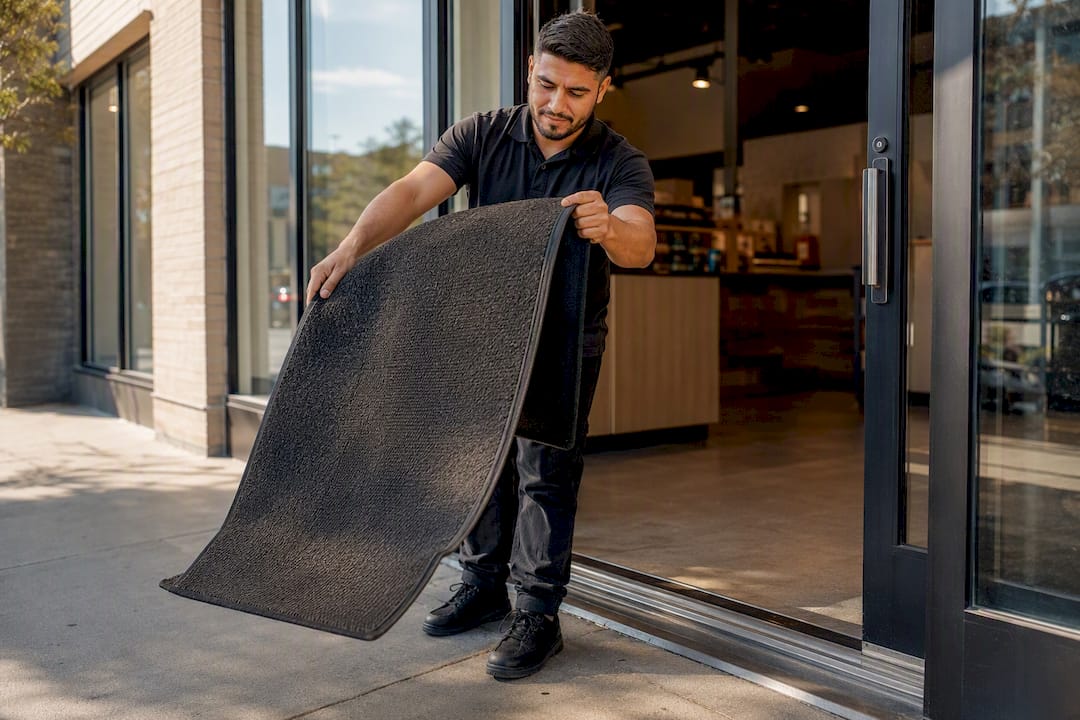
Entrance and exterior. This is the first thing every shopper judges, often before they’re through the door. Vacuum or shake out entrance mats at opening and again midday, clean interior and exterior door glass, and do a quick sidewalk sweep for trash, gum, and tripping hazards. Mat sizing matters more than most managers realize. A mat that’s too short lets shoppers track soil past the entry zone and onto sales floor flooring, according to entryway mat guidance from the Carpet and Rug Institute, which recommends mats long enough to capture at least two full footsteps before a customer’s shoes hit hard flooring.
Sales floor. Sweep or vacuum all traffic lanes, spot-mop spills as they happen, dust shelving and display fixtures at eye level and below, and straighten merchandise that’s been handled and abandoned mid-aisle. This is the zone where visible cleaning matters most, since it’s where customers spend the bulk of their time.
Checkout and POS. Disinfect terminals, scanners, and card readers at shift changes, clear clutter from counters, and confirm bags, receipt paper, and pens are stocked. A sticky counter or a dead pen at checkout is a small thing that reads as carelessness at the exact moment you want a customer’s last impression to be good.
Fitting rooms. Sanitize surfaces and mirrors between customers when volume allows, or on a fixed rotation several times per hour during busier periods. Check for abandoned merchandise, tags, and lost personal items every time a room turns over.
Restrooms. Check and restock at least twice daily as a baseline, with more frequent passes during peak shopping hours or events. Wipe fixtures, refill soap and paper, and address odor at the source rather than masking it. A restroom that looks neglected does more damage to customer trust than almost any other single space in the store.
Stockroom and back of house. Sweep floors, empty garbage before it overflows, keep pallets and boxes off walkways, and clean up spills immediately rather than flagging them for later. Back-of-house neglect eventually shows up front of house, usually in the form of tracked-in debris or a safety incident.
Breakroom and back office. Wipe down microwaves and refrigerator handles, empty trash, and do a quick fridge check so nothing spoils and lingers.
Here’s how a typical day breaks down by timing:
- Pre-open (30 to 45 minutes before doors open): Restrooms stocked and checked, floors swept, entrance glass cleaned, POS counters wiped and stocked.
- During open hours: Hourly high-touch wipe-down (door handles, POS, fitting room surfaces), spot-mop as needed, restroom checks on a set interval.
- Close: Full sales floor sweep, trash removed from all zones, stockroom tidied, final restroom check and restock for the next morning.
Assign a named owner to every task, not just a zone. Clear responsibility and timing improve accountability. A quick photo plus initials, logged in a shared folder or a simple app, gives you proof the task happened without adding real time to anyone’s shift.
Pro Tip: Post the daily checklist where the team clocks in, not in a binder in the office. Tasks that are out of sight get skipped first when the store gets busy.
What Weekly Tasks Keep a Retail Store Looking Its Best?
Daily tasks keep a store from looking dirty. Weekly tasks keep it from looking worn, which is a different problem and a more expensive one to fix if you let it slide.
- Auto-scrub or wet-mop all hard flooring with a neutral cleaner, then burnish or polish finished floors where the surface calls for it.
- Spot-treat carpeted areas and run a scheduled extraction pass on high-traffic carpet zones before stains set permanently.
- High-dust shelving tops, light fixtures, and reachable vents, since dust here eventually settles onto merchandise below.
- Clean interior glass and mirrors fully, beyond the quick daily wipe, including corners and frames that accumulate grime.
- Sanitize shared devices like fitting room call buttons, self-checkout screens, and hand sanitizer dispensers, and confirm dispensers are actually dispensing.
- Check inventory and storage areas for pest activity, moisture, or clutter that’s starting to block emergency exits.
These are the tasks that separate a store that looks fine on a walkthrough from one that’s quietly deteriorating. A floor that only gets a daily spot-mop will dull within weeks; one that gets a proper weekly auto-scrub holds its finish for months.
Which Monthly and Seasonal Deep Cleans Matter Most?
Monthly and seasonal tasks are where you protect the store’s actual physical assets. Skip these long enough and you’re not cleaning anymore, you’re restoring, which costs far more.
Monthly:
- Full carpet extraction across all carpeted zones, not just high-traffic spots.
- Deep grout cleaning in tile areas, especially entrances and restrooms where soil builds fastest.
- Strip and re-coat VCT flooring on a rotation based on traffic volume, not a fixed calendar date.
- Clean HVAC diffusers and grilles to cut down on dust recirculation across the sales floor.
Seasonal and peak-period prep:
- Pre-season deep clean before major shopping periods, covering every zone at once rather than piecemeal.
- Post-holiday restoration once foot traffic drops, addressing the accumulated wear from peak shopping periods.
- Exterior pressure washing of sidewalks, entrances, and dumpster pads, particularly where grease or gum has built up.
Some of these tasks need equipment most stores don’t own outright, like commercial extractors or floor strippers, and that’s the point where hiring a professional crew usually makes more financial sense than buying gear that sits idle eleven months a year. If you’re weighing which deep tasks to handle in house versus hand off, a room-by-room breakdown of what deep cleaning actually includes is a useful reference point before you decide.
Pro Tip: Schedule VCT strip-and-recoat for overnight or early morning hours only. The chemical odor and wet-floor downtime are much harder to manage during business hours.
Who Should Be Responsible for Each Cleaning Task?
A checklist without owners is a wish list. Splitting responsibility by role keeps accountability clear without requiring a dedicated cleaning staff for every store.
- Cashiers and sales associates handle spot tasks during their shifts: wiping down high-touch surfaces, straightening merchandise, and flagging spills immediately rather than waiting for a break in customer traffic.
- A dedicated cleaning crew (in house or contracted) handles nightly closing tasks and the weekly deep-maintenance list, since these require dedicated time blocks that associates working the floor can’t reliably protect.
- The store manager runs audits, not just spot-checks. That means walking the store against the actual checklist on a set schedule, not just noticing problems when a customer mentions them.
For logging completion, paper sign-off sheets work for small stores but get lost or ignored fast. A shared photo folder is a cheap middle ground. Dedicated inspection apps like the retail cleaning checklist templates from SafetyCulture add timestamped photo proof and reporting, which matters most once you’re managing more than one location.
What Cleaning Supplies and Safety Rules Should Retailers Follow?
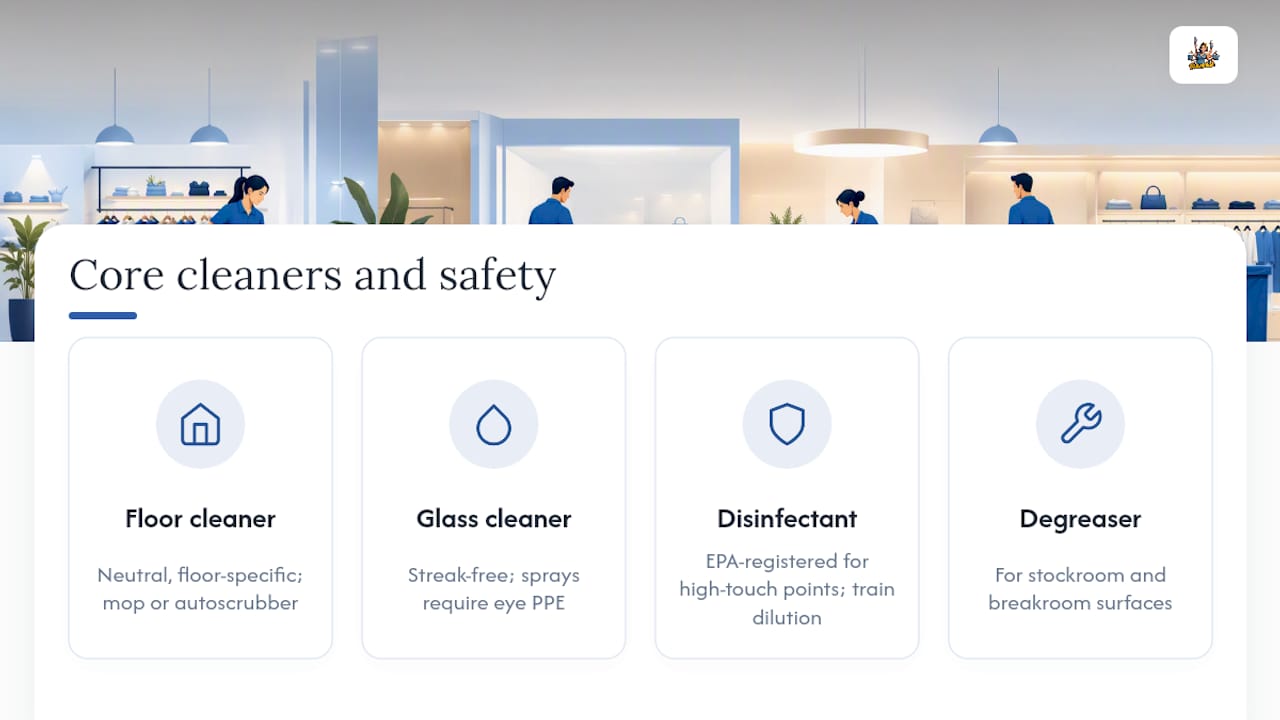
Stock four core product categories: a neutral floor cleaner safe for your specific flooring, a streak-free glass cleaner, an EPA-registered disinfectant for high-touch points, and a degreaser for stockroom and breakroom surfaces.
Equipment choices depend on store size. Auto-scrubbers make sense once you’re covering more than a few thousand square feet of hard flooring regularly; smaller stores get by with a quality wet mop and bucket system. Entrance mats need the sizing and placement guidance covered earlier, plus a maintenance schedule of their own, since a soiled mat stops protecting your floors.
On safety: train staff on correct dilution ratios, keep chemicals labeled and stored in locked cabinets away from food areas, and require basic PPE (gloves, and eye protection for anything sprayed) for tasks beyond routine wiping. Products carrying the EPA Safer Choice label are a reliable shortcut for identifying effective cleaners with a lower environmental and health profile, useful when you’re vetting new suppliers without running your own chemical review.
92% of shoppers say cleanliness is the top factor in whether they return to a store, and 66% specifically want to see cleaning happen while they’re shopping, according to Tennant Company’s retail cleaning research. That second number is the one that should change your scheduling: cleaning that only happens before or after hours is invisible to the customer whose opinion you’re trying to win.
How Do You Audit Cleanliness and Prove Tasks Are Done?
Audits fail when they’re vague. “Looks clean” isn’t a standard; a checklist with pass/fail checkpoints is.
- Use sight, smell, and touch as your baseline audit senses: visible dust or debris, odor in restrooms or trash areas, and sticky or tacky surfaces at checkout and fitting rooms.
- Add ATP testing on high-touch surfaces if you want an objective backup to the visual check, particularly for restroom fixtures and POS equipment.
- Run daily visual checks at open and close, a documented weekly audit with a signed checklist, and a monthly review specifically for corrective actions that keep recurring.
The ISSA Clean Standard combines exactly this mix, objective ATP measurement plus subjective audit scoring, to set defined ranges of clean and standard corrective-action steps. It’s built for commercial facilities generally, but the framework translates directly to retail.
| Audit item | Method | Frequency |
|---|---|---|
| High-touch surfaces (POS, doors) | Visual + ATP swab | Daily / weekly |
| Restroom fixtures | Visual + smell | Twice daily minimum |
| Floor finish | Visual gloss check | Weekly |
| Fitting room surfaces | Visual + touch | Between customers or hourly |
When an item fails, the corrective action should be immediate for daily items (re-clean now, log it) and scheduled for structural items (add to next week’s deep-clean list). Digital inspection tools that capture photo proof at each checkpoint remove the guesswork about whether a task actually happened, which matters most when you’re managing multiple locations or handing off audits to an assistant manager. For a template built around this exact structure, Octomaids’ audit-ready office cleaning checklist walks through the same pass/fail logic applied to commercial spaces.
Field Notes: What Actually Trips Up Retail Cleaning Programs
The trouble spots repeat across nearly every store: entrance mats that go weeks without a shake-out, checkout counters that get wiped but never actually disinfected, and restrooms that get checked on paper but not in practice during a busy Saturday.
Set par levels for consumables, soap, paper towels, and hand sanitizer, and tie reorder triggers to a specific quantity rather than a vague “when it’s low.” A weekly inventory check built into your audit routine catches shortages before they become a customer complaint.
One pattern shows up consistently in stores that score well on audits: the same crew cleans the same zones every time. Rotating staff through cleaning duties randomly means nobody develops the eye for what “off” looks like in their specific space.
Why Checklist Discipline Is a Revenue Decision, Not a Chores List
Most managers treat the cleaning checklist as maintenance overhead. It’s closer to a sales tool. Store cleanliness measurably affects dwell time and basket size, and with 92% of shoppers naming cleanliness as their top loyalty factor, a skipped restroom check isn’t a small oversight. It’s a lost repeat customer.
Treat your checklist like any other KPI you’d track weekly, not an afterthought handled when time allows. Run the daily and weekly lists for one full month, then audit against the ISSA framework and see where the gaps actually are. Most managers are surprised by which zone fails first.
— Steven
How Octomaids Can Support Your Store’s Cleaning Program
Retailers rarely outsource the whole checklist. What they hand off are the tasks that need equipment, training, or hours most in-house teams don’t have: carpet extraction, restroom deep sanitation, VCT strip-and-recoat, and seasonal exterior pressure washing.
A professional cleaning service fills that gap for stores in the local region. Instead of juggling contractor bids for every deep-clean cycle, you get the same trusted crew returning for each visit, which matters when you’re relying on audit consistency and want a team that already knows your store’s layout and trouble spots. When you’re evaluating any cleaning partner, ask about crew consistency, whether they provide audit-style reporting after each visit, proof of insurance, and references from similar retail accounts. Those four questions filter out a lot of contractors fast.
If your weekly or monthly checklist items are eating more manager hours than they should, Octomaids’ commercial cleaning services cover the deep-maintenance side of retail spaces, from floor care to periodic deep sanitation. Request a quote and find out which tasks make sense to hand off first.
Sources
- The definitive guide to retail shine (Tennant Company)
- ISSA Clean Standards
- Retail store cleaning checklist (SafetyCulture)
- EPA Safer Choice
- The hidden revenue driver: how store cleanliness influences dwell time and basket size
FAQ
How do you deep clean a retail store?
Deep cleaning covers monthly and seasonal tasks beyond daily upkeep: carpet extraction, grout cleaning, VCT strip-and-recoat, HVAC vent cleaning, and exterior pressure washing, usually scheduled around slow periods or overnight to avoid disrupting business hours.
How often should a retail store be cleaned?
Daily tasks (floors, checkout, restrooms) happen every operating day, weekly tasks (deep floor maintenance, high dusting) happen on a fixed weekly schedule, and monthly or seasonal deep cleans happen four to twelve times a year depending on traffic volume.
What should a daily store cleaning checklist include?
It should cover every customer-facing and back-of-house zone: entrance and mats, sales floor, checkout, fitting rooms, restrooms, stockroom, and breakroom, each with a named owner and a set time (pre-open, during open hours, and close).
How do you prove cleaning tasks were actually completed?
Use a logging method with a timestamp, either a signed paper checklist, a shared photo folder with initials, or a digital inspection app like SafetyCulture’s templates, which capture photo proof and generate reports for audits.
What cleaning products should retail stores avoid or choose?
Choose neutral floor cleaners, EPA-registered disinfectants for high-touch points, and streak-free glass cleaners, and favor products carrying the EPA Safer Choice label when comparing suppliers on safety and environmental profile.
Recommended
- Office Cleaning Supplies Managers Need: Zone Par Levels & EPA Signals
- How to Organize Your Cleaning Supplies Closet
- Shared Workspace Sanitation Best Practices Managers Can Use Today
About Octomaids
Octomaids is a locally operated professional cleaning company serving Vancouver, Clark County, and the surrounding Portland metro area. Since 2006, our cleaning teams have helped homeowners, renters, property managers, and businesses with recurring cleaning, deep cleaning, move-in/move-out cleaning, and commercial cleaning.
Our cleaning articles are reviewed to ensure the information reflects our real-world experience and professional cleaning practices.