



Hire a professional move-out cleaning crew or, at minimum, enforce a documented scope with a room-by-room checklist and itemized invoice. That single decision speeds unit turnover, cuts deposit disputes, and protects your bottom line. Pricing and legal documentation requirements are covered in detail below. A team like Octomaids shows what that documented, checklist-driven service looks like in practice.
TL;DR:
- Detailed checklists and timestamped photos are essential to substantiate cleaning charges and defend against tenant disputes.
- Move-out cleaning costs range from $0.12 to $0.40 per square foot, with larger or heavily soiled units costing significantly more, especially in high-cost markets.
- Consistent, trained vendors who follow a documented scope produce better results and reduce the risk of damage claims and inspection delays.
- Proper documentation and itemized invoices that link costs to specific conditions are crucial for legally charging tenants for cleaning beyond normal wear.
- Efficient turnover relies on streamlined scheduling, overlapping workflows, and a dedicated team familiar with the property’s standards to minimize vacancy periods.
Table of Contents
- What Does a Move-Out Cleaning Actually Cover?
- How Much Should a Move-Out Cleaning Cost?
- What’s the Fastest Path From Move-Out to Rent-Ready?
- Can You Legally Charge Tenants for Move-Out Cleaning?
- How Do You Vet and Contract a Move-Out Cleaning Vendor?
- What Does a Dedicated Local Move-Out Team Actually Deliver?
- Managing Move-Out Cleaning Across Multiple Units at Once
- Common Mistakes That Cost Property Managers Money
- Do Cleaning Requirements Differ by Property Type?
- Are Eco-Friendly Cleaning Products Worth Requiring?
- Three Priorities I’d Push Property Managers to Adopt
- Get a Documented, Ready-to-Present Move-Out Clean
- Sources
- FAQ
What Does a Move-Out Cleaning Actually Cover?
A move-out cleaning goes well beyond what a tenant would do with a vacuum and a spray bottle on their way out the door. It targets every surface that an inspector or incoming tenant will notice, and it draws a line between everyday grime and the kind of damage that justifies a deposit deduction.
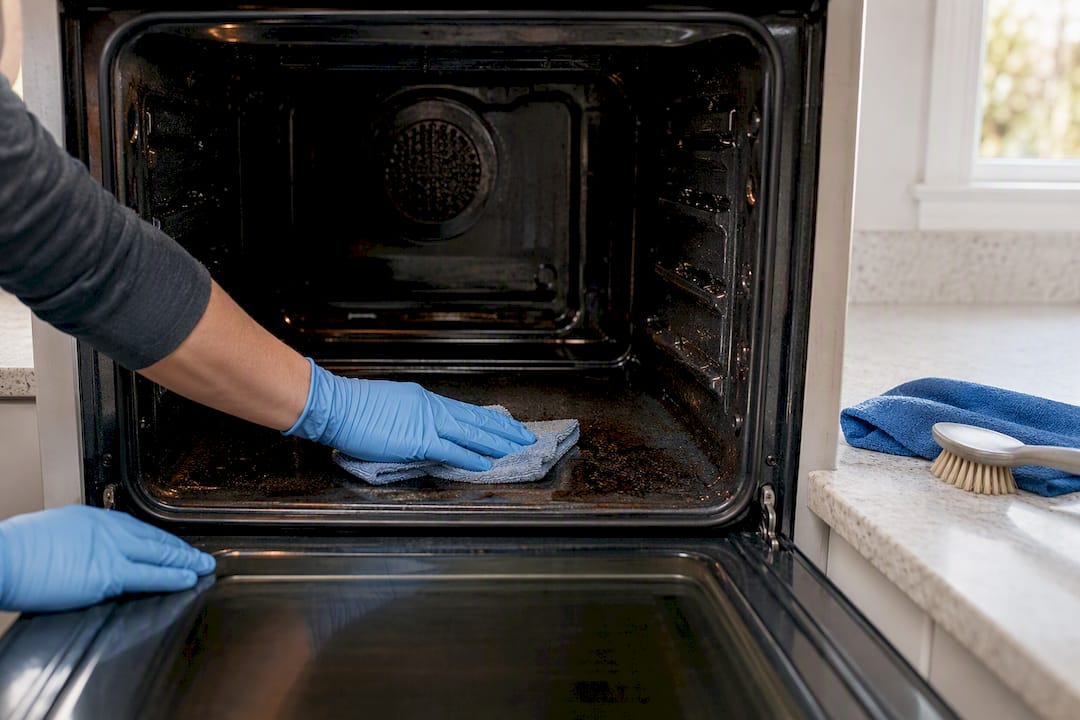
In the kitchen, the checklist has to include appliance interiors: the oven, refrigerator, and microwave all collect buildup that a surface wipe never touches. Cabinet interiors, countertops, the range hood, and stovetop drip pans round out the zone. These are also the items renters most often skip, which is exactly why they end up on a landlord’s inspection list.
Bathrooms carry their own set of trouble spots. Grout lines and caulk seams hold mold and soap scum long after a quick clean, shower door tracks collect hard water residue, and the exhaust fan and toilet base are two spots inspectors check almost automatically because tenants rarely touch them.
Every room in the unit needs the same baseline pass regardless of use: baseboards, window tracks, air vents, light switch plates, closet floors, and walls. Walls deserve a closer look than most managers give them, because the difference between a scuff mark (normal wear) and a gouge or grease stain (chargeable damage) is often what determines whether a deduction holds up.
A solid working checklist looks like this:
- Kitchen: oven, fridge, microwave interiors; cabinets; counters; range hood; drip pans
- Bathrooms: grout, caulk, shower tracks, exhaust fan, toilet base
- All rooms: baseboards, window tracks, vents, switch plates, closet floors, walls
- Move-in versus move-out comparison for scuffs, nail holes, and general wear
Some jobs need more than the standard pass, and these commonly get billed as add-ons rather than folded into a flat rate: carpet extraction, heavy grime buildup from long-term tenants, and hoarding or abandoned-item removal. Flagging these separately during the walkthrough, rather than discovering them mid-clean, keeps your vendor relationship and your pricing honest. A room-by-room deposit checklist gives tenants the same standard your cleaners will be held to, which cuts down on surprises at final inspection.
How Much Should a Move-Out Cleaning Cost?
Move-out cleaning typically runs $0.12 to $0.40 per square foot, with the final number depending on unit size, condition, and local labor rates. That range covers most of the vendor quotes you’ll see, but the pricing model behind the number matters as much as the number itself.
Pricing Snapshot: A 1,200 square foot unit in average condition generally lands between $150 and $265; heavily soiled units or high-cost metro markets push toward $300 to $480 for the same square footage.
Vendors price move-out jobs two main ways. Flat base pricing plus itemized add-ons works well for standard units where the base scope is predictable and extras (carpet extraction, appliance deep clean, junk removal) get billed separately. Per-square-foot pricing works better across a portfolio with mixed unit sizes, since it scales automatically instead of requiring a new quote for every floor plan. Flat pricing protects margins on small, clean units. Per-square-foot protects margins when your portfolio includes larger homes or units in variable condition.
Rough benchmarks by unit type:
- Studio (400 to 600 sq ft): typically $50 to $150 for a standard-condition clean
- One-bedroom (700 to 900 sq ft): typically $90 to $220
- Two-bedroom (1,000 to 1,300 sq ft): typically $150 to $300
- Heavy-soil or hoarding-adjacent units: often $300 to $500+ once add-ons are included
The number on the quote matters less than what backs it up. Vendors who hand over detailed checklists and timestamped photos alongside their invoice tend to command higher rates and win repeat business from property managers, because that documentation is what makes the charge defensible if a tenant disputes it. When you’re building a quote to present to a tenant or ownership group, itemize it the same way: base cleaning, appliance detail, carpet work, junk removal, each on its own line with its own price. A quote that reads as one lump sum invites questions. An itemized one answers them before they’re asked.
What’s the Fastest Path From Move-Out to Rent-Ready?
The unit turnover clock starts the moment keys hit your desk, and every day it sits empty costs you rent. A structured, seven-phase process, moving from pre-move-out communication through inspection, junk removal, cleaning, repairs, and re-listing, is what separates a three-day turnaround from a three-week one. Average turnover costs $2,500 to $4,000 and takes 14 to 30 days when it’s handled reactively instead of on a defined workflow.
- Inspect same day. Walk the unit within hours of key return, not days. Use this walkthrough to sort items into “trash,” “donate,” and “possible tenant claim” before anything gets touched.
- Clear junk immediately. Same-day junk removal is the single biggest lever for cutting delay, since cleaners and contractors can’t work efficiently around abandoned furniture or debris.
- Overlap cleaning and repairs. Send in your cleaning crew while a maintenance tech handles minor patch and paint work in rooms the cleaners haven’t reached yet. Reserve specialists like carpet extraction or HVAC service for after the general clean, since a fresh carpet clean gets ruined by drywall dust from a repair job done afterward.
- Document as you go. Timestamped photos before cleaning starts, during key stages, and after completion create the paper trail you’ll need if a deposit deduction gets challenged.
- Coordinate access. Set one point of contact for keys and lockbox codes so cleaners, contractors, and photographers aren’t waiting on each other.
- Re-list before the unit is fully finished. Photos can go up once the space is clean and repairs are cosmetic-only; you don’t need to wait for the final walkthrough to start marketing.
Pro Tip: Build a shared digital checklist (a simple spreadsheet or a tool like Asana works fine) that cleaners, contractors, and your leasing team all update in real time. It keeps three separate vendors from showing up on the same day, or worse, none of them showing up at all.
Property managers running several units at once benefit most from this overlap strategy, since staggering crews across properties on a fixed weekly schedule beats scrambling every time a lease ends.
Can You Legally Charge Tenants for Move-Out Cleaning?
Yes, but only for cleaning that goes beyond normal wear and tear, and only with documentation to back the charge. Landlords can deduct cleaning costs from a security deposit when the unit is left dirtier than it was at move-in, but many states require itemized statements and receipts, and failing to follow those rules can forfeit your right to deduct anything at all.
The distinction that matters most is normal wear and tear versus damage. A faded carpet from years of foot traffic is wear and tear. A carpet stained with pet urine or burn marks is damage. Dust on blinds is wear and tear. Grease coating a range hood after years of no cleaning tips toward chargeable. Courts have also pushed back on blanket policies: lease clauses that mandate a professional cleaning fee regardless of the unit’s actual condition have been successfully challenged, because deductions generally have to tie to the additional cleaning actually needed, not a flat fee applied automatically to every tenant.
Documentation Checklist:
- Signed move-in condition report for comparison
- Timestamped before-and-after photos of every room
- Signed walk-through notes from both parties, when possible
- Itemized invoice specifying each cleaning task and its cost
- Receipts retained for the length of your state’s dispute window
Itemized, condition-linked invoicing is the strongest protection you have against a deposit dispute or a statutory forfeiture claim. A generic “$200 cleaning fee” line item is far easier to challenge than five specific line items totaling the same amount, each tied to a photographed condition. Building this into your process starts before move-out, with a pre-move-out inspection and a written checklist handed to the tenant so nobody is surprised by what “clean” means when they hand over the keys. A tenant-facing move-out checklist sets that expectation in writing well before the final walkthrough.
How Do You Vet and Contract a Move-Out Cleaning Vendor?
Not every cleaning company is built for rental turnover. Vetting the right one comes down to a short list of questions and a contract that spells out exactly what you’re paying for.
Start with experience and process:
- Has the vendor worked directly with property managers or landlords before, or mostly residential one-off jobs?
- Do they work from a checklist-driven scope, or improvise room by room?
- Are staff insured and background-checked?
- Can they provide references specifically from other property managers?
Once you’ve settled on a vendor, put the terms in writing rather than relying on a verbal understanding. The contract should define exact scope and exclusions (what’s included in the base price versus billed separately), add-on pricing rules for carpet extraction or heavy soil, a re-clean guarantee if the job doesn’t pass inspection, photo deliverables as part of every invoice, clear invoicing terms, and a cancellation policy for last-minute schedule changes.
Pro Tip: Run a trial job on one unit before rolling a new vendor across your whole portfolio. Sign a scope sheet at that first job specifying exactly what “done” looks like, then use it as the template for every job after.
Set an escalation path up front, too. Decide now who handles a dispute if a tenant claims the unit wasn’t properly cleaned before their move-in, rather than figuring it out mid-argument. A vendor who balks at putting any of this in writing is telling you something about how they’ll handle a dispute later.
What Does a Dedicated Local Move-Out Team Actually Deliver?
A professional house cleaning company serving Vancouver, WA and the Portland, OR metro area since 2006 typically offers move-in/move-out cleaning as one of its core services, alongside recurring home cleaning and commercial work. Such companies often send the same dedicated, background-checked team to a property on repeat visits, which matters for portfolios managing multiple units on a rotating schedule.
For property managers evaluating what “documented and defensible” should look like in practice, a move-in/move-out cleaning service built around a room-by-room checklist, timestamped before-and-after photos, and an itemized invoice covers the exact deliverables this guide recommends requiring from any vendor. That combination, consistent crew plus paper trail plus a satisfaction guarantee on re-cleans, is the standard worth holding every vendor to, whether or not you end up working with Octomaids.
Managing Move-Out Cleaning Across Multiple Units at Once
Turnover season rarely spreads itself evenly across the calendar. Lease-end dates cluster around summer months and the first of each month, which means a portfolio of twenty units can generate five simultaneous move-outs with almost no warning.
The fix is standing infrastructure, not scrambling. Lock in a vendor relationship (or a short roster of two or three) before peak season hits, rather than sourcing cleaners job by job. A consistent crew learns your checklist once and applies it everywhere, which cuts down on the inspection call-backs that come from inconsistent work.
Batch your scheduling where geography allows it. Units in the same building or complex can share a cleaning crew’s travel day, which reduces cost per job and keeps your timeline tighter. Build a buffer day into every unit’s turnover estimate during high-volume months, since a single delayed key handoff or unexpected junk-removal job can cascade across a tightly packed schedule.
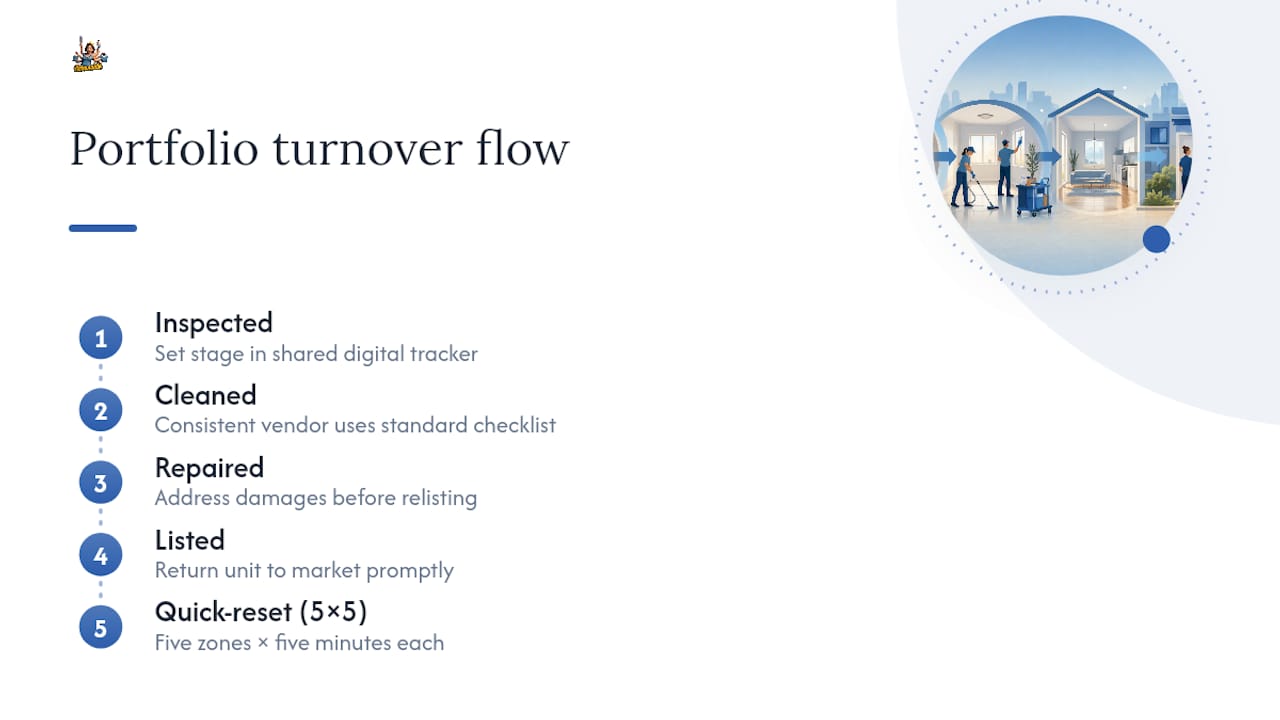
For quick touch-ups between full move-out cleanings, staff can use the 5×5 method, five zones tackled for five minutes each, to handle light pre-inspection resets without pulling in a full crew. It’s not a substitute for a real move-out clean, but it’s useful for common areas or units sitting vacant longer than expected. Keep a shared digital tracker across your whole portfolio so you can see every unit’s stage (inspected, cleaned, repaired, listed) at a glance instead of chasing status updates unit by unit.
Common Mistakes That Cost Property Managers Money
The most expensive mistake is skipping documentation to save time. A cleaning charge with no before photo, no itemized invoice, and no signed move-in comparison is a charge a tenant can challenge successfully, even when the unit genuinely needed the work.
A second common error is charging a flat cleaning fee regardless of condition. Courts have rejected this approach when it’s applied automatically instead of tied to actual need, which means a blanket policy can cost you the whole deduction, not just the disputed portion.
Rushing the junk-removal step causes a cascade of delays. Cleaners can’t do a thorough job around furniture and debris, contractors can’t access walls or floors for repairs, and the whole timeline slips by days while everyone waits on one bottleneck.
Underestimating add-on scope is another frequent miss. A quote based on a “standard” clean that doesn’t account for carpet staining or years of grease buildup either eats your margin or triggers an awkward renegotiation mid-job. Walk the unit and flag likely add-ons before the crew arrives, not after.
Finally, inconsistent vendors create inconsistent results. Rotating between whoever’s available that week means every job gets evaluated against a different standard, which makes it harder to defend charges and harder to spot a bad clean before a tenant does.
Do Cleaning Requirements Differ by Property Type?
A single-family home carries different inspection expectations than a multifamily apartment unit. Yards, garages, and often HVAC filters fall under the landlord’s cleaning scope for a house in a way that rarely applies to an apartment, where shared-building systems are handled separately.
Furnished units add an entire layer that unfurnished rentals skip. Upholstery, mattress protectors, and furniture surfaces all need inspection and cleaning between tenants, and disputes over furnished-unit cleanliness tend to be more contentious because there’s more surface area, literally and legally, for disagreement over what counts as damage versus wear.
Apartments in larger buildings often follow property management company standards that apply uniformly across every unit, which actually simplifies vendor contracts, since one checklist can serve the whole building rather than being customized property by property. Single-family homes and duplexes, by contrast, usually need a slightly customized scope depending on square footage, yard maintenance responsibilities, and whether appliances are owned by the landlord or the tenant.
Whatever the property type, the core principle holds steady: normal wear and tear isn’t chargeable, condition-specific damage and neglect are, and the checklist should reflect the property’s actual layout rather than a generic template borrowed from a different housing type.
Are Eco-Friendly Cleaning Products Worth Requiring?
Green cleaning products matter more for rentals than for owner-occupied homes, mainly because tenants with allergies, pets, or small children have no say in what chemicals get used in the unit before they move in. Requiring low-VOC, fragrance-free, or plant-based cleaning products reduces the chance of a health complaint from an incoming tenant with sensitivities.
Practically, this means asking vendors what they use on hard surfaces, in bathrooms, and for carpet treatment, and confirming those products don’t leave strong residual odors that linger for move-in day. Ammonia-based and heavily fragranced products can trigger complaints fast, especially in smaller units with limited ventilation.
It’s also worth building ventilation time into your turnover schedule. Airing out a unit for a few hours after a deep clean, particularly one that included any chemical-heavy treatment like oven degreasing or carpet shampooing, prevents move-in day complaints about smell before they start. This isn’t a regulatory requirement in most markets, but it’s a low-cost way to head off tenant friction on day one.

Three Priorities I’d Push Property Managers to Adopt
Documentation isn’t overhead. It’s the cheapest insurance you’ll ever buy against a deposit dispute, and skipping it to save fifteen minutes on a walkthrough is a false economy every time.
Price transparently. A base package with clearly documented add-ons builds trust with tenants and ownership groups alike, and it survives scrutiny in a way a flat, unexplained fee never does.
Stick with a consistent vendor or a small vetted roster instead of sourcing crews job by job. Variance is the enemy of a defensible process, and a cleaner who knows your checklist cold will always outperform a new hire learning it for the first time.
— Steven
Get a Documented, Ready-to-Present Move-Out Clean
If everything in this guide points to one conclusion, it’s that a move-out cleaning is only as good as the paper trail behind it. A reputable cleaning service handles both halves of that equation: a dedicated, background-checked team that shows up consistently, and a service built around the checklist-and-photo standard this article recommends requiring from any vendor. That’s the practical alternative to juggling unpredictable one-off cleaners between every lease turnover.
Octomaids serves property managers and landlords across Vancouver, WA and the Portland, OR metro area, and the move-in/out cleaning service page lays out exactly what’s included so you can compare it against any vendor bid you’re currently weighing. For portfolios running multiple units on a rotating schedule, having the same dedicated team return for every turnover can help reduce the inconsistency that causes disputes in the first place. If you’re managing a busy turnover season right now, request a quote and get a job scheduled before your next lease-end date hits.
Sources
- Landlord Move-Out Checklist: The Complete Guide 2026 | Dropcurb
- Move-Out Cleaning Checklist: What Landlords Inspect | DoorstepHQ
- Can a Landlord Charge for Cleaning After You Move Out? – LegalClarity
FAQ
What Is Usually Included in a Move-Out Cleaning?
A move-out cleaning covers appliance interiors, cabinets, counters, and range hoods in the kitchen, plus grout, caulk, and exhaust fans in bathrooms. It also includes baseboards, window tracks, vents, and closet floors throughout the unit, with carpet extraction and heavy grime removal typically billed as separate add-ons.
Who Is Responsible for Move-Out Cleaning?
Tenants are generally responsible for leaving a unit in the same condition as move-in, minus normal wear and tear. Landlords can deduct cleaning costs from the deposit only when the unit is left dirtier than that baseline, and only with proper documentation to support the charge.
What Is the 5×5 Rule for Cleaning?
The 5×5 method means cleaning five zones for five minutes each, a quick maintenance tactic rather than a full deep clean. It works well for light touch-ups between full move-out cleanings but isn’t a substitute for a complete inspection-ready clean.
Can a Landlord Charge a Cleaning Fee After a Tenant Moves Out?
Yes, but only for cleaning beyond normal wear and tear, and the charge needs to be backed by documentation like photos and an itemized invoice. Blanket cleaning fees applied regardless of the unit’s actual condition have been successfully challenged in several states, so the deduction has to match real, provable need.
How Much Does a Professional Move-Out Cleaning Cost?
Move-out cleaning typically runs $0.12 to $0.40 per square foot, with a 1,200 square foot unit in average condition landing around $150 to $265. Octomaids does not publish flat rates online; current pricing for a move-in/out cleaning is available by requesting a quote through the site.
Recommended
- Renters: $100–$475 Apartment Move Out Cleaning Costs and 5 Prep Steps
- Rent Ready in 3–5 Days: Landlord Cleaning Checklist Between Tenants
About Octomaids
Octomaids is a locally operated professional cleaning company serving Vancouver, Clark County, and the surrounding Portland metro area. Since 2006, our cleaning teams have helped homeowners, renters, property managers, and businesses with recurring cleaning, deep cleaning, move-in/move-out cleaning, and commercial cleaning.
Our cleaning articles are reviewed to ensure the information reflects our real-world experience and professional cleaning practices.