


The most reliable system for any shared workplace kitchen runs on three cadences: a daily high-touch wipe routine, a weekly fridge reset, and a scheduled monthly deep clean. Post a fridge purge day on the calendar today, and drop an appliance thermometer in the fridge before the week ends. Both OSHA’s sanitation standard and Octomaids’ own audit-ready checklists confirm these are the moves that separate kitchens that pass inspection from ones that just look clean.
TL;DR:
- Weekly fridge cleanouts and temperature checks ensure perishables stay safe and odors do not develop, preventing pest issues and equipment strain.
- Assign specific cleaning roles and post schedules to guarantee accountability for daily, weekly, and monthly tasks instead of relying on staff goodwill.
- Use a set of color-coded microfiber cloths, EPA-registered disinfectants, and a thermometer to follow the proper clean then disinfect sequence, avoiding bacteria persistence.
- Regularly descale appliances and clean behind and underneath equipment to prevent breakdowns caused by dust buildup, hard water deposits, and dirt accumulation.
- Professional cleaning teams can consistently execute the schedule, address deep-cleaning needs, and eliminate staffing gaps in office kitchen maintenance.
Table of Contents
- The Daily Office Kitchen Cleaning Checklist
- Weekly Kitchen Cleaning Tasks That Stop Smells and Pests
- Monthly and Quarterly Deep-Clean and Maintenance Tasks
- Supplies, PPE, and the Clean-Then-Disinfect Rule
- A Fridge Policy Your Staff Will Actually Follow
- Cleaning Office Appliances the Right Way
- Making the Checklist Stick: Owners, Signage, and Enforcement
- Octomaids’ Audit-Ready Checklist and Sample Par Levels
- Three Small Moves That Change Everything
- Let Octomaids Handle the Cadence for You
- Sources
- FAQ
The Daily Office Kitchen Cleaning Checklist
A daily routine is the backbone of any office kitchen cleaning checklist, designed to be efficient so it can be completed quickly. Skip a day and grease, crumbs, and bacteria can compound fast in a space used by many people, making regular cleaning essential.
Here is the sequence that holds up under real office traffic:
- Clear and wipe every surface. Wipe counters, tables, and food prep surfaces with an all-purpose detergent first to lift grease and crumbs, since disinfectant sprayed onto a dirty surface can’t do its job properly.
- Disinfect the high-touch points. Once surfaces are clean, hit the fridge handle, microwave buttons, faucet, and cabinet pulls with an EPA-registered disinfectant and let it sit for the full contact time listed on the label. Cleaning first and disinfecting second is the sequence Nexus Facility Services recommends for hygienic shared spaces, and wiping it off early undercuts the whole step.
- Handle the dishes. Wash or load anything left in the sink, and run the dishwasher overnight whenever it’s full rather than letting mugs pile up until morning.
- Empty trash and recycling before they overflow. A lidded or pedal bin cuts down on hand contact, and OSHA’s sanitation standard expects waste receptacles to be emptied daily when in use, with liners changed and bin exteriors wiped down at the same time.
- Spot-clean the floor. A quick sweep or mop of sticky spots near the coffee station or sink keeps grime from setting into grout lines that get much harder to clean later.
- Check the coffee station. Top off creamer, sugar, and filters, and wipe down the counter around the machine where spills tend to collect.
- Sign off on the checklist. A quick initial on a printed sheet or a tap on a shared digital checklist app creates a record that the task actually happened, which matters if a manager ever needs to show an audit trail.
Pro Tip: Keep a laminated version of this list taped inside a cabinet door near the sink. A checklist nobody can find gets skipped within a week, no matter how good it looks in the shared drive.
Weekly Kitchen Cleaning Tasks That Stop Smells and Pests
Daily wiping handles the surface. Weekly tasks handle what accumulates underneath it, and this is the part of an office kitchen sanitation guide most teams shortchange until something starts smelling off or a moth shows up near the pantry shelf.
- Run a full fridge reset. Give staff a heads up the day before, then pull everything out, toss unlabeled or expired items, wipe down shelves and drawers, and clean the door gaskets where crumbs and spills collect. Check that the internal temperature reads at or below a safe refrigeration temperature using a dedicated appliance thermometer.
- Deep-clean the small appliances. Wipe the microwave interior, remove and wash the turntable, empty toaster crumb trays into the trash, and wipe down the coffee maker’s exterior and drip tray.
- Launder or replace the soft goods. Reusable cloths go through a hot wash cycle, and sponges or scrub brushes that have been used all week get swapped for fresh ones. This is also the moment to check supply par levels and place a reorder before dish soap or disinfectant runs out mid-week.
- Wipe the surfaces daily cleaning misses. Cabinet pulls, backsplashes behind the sink, and the seating surfaces in the breakroom collect fingerprints and crumbs that a quick daily wipe doesn’t always reach. A weekly pass with detergent, plus a spot mop for any spills that have dried onto the floor, closes that gap.
A practical office kitchen schedule separates these weekly deep-clean tasks from daily maintenance precisely because trying to do everything every day burns out whoever is responsible for the kitchen, while doing it weekly keeps the buildup from ever becoming a problem.
Monthly and Quarterly Deep-Clean and Maintenance Tasks
Monthly maintenance is where equipment life gets protected and where an office kitchen sanitation guide starts looking less like a chore list and more like a facilities program. Skip this cadence for a few months and you’re not looking at a dirty counter anymore. You’re looking at a warped dishwasher gasket or a fridge compressor working overtime because the coils are caked in dust.
- Move appliances and clean underneath them. Pull the fridge, microwave cart, and coffee station away from the wall to sweep and wipe the floor and wall behind them, an area that daily and weekly routines never touch.
- Vacuum refrigerator coils and clean drip pans. Dust buildup on coils forces the compressor to work harder, which shortens the appliance’s life. Commercial kitchen maintenance guidance recommends this as a monthly task specifically to prevent equipment failure.
- Descale coffee machines and kettles. Follow the manufacturer’s instructions on descaling solution and frequency. Hard water buildup affects both taste and machine lifespan.
- Delime the dishwasher. Mineral deposits from hard water reduce cleaning performance over time, and a monthly delime cycle keeps spray arms clear and glassware coming out spotless instead of cloudy.
- Sanitize trash bins and scrub grout. Wash bins with hot soapy water and a disinfectant rinse, scrub tile grout lines, and wipe down exhaust fan covers and vents. If the kitchen has a range hood, schedule a licensed vent cleaning service on the same cadence.
- Log the deep clean. Note the date, tasks completed, and who did them. This log becomes the paper trail a manager needs if a landlord, health inspector, or corporate audit ever asks for proof of a maintenance program.
Octomaids’ own audit-ready office cleaning checklist walks through this exact documentation approach for managers who want a template rather than building one from scratch.
Supplies, PPE, and the Clean-Then-Disinfect Rule
Every office kitchen cleaning checklist runs on the same short supply list, and most compliance failures trace back to missing or expired versions of these basics rather than a lack of effort from staff.
- Color-coded microfiber cloths, so the cloth used on the counter never touches the trash can lid.
- All-purpose detergent for the first pass on any surface, food residue included.
- An EPA-registered disinfectant rated for hard, non-porous surfaces like counters, handles, and buttons.
- A food-safe sanitizer specifically for surfaces that touch food directly, since not every disinfectant is rated safe for that contact.
- An appliance thermometer to verify the fridge holds at or below 40°F.
- Disposable paper towels, gloves, and a pedal or lidded trash bin to limit hand contact with waste.
The order matters more than the products. Clean first to physically remove grease and food particles, then disinfect and let the product sit for its full label contact time. Skipping the contact time is the single most common mistake, and it’s the reason a “cleaned” kitchen can still test positive for bacteria on swab tests. This clean then disinfect sequence is standard guidance from facility hygiene specialists, and it holds regardless of which disinfectant brand ends up in the supply cabinet.
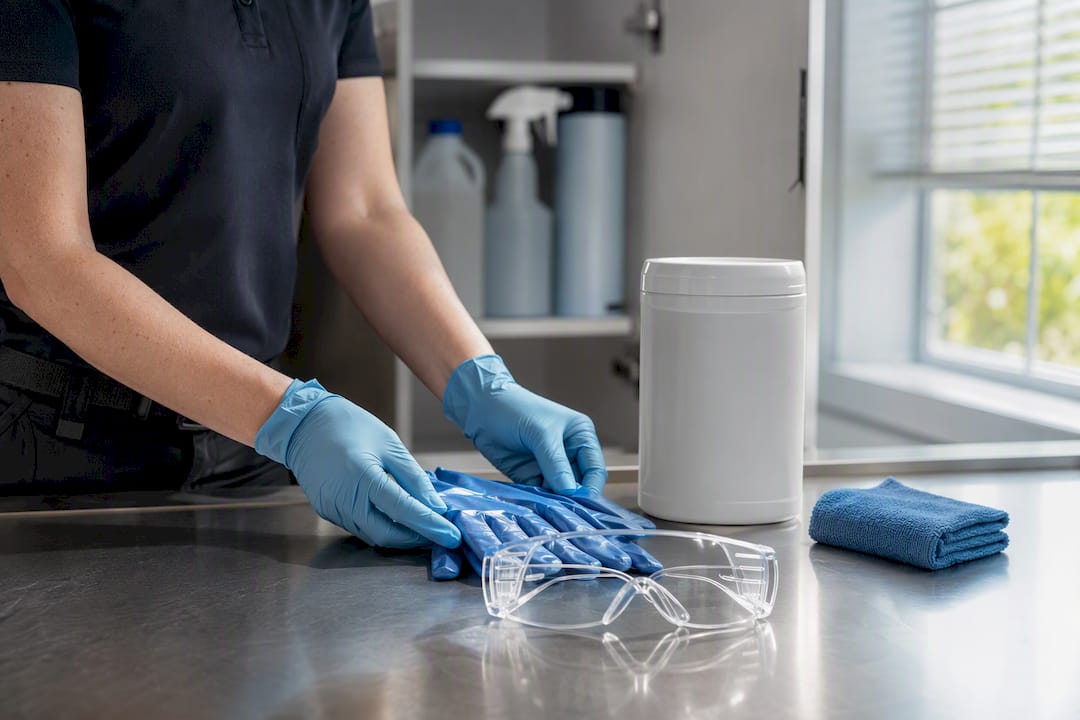
Every chemical in that cabinet needs a Safety Data Sheet on file, and staff handling concentrated disinfectants should know when gloves are required and how much ventilation a product needs during use. A supplier like wholesale wiping rag providers can also cut per-unit costs for high-volume cloths, which matters once a kitchen is going through dozens of them a month. For managers who want the full par-level breakdown by zone, Octomaids’ supply list guide covers exact quantities.
A Fridge Policy Your Staff Will Actually Follow
The shared office fridge causes more workplace friction than almost any other kitchen fixture, and most of that friction disappears with a written policy instead of passive-aggressive sticky notes.
Start with temperature. The fridge needs to hold at or below a safe refrigeration temperature, checked regularly with an appliance thermometer rather than trusted to the dial on the door. Perishable food should go into the fridge within two hours of arriving, or within one hour if the room is warmer than 90°F, which matters for anything left out during a summer potluck or catered lunch.
From there, a short set of rules does the heavy lifting:
- Label everything with a name and date. Unlabeled items are fair game on purge day, no exceptions.
- Run a weekly purge, ideally the same day every week, so staff know exactly when to grab anything they want to keep.
- Keep raw items on the bottom shelf to prevent drips onto food that won’t be cooked before eating.
- Don’t overpack shelves. Airflow around stored food matters for keeping the whole fridge at a consistent temperature, not just the items near the vent.
A posted purge schedule with automatic, no-warning disposal of unlabeled items dramatically improves compliance compared to relying on reminder emails that people scroll past.
Cleaning Office Appliances the Right Way
Each appliance in an office kitchen has its own failure point, and generic wiping doesn’t address any of them well.
- Microwave. Heat a bowl of water with lemon or vinegar for two minutes to loosen splatter with steam, then wipe the interior clean. Remove and wash the turntable separately, clean the door seal where grime collects, and disinfect the exterior and buttons last.
- Coffee machine. Wipe it down daily, clean the drip tray weekly, and descale monthly following the manufacturer’s manual. Skipping descaling is the top reason office coffee starts tasting off after a few months.
- Dishwasher. Run it at the end of every day once it’s full rather than half loading it. Monthly, pull the spray arms and door gasket to check for hard water scale or trapped food particles blocking the jets.
- Toaster and small appliances. Empty crumb trays every few days, not just when the toaster starts smoking, and wipe exteriors regularly. Check cords and plugs periodically for fraying, especially on shared units that get moved or unplugged often.
Pro Tip: Assign appliance descaling to whoever restocks supplies that week. Pairing a task nobody wants to forget with one that’s already a habit gets it done far more reliably than a separate reminder.
Making the Checklist Stick: Owners, Signage, and Enforcement
A checklist without a named owner is a suggestion, not a system. Field-tested workplace hygiene practices consistently show that assigning specific tasks to specific people, rotated weekly or monthly, produces far better compliance than a vague “everyone pitches in” approach.
- Assign named owners for each cadence, rotating the responsibility so it doesn’t always land on the same person.
- Post a visible sign-off sheet near the sink, or use a simple shared digital checklist that logs who completed what and when.
- Write a short code of conduct. Three rules cover most of it: clean as you go, label your food, and no dishes left in the sink overnight.
- Automate the fridge purge. Skip the warning emails. A posted schedule with automatic disposal on purge day removes the need for anyone to play enforcer.
A structured cleaning schedule with named owners turns this from a list people ignore into a system people actually follow, mostly because it removes the ambiguity about whose job it is this week.
Octomaids’ Audit-Ready Checklist and Sample Par Levels
Octomaids built its Audit Ready Office Cleaning Checklist around the same logic covered here: countertops, sinks, appliance exteriors, cabinet fronts, trash zones, and shared seating, each assigned a cadence and a place to log completion.
Reasonable par levels for a 20 to 30 person office kitchen include:
- Dish soap: 2 bottles in rotation, reorder at 1
- Dishwasher tablets: a 2 week supply on hand at all times
- Disposable gloves: 1 box minimum, sized for the smallest hand on staff
- Trash liners: enough for 2 full weeks without a supply run
A simple rota works best when it names a person for daily wipes, a different person for the weekly fridge reset, and rotates the monthly deep clean across the whole team quarterly.
Three Small Moves That Change Everything
Most office kitchens don’t fail because staff are careless. They fail because nobody owns the fridge purge and the “cleaning supplies” cabinet has been running on fumes for a month. Naming an owner, posting a visible purge schedule, and buying one decent appliance thermometer and a set of color coded cloths fixes more problems than any laminated checklist ever will. I’ve seen elaborate cleaning schedules collapse within weeks because they depended on goodwill instead of a name on a calendar. The programs that hold up are almost always the boring ones: cheap tools, clear ownership, and a purge day nobody has to be reminded about twice.
— Steven
Let Octomaids Handle the Cadence for You
Running a daily, weekly, and monthly cleaning cadence on top of an already full job description is where most office kitchen programs quietly fall apart. Professional cleaning companies can provide office managers with a dedicated cleaning team that shows up on the same schedule every time, instead of a rotating cast of subcontractors learning your kitchen from scratch each visit.
Whether you need recurring upkeep for the daily and weekly tasks or a one-time audit-ready deep clean covering coils, gaskets, and vents, Background-checked, insured cleaning teams handle it without you having to chase down who did what. That consistency also solves the staffing gap many facility managers face when they consider outsourcing cleaning rather than pulling it from an already stretched office team. Visit the office cleaning services page to request a quote and see how a recurring schedule could fit your kitchen.
Sources
- OSHA 1910.141 — Sanitation
- Office Kitchen Cleanliness: Maintaining Hygienic Shared Spaces – Nexus Facility Services
- Share of facility managers by whether cleaning services have been outsourced – Statista
- Office Kitchen Cleaning: Complete Checklist & Tips – SuperClean
FAQ
What is the daily cleaning checklist for an office kitchen?
Daily tasks cover wiping and disinfecting counters and high-touch surfaces, washing or loading dishes, emptying trash before it overflows, spot-cleaning the floor, and restocking the coffee station, with a quick sign-off to log completion.
What is the 5S checklist for a kitchen?
5S (sort, set in order, shine, standardize, sustain) is a workplace organization method borrowed from lean manufacturing; applied to a kitchen it generally means removing clutter, giving supplies a fixed home, cleaning thoroughly, standardizing the routine, and maintaining it through regular checks.
How often should the office fridge be cleaned?
The fridge needs a full reset weekly, including a temperature check confirming it holds at or below 40°F, alongside a daily glance for anything spilled or clearly spoiled.
Who should be responsible for office kitchen cleaning?
Assign named owners on a rotating basis rather than leaving it open-ended. Companies like Octomaids can also take on recurring or one-time deep cleans for offices that want a dedicated team handling the full cadence.
What supplies does an office kitchen cleaning checklist require?
A working supply kit includes all-purpose detergent, an EPA-registered disinfectant, food-safe sanitizer, color-coded microfiber cloths, disposable gloves, paper towels, and an appliance thermometer for the fridge.
Recommended
- Office Cleaning Supplies Managers Need: Zone Par Levels & EPA Signals
- Shared Workspace Sanitation Best Practices Managers Can Use Today
About Octomaids
Octomaids is a locally operated professional cleaning company serving Vancouver, Clark County, and the surrounding Portland metro area. Since 2006, our cleaning teams have helped homeowners, renters, property managers, and businesses with recurring cleaning, deep cleaning, move-in/move-out cleaning, and commercial cleaning.
Our cleaning articles are reviewed to ensure the information reflects our real-world experience and professional cleaning practices.