


A well-stocked office runs on eight or nine core items: hand soap, paper towels, disinfectant wipes, a neutral all-purpose cleaner, trash liners, microfiber cloths, a vacuum with a mop system, and nitrile gloves. Beyond those staples, what separates a clean office from a chaotic one is organization: sorting supplies by zone, matching frequency to actual usage, and following the safety rules that keep both your staff and your building compliant. The rest of this office cleaning supplies list breaks all of that down by zone, chemical type, equipment, inventory, and schedule.
TL;DR:
- Offices should prioritize daily checks of high-turnover supplies like soap, paper towels, and trash liners to prevent shortages during busy periods.
- Using EPA-registered disinfectants with proper dwell times enhances germ-killing effectiveness, especially on high-touch surfaces.
- Green cleaning products certified by EPA Safer Choice or Green Seal are becoming popular choices to reduce chemical exposure and maintain safety standards.
- Proper labeling, SDS access, and staff training on PPE are essential to comply with OSHA hazard communication regulations.
- Outsourcing cleaning supply management to professionals can save time, ensure consistent supply levels, and improve overall hygiene compliance.
Table of Contents
- Office Cleaning Supplies Checklist by Zone
- The Core Four Chemicals and How to Pick Safer Ones
- Tools and Equipment Worth the Investment
- Setting Par Levels So You Never Run Out (or Overbuy)
- A Cleaning Schedule That Matches Supplies to Frequency
- Safety and Compliance Basics Every Manager Should Know
- How Octomaids Organizes a Cart to Avoid Cross-Contamination
- Why the Boring Supply List Matters More Than the Big Clean
- Let Octomaids Handle the Supply List for You
- Where to Verify Product Claims and Safety Rules
- Sources
- FAQ
Office Cleaning Supplies Checklist by Zone
Walking your office zone by zone beats guessing at a master list. Different areas wear out different products at wildly different rates, and a restroom that runs dry on soap creates a bigger problem than a desk that goes a day without disinfectant wipes.
Workstations and desks
- Screen-safe wipes for monitors and keyboards
- Compressed-air dusters for keyboard crevices and vents
- Small hand-sanitizer bottles at shared desks or hot-desking stations
- Microfiber cloths for surfaces (color-coded separately from restroom cloths)
Break room
- Food-safe dish soap for shared mugs and dishes
- Center-feed paper towel rolls for spills
- Degreaser formulated for microwave and stovetop residue
- Non-scratch sponges, replaced weekly to avoid bacterial buildup
- Extra-capacity trash liners for food waste
Restrooms
- Hand soap refills, matched to your dispenser type
- Toilet bowl cleaner and a dedicated bowl brush
- Urinal screens (where applicable)
- Toilet tissue and paper towels sized to daily traffic
- A descaler for mineral buildup on fixtures and tile
Floors and shared areas
- A vacuum, with a HEPA filter if anyone on staff has allergies or asthma
- A flat microfiber mop system rather than a traditional string mop
- A squeegee for entryway glass and spills
- Floor cleaner matched to the surface, since a solution safe for tile can dull hardwood or vinyl
A practical rule of thumb for setting par levels is to budget approximately one toilet paper roll per several daily restroom users, adjusting as needed based on dispenser size. An office cleaning checklist built around these zones makes it easy to spot gaps during a walk-through instead of discovering them when a dispenser runs empty.
The Core Four Chemicals and How to Pick Safer Ones
Most offices need only four chemical products, plus a couple of situational extras. A practical commercial cleaning framework built around this “core four” covers the majority of daily office needs without cluttering your supply closet:
- A neutral pH all-purpose cleaner for desks, counters, and general surfaces
- An EPA-registered disinfectant for high-touch points and areas where illness is a concern
- An ammonia-free glass cleaner for windows, partitions, and monitors
- A restroom descaler for mineral and scale buildup
Disinfectants only work if you use them correctly. Check the label for the specific pathogens it targets and the required contact, or “dwell,” time. Most disinfectants need to stay wet on a surface for several minutes to actually kill germs, not just a quick wipe and move on. Cleaners remove visible soil first; disinfecting a dirty surface without cleaning it first reduces effectiveness.
Statistic callout: Employers increasingly favor green cleaning products specifically to cut worker exposure to harsh chemicals, according to OSHA’s guidance on cleaning chemical safety. When shopping for those alternatives, look for EPA Safer Choice or Design for the Environment (DfE) labels, along with Green Seal or Ecologo certification. These labels mean an independent body has reviewed the formula, not just a marketing claim on the bottle.
Tools and Equipment Worth the Investment
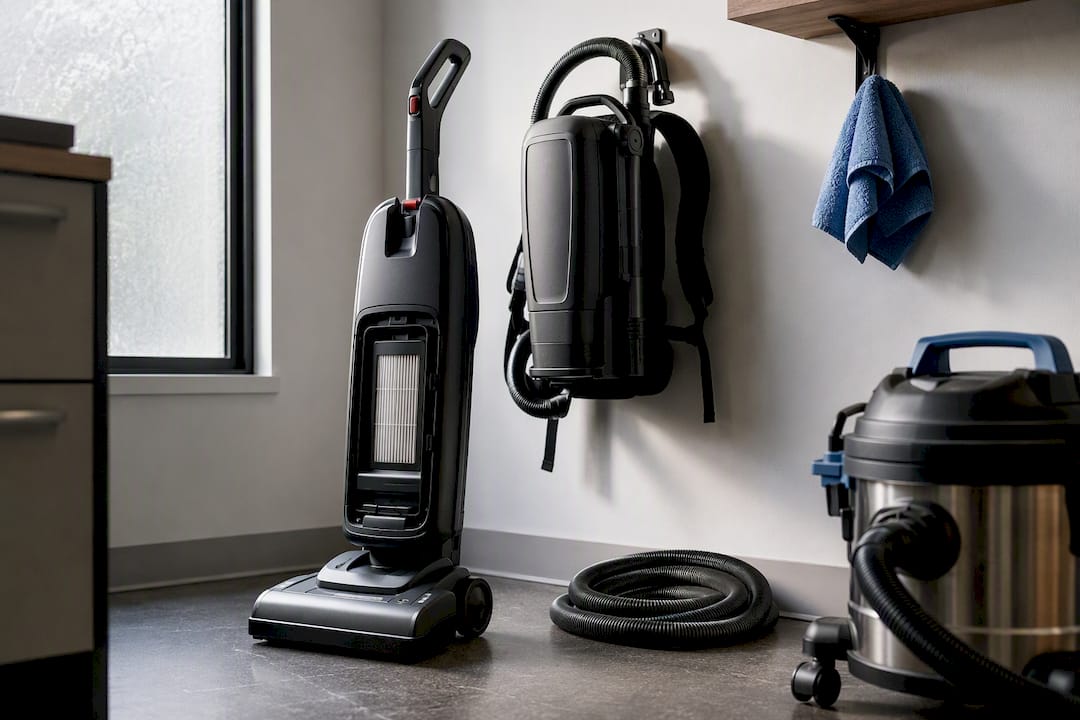
The right tools reduce how much chemical you need and how long cleaning takes. For a small office, an upright vacuum with a HEPA filter usually handles carpet and low-pile rugs fine. Mid-size offices with mixed flooring often do better with a backpack vacuum, and any office prone to spills or flooding benefits from a wet/dry shop vacuum on hand.
Flat microfiber mop systems consistently outperform traditional string mops, as outlined in these spring cleaning tips for carpet and flooring. They pick up more debris, need less water and cleaner, and don’t drag dirty water across clean floors. Replace microfiber pads once they lose absorbency, typically after a few hundred washes.
Round out the cart with:
- Squeegees and lint-free window wipes
- Clearly labeled spray bottles for every diluted chemical
- Wet-floor caution signs
- A rolling janitorial cart to keep supplies organized between rooms
PPE matters here too: stock nitrile gloves in at least two sizes, basic eye protection, and dust masks for anyone handling vacuum bags or dry sweeping.
Setting Par Levels So You Never Run Out (or Overbuy)
A par level is simply the minimum quantity of a supply you keep on hand before reordering. Getting this right prevents both empty dispensers and a storage closet stuffed with a year’s worth of paper towels.
- Start with a benchmark. For toilet paper, roughly one roll per 8 to 10 users per day is a reasonable starting point; adjust up or down based on your dispenser’s roll capacity.
- Store chemicals safely. Keep incompatible products segregated, label every refill container clearly, and rotate stock first-in, first-out so nothing expires unused.
- Keep Safety Data Sheets accessible. A digital folder or a physical binder both work, as long as any employee can find one within minutes.
- Check par levels weekly. Regular par-level reviews catch shortages before they become a Monday-morning scramble.
- Automate high-turnover items. Set auto-reorder for soap, paper towels, and liners, but weigh bulk discounts against how much closet space you actually have.
Pro Tip: Set a recurring 15-minute calendar reminder every Friday to physically check dispenser levels and closet stock. It takes less time than one emergency supply run, and it always does.
A Cleaning Schedule That Matches Supplies to Frequency
Supplies only help if you use them on a rhythm that matches how fast your office actually gets dirty. High-touch surfaces need daily attention; hard floors and appliances can stretch to weekly.
Daily:
- Wipe high-touch points (door handles, light switches, shared equipment)
- Swap trash liners
- Restock soap and paper towels
- Spot-vacuum visible debris in entryways and under desks
Weekly:
- Full vacuum pass across all carpeted areas
- Mop hard floors with your flat microfiber system
- Clean break room appliances, including the microwave with degreaser
- Deep-clean restrooms with descaler
- Run a full supply inventory check
Monthly or quarterly:
- Spot-treat carpet stains that daily vacuuming misses
- Inspect and maintain equipment (vacuum filters, mop heads)
- Audit your SDS binder and PPE stock for gaps
Building this into a repeatable office cleaning schedule turns supply management from a reactive scramble into a predictable routine.
Safety and Compliance Basics Every Manager Should Know
Cleaning chemicals come with legal obligations, not just best practices. Under OSHA’s Hazard Communication Standard, employers must maintain accessible Safety Data Sheets for hazardous products and fold them into a written hazard-communication program that employees can actually reference.
That said, OSHA has clarified that many ordinary consumer-grade office products fall outside the standard when used the way a typical consumer would use them at home. The obligation tightens when use frequency or concentration goes beyond that, so it’s worth evaluating how your staff actually uses a product, not just what the label says.
Statistic callout: Maintaining SDSs and labeling refill containers are described by OSHA as low-effort steps that many small offices still skip, despite the outsized safety impact.
- Label every spray bottle and refill container with its contents
- Train staff on basic PPE use and simple spill response
- Keep an SDS binder or verified digital access point
- Ensure ventilation and keep a basic spill kit near concentrated chemicals
How Octomaids Organizes a Cart to Avoid Cross-Contamination
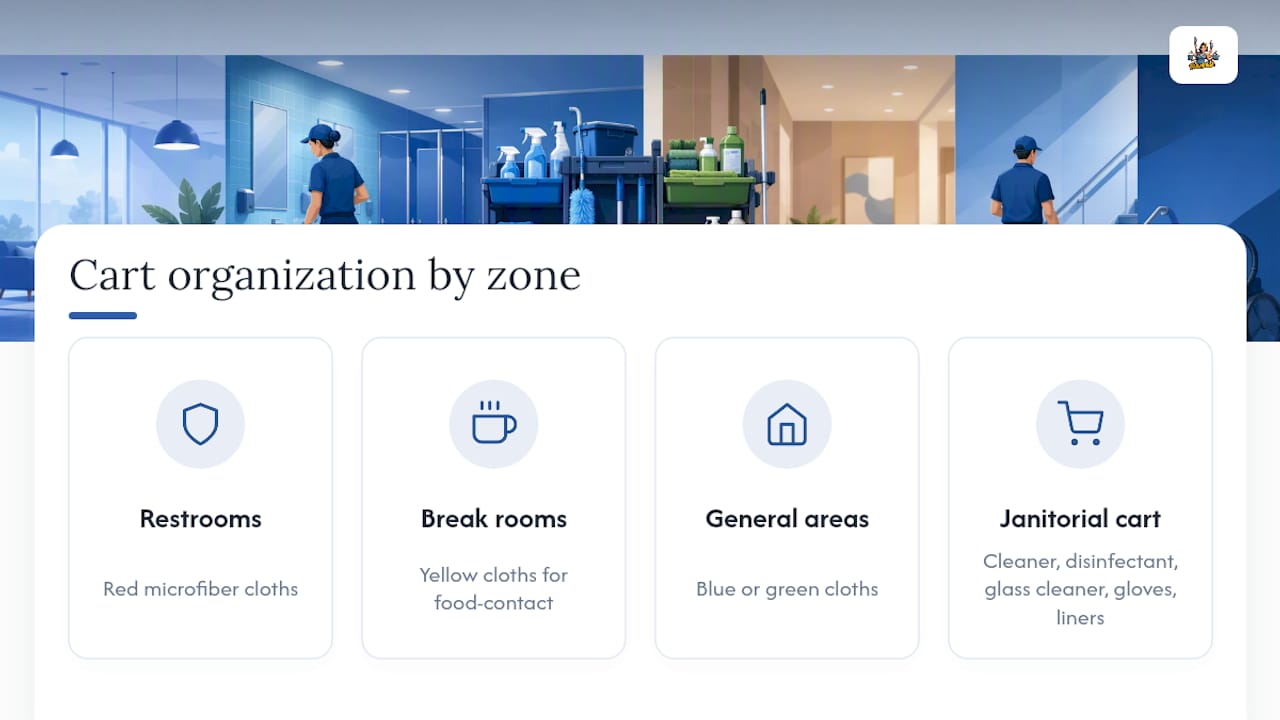
Professional crews color-code microfiber cloths and mop heads by zone: red for restrooms, yellow for break rooms and food-contact surfaces, blue or green for general areas. A well-stocked janitorial cart carries all-purpose cleaner, disinfectant, glass cleaner, color-coded cloths, gloves, and trash liners for one complete pass. Assigning the same cleaner to the same office builds familiarity with trouble spots. Combined with scheduled sanitation reviews, that consistency catches problems before they become complaints.
Why the Boring Supply List Matters More Than the Big Clean
Reliable hygiene supplies do more for a business than shiny floors. An office that never runs out of soap or disinfectant wipes has fewer sick days circulating through the break room and fewer afternoons lost to someone hunting for paper towels in a supply closet. The checklist in this article isn’t glamorous work, but it’s the difference between an office that quietly runs and one that’s constantly firefighting small, preventable problems.
— Steven
Let Octomaids Handle the Supply List for You
Building and maintaining this list every month takes real time, and running out of hand soap on a Monday morning is nobody’s idea of a good start to the week. Octomaids offers office cleaning service built around recurring visits, deep cleans when you need them, and janitorial support that keeps supplies stocked without you tracking par levels yourself.
Unlike managing this checklist solo, a consistent cleaning team can help reduce the need to re-explain your office layout or dispenser types every visit. If you’re not sure whether your current setup is actually adequate, request a free supply audit through our commercial cleaning services page and we’ll walk your space with you.
Where to Verify Product Claims and Safety Rules
Before buying, check the EPA Safer Choice and DfE product search to confirm a green claim is independently certified rather than just marketing language. EPA’s custodial model contract language lists acceptable standards by product category, useful for procurement decisions. For safety rules, OSHA’s hazard communication guidance spells out SDS and labeling requirements directly.
Sources
- Identifying Greener Cleaning Products | US EPA
- Protecting Workers Who Use Cleaning Chemicals | OSHA (OSHA3512)
- Steps to an Effective Hazard Communication Program for Employers That Use Hazardous Chemicals | OSHA (OSHA3695)
- Commercial Cleaning Supplies List: Complete Checklist & Costs
FAQ
What are the must-have items on an office cleaning supplies list?
Hand soap, paper towels, disinfectant wipes, a neutral all-purpose cleaner, trash liners, microfiber cloths, a vacuum with a mop system, and nitrile gloves cover the core needs of most offices.
How often should office cleaning supplies be restocked?
High-turnover items like soap, paper towels, and trash liners need daily checks, while a full inventory review works best on a weekly basis to catch shortages before they cause a shortage.
What disinfectant should offices use?
Choose an EPA-registered disinfectant, check the label for its target pathogens and required contact time, and always clean a surface before disinfecting it for full effectiveness.
Are green cleaning products required by law?
No, but EPA Safer Choice and Green Seal certifications help identify products that reduce chemical exposure, which many employers now prefer for staff health reasons.
Do offices need Safety Data Sheets for cleaning products?
Yes. Employers must maintain accessible SDSs for hazardous cleaning products and include them in a written hazard-communication program.
Is it better to outsource office cleaning supply management?
Outsourcing to a service like Octomaids’ recurring cleaning removes the need to track par levels, safety compliance, and reordering yourself, which many small offices find saves both time and money over managing it in-house.
Recommended
- 6 Steps to an Audit Ready Office Cleaning Checklist for Managers
- How to Create an Office Cleaning Schedule That Works
- Shared Workspace Sanitation Best Practices Managers Can Use Today
- How to Organize Your Cleaning Supplies Closet
About Octomaids
Octomaids is a locally operated professional cleaning company serving Vancouver, Clark County, and the surrounding Portland metro area. Since 2006, our cleaning teams have helped homeowners, renters, property managers, and businesses with recurring cleaning, deep cleaning, move-in/move-out cleaning, and commercial cleaning.
Our cleaning articles are reviewed to ensure the information reflects our real-world experience and professional cleaning practices.