


Biweekly cleaning fits most occupied homes, especially those with pets, children, or allergy concerns, while monthly cleaning works better for low-traffic households or second residences. The trade-off is straightforward: monthly service costs less overall, but it asks more of you between visits, while biweekly service costs more yet keeps buildup from ever taking hold, a balance supported by CDC guidance and our team’s own field experience.
TL;DR:
- Monthly visits tackle four weeks of grime on baseboards, window sills, and kitchen surfaces, so households must maintain high traffic areas themselves.
- Biweekly visits cover vacuuming, dusting, bathrooms, counters, and spot mopping, while one or two deeper jobs, such as baseboards, rotate between appointments.
- Compare each schedule’s total monthly cost, not its per visit price; monthly service saves on visits but requires more upkeep between appointments.
- Test a new schedule for at least four cleaning cycles, then adjust if dirt returns early or household needs change, such as during pollen season.
Table of Contents
- What biweekly and monthly cleaning actually deliver
- What a biweekly clean looks like and who should pick it
- What a monthly clean looks like and who should pick it
- How to choose the right cleaning frequency for your home
- How our teams structure recurring visits
- Prioritizing health and consistency over a fixed rule
- Let our team build a cleaning schedule around your home
- FAQ
- Sources
What biweekly and monthly cleaning actually deliver
The two schedules aren’t just different frequencies, they’re different philosophies. Biweekly visits function as maintenance: your cleaner keeps ahead of daily wear so dirt and allergens never accumulate past a manageable point. Monthly visits function more like a reset, often requiring extra time on buildup that’s had four weeks instead of two to settle into carpets, grout, and upholstery.
Here’s how that plays out across a typical home:
- Biweekly: vacuuming, dusting, bathroom and kitchen wipe-downs, spot mopping, and rotating deeper tasks like baseboards or appliance exteriors.
- Monthly: the same core tasks plus restorative work such as scrubbing built-up grime, degreasing kitchen surfaces, and addressing dust that has settled into corners and vents.
Cost follows the same logic. A biweekly plan spreads smaller charges across more visits, which CDC guidance frames as often the more cost-effective path because it limits how much restorative work (and how many harsher products) a monthly reset eventually requires. Three quick scenarios: a family with a shedding dog and two kids in sports leans biweekly for allergen control; a retired couple in a tidy, low-traffic condo does fine on monthly; a remote worker who hosts guests often tends to land on biweekly simply to keep the home presentable without lifting a finger daily.
What a biweekly clean looks like and who should pick it
A biweekly visit covers the essentials every two weeks: vacuuming carpets and rugs, dusting surfaces, wiping down counters and appliance fronts, cleaning bathrooms, and spot-mopping hard floors, much like comprehensive residential cleaning services in St. Augustine, FL. Deeper tasks, like inside the oven, baseboards, or light fixtures, typically rotate onto a schedule so every area gets attention over a few visits without stretching out each appointment.
This cadence tends to suit:
- Dual-income households with little time for daily upkeep.
- Pet owners managing shedding, dander, or tracked-in dirt.
- Allergy-prone residents who need consistent allergen control.
- Frequent hosts who want the home guest-ready more often.
- Remote workers who notice mess accumulating in real time.
Most biweekly visits run efficiently because the home never falls far behind, which means your cleaner spends time refining rather than rescuing. CDC guidance notes that households with children, shedding pets, or asthma and allergy concerns generally need this kind of consistency to keep particulate levels from affecting indoor air.
Pro Tip: If you’re testing biweekly for the first time, pick a service that rotates deep tasks on a visible schedule so you always know what’s being tackled next. Our biweekly cleaning plans lay out exactly how that rotation works.
What a monthly clean looks like and who should pick it
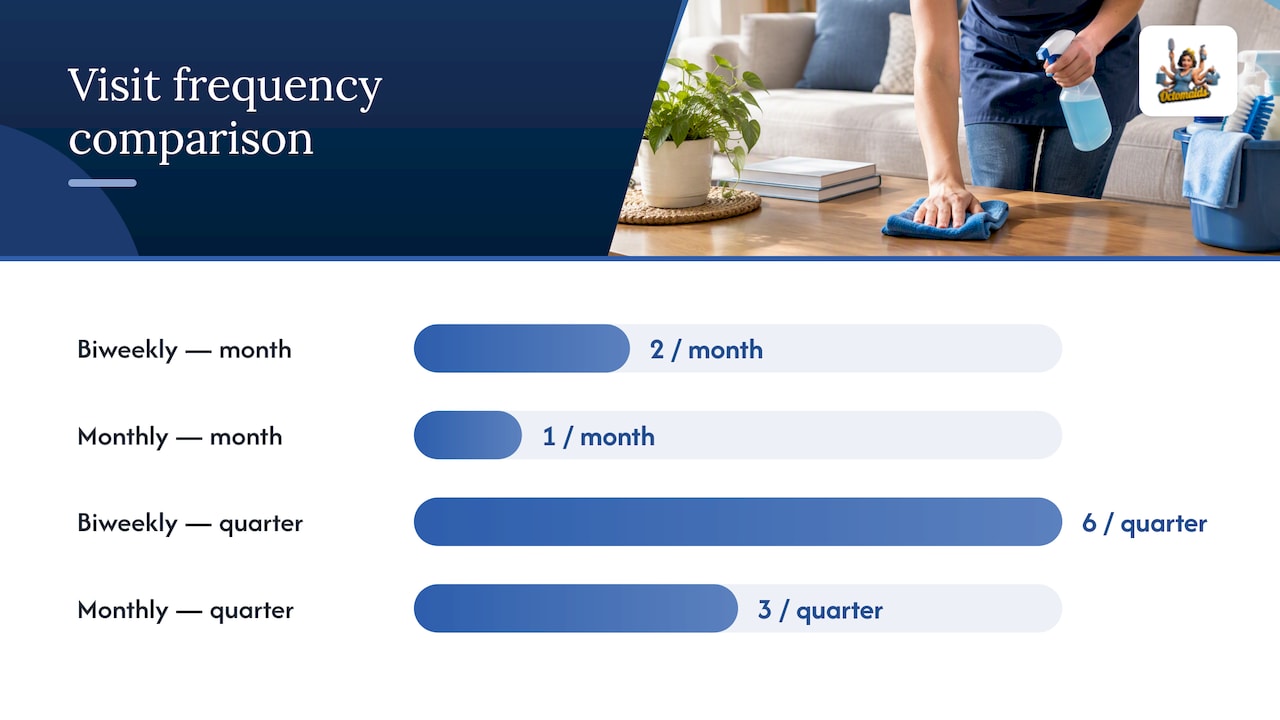
A monthly visit leans restorative. Your cleaner spends more time on areas that accumulate buildup over four weeks, such as baseboards, window sills, and kitchen grease, rather than simply maintaining what’s already clean. Expect the appointment to run longer and sometimes require stronger products to bring the home back to baseline.
Monthly service tends to fit:
- Second homes or vacation properties with low or occasional occupancy.
- Single occupants who keep tidy habits and generate little daily mess.
- Budget-conscious households willing to handle more upkeep themselves.
Between visits, a little daily effort goes a long way. Wiping high-touch surfaces, running a quick vacuum in main traffic areas, and keeping dishes and laundry from piling up all prevent the kind of buildup that turns a monthly visit into a full restoration job. We cover more of these habits in our guide on maintaining a clean home between visits.
How to choose the right cleaning frequency for your home
Before committing to a cadence, run through a short checklist:
- Count your occupants and pets. More people and animals mean faster buildup and a stronger case for biweekly.
- Factor in allergies or asthma. Consistent cleaning limits allergens embedding into carpets and upholstery.
- Think about hosting frequency. Regular guests favor a tighter schedule.
- Set a realistic monthly budget. Compare the total monthly cost of each cadence, not just the per-visit price.
- Ask your provider what’s included per visit, how deep tasks rotate, and whether you get the same cleaning team each time.
CDC guidance suggests giving any new cadence at least four cycles before adjusting, since that’s usually enough time to see how your specific home accumulates dirt.
Pro Tip: Weigh the cost of a recurring service against your own time. If weekend cleaning is eating into hours you’d rather spend elsewhere, the math often favors hiring it out.
How our teams structure recurring visits
We offer weekly, biweekly, and monthly recurring plans, and every client keeps the same dedicated team visit after visit rather than rotating staff. On biweekly visits, our cleaners focus on maintenance tasks and rotate one or two deeper jobs each time. On monthly visits, we allocate extra time upfront for restorative work like degreasing and buildup removal before returning to standard tasks.
A few things make each visit more effective:
- Clearing countertops and floors beforehand lets our team focus on cleaning instead of tidying.
- Flagging high-traffic areas helps us prioritize where buildup happens fastest.
- All cleaners are background-checked, trained, and insured, and every visit is backed by a satisfaction guarantee.
Prioritizing health and consistency over a fixed rule
If budget drives the decision, start monthly and watch how your home holds up. If health or consistency matters more, biweekly is the safer default, particularly for allergy-prone households, since CDC guidance notes that regular cleaning of high-touch surfaces does most of the work in typical homes. Frequency isn’t permanent. Pollen season, a new pet, or a change in who’s home all justify revisiting your schedule, and a flexible provider should make that adjustment easy.
— Steven
Let our team build a cleaning schedule around your home
We built our recurring service around the idea that consistency beats one-size-fits-all scheduling. Whether your household needs the steady rhythm of biweekly visits or the occasional reset of a monthly clean, our same dedicated team learns your home and adjusts as your needs change.
A few reasons households stick with recurring service once they start:
- You get the same trusted cleaners every visit instead of rotating strangers.
- Plans flex between weekly, biweekly, and monthly as your life changes.
- Every visit is backed by our satisfaction guarantee.
Our services cover a broad service area including Clark County, Washington and the Portland Metro area. If you’re ready to find the right cadence for your home, explore our recurring home cleaning plans and request a free estimate today.
FAQ
Should I get my house cleaned biweekly or monthly?
Choose biweekly if your household includes pets, kids, allergy sufferers, or frequent guests, since consistent cleaning limits allergen buildup according to CDC guidance. Choose monthly if you live alone, keep a low-traffic home, or are managing a second residence with light use.
What is the 5 5 5 rule for cleaning?
Definitions of this rule vary across cleaning blogs and aren’t tied to an official standard, so treat it as a general organizing tactic rather than a fixed method. A common version suggests spending five minutes each on five different small tasks to tidy five areas, which can work well as a daily habit between professional visits.
What is the 80/20 rule house cleaning?
This principle borrows from the broader idea that a small portion of effort produces most of the visible result, commonly applied to cleaning by focusing on high-traffic, high-visibility areas first. There’s no official cleaning standard behind the number, so it’s best used as a prioritization habit rather than a precise rule.
How often do normal people clean their house?
Cleaning habits vary widely by household size, pets, and lifestyle, so there’s no single average that applies to everyone. CDC guidance points to occupancy and daily habits, not home size, as the strongest predictors of how often a home needs attention.
How do I know if my chosen frequency is working?
Give any new schedule at least four cleaning cycles before judging it, since that’s generally enough time to see how your home accumulates dirt between visits, per CDC guidance. If dust, allergens, or mess are building up noticeably before your next visit, it’s a sign to increase frequency.
Sources
- When and How to Clean and Disinfect Your Home | CDC
- CDC: Cleaning and Disinfecting Guidance (supplement)
Recommended
- Home Cleaning Frequency Guide for a Healthier Home
- Recurring Cleaning Schedule Examples for Busy Homes
- How to Maintain a Clean Home Between Visits
- Deep Clean vs Regular Clean: A Homeowner’s Guide
About Octomaids
Octomaids is a locally operated professional cleaning company serving Vancouver, Clark County, and the surrounding Portland metro area. Since 2006, our cleaning teams have helped homeowners, renters, property managers, and businesses with recurring cleaning, deep cleaning, move-in/move-out cleaning, and commercial cleaning.
Our cleaning articles are reviewed to ensure the information reflects our real-world experience and professional cleaning practices.