


Switching to green cleaning products and procedures cuts airborne chemical exposure, improves indoor air quality, and lowers environmental impact, but only when product choice, dilution, ventilation, and training all work together. The LUCIR intervention study and programs like EPA Safer Choice back this up with measurable results, not marketing claims. Some cleaning providers build protocols around that same principle: the products matter, but the system around them matters more.
TL;DR:
- Concentrated products, microfiber tools, and controlled dosing decrease packaging waste, energy use, and chemical consumption, enhancing environmental benefits.
- Full safety depends on operational procedures; automated dilution, trained staff, and proper ventilation are crucial to minimize health risks.
- Certification from EPA Safer Choice, DfE, or Green Seal ensures product safety and performance, while vague labels and fragrances may indicate lower transparency.
- Using green products without adjusting procedures offers limited benefits; combining certified products with systemic practices delivers real health and environmental improvements.
Table of Contents
- What Are the Health Benefits of Green Cleaning?
- How Does Green Cleaning Reduce Environmental Impact?
- What Safety Advantages Come From Green Cleaning Programs?
- Does Green Cleaning Actually Work as Well as Conventional Products?
- Which Certifications Actually Mean Something?
- What Are the Downsides of Green Cleaning Products?
- How Does a Professional Eco-Friendly Cleaning Service Apply This?
- Choose the Program, Not Just the Bottle
- Get Verified Green Cleaning Without Doing the Homework Yourself
- Sources
- FAQ
What Are the Health Benefits of Green Cleaning?
The clearest evidence comes from the LUCIR intervention study, which tracked households that switched from conventional to green cleaning products. The results were striking: airborne chloroform dropped significantly, 1,4-dioxane and naphthalene declined substantially, and hexane also showed a marked decrease. Benzene and toluene also fell by moderate amounts. These aren’t marginal shifts. They represent a real reduction in the chemical load occupants breathe in every day.
Respiratory health tells a similar story from the opposite direction. Research on cleaning products and respiratory outcomes found that people who used many different cleaning products frequently had substantially higher odds of current asthma. The risk climbs with frequency and variety, not just with any single “bad” product.
Quick data point: the LUCIR study observed a strong reduction in chloroform concentrations after swapping cleaning product lines, with no equipment changes required.
Practical steps that follow from this evidence:
- Choose unscented formulas whenever performance allows it.
- Ventilate rooms during and after cleaning, especially in bathrooms and kitchens.
- Avoid mixing or using multiple cleaning products back to back in the same space.
- Limit how many different products you keep in rotation.
- Favor products with third-party certification over vague “natural” claims.
For homeowners already dealing with allergies or asthma in the family, professional cleaning that prioritizes healthier products can make a measurable difference in daily air quality.
How Does Green Cleaning Reduce Environmental Impact?
Environmental gains from green cleaning go beyond “safer ingredients.” They show up in the full lifecycle of a cleaning program, from manufacturing to disposal. A life-cycle and microbiological performance study found that integrated green cleaning protocols, combining product substitution with dosing control and microfiber tools, achieved substantial reductions in global warming potential compared to conventional methods.
That reduction didn’t come from the cleaner alone. It came from the whole system: concentrated formulas that ship in smaller containers, automated dosing that prevents overuse, and microfiber cloths that physically remove soil instead of relying on more chemical volume.
A few practical levers matter most:
- Concentrated products cut packaging waste and shipping emissions compared to ready-to-use bottles.
- Cooler laundering temperatures reduce energy use without sacrificing cleanliness when paired with the right detergent chemistry.
- Microfiber tools reduce both chemical consumption and textile waste over time, since they last longer than disposable wipes.
- Bulk purchasing and refill systems cut single-use plastic significantly for offices and multi-unit properties.
Facility managers looking to maximize impact should treat the cleaning cart, not just the bottle label, as the target for improvement.
What Safety Advantages Come From Green Cleaning Programs?
Lower-toxicity formulas reduce the acute risks that come with conventional chemical cleaning: skin burns, respiratory irritation from fumes, and the hazardous waste handling that follows disposal of harsh solvents. That’s a direct benefit for anyone doing the cleaning, whether it’s a janitorial crew or a homeowner tackling a weekend deep clean.
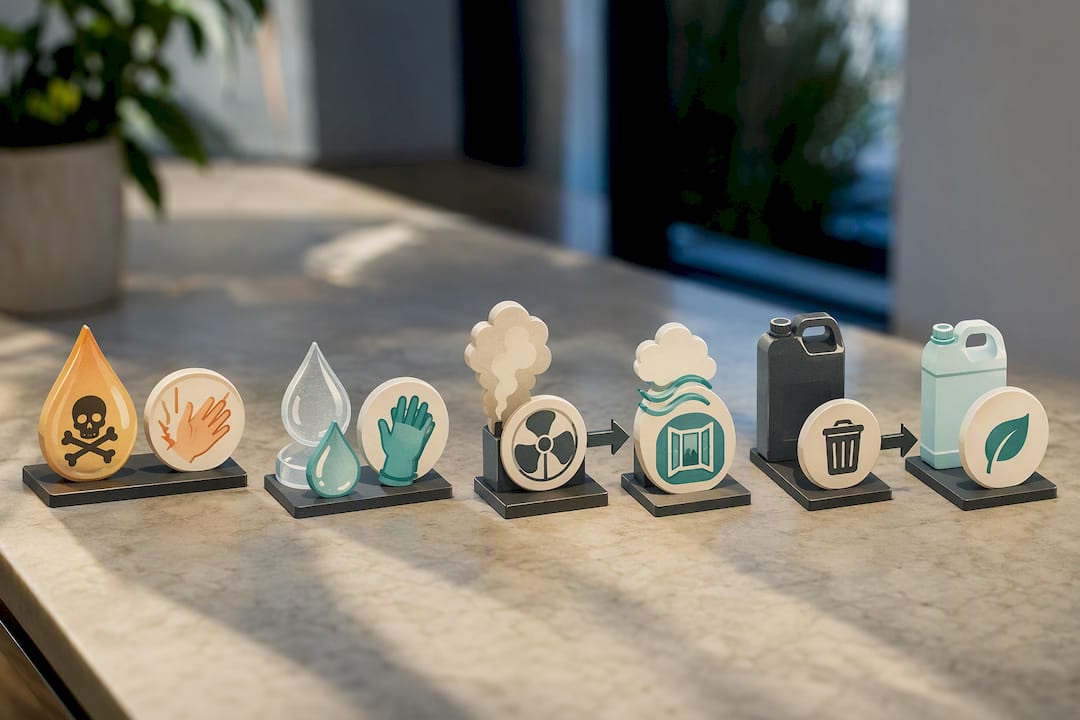
But the product swap only delivers full protection when it’s paired with the right procedures. The EPA’s guidance on greener cleaning products frames this correctly: green cleaning is a program, not a purchase.
Operational controls that make the difference:
- Automated or measured dilution systems, so staff never guess concentration ratios.
- Documented training on product use, storage, and emergency response.
- Adequate ventilation during and after chemical application.
- Correct PPE for any remaining higher-hazard tasks, like disinfecting.
- Scheduling that limits occupant exposure during active cleaning windows.
Pro Tip: Ask any cleaning provider how they control dilution ratios. If the answer is “we eyeball it,” that’s a red flag for both safety and consistency.
Fewer injuries mean fewer workers’ compensation claims and less liability exposure for businesses, a benefit that rarely makes the marketing copy but shows up clearly on the books.
Does Green Cleaning Actually Work as Well as Conventional Products?
Yes, when the protocol is designed correctly. The same life-cycle and microbial performance study that measured environmental gains also tracked surface contamination levels. Facilities using the green protocol maintained or improved microbial cleanliness compared to conventional methods, largely because microfiber and dosing control removed soil mechanically rather than relying on chemical strength alone.
That said, green products aren’t a universal substitute. Certain disinfecting contexts, like active outbreak control in healthcare settings, still call for stronger, EPA-registered disinfectants. A responsible program blends approaches: green products for routine cleaning, targeted stronger chemistries where public health rules require them.
On cost, the picture favors green programs over time:
- Concentrated products lower per-unit cost despite a higher sticker price on the bottle.
- Reduced hazardous waste disposal cuts a real line-item expense for offices and rental properties.
- Fewer injuries and less product waste lower total cost of ownership even when the shelf price looks comparable.
Homeowners weighing a deep clean versus a regular cleaning schedule will find the same logic applies: matching the method to the task saves money without cutting corners on results.
Which Certifications Actually Mean Something?
Not every “eco” label carries weight. Here’s what to actually look for:
- EPA Safer Choice certifies that every ingredient in a product, not just the marketing headline ingredient, meets strict human and environmental health criteria through what the agency calls informed substitution.
- Design for the Environment (DfE), now folded into Safer Choice, evaluates whole-product safety profiles rather than single ingredients.
- Green Seal applies independent, third-party verification of performance and environmental claims.
Red flags to watch for:
- Vague language like “eco-friendly” or “natural” with no certification backing it up.
- Fragrance-first marketing that emphasizes scent over ingredient transparency.
- No safety data sheet or ingredient list available on request.
A short vetting checklist for buyers and office managers: confirm certification status, ask how dilution is controlled, check that staff receive documented training, and request evidence of performance testing rather than taking claims at face value.
What Are the Downsides of Green Cleaning Products?
Green cleaning isn’t risk-free, and pretending otherwise does readers a disservice. A comparative VOC emissions study found that some green cleaners, especially fragranced ones, emitted higher levels of monoterpenes than conventional products. Those compounds can react indoors to form secondary pollutants like formaldehyde and fine particulate matter.
Key stat: fragranced green products in that study showed higher average total monoterpene emissions than their conventional counterparts, undercutting the assumption that “green” automatically means lower indoor air impact.
Combined-use frequency is the other real risk. As noted earlier, heavy use of multiple products correlates with elevated asthma risk regardless of whether those products are labeled green.
Mitigation is straightforward:
- Choose unscented over fragranced whenever the option exists, a point echoed in research on fragrance ingredients and indoor air quality.
- Stagger product use rather than layering several in one session.
- Ventilate immediately during and after cleaning, especially with any scented product.
How Does a Professional Eco-Friendly Cleaning Service Apply This?
A verified eco-friendly program puts the checklist above into daily practice rather than treating it as a one-time purchase decision. Octomaids sends the same trained, background-checked cleaning teams to each recurring visit, which keeps dilution habits, product choices, and technique consistent instead of changing with every new hire.
Before hiring any provider, ask these five questions:
- Do you use certified, low-toxicity products, and can you name the certification?
- How do you control dilution ratios across jobs?
- Do the same cleaners return for recurring visits?
- What training do cleaners receive on product use and ventilation?
- Can I request unscented products for my home or office?
Choose the Program, Not Just the Bottle
The evidence points one direction: swapping to a green-labeled bottle without changing procedure leaves most of the benefit on the table. Real gains come from pairing certified, ideally unscented, products with dosing control, ventilation, and trained hands. That’s the difference between a marketing claim and a measurable reduction in chemical exposure. Adopt the program, not just the product, and the health and environmental returns follow.
— Steven
Get Verified Green Cleaning Without Doing the Homework Yourself
Vetting certifications, checking dilution systems, and training a crew takes time most homeowners and office managers don’t have. Some cleaning providers have completed that work for their local service areas, sending the same trained team to homes or offices every visit instead of a rotating cast of unfamiliar faces.
Whether you need recurring house cleaning, a one-time deep clean, move-in or move-out service, or office cleaning for a busy workplace, you can expect consistent product choices and procedures visit after visit, not guesswork. That consistency is exactly what the research points to as the real driver of health and environmental benefits. Ready to see what a verified program looks like in your own space? Check our service options and get a quote to get started.
Sources
- Changes in Latina Women’s Exposure to Cleaning Chemicals Associated with Switching from Conventional to “Green” Household Cleaning Products: The LUCIR Intervention Study
- Cleaning products and classes associated with poor respiratory health – PMC
- Environmental and Microbiological Performance of a CAM-Compliant Green Cleaning Protocol: An Integrated Life Cycle and Surface Contamination Assessment in a Civil Facility
FAQ
What Are the Main Benefits of Green Cleaning?
Green cleaning reduces airborne chemical exposure (the LUCIR study recorded chloroform drops of 86.7%), improves indoor air quality, and lowers environmental impact through concentrated formulas and less packaging waste.
Why Is Green Housekeeping Important for Offices and Homes?
It protects the health of occupants and cleaning staff by reducing chemical burns, respiratory irritation, and hazardous waste handling, while also cutting long-term disposal and injury-related costs.
What Are the Cons of Green Cleaning?
Some fragranced green products emit higher monoterpene levels that can form secondary indoor pollutants like formaldehyde, and heavy or combined use of any cleaning products, green or conventional, is linked to higher asthma risk.
What Are the Overall Benefits of Going Green With Cleaning?
Beyond health and environmental gains, going green with a full program, not just a product swap, tends to lower total costs over time through reduced disposal fees, fewer injuries, and less product waste.
Recommended
- Hire an Eco-Friendly Cleaning Service That Verifies Its Claims
- Why Professional Cleaning Creates a Healthier Home
- Book Truly Fragrance Free Cleaning in 48 Hours With Octomaids
- Pet-Friendly House Cleaning: The Safe, Non-Toxic Approach
About Octomaids
Octomaids is a locally operated professional cleaning company serving Vancouver, Clark County, and the surrounding Portland metro area. Since 2006, our cleaning teams have helped homeowners, renters, property managers, and businesses with recurring cleaning, deep cleaning, move-in/move-out cleaning, and commercial cleaning.
Our cleaning articles are reviewed to ensure the information reflects our real-world experience and professional cleaning practices.