


Check the care tag, vacuum the whole surface, spot-treat with a cleaner that matches the code, then deep-clean only when that code allows water or solvent. That single sequence prevents most of the damage we see homeowners cause with good intentions and the wrong product.
Right after a spill, move fast but stay disciplined:
- Blot immediately with a dry cloth. Never rub.
- Scrape off solids (food, wax) before any liquid touches the fabric.
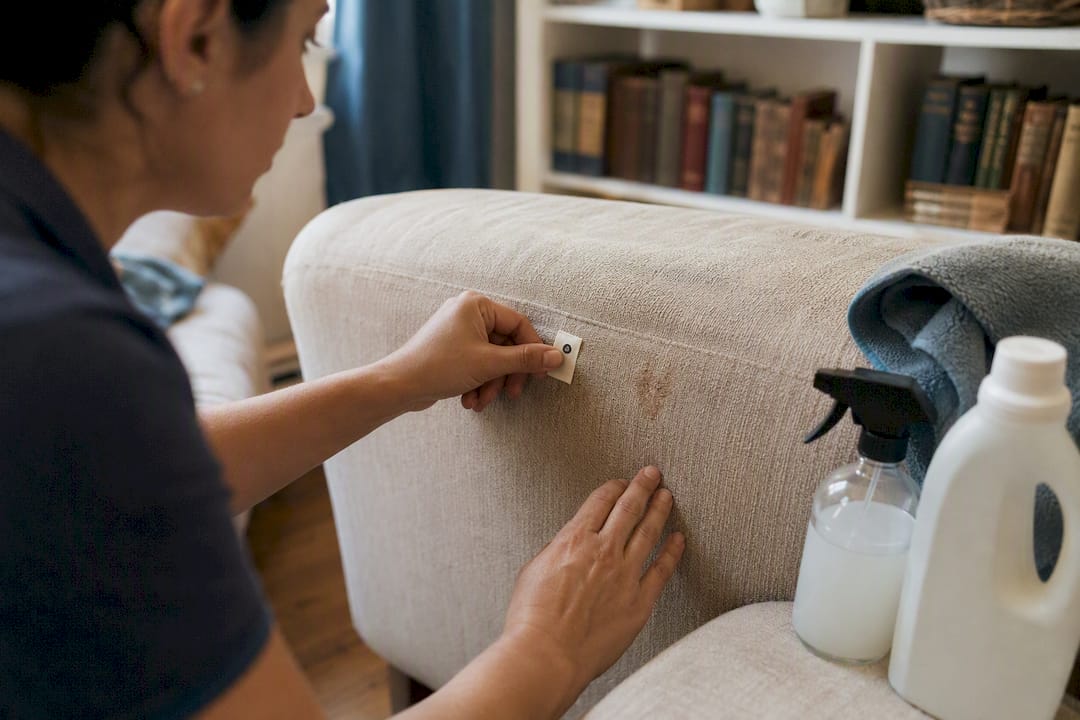
- Check the tag before reaching for a cleaner.
Every couch carries one of four care codes: W (water-based cleaners), S (solvent only), W/S (either), or X (vacuum only, no liquid). That letter decides everything that follows.
Key Takeaways
The couch care tag’s letter code (W, S, W/S, or X) determines every safe cleaning choice you make afterward, from spot treatment to full extraction.
| Point | Details |
|---|---|
| Read the tag first | Locate the W, S, W/S, or X code under cushions before touching any cleaner. |
| Vacuum before liquid | Weekly vacuuming with an upholstery tool removes grit that liquid would push deeper. |
| Blot, never rub | Lift stains from the outside in with a cloth and cleaner, not directly on the fabric. |
| Match cleaner to stain | Use enzyme cleaners for pet urine, absorption powders for grease, and cold water for blood. |
| Dry fully before use | Allow 6 to 12 hours with fans and airflow to prevent watermarks or mold. |
| Call Octomaids for hard cases | Octomaids handles upholstery within deep cleans and move-out services when a stain or fabric code is past safe DIY territory. |
Table of Contents
- How Do You Find and Decode the Couch Care Tag?
- How Often Should You Maintain a Couch Between Deep Cleans?
- What’s the Right Way to Spot-Clean a Stain?
- When Should You Deep Clean and What Tools Work Best?
- Does Cleaning Method Change by Material?
- How Do You Get Odors Out Without Overdoing It?
- What Drying Mistakes Cause Permanent Damage?
- When Does a Professional Upholstery Cleaner Make Sense?
- What Belongs in a Couch Cleaning Toolkit?
- Sources
- FAQ
How Do You Find and Decode the Couch Care Tag?
The tag usually hides under a seat cushion or on the underside of the frame, sometimes stapled near a zipper. Manufacturers attach it precisely so you don’t have to guess, and skipping it is the single most common reason DIY cleaning attempts go wrong.
Here’s what each code actually permits:
- W: Water-based cleaners and steam are safe.
- S: Solvent-based cleaners only; water can cause rings, shrinkage, or dye bleed.
- W/S: Either water or solvent-based products work.
- X: Vacuum only. No liquid of any kind, professional cleaning required for stains.
Pro Tip: Take a photo of the tag with your phone the day you buy the couch. Tags fade, fall off, or get lost in cushion covers, and you’ll want that reference the first time something spills.
How Often Should You Maintain a Couch Between Deep Cleans?
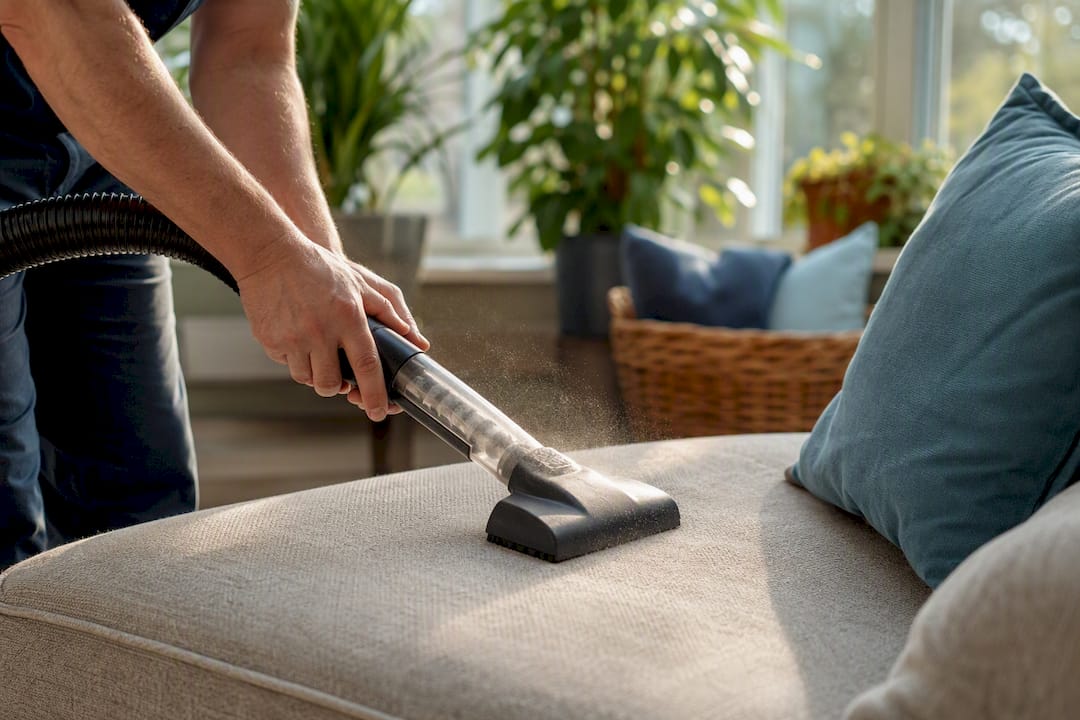
Prevention beats extraction every time. A weekly vacuum session with the upholstery attachment keeps grit from grinding into fibers, which is exactly what happens when dust and crumbs sit under body weight for weeks.
- Vacuum weekly using the upholstery and crevice tools, working seams and under cushions.
- Rotate and flip cushions every couple of weeks to even out wear.
- Wipe armrests and headrest areas with a damp cloth, since those spots collect the most body oil.
Keep a small kit on hand: a handheld vacuum, a lint roller, a microfiber cloth, and a fabric-safe spray. Households with pets or young kids should double this cadence; for more tips, see how to effectively get dog hair out of carpet. Loose hair and crumbs are what turn a quick wipe-down into a full deep clean.
What’s the Right Way to Spot-Clean a Stain?
The workflow stays the same no matter what caused the mess: blot, test, treat, rinse, dry. Apply cleaner to a cloth, never straight onto the fabric, and always work from the outside of the stain inward so you don’t spread it wider.
- Blot excess liquid or scrape solids before treating anything.
- Test the cleaner on a hidden patch (back cushion underside, skirt) and wait a few minutes for any reaction.
- Apply cleaner to a cloth, dab gently, and lift the stain rather than scrubbing it.
- Rinse the area lightly with a damp cloth if the code allows water, then blot dry.
Different stains call for different chemistry:
- Red wine: Blot immediately, then use a W-safe cleaner or diluted dish soap. A dedicated wine-removal method works the same on upholstery as it does on carpet.
- Grease or oil: Cover with baking soda or cornstarch to absorb the oil, wait 15 minutes, then vacuum before treating any residue.
- Pet urine: Enzyme cleaners break down the proteins that cause lingering odor. Skip anything without enzymes and the smell tends to return once humidity rises.
- Ink: Dab rubbing alcohol on a cloth (test first) and blot outward; ink sets fast, so speed matters more here than with almost any other stain.
- Blood: Cold water only, never hot, since heat sets the protein permanently. Hydrogen peroxide can help but bleaches some dyes, so test carefully.
Dawn dish soap works on many W-coded fabrics when heavily diluted and rinsed thoroughly, but skipping the rinse leaves a residue that attracts dirt faster than before. If a stain is set-in, covers a wide area, or doesn’t lift after two attempts, stop. That’s your signal a professional deep-clean sofa treatment will do more than another round of scrubbing.
When Should You Deep Clean and What Tools Work Best?
Visible soiling, a musty smell, or the calendar flipping to a new season are your three triggers. Most fabric sofas benefit from occasional deep cleaning, with higher frequency when used heavily by pets or children.
- Vacuum thoroughly first to pull out grit that liquid would otherwise push deeper into the fibers.
- Spot-test your chosen method on a hidden panel.
- Work in small sections rather than soaking the whole cushion at once.
- Extract and rinse, then dry completely before anyone sits down again.
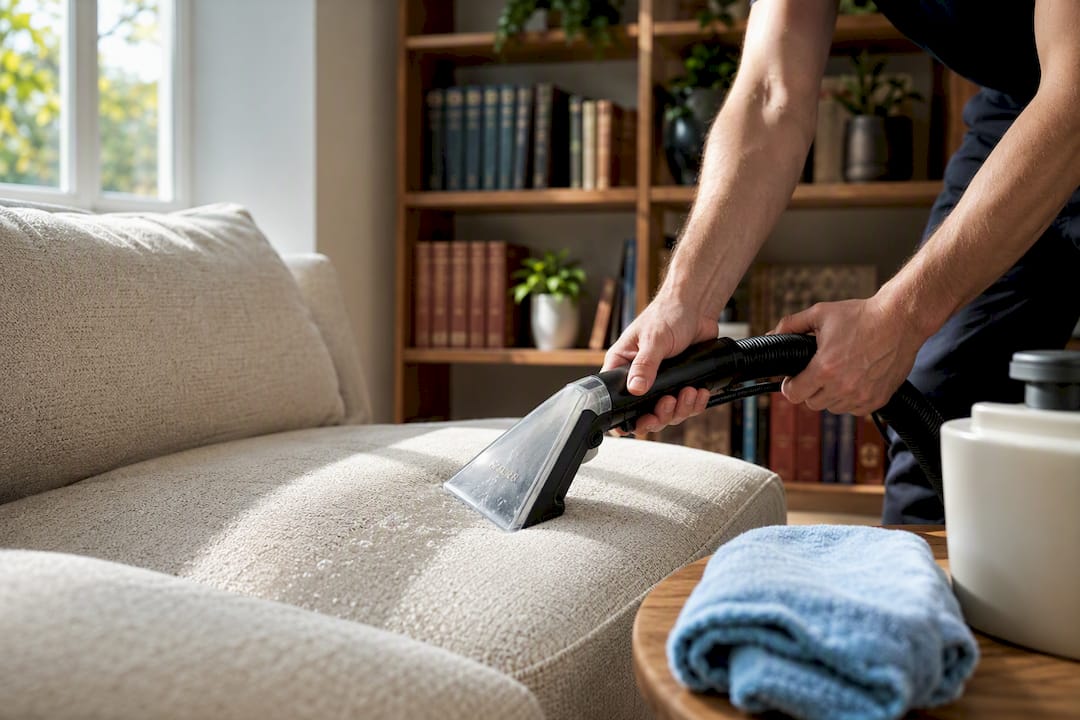
For W and W/S fabrics, a portable upholstery extractor like the BISSELL Little Green handles the job well, pulling out dirty water rather than pushing more moisture in. Steam works too, but only on water-safe fabrics, since steam on the wrong code can warp fibers or bleed dye. Drying typically takes 6 to 12 hours depending on airflow and humidity, so plan the job for a day you don’t need the room.
Does Cleaning Method Change by Material?
Fabric, microfiber, and leather each respond differently to the same cleaner, and that’s where most DIY mistakes start.
- Fabric (W/WS): Use a controlled amount of water or foam upholstery shampoo, always testing first. Air-dry; never toss cushion covers in a hot dryer unless the tag specifically allows it.
- Microfiber: Vacuum before any liquid touches it. Oversaturating microfiber causes watermarks that are hard to reverse, so a barely damp cloth beats a soaked one. Some microfibers respond well to rubbing alcohol on a cloth, but check the tag first.
- Leather: Dust with a dry cloth, then use a dedicated leather cleaner and conditioner rather than fabric shampoo, which strips natural oils and leaves cracking behind. Weiman Leather Cleaner & Conditioner is a widely used option for finished leather. Keep water to a minimum.
- Suede or unfinished leather: Moisture is the enemy here. Use a suede brush and specialist suede cleaner only, and treat any real stain as a job for a professional rather than a home remedy.
How Do You Get Odors Out Without Overdoing It?
Baking soda handles most everyday odors on its own. Sprinkle it across the cushions, let it sit 15 to 30 minutes (overnight for stubborn smells), then vacuum thoroughly.
- Fabric refreshers like Febreze Fabric Refresher work between deep cleans for a general freshness boost.
- Enzyme cleaners such as Nature’s Miracle target organic odors, especially pet accidents, by breaking down the compounds that cause the smell instead of just masking it.
- Steam sanitizes when the care code allows water, but it’s not a substitute for spot treatment on set-in odors.
Skip household bleach entirely. It’s too aggressive for most upholstery and will bleach or weaken fibers long before it solves the odor problem.
What Drying Mistakes Cause Permanent Damage?
Blot out excess moisture first, then point a fan at the couch and open a window if you can. Direct heat, hair dryers, and rushing the process are what cause watermarks and shrinkage, not the cleaning itself.
- Never rub a wet stain; rubbing spreads it and can push it deeper into the padding.
- Skip water entirely on S or X fabrics, even “just a little.”
- Check for a musty smell 24 hours later. That’s your sign moisture got trapped and the cushion needs more airflow or a professional extraction.
When Does a Professional Upholstery Cleaner Make Sense?
Some jobs are genuinely outside DIY territory. S and X coded fabrics, unfinished leather, deep-set pet urine, mold, or a stain that’s already survived two of your own attempts all call for a trained technician rather than another bottle from the store.
Professionals bring fabric-matched solvent systems and truck-grade extraction that pull moisture and residue out completely, something a rented machine rarely matches. Manufacturer codes tend to run conservative, so a trained cleaner can sometimes safely treat fabric that looks off-limits on the tag. That’s a judgment call worth leaving to someone who tests fabric professionally rather than guessing at home.
Before booking, take clear photos of the stain and the care tag, and note how old the stain is. That single detail changes which treatment a technician will use.
What Belongs in a Couch Cleaning Toolkit?
A few reliable tools cover almost every situation you’ll run into, and most homeowners already own half of them.
Start with a vacuum that has an upholstery attachment and crevice tool, since that’s the step every single cleaning method depends on. Add a supply of clean microfiber cloths (they lift stains without leaving lint behind), a spray bottle for diluting cleaners, and baking soda for odor control. For water-safe fabrics, keep a bottle of upholstery shampoo or a mild dish soap on hand, plus a portable extractor like the BISSELL Little Green if you have a fabric sofa and want real extraction power instead of just surface scrubbing.
Pet owners should stock enzyme cleaner such as Nature’s Miracle and a fabric refresher like Febreze for maintenance between deep cleans. BISSELL Professional Pet Stain & Odor Remover is worth keeping nearby too, formulated specifically for the enzymes that break down urine and the odor compounds that regular cleaners miss. Leather owners need a separate shelf entirely: Weiman Leather Cleaner & Conditioner, a soft cloth, and nothing containing ammonia or alcohol unless the product is labeled leather-safe.
Store everything together in one bin near the laundry area. When a spill happens, the difference between a five-minute fix and a permanent stain is usually how fast you can grab the right bottle.
A Note From Octomaids on This Guide
Since 2006, our teams across Vancouver, WA and Portland, OR have tackled upholstery in thousands of homes during deep cleans and move-outs. This guide reflects what actually works on real couches, not just theory.
When Your Couch Needs More Than a DIY Fix
Sometimes a stain wins, and that’s not a failure on your part. It just means the fabric, the age of the stain, or the care code puts the job past what a spray bottle can handle.
Octomaids handles upholstery as part of a full deep clean, a move-in or move-out service, or recurring visits that keep buildup from ever reaching the deep-clean stage. Unlike renting an extractor for a weekend and hoping the fabric code cooperates, our background-checked teams already know how to read a care tag and match the method to it, so you’re not the one testing solvents on your own sofa. If you’re staring down an S or X code, a smell that won’t budge, or pet urine that’s soaked past the cushion surface, that’s exactly the kind of job worth handing off. Request a quote through our services page and describe the couch. We’ll tell you honestly whether it’s a DIY afternoon or a job for our crew.
Sources
- The Right Way to Clean a Couch, Per Experts
- How to Clean a Couch or Sofa
- How To Clean Your Couch
- How to Deep Clean a Couch at Home (and When to Call a Pro)
- HIGH-END UPHOLSTERY CARE… Cleanability Letter Codes
FAQ
What is the best way to clean a fabric couch?
Vacuum first, check the care tag for a W or W/S code, then spot-clean with a diluted, fabric-safe cleaner applied to a cloth rather than directly onto the upholstery.
What is the best way to clean a sofa at home?
Follow the same sequence regardless of material: vacuum, identify the care code, spot-test in a hidden area, treat the stain, then let it dry fully with good airflow before sitting on it again.
How can you deep clean a couch?
Vacuum thoroughly, spot-test your cleaner, work in small sections, then extract with a portable unit like the BISSELL Little Green if the code allows water, followed by 6 to 12 hours of drying time.
Can I use Dawn dish soap to clean my fabric couch?
Yes, on W or W/S coded fabrics, if it’s heavily diluted, tested in a hidden spot, and rinsed thoroughly afterward, since leftover residue attracts dirt faster than an untreated cushion.
When should I call a professional instead of cleaning it myself?
Call a professional for S or X coded fabrics, unfinished leather, deep-set pet urine, mold, or any stain that hasn’t responded to two careful DIY attempts.