



Most tenants spend their final days packing boxes, scrubbing bathrooms, and vacuuming carpets. Windows get a quick wipe at best. That oversight can cost you real money. Understanding why window cleaning matters during move-out goes beyond appearances. It directly affects whether your landlord finds grounds to charge you, how your inspection plays out, and whether you walk away with your full deposit intact. This article breaks down what landlords actually look for, what the law allows them to charge, and how to protect yourself with the right cleaning and documentation strategy.
Table of Contents
- Key takeaways
- Why window cleaning matters during move-out
- How documentation protects your deposit
- What thorough window cleaning actually covers
- Cost vs. return on move-out cleaning
- Your move-out window cleaning plan
- My perspective on this after years in the field
- Ready to protect your deposit? Octomaids can help.
- FAQ
Key takeaways
| Point | Details |
|---|---|
| Dirty windows can cost your deposit | Landlords can legally deduct cleaning fees if windows and tracks are left significantly dirtier than at move-in. |
| Normal wear has clear limits | Light dust and minor smudges count as normal wear, but grease buildup and visible neglect do not. |
| Photos are your best protection | Side-by-side move-in and move-out photos of windows, sills, and tracks are the strongest defense in a dispute. |
| Clean every window component | Tracks, sills, screens, frames, and hardware matter just as much as the glass itself during final inspections. |
| Professional cleaning pays for itself | Investing in a thorough move-out clean often costs less than a single deposit deduction for excessive window dirt. |
Why window cleaning matters during move-out
The phrase “move-out cleaning” covers a lot of ground, but landlords and property managers typically use a more specific term: end-of-tenancy cleaning. That standard carries real expectations about the condition you leave the property in, and windows are not exempt.
Landlords can charge for cleaning only when the condition at move-out is noticeably worse than at move-in, accounting for normal wear and tear. That distinction matters. If you moved into a rental with sparkling windows and handed back a unit with film-coated glass, greasy frames, and tracks packed with dead insects and debris, that qualifies as excessive deterioration under most lease agreements.
Here is where many tenants run into trouble without realizing it:
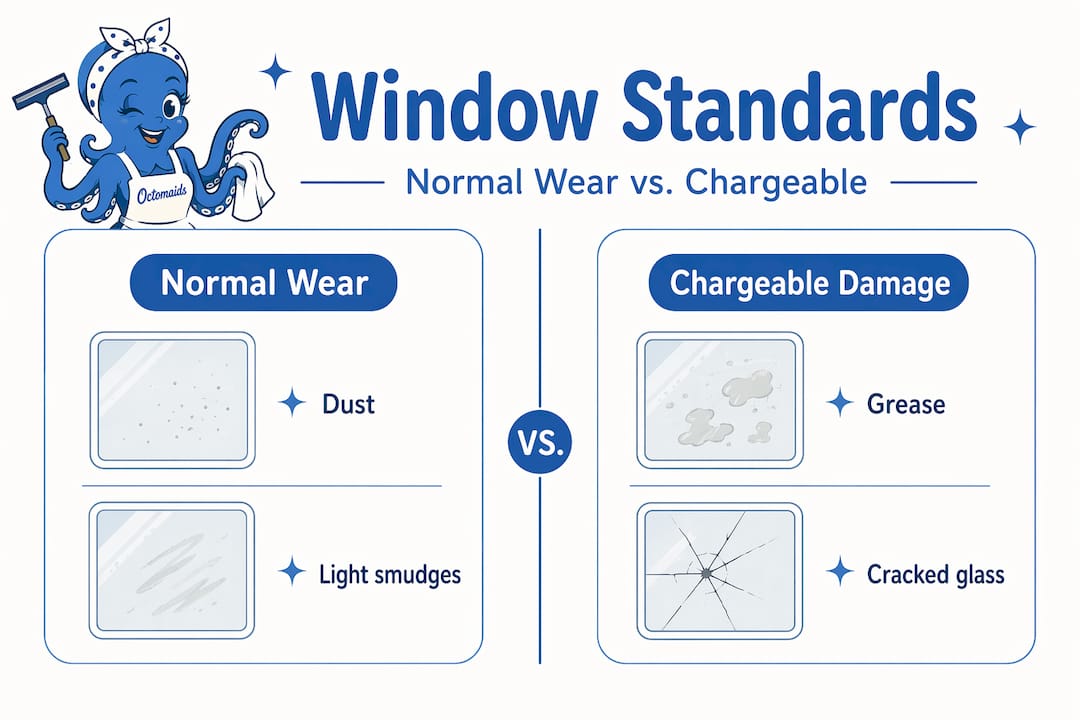
- Routine dust on interior glass is generally considered normal wear and tear. Landlords typically cannot charge for this.
- Greasy buildup near kitchen windows, or heavy grime that has accumulated over months, crosses into chargeable territory.
- Window tracks and sills filled with dirt, mold, or insect residue are almost always flagged during inspections.
- Cracked glass and broken hardware fall under damage, not wear. These are separate from cleaning but often discovered at the same time.
According to ReadYourLease, dust and light smudges qualify as normal wear, while cracked glass or greasy buildup are chargeable items. Your lease agreement may specify cleaning standards even further, so reviewing those terms before your move-out date is worth the fifteen minutes it takes.
Pro Tip: Ask your landlord or property manager for a copy of their move-out cleaning checklist at least two weeks before your departure. Many landlords have one and will share it. Knowing their exact expectations removes guesswork entirely.
Local laws also play a role here. Some states limit how much landlords can charge for cleaning and require itemized receipts. Others give landlords broader latitude. Understanding the rules in your jurisdiction gives you leverage if a dispute ever arises.
How documentation protects your deposit
Cleaning thoroughly is only half the equation. Proving that you cleaned thoroughly is the other half. This is where many tenants lose disputes that they should have won.
Side-by-side photos of window condition at move-in and move-out are the most reliable way to demonstrate that you left the property in good shape. Courts and mediation processes consistently favor tenants who can show clear, dated visual evidence of conditions at both points in time. Without that documentation, it often comes down to your word against your landlord’s.
Here is how to build a documentation record that actually holds up:
- At move-in, photograph every window. Get the glass, the sill, the track, the lock, and the screen. Use natural light and capture any pre-existing dirt, streaks, or damage. Date-stamp every photo.
- Note any existing issues in writing. Send your landlord an email summarizing what you observed. That creates a timestamped paper trail before any dispute arises.
- Repeat the same shots at move-out. Match the angles as closely as possible. Side-by-side comparisons only work when the framing is consistent.
- Photograph your cleaning supplies and process. A photo of clean rags, a spray bottle, and freshly wiped tracks takes ten seconds and adds context.
- Organize everything in a labeled folder. Store move-in and move-out photos together, clearly labeled by room and date.
Courts rely on condition evidence when evaluating deposit disputes, and a well-organized folder of dated photos puts you in a far stronger position than any verbal account.
Pro Tip: Before your final walkthrough, ask your landlord if they offer a pre-move-out inspection. Many states require landlords to offer this. It gives you a chance to address any window issues before the final assessment, rather than finding out after the fact through a deduction notice.
This pre-inspection option is specifically noted by LegalClarity, which explains that pre-move-out walkthroughs give tenants the opportunity to correct excessive cleaning issues before landlords make final deductions.
What thorough window cleaning actually covers
Most people think cleaning windows means wiping the glass. Landlords think about it differently. A complete end-of-tenancy window cleaning involves several components that each carry their own inspection weight.
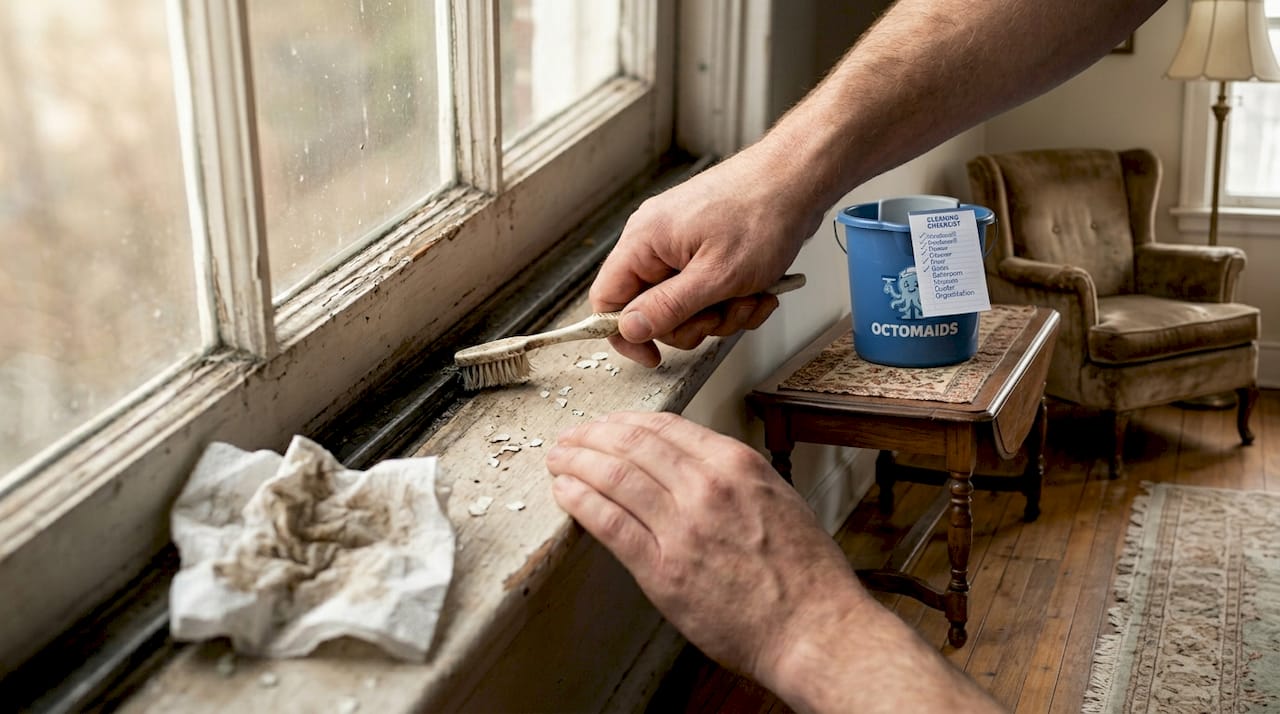
According to RMS Cleaning, a proper move-out window cleaning includes interior glass surfaces, frames, tracks, sills, and hardware. Rental Housing Journal notes that windows, blinds, and locks are common inspection focus areas that directly influence deposit outcomes.
Here is what a complete window cleaning covers:
- Interior glass. Use a streak-free glass cleaner and a lint-free cloth or squeegee. Work top to bottom to avoid dripping on areas already cleaned.
- Exterior glass. This is often skipped and often noticed. If accessible, clean it. If you are on an upper floor, consider whether a professional service is safer.
- Window tracks. Use a stiff brush or old toothbrush to loosen debris, then vacuum it out before wiping down with a damp cloth. Tracks collect more grime than any other window component.
- Sills and frames. Wipe down with an all-purpose cleaner. Pay attention to corners and edges where dirt packs in.
- Screens. Remove screens if possible and rinse them outdoors or wipe with a damp cloth. Dusty, bent, or torn screens get noted.
- Locks and hardware. Wipe down and make sure they operate correctly. A sticky lock gets flagged.
| Component | DIY | Professional |
|---|---|---|
| Interior glass | Easily done with basic supplies | Streak-free finish, consistent quality |
| Window tracks | Time-consuming but manageable | Faster with commercial tools |
| Exterior glass | Possible on ground floor | Safer and more thorough on upper floors |
| Screens | Doable with garden hose | Included in most move-out packages |
| Frames and sills | Simple wipe-down | Part of comprehensive detail work |
The same attention to detail that applies to grout cleaning matters during move-out as it does for window surfaces. Both involve neglected zones that look minor at a glance but tell landlords exactly how well the property was maintained.
Cost vs. return on move-out cleaning
Let us talk money, because this is where the math becomes very clear.
Typical move-out cleaning costs run around $360, with hourly rates landing near $50 to $55. Window cleaning is often added as a service component within a larger move-out package, which keeps the cost reasonable when bundled.
Compare that to a deposit deduction. Security deposits on a one-bedroom apartment in Portland or Vancouver commonly run $1,000 to $2,000. A landlord who documents dirty windows, grimy tracks, and filmed-over glass has legitimate grounds to charge $150 to $300 or more for professional cleaning. That single line item can exceed what you would have spent cleaning proactively.
| Scenario | Estimated cost |
|---|---|
| DIY window cleaning (supplies) | $15 to $30 |
| Add-on window cleaning with move-out service | $50 to $100 |
| Full professional move-out cleaning with windows | $300 to $400 |
| Landlord-charged cleaning deduction (windows) | $150 to $300+ |
| Full deposit lost to excessive cleaning charges | $500 to $2,000+ |
The move-out cleaning checklist for renters that Octomaids publishes breaks down exactly what landlords typically expect, which helps you budget your time and money accurately before that final inspection.
Spending $50 on a professional window cleaning add-on, or two hours doing it yourself, is one of the highest-return investments you can make before handing back your keys.
Your move-out window cleaning plan
Timing and organization determine whether your window cleaning actually holds up at inspection. Cleaning too early and then letting dust settle again defeats the purpose. Here is a plan that works in practice:
- Schedule cleaning two to three days before your move-out date. This gives you time to re-wipe anything that gets dusty again without rushing.
- Clean windows after all furniture has been removed. Furniture blocks access to sills and creates shadows that make it hard to spot streaks.
- Work in this order: tracks first, then sills, then frames, then glass. Going out of order means debris from tracks ends up on glass you already cleaned.
- Do a final light wipe on move-out day. Even a quick pass removes fingerprints and dust that settled overnight.
- Photograph immediately after cleaning. Do not wait until the walkthrough. Clean, fresh photos taken right after you finish are the most compelling evidence.
- Communicate with your landlord. If you have completed a thorough clean, a brief message noting that windows, tracks, and sills have been addressed sets a cooperative tone before the inspection.
Combining your window cleaning with a full room-by-room cleaning guide helps you work through the property systematically so nothing gets left behind.
Pro Tip: If you hire a professional cleaning service for your move-out, ask them to document their work with before-and-after photos. Many reputable services will do this at no extra charge, and it adds a layer of third-party credibility to your condition record.
My perspective on this after years in the field
I have seen the pattern repeat itself more times than I can count. Tenants spend hours on bathrooms, repaint scuffs on walls, and even replace light bulbs. Then they hand back a rental with windows that look like they have not been touched since the day they moved in.
What I have learned is that windows carry disproportionate psychological weight during an inspection. A landlord or property manager walks into a unit and light immediately draws their eye to the windows. Dirty glass, film-covered frames, and debris-packed tracks signal neglect in a way that a dusty baseboard simply does not. It tells the story of how the entire property was treated.
The documentation piece is where I think most tenants genuinely underestimate their own protection. I have seen tenants lose deposit disputes they should have won because they cleaned well but had no evidence. The landlord claimed the windows were dirty. The tenant had no photos. The tenant lost. That outcome has nothing to do with fairness. It has to do with evidence.
My honest advice: treat window cleaning as a strategic component of your move-out, not an afterthought. Budget time for it, document it, and if the property has a lot of windows or you are on upper floors, put that task in professional hands. The return on that investment almost always exceeds the cost.
— Steven
Ready to protect your deposit? Octomaids can help.
Moving out is stressful enough without worrying about whether your landlord will find fault with overlooked corners and grimy tracks. Octomaids has been helping renters in Vancouver, WA and Portland, OR move out with confidence since 2006. Our professional move-out cleaning service covers everything landlords inspect, including interior glass, window tracks, sills, frames, and screens, so you are not leaving money on the table.

We are a family-owned team, and we send the same trusted cleaners to every job. Whether you need a full move-out deep clean or targeted window cleaning as part of your departure prep, we work around your schedule and deliver the standard that gets deposits back. Reach out to Octomaids today to book your move-out cleaning and leave with the documentation and peace of mind that comes from a professionally cleaned home.
FAQ
Can a landlord charge for dirty windows at move-out?
Yes. Landlords can legally deduct cleaning costs from your deposit when windows and tracks are left in significantly worse condition than at move-in, beyond normal wear and tear.
What counts as normal wear and tear on windows?
Light dust and minor smudges are generally considered normal wear and tear and are not chargeable. Greasy buildup, mold in tracks, and heavy grime cross into excessive deterioration that landlords can charge for.
Should you clean windows before moving out?
Yes. Cleaning windows before departure protects your deposit and gives you the opportunity to document the condition with photos before the final walkthrough. It is one of the most cost-effective steps on any move-out cleaning checklist.
How do photos help during a deposit dispute?
Side-by-side condition photos of windows at move-in and move-out give you documented evidence that courts and mediation processes rely on when evaluating whether cleaning charges are justified.
Is it worth hiring a professional for move-out window cleaning?
In most cases, yes. The cost of professional window cleaning as part of a move-out service package is typically far lower than a single deposit deduction for excessive cleaning, especially when exterior glass or upper-floor windows are involved.