



Deep cleaning is defined as a thorough, room-by-room cleaning process that removes built-up grime, odors, and contaminants that routine maintenance cleaning leaves behind. For landlords and property managers, it is not optional maintenance. It is the single most effective way to protect your investment, reduce vacancy time, and set the right tone with every incoming tenant. The average tenant turnover cost runs about $2,500 when you factor in cleaning, repairs, vacancy days, and admin work. A professional deep clean costing $100–$300 is one of the smallest line items in that budget and one of the highest-impact ones.
Why rental properties need deep cleans between every tenancy
Deep cleaning in rental properties serves a fundamentally different purpose than the weekly wipe-down a tenant might do. Standard maintenance cleaning keeps surfaces tidy. Deep cleaning removes the invisible layer of accumulated grease, soap scum, mold spores, and odor-causing bacteria that builds up over months of occupancy. That buildup does not disappear with a quick mop and spray.
The industry term for this process is “restorative cleaning,” and it applies specifically to properties returning to market after occupancy. Visible signs of buildup like sticky film on cabinet doors, darkened grout lines, or a persistent musty smell are direct signals that a restorative clean is overdue. If two or three of those signs are present at once, a professional deep clean is the only appropriate response.

Skipping this step has a measurable cost. Problems neglected at move-out become maintenance complaints within the first 30 days of a new tenancy. That means phone calls, repair visits, damaged landlord-tenant relationships, and sometimes early lease terminations. A thorough deep clean before move-in eliminates most of those complaints before they start.
What distinguishes deep cleaning from standard and turnover cleaning?
Landlords often use “turnover cleaning” and “deep cleaning” interchangeably. They are not the same service, and confusing them leads to gaps that cost money later.
Turnover cleaning is a reset. It focuses on visible guest or tenant readiness: wiping surfaces, cleaning bathrooms, mopping floors, and removing obvious debris. It typically takes 3–6 hours and prepares the unit to look presentable. Deep cleaning targets hidden buildup and takes 3–8 hours depending on property size and condition. It goes behind appliances, inside ovens, into grout lines, and through ventilation covers.
| Cleaning type | Time required | Primary focus | Frequency |
|---|---|---|---|
| Standard maintenance | 1.5–2.5 hours | Surface tidiness | Weekly or biweekly |
| Turnover cleaning | 3–6 hours | Visible readiness for new tenant | Every tenancy change |
| Deep cleaning | 3–8 hours | Built-up grime, odors, hidden areas | Every 3–6 months |
Standard maintenance cleaning keeps a property livable. Turnover cleaning makes it presentable. Deep cleaning makes it defensible. That last word matters because photo documentation at move-in is your legal foundation for deposit deductions if a tenant leaves the unit in poor condition. A deeply cleaned property gives you a clean baseline to photograph and document.
When should you schedule a deep clean for your rental?
Timing a deep clean correctly is as important as doing one at all. The right schedule depends on your rental type, tenant turnover frequency, and local climate.
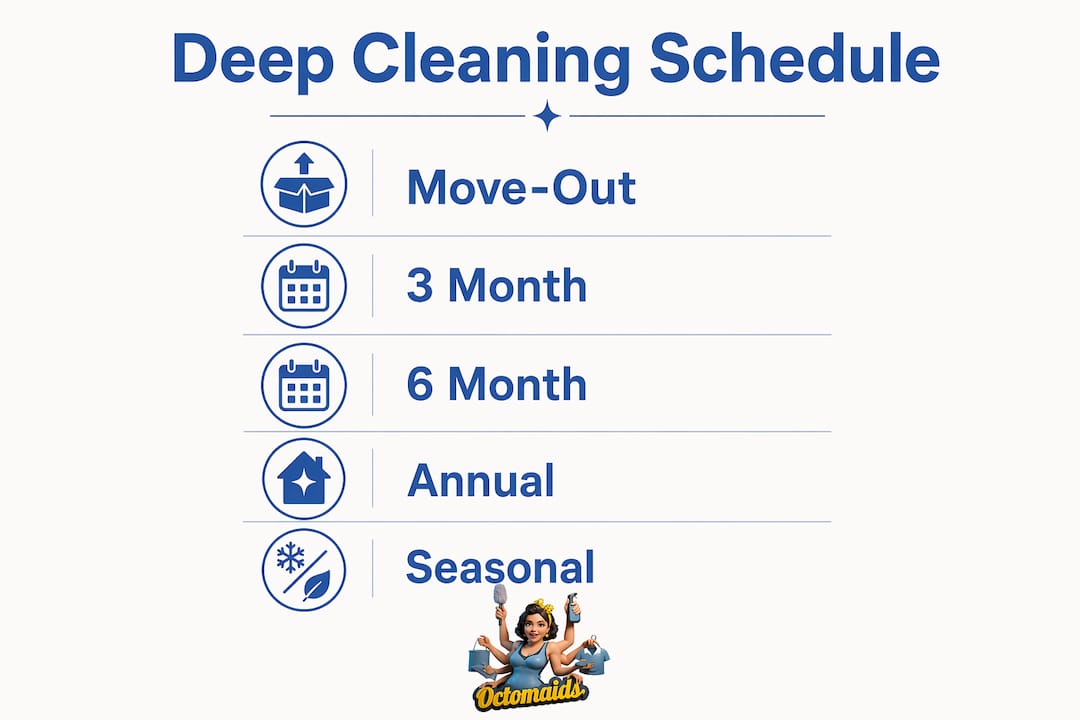
Current 2026 professional guidelines recommend the following intervals:
- High-turnover rentals (short-term, vacation, or monthly rentals): deep clean every 3 months
- Standard long-term rentals (6-month to annual leases): deep clean every 4–6 months, timed to tenant transitions
- Vacation homes with seasonal use: deep clean at the start and end of each season
- Humid climates (like the Pacific Northwest): more frequent grout and caulking care to prevent mold growth
These intervals come from 2026 industry best practices for rental property maintenance. They reflect the reality that grime accumulates on a predictable timeline regardless of how careful tenants are.
Pro Tip: Schedule your deep clean within 24–48 hours of a tenant vacating. That window lets you time the turnover efficiently, complete any repairs before the deep clean, and re-clean any areas disturbed by repair work before the new tenant arrives.
Seasonal timing also matters beyond just climate. Spring and fall are natural inflection points for rental markets. Scheduling a deep clean in march or september aligns with peak leasing activity and gives you a freshly documented baseline right when prospective tenants are touring units.
Which deep cleaning tasks are essential for rental properties?
A proper deep clean covers areas that standard cleaning never touches. Organized by area, the non-negotiable tasks include:
Kitchen
- Degrease oven interior, racks, and broiler pan
- Clean behind and beneath the refrigerator and stove
- Scrub inside the refrigerator, including door seals
- Wipe cabinet interiors and treat any odors
- Descale the dishwasher filter and spray arms
Bathrooms
- Scrub grout lines with a stiff brush and grout cleaner
- Remove and clean exhaust fan covers
- Treat caulking for mold and mildew
- Descale showerheads and faucet aerators
- Clean behind and beneath the toilet
Living areas and bedrooms
- Dust and wipe all ceiling fan blades and light fixtures
- Clean window tracks, sills, and blinds
- Vacuum and treat carpet for odors
- Wipe baseboards, door frames, and switch plates
Whole property
- Clean all HVAC vents and return air covers
- Wipe interior window glass
- Treat any visible mold or mildew on walls
For a detailed room-by-room breakdown, the scope of each task varies by property age and condition. Older properties with original grout or older appliances require more time and more aggressive cleaning agents. Budget accordingly.
Pro Tip: Pay special attention to rental appliance cleaning. Ovens and refrigerators are the two most common sources of odor complaints from new tenants, and they are also the two areas most often skipped in a basic turnover clean.
How does deep cleaning affect tenant retention and turnover costs?
The financial case for deep cleaning is direct. The average turnover cost of $2,500 includes vacancy days, and vacancy days are the most expensive line item in that figure. A property that shows well, smells clean, and has documented condition at move-in attracts tenants faster and retains them longer.
A deeply cleaned rental also sends a psychological signal. Incoming tenants perceive a well-maintained home as one worth taking care of. That perception translates into better day-to-day upkeep, fewer damage complaints, and a higher likelihood of lease renewal. Think of it as setting the standard before the lease is even signed.
The DIY versus professional question comes down to time and documentation. A landlord who self-cleans saves the $100–$300 service fee but loses the professional’s eye for detail and the paper trail that comes with a professional invoice. Legal frameworks in many jurisdictions do not mandate professional cleaning fees unless they are documented at lease start. That means your move-in documentation, including photos and a signed condition report, is the only protection you have when a tenant disputes a deposit deduction.
The practical recommendation: use professional cleaning services for deep cleans and document everything. Handle routine maintenance cleans yourself if budget requires it. The deep clean is not the place to cut costs.
Key Takeaways
Deep cleaning rental properties is the most cost-effective way to reduce vacancy time, prevent early tenancy complaints, and protect your deposit documentation.
| Point | Details |
|---|---|
| Deep cleaning vs. turnover cleaning | Turnover cleans reset visible surfaces; deep cleans remove built-up grime in hidden areas over 3–8 hours. |
| Recommended frequency | Clean every 3 months for high-turnover rentals, every 4–6 months for long-term leases. |
| Essential task areas | Prioritize oven degreasing, grout scrubbing, vent cleaning, and appliance interiors every cycle. |
| Financial impact | Average turnover costs reach $2,500; a $100–$300 professional deep clean reduces vacancy duration and repair complaints. |
| Documentation matters | Photo documentation at move-in is your legal baseline for deposit deductions and cleaning enforcement. |
What I’ve learned after years of rental property cleaning
I have seen the same pattern repeat itself more times than I can count. A landlord skips the deep clean to save a few hundred dollars, the new tenant moves in, and within three weeks there is a complaint about the oven smell or the bathroom grout. That complaint costs more to resolve than the deep clean would have. It also starts the tenancy on a bad note that is very hard to recover from.
The documentation piece is the one landlords most consistently underestimate. You can have the cleanest property in the building, but without dated photos and a signed move-in condition report, you have no legal standing when a tenant disputes a deposit deduction. I have watched landlords lose deposit disputes not because the tenant was right, but because the landlord had no baseline to point to. A professional clean gives you a receipt. Your own photos give you a record. Together, they give you protection.
The other thing I would push back on is the idea that deep cleaning is only necessary at tenant transitions. Long-term tenants accumulate grime too. A deep clean every 4–6 months, even mid-tenancy with proper notice, keeps the property in better condition and gives you a documented record of its state throughout the lease. That record is worth more than most landlords realize until they need it.
— Steven
Professional deep cleaning for your rental property
Landlords and property managers in Vancouver, WA and Portland, OR have relied on Octomaids since 2006 for exactly this kind of work. Whether you need a thorough move-in and move-out clean between tenancies or a scheduled deep clean mid-lease, Octomaids sends the same trusted cleaners every visit so you get consistent results and a reliable paper trail.
The Octomaids team covers everything on the essential task list above, from oven degreasing to grout scrubbing to vent cleaning, so nothing gets missed before your next tenant walks through the door. For landlords managing multiple units or tight turnaround windows, professional cleaning services remove the guesswork and free up your time for the parts of property management that actually require your attention. Reach out to Octomaids to schedule your next rental deep clean.
FAQ
What is the difference between deep cleaning and turnover cleaning?
Turnover cleaning resets a unit for the next tenant by addressing visible surfaces and takes 3–6 hours. Deep cleaning removes accumulated grime from hidden areas like oven interiors, grout lines, and vents, and takes 3–8 hours.
How often should a rental property be deep cleaned?
High-turnover rentals need a deep clean every 3 months. Long-term rentals benefit from a deep clean every 4–6 months, ideally timed to tenant transitions.
Can a landlord require professional cleaning from a tenant?
Legal requirements vary by jurisdiction. In many areas, landlords cannot mandate professional cleaning fees unless they are documented in the lease and supported by a move-in condition record with photos.
Why does deep cleaning reduce tenant complaints?
Problems left untreated at move-out, such as musty cabinets or stained grout, become maintenance complaints within the first 30 days of a new tenancy. A thorough deep clean eliminates those issues before the new tenant arrives.
Does a deep clean help with deposit disputes?
Yes. Photo documentation taken after a professional deep clean establishes a clear baseline condition. Without that baseline, landlords have limited legal standing to deduct cleaning costs from a security deposit.