
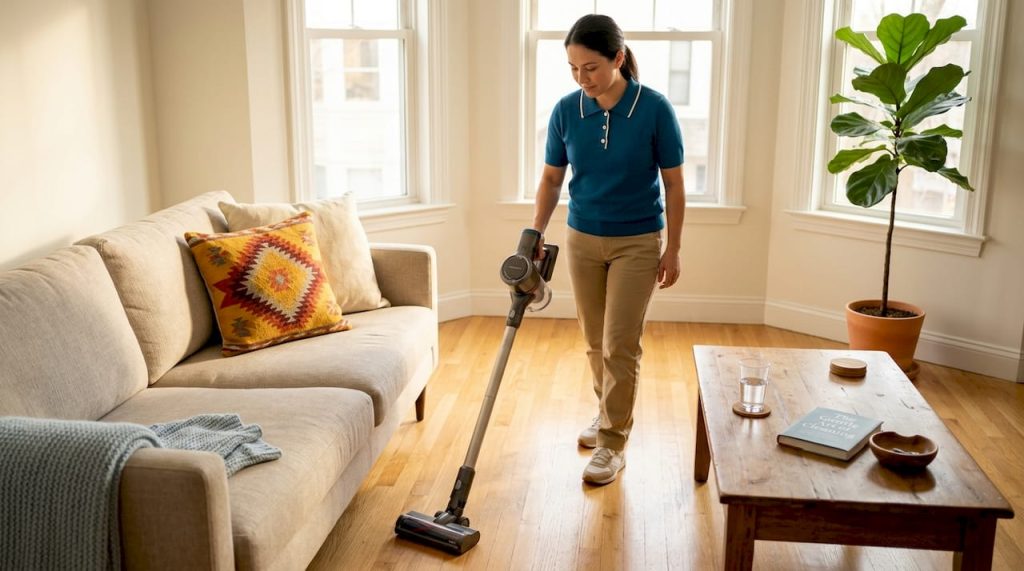


Outsourcing house cleaning is the practice of hiring professional cleaning services to maintain your home, freeing you from what research shows is over 300 hours of annual cleaning labor. That is not a rounding error. For most households, 6 to 8 hours disappear every week to vacuuming, scrubbing, and organizing, hours that could go toward family, work, or rest. The reasons to hire house cleaners go well beyond convenience. Professional cleaning services deliver more consistent results, manage allergens more effectively than most DIY routines, and often cost less than people expect once you account for your own time. Octomaids has served homeowners and renters across Vancouver, WA and Portland, OR since 2006, and the pattern is consistent: people who outsource home cleaning do not regret it.
Why outsource house cleaning instead of doing it yourself?
The most direct answer is time. Weekly professional cleaning returns 3 to 5 hours to homeowners every single week. Over a year, that compounds into a meaningful block of reclaimed life, not just an afternoon here and there.
Most people underestimate how much mental energy cleaning consumes beyond the physical act. You are tracking what needs to be done, buying supplies, scheduling time around other obligations, and feeling guilty when the bathroom goes another week without attention. That cognitive overhead is real, and it accumulates. Outsourcing the planning and execution to a professional team removes that weight entirely.
There is also a consistency argument that DIY cleaning rarely wins. Most households clean reactively, doing a thorough job before guests arrive and letting things slide in between. A recurring professional service maintains a baseline level of cleanliness that your home never drops below. That steady standard is genuinely different from the boom-and-bust cycle of weekend catch-up cleaning.
Here is what outsourcing actually removes from your plate:
- Buying and storing cleaning supplies and equipment
- Tracking which rooms or surfaces were last cleaned and when
- Scheduling cleaning around work, kids, and social commitments
- The physical fatigue of scrubbing, mopping, and vacuuming after a full workday
- The mental load of deciding what “clean enough” means each week
Pro Tip: Before deciding whether to outsource, calculate your hourly rate at work or the dollar value you place on one free hour. If a biweekly cleaning visit costs less than two or three of those hours, the math almost always favors outsourcing.
What health benefits come from professional cleaning services?
A professionally cleaned home is not just tidier. It is measurably healthier, particularly for anyone managing allergies, asthma, or respiratory sensitivities. Allergen control requires multi-component interventions, not a single tool or product. Running an air purifier alone, for example, does not address dust mite populations in bedding or pet dander embedded in upholstery.
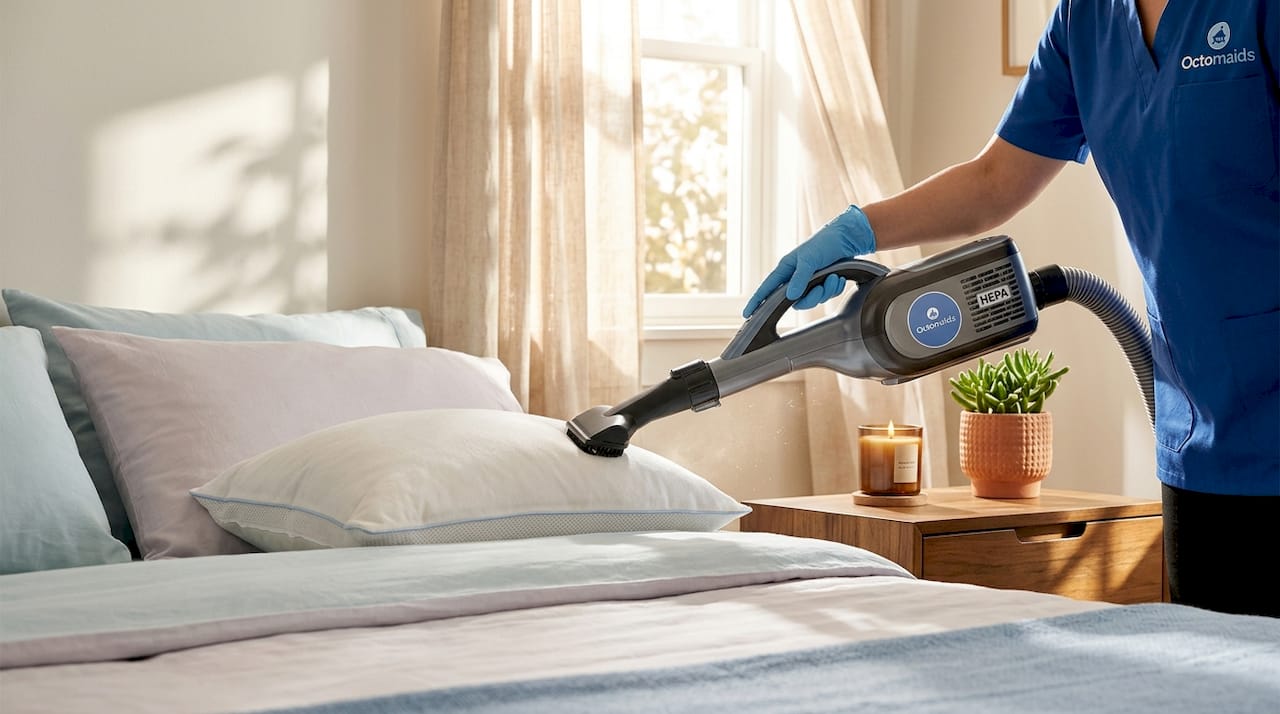
Professional cleaners use structured, layered approaches that address multiple allergen sources in a single visit. A thorough session typically includes HEPA-filter vacuuming, surface wiping with appropriate products, attention to high-accumulation zones like baseboards and ceiling fans, and humidity-aware cleaning in bathrooms and kitchens. Each of those steps targets a different allergen pathway.
The health improvements documented in homes with regular professional cleaning are not subtle. Reduced dust load, lower mold risk, and fewer airborne irritants translate directly into fewer allergy flare-ups and better sleep quality. For households with children or elderly residents, those gains are especially significant.
Curtains and drapes are one area most homeowners overlook entirely. Fabric window treatments trap dust and allergens at eye level and are rarely cleaned in a standard DIY routine. Knowing how to clean curtains properly, or having a professional handle them, removes a surprisingly significant allergen source from your living space.
Pro Tip: If you or a family member has diagnosed allergies or asthma, tell your cleaning service which allergens are the concern. A good provider will adjust their protocol, focusing on dust mite encasements, HEPA vacuuming frequency, and humidity management in the rooms that matter most.
How does outsourcing compare financially to DIY cleaning?
The cost comparison between DIY and professional cleaning is almost always framed incorrectly. People look at the invoice and compare it to zero, as if cleaning themselves costs nothing. It does not.
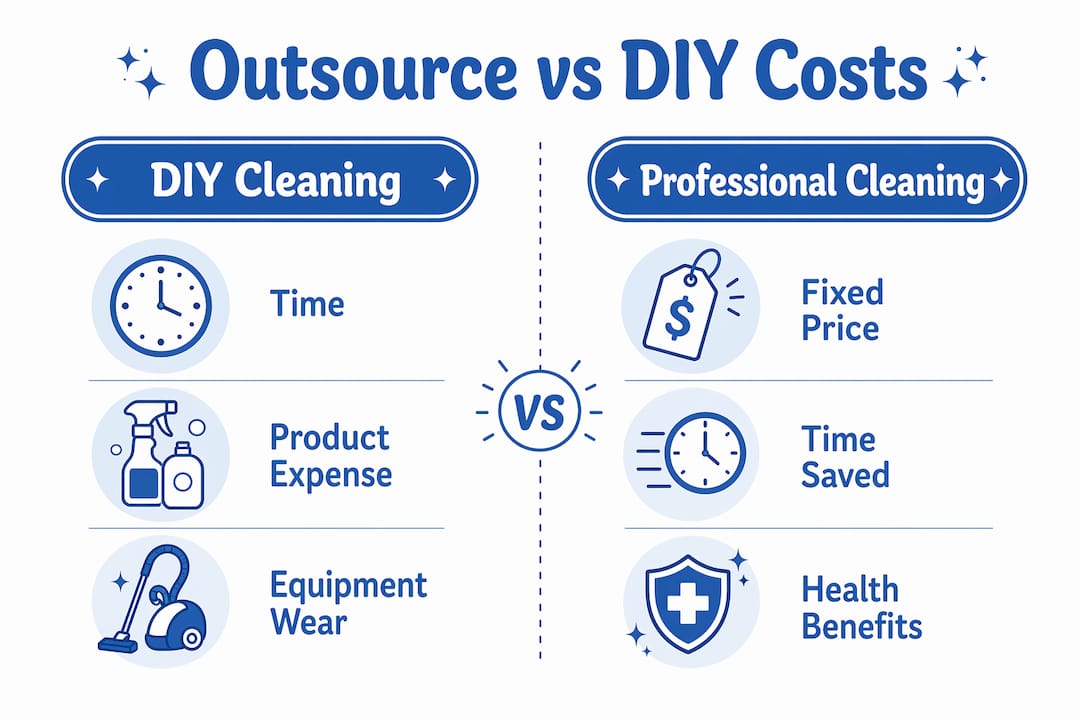
Recurring biweekly cleaning for a 2,000 square foot home typically runs around $165 per visit. That number sounds straightforward until you account for what DIY actually costs: your time, cleaning products, equipment maintenance, and the hidden mental overhead of managing the whole process yourself. When homeowners do the full accounting, outsourcing frequently comes out ahead.
| Cost factor | DIY cleaning | Professional cleaning |
|---|---|---|
| Time per biweekly session | 3 to 5 hours of your time | Zero hours of your time |
| Supplies and equipment | $30 to $60 per month | Included in most service fees |
| Mental scheduling load | High, ongoing | Eliminated |
| Consistency of results | Variable, reactive | Consistent, scheduled |
| Typical biweekly cost | “Free” but 6 to 10 hours monthly | Approximately $165 per visit |
The invisible costs of DIY are what most people miss. Buying the right products for different surfaces, replacing worn mop heads and vacuum filters, and spending Saturday mornings cleaning instead of recovering from the week. Those are real costs, just not ones that show up on a receipt.
Flat-rate pricing models used by professional services also provide financial predictability that DIY cannot match. You know exactly what you will pay each visit, with no surprise supply runs or equipment failures to absorb.
What should you know before hiring a professional cleaner?
The benefits of hiring cleaning services are real, but getting the most from outsourcing depends on choosing the right provider and understanding how the relationship works. A few practical details make a significant difference.
Most professional cleaners supply their own tools and products. Independent cleaners are typically expected to bring standard equipment to each job, but you should confirm this before your first visit. Some providers use client-supplied products by request, which matters if you have preferences for fragrance-free or allergy-specific formulas.
Consistency of personnel is one of the most underrated factors in a good cleaning relationship. When the same cleaner visits your home repeatedly, they learn your preferences, your layout, and the areas that need extra attention. Services that rotate staff constantly reset that learning curve every visit. Octomaids assigns the same trusted cleaners to each recurring client for exactly this reason.
Before committing to a service, ask these questions:
- Do you supply your own cleaning products and equipment?
- Will the same cleaner be assigned to my home each visit?
- Are your cleaners background-checked?
- What is included in a standard visit versus a deep clean?
- How do I communicate preferences or flag areas that need more attention?
Frequency options also shape the value you get. Weekly service maintains a consistently high standard and works well for busy households or homes with pets. Biweekly is the most popular choice, balancing cost and cleanliness effectively. Monthly service suits smaller homes or people who handle light maintenance themselves between visits.
Pro Tip: Request a deep clean house checklist from your provider before the first visit. Reviewing it together sets clear expectations and prevents the frustration of discovering a missed area after the team has left.
Key takeaways
Outsourcing house cleaning saves homeowners over 300 hours annually, reduces allergen exposure through structured multi-component cleaning, and is financially competitive with DIY once time and mental overhead are properly accounted for.
| Point | Details |
|---|---|
| Time savings are substantial | Professional cleaning returns 3 to 5 hours weekly, totaling over 300 hours reclaimed per year. |
| Health benefits are evidence-based | Multi-component allergen cleaning reduces dust mites, mold, and airborne irritants more effectively than single DIY measures. |
| DIY has hidden costs | Supplies, equipment, and mental scheduling overhead make DIY cleaning more expensive than most homeowners calculate. |
| Consistency beats reactive cleaning | Recurring professional service maintains a steady cleanliness baseline that DIY boom-and-bust cycles cannot match. |
| Provider selection matters | Background-checked teams with consistent cleaner assignment deliver better results and build genuine trust over time. |
Why I think outsourcing cleaning is one of the highest-return decisions a homeowner can make
I have talked with hundreds of homeowners over the years, and the ones who resist outsourcing cleaning almost always frame it the same way: “I can do it myself, so why pay someone else?” That framing treats cleaning as a skill gap rather than a time allocation decision. You are not outsourcing because you cannot clean. You are outsourcing because your time has value, and scrubbing grout on a Saturday afternoon is a poor use of it.
What surprises people most after their first few recurring visits is not the cleanliness itself. It is the mental relief. The low-grade awareness that the bathroom needs attention, that the kitchen floor is overdue, that you should really vacuum before your parents visit. That background noise disappears. Your home stops being a source of low-level stress and becomes a place you actually enjoy being in.
I have also seen the health argument play out in real households. Families with allergy sufferers who switched to recurring professional cleaning report noticeable symptom reduction within a few months. That is not a coincidence. It is the result of consistent, structured allergen management that most DIY routines simply do not replicate.
My honest advice: start with biweekly service for three months. Track how you feel about your home, your weekends, and your stress level. The data you collect from your own life will be more persuasive than any article.
— Steven
How Octomaids makes outsourcing your home cleaning simple
Octomaids has provided professional house cleaning to homeowners and renters across Vancouver, WA and Portland, OR since 2006. Our family-owned team offers recurring weekly and biweekly plans, one-time deep cleans, and move-in or move-out service, all delivered by the same background-checked cleaners every visit. You get the consistency and trust that makes outsourcing actually work, not just a different stranger each time.
If you are ready to reclaim your weekends and come home to a genuinely clean space, explore our home cleaning best practices or browse our full range of residential cleaning services to find the plan that fits your home and schedule. Getting a free quote takes less than two minutes.
FAQ
Why outsource house cleaning instead of doing it yourself?
Outsourcing house cleaning returns 3 to 5 hours weekly to homeowners and eliminates the mental overhead of scheduling, supply management, and tracking cleaning cycles. For most households, the time and energy savings make professional cleaning financially competitive with DIY once all costs are counted.
How much does professional house cleaning typically cost?
Recurring biweekly cleaning for a 2,000 square foot home typically costs around $165 per visit, with most professional services including their own supplies and equipment. Flat-rate pricing makes the investment predictable and easy to budget.
What health benefits does professional cleaning provide?
Professional cleaning reduces allergen load through multi-component approaches including HEPA vacuuming, humidity control, and thorough surface cleaning. Homes with regular professional service show measurable reductions in dust mites, mold, and airborne irritants that trigger allergies and asthma.
How do I choose the right cleaning frequency?
Weekly service suits busy households, homes with pets, or anyone with allergy sensitivities. Biweekly is the most popular option and balances cost with consistent cleanliness effectively. Monthly service works for smaller homes where light maintenance is handled between visits.
Do professional cleaners bring their own supplies?
Most professional cleaners supply their own tools and cleaning products, but you should confirm this before your first visit. If you have preferences for specific formulas, such as fragrance-free or allergen-specific products, communicate that to your provider in advance.