
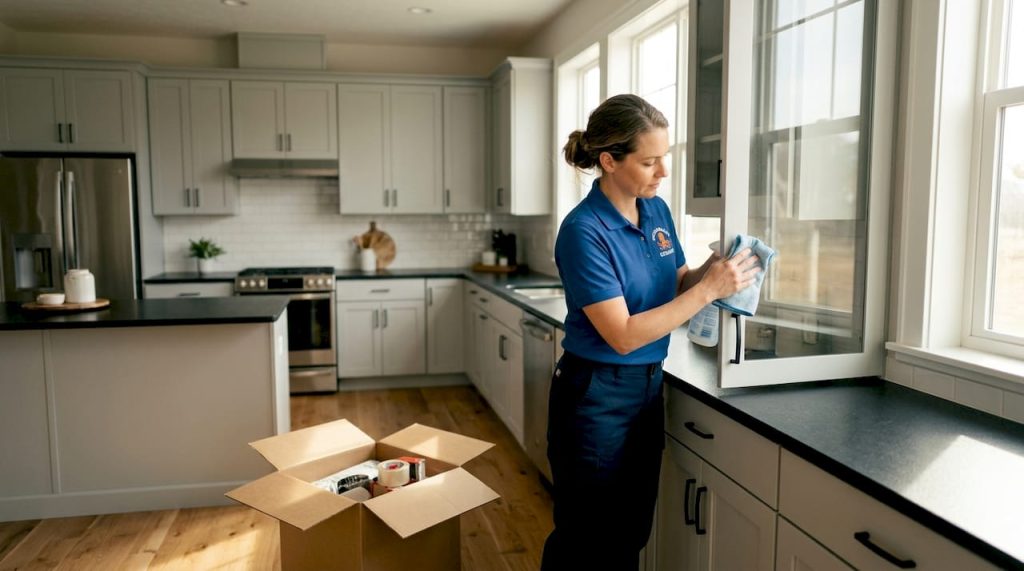


You signed the papers, got the keys, and walked into what looks like a spotless new home. Fresh paint, clean counters, not a scuff in sight. But here is what most buyers and renters never find out until they start sneezing, coughing, or noticing a strange haze on their brand new floors: new homes are not clean homes. Understanding why new homes need professional cleaning could be the most useful thing you learn before your first night under that new roof.
Table of Contents
- Key takeaways
- What is really hiding in your new home
- Why professional cleaning beats DIY every time
- When and how to schedule your move-in cleaning
- Understanding professional cleaning methods and what to expect
- My perspective on new home cleaning
- Start your new home the right way with Octomaids
- FAQ
Key takeaways
| Point | Details |
|---|---|
| New homes hide serious contaminants | Construction dust, VOCs, and chemical residues remain even after a builder walkthrough. |
| HVAC systems need special attention | Ducts accumulate drywall dust during construction and circulate it the moment the system runs. |
| Professional equipment matters | HEPA-filtered vacuums and hot water extraction remove particles that standard cleaning misses entirely. |
| Timing is everything | Schedule professional cleaning after construction ends but before any furniture arrives. |
| Professional cleaning protects your investment | Deep cleaning prevents surface damage, extends flooring life, and reduces long-term allergen buildup. |
What is really hiding in your new home
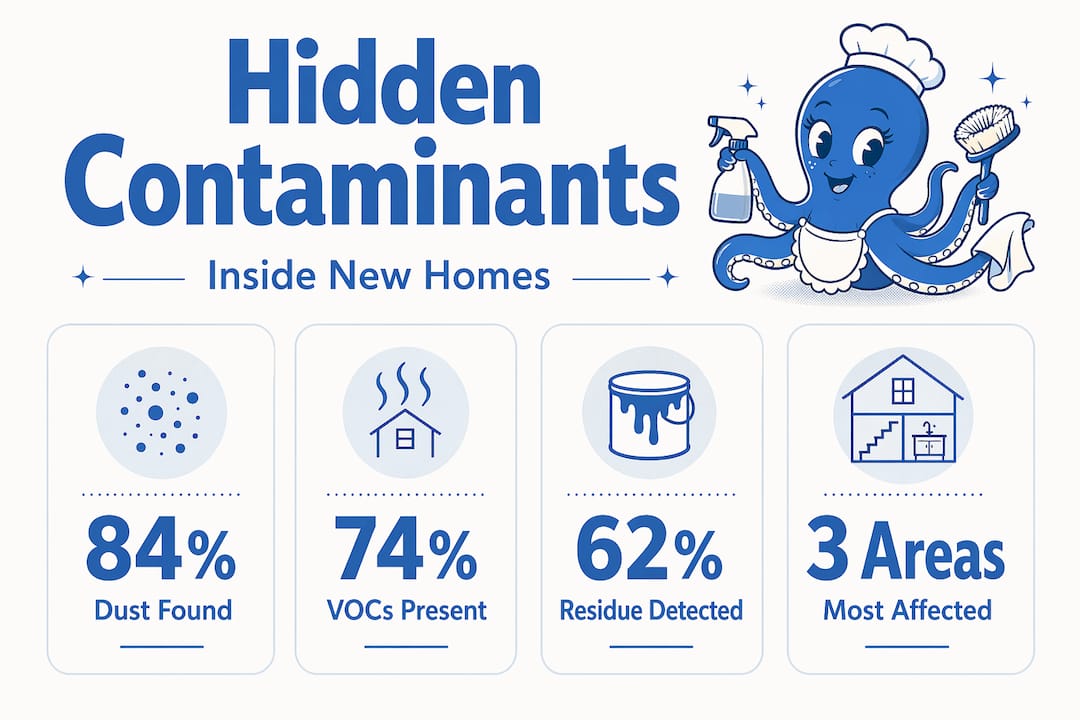
Most people picture “construction mess” as sawdust on the floor and a few smudges on the windows. The reality is far more complicated, and far more invisible. Post-construction contamination spreads through every surface, every gap, and every breath of air in the building.
Here is what your builder’s crew almost certainly left behind:
- Drywall sanding dust. This is the most pervasive offender. Fine gypsum particles settle into carpet fibers, grout lines, HVAC registers, and even inside cabinet drawers. It has a powdery, almost invisible texture that is easy to miss until light hits it at an angle.
- Paint residues and adhesives. Spray painting and caulking leave microscopic chemical particles on surfaces. These are not harmful to touch but they off-gas volatile organic compounds (VOCs), which are airborne chemicals that irritate airways and eyes.
- Chemical residues from sealants and finishes. New flooring, cabinetry, and countertop sealants release VOCs for weeks after installation.
- Fine particulate matter. Wood cutting, tile grinding, and concrete work generate particles small enough to stay suspended in air for hours.
- Allergens embedded in new materials. Formaldehyde from pressed wood products and fiberglass from insulation are two of the most common irritants hiding in plain sight.
The HVAC system deserves its own conversation. New construction HVAC systems often run during the building process for temperature control, which means the ducts have been pulling in construction dust the entire time. Effective duct cleaning after construction requires full-system cleaning, including coils, blower fans, and vents, not just a surface pass at the registers. The moment you switch your HVAC on without that cleaning done, you are blowing months of accumulated debris straight into your living space.
What makes this especially concerning is how well sealed modern homes are. Tightly sealed homes trap dust and VOCs with nowhere to escape, and indoor air pollution can be 2 to 5 times worse than outdoor air. For anyone with asthma, allergies, or young children, moving into an uncleaned new home is a genuine health risk.
Pro Tip: Before your professional cleaning appointment, ask the cleaning provider specifically about VOC-reducing ventilation protocols. A quality team will open windows strategically and use air movement equipment, not just clean surfaces.
Why professional cleaning beats DIY every time
Once homebuyers understand what they are dealing with, the next instinct is often to grab a mop and handle it themselves. That instinct is understandable, but it consistently produces incomplete results. Here is why professional cleaning is the better choice in every measurable way.
-
HEPA filtration changes everything. Standard vacuum cleaners recirculate fine particles back into the air. HEPA-filtered wet-dry vacuums with sealed systems capture particles down to 0.3 microns and trap them instead of releasing them. Drywall dust and VOC particulates fall in exactly that size range.
-
Hot water extraction for carpets and upholstery. A rental carpet shampooer cannot reach deep into carpet fibers where construction dust embeds. Hot water extraction eliminates up to 98% of allergens and bacteria from carpeting, protecting surfaces from the permanent staining and fiber damage that embedded dust causes over time.
-
Trained eyes catch what yours will not. A professional cleaner notices grout haze on tile, adhesive residue on glass, and paint overspray on fixtures the moment they walk in. These issues require specific cleaning agents and techniques. Using the wrong product on a new surface can cause permanent damage.
-
Safe chemical use on brand new finishes. New homes have surfaces that have never been cleaned before. New countertops, floors, and fixtures have specific care requirements that trained cleaners understand. Harsh chemicals that work fine on seasoned surfaces can strip sealants on new ones.
-
Allergen load reduction. Consistent professional cleaning significantly reduces allergen levels in homes where residents have asthma or allergies, and this benefit starts with the very first deep clean.
-
Liability protection. Licensed cleaners carry bonding and insurance. If something is damaged during the cleaning process, you are protected. A DIY mishap on a new home’s finishes means the cost comes out of your pocket.
“Professional cleaning is not a luxury in a new home. It is preventive maintenance that protects surfaces, extends flooring life, and prevents allergen buildup from taking root in the first place.”
The importance of cleaning new homes thoroughly before occupancy goes beyond comfort. It protects the materials you just paid for.
When and how to schedule your move-in cleaning
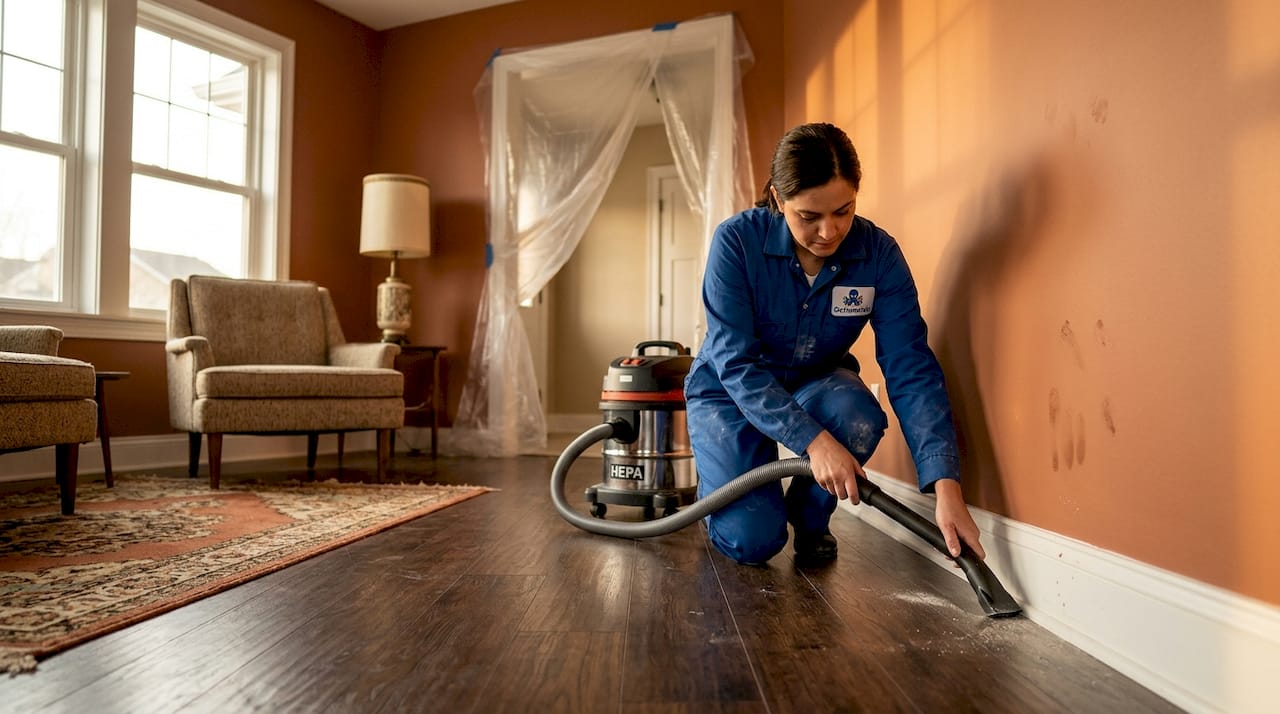
Timing the cleaning correctly is just as important as the cleaning itself. Moving furniture in before the deep clean is the most common mistake buyers make, and it forces cleaners to work around obstacles instead of reaching every surface.
The right sequence looks like this:
- Construction completion: Wait until all trades have finished and the builder has done their walkthrough. Scheduling too early means debris returns.
- Professional cleaning: This is your window. The home is empty, every surface is accessible, and nothing has been contaminated by moving boxes yet.
- Move-in day: Bring your belongings into a genuinely clean home.
When choosing your cleaning provider, these are the non-negotiable criteria:
- Bonded and insured with verifiable licensing
- Experience with post-construction or move-in cleaning services, not just standard recurring residential cleaning
- Transparent about the products and equipment they use
- Willing to discuss your home’s specific construction materials and finishes
Here is a breakdown of the service types to ask about and what each addresses:
| Service type | What it addresses | Why it matters for new builds |
|---|---|---|
| Air duct cleaning | Accumulated drywall dust and debris in HVAC system | Prevents contaminant recirculation when heat or AC runs |
| Hot water extraction | Deep carpet and upholstery allergen removal | Construction dust embeds far deeper than vacuuming reaches |
| Tile and grout restoration | Grout haze, adhesive residue, surface film | New tile installations leave a layer of film that dulls appearance |
| Surface and fixture cleaning | Paint overspray, adhesive residue, fingerprints | New surfaces need targeted products to avoid finish damage |
| Window and track cleaning | Construction film, adhesive labels, dust in tracks | Tracks collect debris that prevents proper sealing |
Move-in cleaning packages designed for new homes often bundle these services together. That is worth asking about, because bundling is typically more cost-effective than scheduling each service separately.
Pro Tip: Tell your cleaning provider the home is new construction, not just recently vacated. The two require different approaches, different equipment, and different cleaning agents.
Understanding professional cleaning methods and what to expect
Not all professional cleaning is equal. Understanding the methods used helps you evaluate providers and set realistic expectations for the results.
The most effective post-construction workflows use multi-stage approaches that include mechanical ventilation, powered vacuuming, and odor-neutralizing diffusers in sequence. This is important because rushing straight to surface wiping before dust has been captured just spreads fine particles around.
| Method | How it works | DIY accessible? |
|---|---|---|
| HEPA wet-dry vacuum | Captures particles to 0.3 microns in sealed system | Rarely (rental units often lack true HEPA sealing) |
| Hot water extraction | High-pressure hot water flushes carpet fibers, extracted immediately | No (rental units lack commercial pressure and temperature) |
| Odor-neutralizing diffusion | Breaks down VOC molecules and airborne odors at the molecular level | No (requires professional grade agents) |
| Steam cleaning | High-temperature vapor sanitizes tile, grout, and hard surfaces | Partially (consumer steamers lack commercial heat output) |
| Surface-specific chemical cleaning | Targeted agents matched to each material type | No (requires product knowledge and training) |
The clearest takeaway from this comparison is that DIY cleaning in a new construction home closes very few of the gaps. Consumer equipment simply does not reach the particle sizes, temperatures, or extraction pressures that professional equipment does. Professional cleaning is preventive maintenance, and the cost of skipping it often shows up later in damaged flooring, persistent allergens, or HVAC issues.
My perspective on new home cleaning
I have talked with hundreds of homeowners in the Vancouver and Portland area over the years, and the pattern is consistent. Buyers walk into a new home, see clean surfaces, and decide they are good to go. Then two weeks later they are sneezing, their new floors look dull, and their HVAC filter is already clogged black.
What I have learned is that the problem is not negligence. It is invisible contamination. No one can see drywall dust in an air duct or feel VOCs in the air. The home looks pristine because construction crews do a cosmetic pass before handover. That is not the same thing as a clean home.
The biggest pitfall I see buyers fall into is hiring a standard house cleaner and calling it done. Post-construction cleaning requires specific equipment and protocols that most residential cleaners are not equipped for. Ask directly: have you cleaned new construction homes before? What equipment do you use for fine dust? If you get vague answers, keep looking.
My honest take is this: the best time to protect your new home is before you live in it. Once you bring in furniture, lay out rugs, and start daily life, contaminants from construction get layered under everything else. Getting it done right the first time saves you real money and real health problems down the line. It is one of the smartest new house move-in tips I can offer, full stop.
— Steven
Start your new home the right way with Octomaids
Moving into a new home in the Vancouver, WA or Portland, OR area? Octomaids has been helping homeowners and renters get their homes genuinely clean since 2006. Our post-construction cleaning services are specifically designed for new builds, covering everything from HVAC-ready surface prep to deep carpet extraction and tile restoration. We use professional-grade equipment and matched products for each surface type, so your new finishes stay protected.
Schedule your cleaning before the moving truck arrives and your furniture lands on a floor that has actually been cleaned. You can browse all our cleaning services or go straight to our move-in cleaning page to get started. Want a chance to experience our work for free? Check out our free cleaning giveaway for new customers.
FAQ
Why do new homes need professional cleaning if they have never been lived in?
New construction generates drywall dust, VOCs, adhesive residues, and fine particulates that settle into every surface during the build process. Builder cleanup is cosmetic, not deep, leaving contaminants that require professional-grade equipment to fully remove.
When is the best time to schedule cleaning in a new home?
The best window is after all construction work is complete but before any furniture is moved in. An empty home gives professional cleaners full access to every surface, floor, and fixture without obstacles.
Can I just clean a new home myself?
Standard consumer equipment cannot capture the particle sizes or reach the temperatures needed to remove post-construction contaminants effectively. DIY cleaning without HEPA-sealed vacuums often redistributes fine dust rather than eliminating it.
What does a professional move-in cleaning typically include?
A thorough move-in cleaning package for new construction should cover air duct cleaning, hot water carpet extraction, tile and grout restoration, surface and fixture cleaning, and window track cleaning, all tailored to new build materials.
Is professional cleaning worth the cost in a new home?
Yes. Professional cleaning preserves surfaces, extends flooring life, and reduces allergen buildup from day one, preventing repair and replacement costs that accumulate when construction residues are left untreated.