
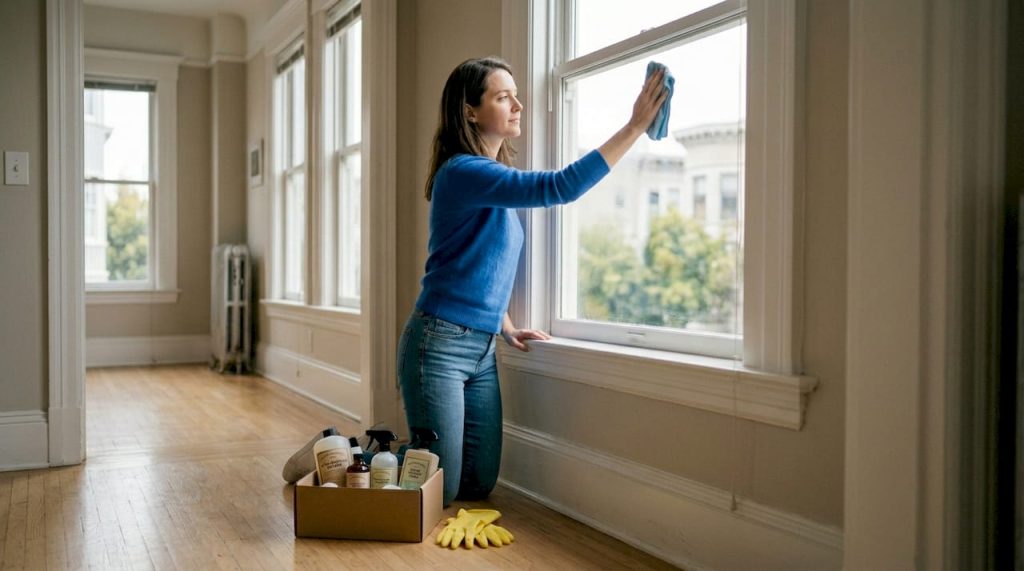


Moving into a new home feels exciting, but that fresh start can carry hidden risks you cannot see. Why move-in cleaning is essential comes down to one uncomfortable truth: even spotless-looking homes hold layers of dust, allergens, and microbial residue left behind by previous occupants. Pet dander, mold spores, and fine particulate matter settle into surfaces, vents, and corners long before you arrive. Starting your new chapter in a truly clean environment protects your family’s health, reduces allergy triggers, and gives you the peace of mind that your home belongs to you, not the people who lived there before.
Table of Contents
- Key takeaways
- Why move-in cleaning protects your health
- Critical areas and surfaces to clean first
- How to prepare for move-in cleaning
- DIY cleaning versus hiring professionals
- My honest take on move-in cleaning
- Start your new home the right way with Octomaids
- FAQ
Key takeaways
| Point | Details |
|---|---|
| Hidden allergens are real | Empty homes still harbor dust mites, pet dander, and mold spores that affect respiratory health. |
| Cleaning sequence matters | Working top-down prevents recontamination of surfaces you have already cleaned. |
| HEPA vacuums outperform standard ones | Sealed HEPA vacuums trap fine particles instead of pushing them back into the air. |
| High-touch surfaces need disinfecting | Doorknobs, switches, and faucets require EPA-registered disinfectants applied with correct contact times. |
| Professionals deliver deeper results | Hiring a move-in cleaning service saves time and reaches areas DIY cleaning typically misses. |
Why move-in cleaning protects your health
The air inside a home is not neutral. Indoor air pollution can trigger asthma, aggravate allergies, and contribute to cardiovascular stress through prolonged exposure to fine particulate matter. When a previous family had pets, smoked indoors, or simply lived there for years, those particles do not disappear when they pack their boxes. They settle into carpet fibers, settle on ceiling fan blades, and collect inside HVAC vents.
Dust mite allergens are particularly stubborn. They thrive in soft surfaces like carpets, upholstered furniture left behind, and even the gaps between floorboards. Mold spores are another concern, especially in bathrooms and under sinks where moisture has accumulated over time. For families with young children or anyone with asthma, moving into a home that has not been thoroughly cleaned is genuinely risky, not just unpleasant.
The tools you use during cleaning matter as much as the effort you put in. Standard vacuums can redistribute fine dust back into the air rather than containing it, which actually worsens indoor air quality during the cleaning process itself. Sealed HEPA filtration vacuums trap particles at 0.3 microns and smaller, preventing that redistribution. Research shows that HEPA vacuums reduce airborne particulates within four to six weeks of consistent use, leading to measurable improvements in allergy symptoms.
Here is what to target specifically for allergen reduction:
- Ceiling fans, light fixtures, and the tops of door frames where dust accumulates undisturbed
- HVAC vents and return air grilles, which circulate whatever is sitting inside them
- Carpets and rugs, using a sealed HEPA vacuum with multiple slow passes
- Window sills and blinds, which collect fine particulate matter from both inside and outside
- Under and behind built-in appliances like refrigerators and dishwashers
Pro Tip: Before running the HVAC system for the first time, replace the air filter. A dirty filter from the previous occupant will immediately circulate their dust, dander, and debris throughout your new home.
Critical areas and surfaces to clean first
Not every surface in a home carries the same health risk. High-touch surfaces like doorknobs, light switches, faucet handles, and toilet flush levers are contact points that accumulate microbial load from dozens of hands over months or years. Visible cleanliness on these surfaces means almost nothing. A switch plate can look perfectly fine and still harbor pathogens that survive on hard surfaces for days.
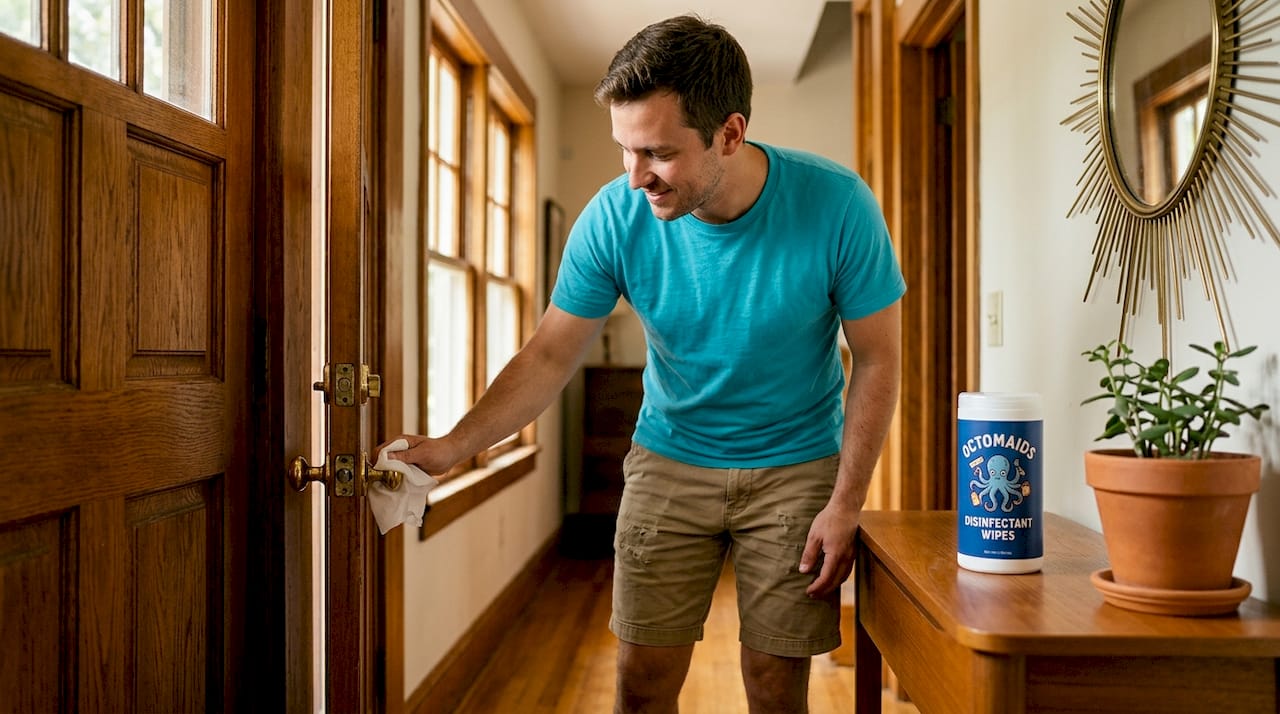
The kitchen and bathroom deserve the most attention and the most time. These two rooms combine moisture, food residue, and high-touch frequency in ways that create ideal conditions for microbial growth. Cleaning them first, before you bring in any of your belongings, gives you full access to every corner.
| Surface category | Cleaning approach | Why it matters |
|---|---|---|
| Doorknobs and light switches | EPA-registered disinfectant, full contact time | High microbial transfer from hands |
| Kitchen counters and sink | Degrease, then disinfect | Food residue feeds bacterial growth |
| Bathroom toilet, tub, and tile | Disinfect with correct dwell time | Moisture creates mold and bacteria |
| Cabinet interiors | Wipe with all-purpose cleaner, dry fully | Previous food and chemical residue |
| Floors and baseboards | Vacuum first, then mop with disinfecting solution | Dust settles here from all other surfaces |
One of the most common mistakes people make is wiping a surface and immediately moving on. Proper disinfection requires contact time, meaning the disinfectant must stay visibly wet on the surface for the duration listed on the product label, often two to four minutes. Wiping it dry immediately after application essentially cancels out the disinfecting effect. You have cleaned the surface, but you have not disinfected it.
Pro Tip: Read the label on your disinfectant before you start. Most products require a specific contact time that is longer than most people assume. Spray, walk away, and come back before wiping.
How to prepare for move-in cleaning
The single biggest advantage you have during a move is timing. Cleaning an empty home is dramatically more effective than cleaning around furniture and boxes, because every surface is accessible. Once your belongings are inside, corners get blocked, appliances get pushed against walls, and the thoroughness of your clean drops significantly. Use that window.
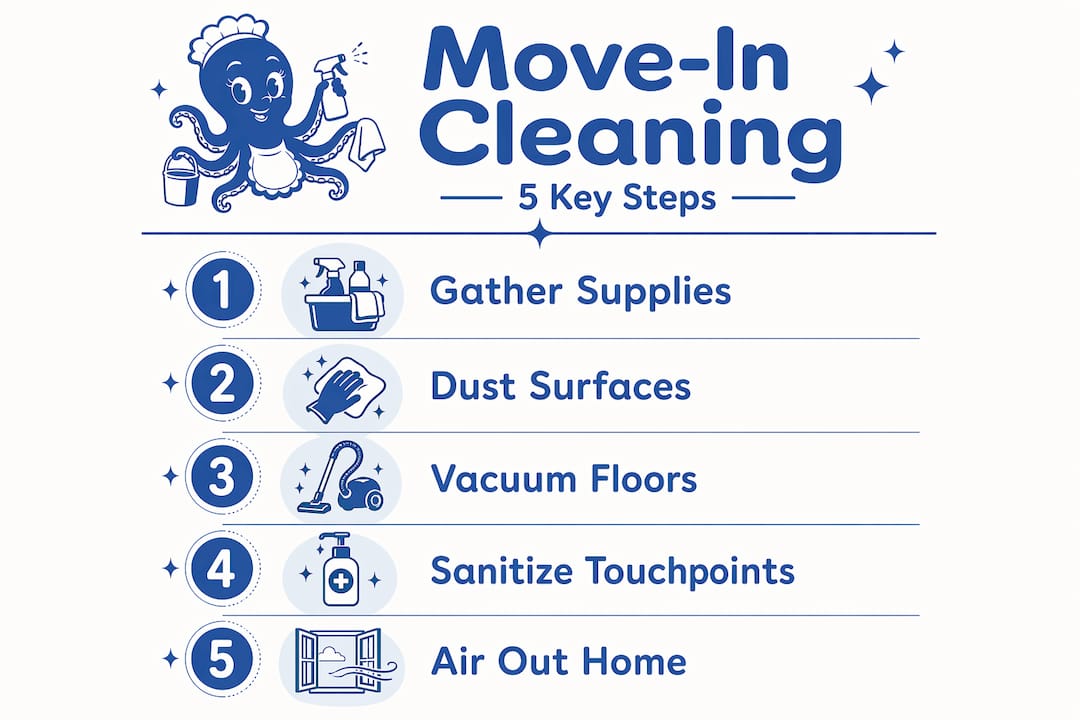
Here is a practical, room-by-room sequence to follow:
- Start at the top of each room. Dust ceiling fans, light fixtures, and the tops of door frames before touching anything lower. Gravity will carry that dust downward, and you will catch it when you vacuum and mop later.
- Clean kitchen cabinets inside and out. Wipe down shelves, check for signs of pest activity, and line shelves before putting your dishes and food inside.
- Scrub the kitchen appliances. The oven, refrigerator interior, and dishwasher filter are frequently neglected by previous occupants. These areas can harbor grease, mold, and odors.
- Deep clean both bathrooms. Scrub the toilet, tub, shower tile, and grout. Disinfect the sink, faucets, and toilet handle with proper contact time.
- Wipe down all high-touch surfaces throughout the home. Doorknobs, light switches, cabinet pulls, and stair railings all need disinfecting.
- Vacuum all floors with a HEPA vacuum. Move slowly and make multiple passes, especially on carpet.
- Mop hard floors last. This captures anything the vacuum loosened and leaves the floor truly clean before your furniture arrives.
Your move-in cleaning checklist should also include supplies gathered in advance. You will need a HEPA vacuum, microfiber cloths, an EPA-registered disinfectant, a degreaser for the kitchen, a bathroom-specific cleaner, a mop, and a bucket. Microfiber cloths are worth emphasizing because they trap particles rather than spreading them, unlike paper towels or cotton rags.
Pro Tip: Clean the home the day before your moving truck arrives, not the same day. You will have more time, less stress, and the disinfectants will have fully dried before your family walks through.
The impact of cleaning on indoor air quality extends beyond what you can smell or see. Removing accumulated dust and allergens before you move in sets a healthier baseline that your ongoing cleaning routine can maintain.
DIY cleaning versus hiring professionals
Doing the cleaning yourself is absolutely possible, and for a small, recently updated home, it may be all you need. The honest trade-off is time and thoroughness. A full move-in clean done properly takes four to eight hours for an average home, and that estimate assumes you have the right tools and know where to look.
| Factor | DIY cleaning | Professional service |
|---|---|---|
| Cost | Lower upfront cost | Higher upfront, saves time |
| Thoroughness | Depends on experience and tools | Trained teams with specialized equipment |
| Allergen removal | Limited without HEPA tools | HEPA vacuums and professional-grade products |
| Time required | 4 to 8 hours or more | Typically 2 to 4 hours |
| Best for | Small homes, recent builds | Older homes, pets, smokers, families with allergies |
Professional move-in cleaning services are particularly worth considering when the previous occupants had pets, smoked inside the home, or lived there for many years. These situations leave behind allergen loads and odors that standard cleaning tools simply cannot address. Professionals bring sealed HEPA vacuums, commercial-grade disinfectants, and the trained eye to spot what most people miss, such as mold under sink cabinets, grease buildup inside oven hoods, and residue inside dishwasher filters.
There are also situations where the time savings alone justify the cost. Moving is physically and emotionally demanding. Handing off the cleaning to a trusted team means you arrive at a home that is genuinely ready, not just visually passable.
My honest take on move-in cleaning
I have worked with hundreds of families moving into new homes, and the pattern I see repeatedly is this: people underestimate what a previous occupant leaves behind. Not because they were dirty people, but because cleaning for a move-out is almost always rushed and surface-level. The oven gets wiped, the floors get swept, and the bathroom gets a quick spray. That is not the same as a thorough clean.
What I have learned is that the families who invest in a real move-in clean, whether they do it themselves or hire someone, report feeling genuinely settled faster. There is something psychological about knowing your home is truly yours, not layered with the history of strangers. A clean space affects your mood, your sleep, and your sense of control during an otherwise chaotic transition.
The overlooked details matter more than people expect. The top-down cleaning approach is not just a preference; it is the difference between cleaning a surface once and cleaning it twice. Skipping the HVAC filter replacement is the kind of mistake that circulates someone else’s pet dander through your home for weeks before you realize why your allergies are acting up.
My advice is simple. Treat the move-in clean as the first thing you do in your new home, not an afterthought. Block the time, gather the right supplies, and do it before a single box crosses the threshold. You will not regret it.
— Steven
Start your new home the right way with Octomaids
Moving is already a lot to manage. The last thing you need is to spend your first weekend scrubbing someone else’s kitchen or wondering whether the bathroom was actually cleaned properly.
Octomaids has been serving families in Vancouver, WA and Portland, OR since 2006, and our move-in cleaning service is built specifically for this moment. Our family-owned team brings sealed HEPA vacuums, EPA-registered disinfectants, and a trained eye for the spots most people miss. We handle the kitchen, bathrooms, high-touch surfaces, and every corner in between, so you can focus on unpacking and settling in. Whether you need a one-time deep clean or want to set up recurring cleaning to maintain that fresh start, we send the same trusted cleaners every visit. Explore all of our cleaning services and book the team that Vancouver and Portland families have trusted for nearly two decades.
FAQ
Is move-in cleaning necessary even for new construction?
Yes. New construction homes accumulate construction dust, drywall particles, and chemical residues from materials and finishes that require thorough cleaning before they are safe and comfortable to live in.
What surfaces should I prioritize during move-in cleaning?
Prioritize high-touch surfaces like doorknobs, light switches, faucet handles, and toilet flush levers, followed by kitchen appliances, bathroom fixtures, and all floors using a HEPA vacuum.
How long does a proper move-in clean take?
A thorough DIY move-in clean typically takes four to eight hours for an average-sized home. Professional services generally complete the same scope in two to four hours using specialized equipment and trained teams.
Do HEPA vacuums really make a difference for move-in cleaning?
Yes. Standard vacuums redistribute fine dust back into the air, while sealed HEPA vacuums trap particles as small as 0.3 microns, significantly reducing airborne allergens during and after cleaning.
When is the best time to do a move-in clean?
Clean the home before your furniture and boxes arrive. An empty home gives you full access to every surface, making the clean faster, more thorough, and far more effective than cleaning around your belongings.