



Seasonal deep cleaning is the thorough cleaning process performed once every season to eliminate accumulated dirt, allergens, and bacteria that routine cleaning misses. This practice, formally called periodic deep cleaning in professional cleaning standards, goes far beyond weekly tidying. It targets the hidden buildup of dust mites, mold spores, pet dander, and grease that collects in overlooked areas like baseboards, vents, and behind appliances. Understanding why homes need seasonal deep clean routines is the first step toward a genuinely healthier living environment. Octomaids has seen firsthand, serving Vancouver, WA and Portland, OR since 2006, how consistently this practice transforms both the cleanliness and the comfort of a home.
Why homes need seasonal deep cleaning: the core case
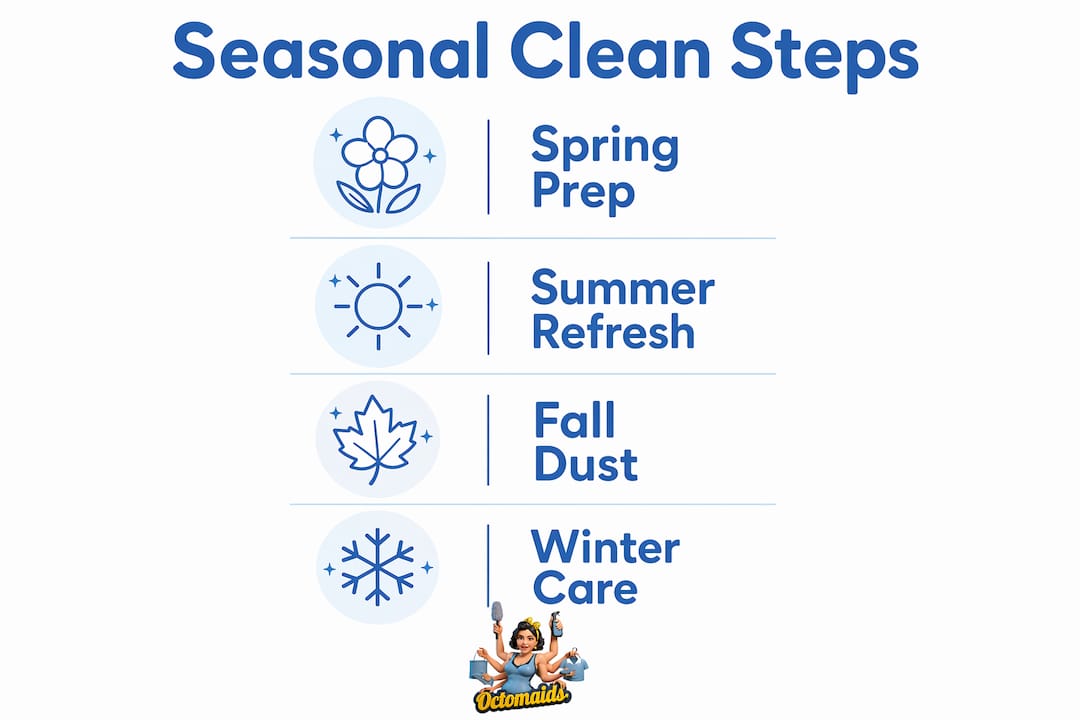
Seasonal deep cleaning aligns cleaning efforts with environmental changes and lifestyle shifts to maintain hygiene and comfort throughout the year. Regular weekly cleaning misses the buildup driven by pollen seasons, humidity swings, and shifting indoor activity patterns. Each season deposits a different category of contaminants. Spring brings pollen and stale winter air. Summer intensifies allergens and humidity. Fall calls for preparing indoor spaces before windows close for months. Winter creates moisture traps that breed mold.
The core argument is simple. Routine cleaning maintains surface appearance. Seasonal deep cleaning removes what routine cleaning cannot reach. Deep cleaning once per season prevents buildup damage, reduces allergens, and supports a healthier living environment. That is not a luxury. It is a maintenance standard.

How often should you deep clean your home?
Cleaning experts recommend deep cleaning 2–4 times per year, depending on household composition and usage. That translates to once per season as the practical standard for most homes. The frequency is not arbitrary. It reflects how quickly allergens, grease, and bacteria accumulate in areas that routine cleaning skips.
Several factors push the frequency higher:
- Pets: Pet dander and hair embed in carpets, upholstery, and air vents faster than most homeowners expect. Homes with one or more pets benefit from deep cleaning every 6–8 weeks in high-traffic areas.
- Children: Young children spend time on floors and touch surfaces constantly. Their proximity to low surfaces increases their exposure to accumulated dust and bacteria.
- High foot traffic: Entryways, kitchens, and living rooms in busy households accumulate grime at a faster rate than the same rooms in a single-occupant home.
- Allergies or asthma: Residents with respiratory sensitivities need more frequent attention to vents, bedding, and soft furnishings.
Kitchens and bathrooms always require more intensive attention than other rooms. Grease coats kitchen surfaces and appliance coils. Moisture in bathrooms creates conditions where mold and bacteria thrive. These two rooms often need a deeper clean every 1–2 months regardless of the overall household schedule. A home cleaning frequency guide can help you calibrate the right schedule for your specific situation.
Pro Tip: Mark your seasonal deep clean dates on a calendar at the start of the year. Treating them like appointments rather than aspirations is the single most effective habit shift for consistent follow-through.
What are the health benefits of deep cleaning your home?
Deep cleaning removes allergens like dust mites and mold spores, improving indoor air quality and reducing respiratory issues. These allergens accumulate in hidden areas that routine cleaning never reaches. The health impact is direct and measurable.
“Removing allergens through seasonal deep cleaning directly correlates to fewer respiratory symptoms such as asthma, congestion, and itchy eyes.” — Dr. Andrew Wong, as cited by St. Vincent’s Medical Center
The physical act of cleaning also carries mental health benefits that most homeowners underestimate. Cleaning movement burns 100–200 calories per hour and releases endorphins, improving anxiety and sleep quality. That is a meaningful physiological shift, not just a motivational talking point.
Clutter and disorder compound the problem. Consistent clutter correlates with elevated cortisol, the primary stress hormone. A clean, organized space reduces that cortisol load, improves concentration, and even reduces household conflict. Think of visual clutter as subconscious visual noise. Your brain processes it constantly, even when you are not consciously aware of it. Removing that noise through a thorough seasonal clean gives your nervous system genuine relief.
Better sleep is another documented outcome. Allergen reduction in bedrooms, combined with the psychological calm of an organized space, creates conditions where sleep quality improves noticeably. The benefits of professional cleaning extend these effects further by reaching areas most homeowners miss during self-directed cleans.
Pro Tip: Focus your bedroom deep clean on mattress vacuuming, washing all bedding at high temperatures, and cleaning air vents. These three tasks have the highest direct impact on sleep quality and respiratory health.
How does seasonal cleaning function as home maintenance?
Seasonal deep cleaning uncovers hidden safety hazards like water damage and fire risks from dust accumulation in appliances. This is the aspect of deep cleaning that most homeowners overlook entirely. A thorough seasonal clean is effectively a home safety inspection.
The priority tasks for each seasonal maintenance check include:
- Check behind and under appliances for water stains, moisture, or mold growth that signals a slow leak.
- Test smoke and carbon monoxide detector batteries and replace them if they are more than 12 months old.
- Vacuum refrigerator coils to prevent overheating, which is a leading cause of appliance fires.
- Clear dryer vents of lint buildup, which the U.S. Fire Administration identifies as a significant residential fire hazard.
- Inspect caulking around tubs, sinks, and windows for cracks that allow moisture intrusion.
- Clean range hood filters to remove grease that accumulates and becomes a fire risk over time.
| Area | Maintenance risk if neglected | Recommended seasonal action |
|---|---|---|
| Refrigerator coils | Appliance overheating and fire | Vacuum coils every 6 months |
| Dryer vent | Lint fire hazard | Clear vent every season |
| Bathroom caulking | Mold growth and water damage | Inspect and reseal annually |
| Smoke detectors | Missed fire alerts | Test and replace batteries seasonally |
| Under-sink cabinets | Undetected slow leaks | Inspect for moisture each season |
Removing buildup also extends the life of flooring, fixtures, and appliances. Grease left on stovetop surfaces degrades the finish. Hard water deposits left on fixtures cause permanent etching. Dirt ground into hardwood floors scratches the surface layer over time. Fall and spring are the two most productive seasons for these preventive tasks because they coincide with major weather transitions that stress your home’s systems.
Pro Tip: Take photos of any areas showing early signs of wear or moisture during your seasonal clean. Dated photos give you a clear record for insurance claims or contractor conversations.
How to adapt your routine for different households
No two homes have the same seasonal cleaning needs. The right approach depends on who lives in the home, what the local environment delivers each season, and whether you own or rent the space.
- Pet owners should prioritize air filter replacement, upholstery cleaning, and floor washing every season. Pet dander is a persistent allergen that embeds deeply in soft surfaces.
- Families with young children need to focus on low surfaces, toy storage areas, and play spaces where bacteria and allergens concentrate at floor level.
- Renters face a specific consideration: lease agreements often specify cleaning standards for move-out. Maintaining a seasonal deep clean routine throughout your tenancy makes the move-out cleaning process significantly less stressful and protects your deposit.
- Allergy-sensitive households should time their spring deep clean to coincide with the start of local pollen season, typically march through may in the Pacific Northwest. Cleaning vents, replacing HVAC filters, and washing window treatments before pollen peaks reduces the allergen load entering the home.
- Humid climates require extra attention to moisture-prone areas. Bathrooms, basements, and under-sink cabinets need inspection for early mold growth every season without exception.
The key principle is that seasonal cleaning is not a fixed checklist applied identically to every home. It is a framework you adjust based on your household’s specific risk factors. A single adult in a low-traffic apartment needs a different approach than a family of five with two dogs in a high-humidity climate.
What does a complete seasonal deep clean actually cover?
A thorough seasonal deep clean targets the areas that routine cleaning skips entirely. The room-by-room deep clean guide from Octomaids breaks this down in detail, but the priority zones are consistent across most homes.
Overlooked areas that every seasonal clean must address:
- Baseboards and door frames where dust accumulates in visible layers
- Ceiling fans, which redistribute allergens every time they run if not cleaned
- Window blinds and curtain rods, which trap dust and pet hair
- Air vents and return grilles, which circulate whatever has collected inside them
- Behind and under furniture, where dust mites build undisturbed colonies
- Inside kitchen cabinets and pantry shelves, where crumbs attract pests
Seasonal focus areas by time of year:
| Season | Primary focus | Key tasks |
|---|---|---|
| Spring | Dust, stale air, post-winter grime | Deep clean vents, wash windows, declutter storage |
| Summer | Allergens, humidity, high-traffic areas | Clean fans, sanitize bathrooms, address moisture |
| Fall | Preparing indoor spaces for winter | Check seals, clean heating systems, deep clean kitchens |
| Winter | Moisture control, indoor air quality | Clean humidifiers, sanitize frequently touched surfaces |
Task sequencing matters. Always clean top to bottom and dry to wet. Start with ceiling fans and light fixtures, move to walls and furniture, then floors last. Clean dry surfaces before wet ones to avoid spreading moisture into dust. Following a structured seasonal cleaning checklist prevents the common mistake of re-contaminating areas you have already cleaned.
Key Takeaways
Seasonal deep cleaning is the most effective strategy for maintaining indoor air quality, preventing home damage, and protecting the health of everyone in the household.
| Point | Details |
|---|---|
| Clean 2–4 times per year | Experts recommend once per season as the baseline, with higher frequency for pets, children, or allergies. |
| Allergen removal improves health | Deep cleaning reduces dust mites and mold spores, directly lowering asthma and respiratory symptoms. |
| Safety inspection built in | Each seasonal clean should check smoke detectors, appliance coils, and hidden moisture to prevent hazards. |
| Adapt to your household | Pets, children, humidity, and renter status all change which areas need the most attention each season. |
| Sequence tasks top to bottom | Cleaning ceiling fans and vents before floors prevents re-contaminating surfaces you have already cleaned. |
What I’ve learned after years of seasonal cleaning
After nearly two decades working with homeowners across Vancouver, WA and Portland, OR, I have noticed one consistent pattern. The homeowners who struggle most with seasonal cleaning are not the ones who lack time. They are the ones who try to do everything at once and burn out before finishing a single room.
Psychologist Dr. Kia-Rai Prewitt puts it directly: start anywhere. The act of beginning in any small area builds momentum and reduces the anxiety that makes people avoid the task entirely. I have seen this play out hundreds of times. A homeowner who commits to cleaning just the kitchen vents and refrigerator coils in one afternoon often ends up cleaning the entire kitchen. The start is the hardest part.
The other thing I would push back on is the idea that seasonal deep cleaning is a chore. It is an investment. Homes that receive consistent seasonal attention hold their finishes longer, have fewer pest problems, and cost less to maintain over time. The 30 minutes spent cleaning dryer vents this fall could prevent a fire. The hour spent checking under-sink cabinets could catch a slow leak before it becomes a $10,000 repair.
Start small. Build the habit. The results compound over years in ways that weekly cleaning simply cannot replicate.
— Steven
Professional seasonal deep cleaning with Octomaids
Knowing what a seasonal deep clean requires and actually executing it thoroughly are two different things. Octomaids has provided professional house cleaning services to homeowners and renters across Clark County, WA and the Portland Metro area since 2006, and our team knows exactly which areas get missed in self-directed cleans.
Whether you need a one-time seasonal deep clean or want to build a recurring schedule that keeps your home consistently clean between seasons, Octomaids delivers the same trusted cleaners every visit. Our family-owned team brings the tools, techniques, and attention to detail that turn a seasonal clean from a weekend project into a genuinely thorough reset. Explore our professional cleaning services or book a one-time deep clean to get your home to the standard that routine cleaning cannot reach.
FAQ
What is seasonal deep cleaning?
Seasonal deep cleaning is a thorough cleaning process performed once every season to remove allergens, bacteria, and buildup that routine cleaning misses. It targets hidden areas like vents, baseboards, appliance coils, and behind furniture.
How often should you deep clean your home?
Experts recommend deep cleaning 2–4 times per year, ideally once per season. Homes with pets, children, or residents with allergies may need more frequent attention in high-traffic areas.
Does deep cleaning actually improve health?
Yes. Removing dust mites, mold spores, and pet dander through seasonal deep cleaning directly reduces respiratory symptoms like asthma, congestion, and sinus irritation, according to Dr. Andrew Wong.
What areas get missed in a regular cleaning routine?
Ceiling fans, air vents, baseboards, behind appliances, window blinds, and under furniture are the most commonly missed areas. These spots accumulate allergens and bacteria that affect indoor air quality year-round.
Is seasonal deep cleaning different for renters?
Renters follow the same health and maintenance principles as homeowners, but should also track cleaning standards required by their lease. Consistent seasonal deep cleaning throughout a tenancy makes move-out cleaning far less demanding and helps protect the security deposit.