
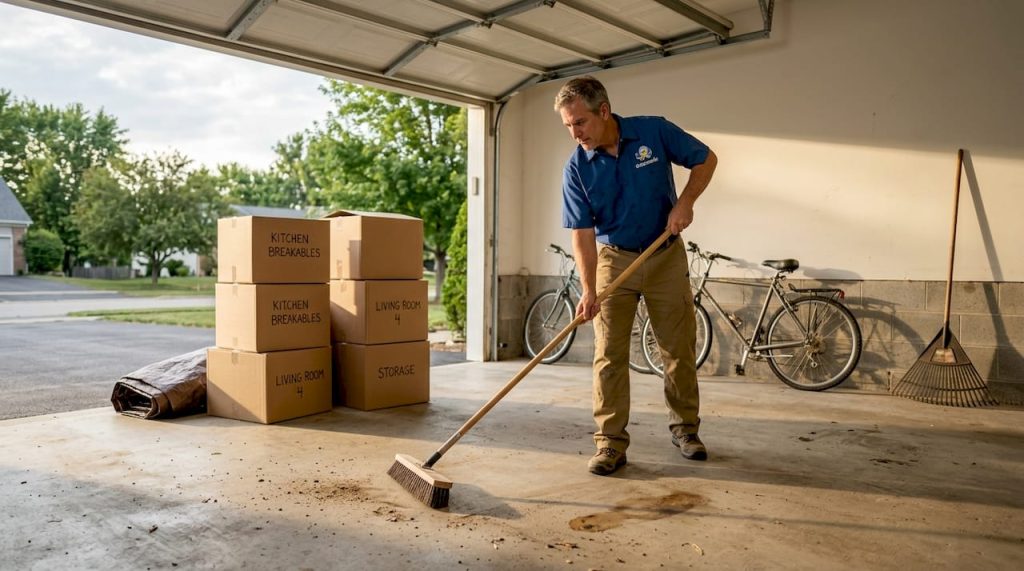


Most people spend weeks planning their move and still walk out of the house forgetting the garage entirely. That oversight is more costly than it sounds. Why garage cleaning is part of move-out is a question that trips up even organized movers, because the garage sits in a gray zone between “inside the house” and “not really my problem.” The truth is, a neglected garage can cost you your security deposit, create real safety hazards, and add unexpected weight to your moving bill. This article breaks down exactly what’s at stake and how to handle it the right way.
Table of Contents
- Key takeaways
- Why garage cleaning is part of move-out
- The real cost of skipping garage cleaning
- The garage cleaning process explained
- Fitting garage cleaning into your move-out plan
- My honest take on garage cleaning during move-out
- Let Octomaids handle the hard part
- FAQ
Key takeaways
| Point | Details |
|---|---|
| Garages are often excluded from standard cleaning | Most move-out cleaning packages do not include garages unless you specifically request it. |
| Neglecting the garage risks your deposit | Some leases specify garage condition expectations, and landlords notice when it’s left dirty or cluttered. |
| Fire and chemical hazards are real | Oily rags and chemical spills in garages are among the leading causes of home fires. |
| Cleaning the garage lowers moving costs | Less clutter means less volume and weight, which directly reduces what professional movers charge. |
| Plan garage cleaning early | Starting garage decluttering before indoor rooms reduces moving stress and keeps the timeline manageable. |
Why garage cleaning is part of move-out
The garage is one of the most misunderstood spaces in any move-out cleaning checklist. People treat it like a storage buffer zone right up until moving day, and then scramble to deal with it at the worst possible time. Understanding where the garage fits in the broader move-out picture changes how you plan everything else.
A standard move-out cleaning covers the spaces a landlord or buyer will inspect most closely: bedrooms, bathrooms, the kitchen, and common living areas. These rooms follow a predictable scope. Surfaces get wiped, floors get mopped, appliances get scrubbed. The garage, by contrast, is a wildcard. Its condition varies so dramatically from home to home that cleaning companies treat it differently.
Standard move-out cleaning services typically exclude garages because of the specialized equipment and unpredictable conditions involved. A garage might be nearly empty with a dusty floor, or it might have years of oil stains, rusted tools, stored chemicals, and moisture damage baked into the concrete. No two garages are the same, which is why pricing and scope are handled separately.
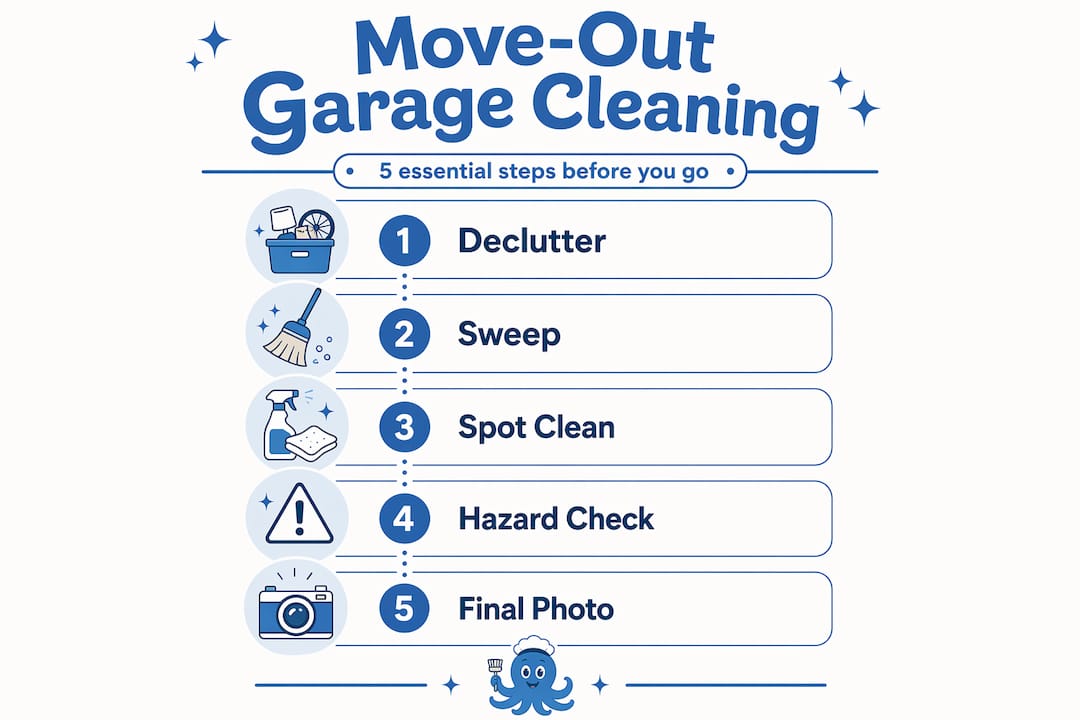
Here is what a typical garage cleaning actually involves:
- Decluttering and sorting: Separating items into keep, donate, recycle, and trash piles before any cleaning begins
- Sweeping and debris removal: Clearing dust, leaves, dirt, and loose debris from floors and corners
- Spot cleaning stains: Addressing oil, grease, and chemical stains on the concrete floor
- Wall and shelf wipe-down: Removing grime, cobwebs, and residue from surfaces
- Hazardous material identification: Flagging chemicals, paints, and flammable materials for proper disposal
Pro Tip: Before calling any cleaning service, photograph your garage’s current condition. This protects you if deposit disputes arise later and gives the cleaning team a clear starting point for scoping the job.
The real cost of skipping garage cleaning
There are three concrete reasons why skipping the garage during move-out is a mistake. They fall into financial, safety, and practical categories, and each one carries more weight than most movers realize.
Financial impact
Reducing clutter before moving directly lowers your moving costs, because professional movers charge based on the total volume and weight of your load. Every box of old hardware, every broken appliance, and every bag of unused materials you haul to your new home adds dollars to that bill. Cleaning the garage before the movers arrive is one of the most practical ways to cut costs without sacrificing anything you actually need.

Beyond moving costs, your security deposit is on the line. Some leases specify garage condition expectations at move-out, and landlords who find oil-stained floors, leftover chemicals, or piles of debris will deduct cleaning fees from your deposit without hesitation. Demonstrating that you left the garage in good condition protects that money and your rental history.
Safety hazards most people overlook
This is where the stakes get serious. Garages accumulate hazardous materials quietly over time. Oily rags are one of the most dangerous. Approximately 900 home fires annually are caused by oily rags, and around 1,700 more result from spontaneous combustion or chemical reactions. Many of these originate in garages where materials are stored improperly and forgotten.
Leaving oily rags in a pile in a closed garage is not a minor oversight. It is a documented fire risk that has destroyed homes. The same applies to old paint cans, solvents, and fertilizers stored together without ventilation.
Proper disposal of oily rags requires storing them in water and detergent-filled metal containers, or drying them flat outdoors before disposal. This is not common knowledge, which is exactly why garages become hazardous over time.
Practical consequences for buyers and landlords
A dirty garage signals neglect to anyone walking through. Buyers factor garage condition into their perception of how well the property was maintained overall. Landlords use it as evidence of how responsibly you treated the space. A cleaned and well-maintained garage also protects the property from moisture intrusion and pests, both of which can cause damage that gets traced back to the previous tenant.
The garage cleaning process explained
Cleaning a garage during move-out is not the same as tidying a room. It requires a different mindset, different tools, and more time than most people budget for. Here is a realistic breakdown of what the process looks like.
- Start with a full declutter. Pull everything out of the garage and sort it before you clean anything. You cannot properly sweep or assess stains with items still in the way.
- Separate hazardous materials. Identify paints, solvents, pesticides, and motor fluids. These cannot go in regular trash and must be taken to a designated hazardous waste facility.
- Sweep from top to bottom. Start with cobwebs and wall grime, then work down to the floor. Sweeping the floor before clearing the walls just creates more work.
- Treat oil and grease stains. Concrete stains require specific degreasers, not general household cleaners. Apply the degreaser, let it sit, then scrub with a stiff brush. Stubborn stains may require a pressure washer.
- Wipe down shelving, walls, and door frames. These surfaces collect dust and residue that landlords and inspectors notice immediately.
- Do a final walkthrough. Check corners, ceiling areas, and behind where shelving units stood. These spots are easy to miss and easy for landlords to find.
Pro Tip: Rent a pressure washer for the day if your garage floor has significant oil staining. The cost is typically $50 to $100 and can save you hundreds in deposit deductions or professional cleaning fees.
Professional move-out cleaning companies often charge extra or exclude garages entirely because pressure washing and stain removal go beyond standard house cleaning scope. Knowing this ahead of time means you can plan accordingly, either by budgeting for the add-on service or by handling the garage yourself before the cleaning crew arrives.
The psychological benefit of finishing the garage early is also worth naming. Clearing clutter from the garage provides real mental clarity during a stressful transition. When that space is resolved, the rest of the move feels more manageable. It is the kind of benefit that is hard to quantify but immediately noticeable.
Fitting garage cleaning into your move-out plan
The garage should not be an afterthought on your move-out cleaning checklist. It belongs in the plan from the beginning, with its own timeline and task list. Here is how to integrate it without creating chaos.
Start earlier than you think you need to. Most people underestimate how long garage decluttering takes. A two-car garage that has been used for storage can easily take a full weekend to sort and clean properly. Begin at least two to three weeks before your move-out date.
Check your lease first. Some agreements include specific language about garage condition. Knowing what your landlord expects in writing gives you a clear target and protects you if there is a dispute.
Here are the most important considerations when planning garage cleaning as part of your move-out:
- Hazardous waste disposal: Most cities have designated drop-off days or facilities for paints, solvents, and motor fluids. Look these up before you start so you are not stuck holding materials you cannot legally trash.
- Donation pickups: Many organizations will pick up usable tools, shelving, and equipment directly from your garage. Schedule this early so you are not scrambling at the end.
- Timing relative to indoor cleaning: Complete garage decluttering before indoor cleaning begins. Dust and debris from the garage can migrate into the house during the process.
- Professional help: If the garage is heavily soiled or you are short on time, move-out cleaning services that include garage add-ons are worth the investment.
Here is a quick comparison to help you decide between DIY and professional garage cleaning:
| Factor | DIY garage cleaning | Professional garage cleaning |
|---|---|---|
| Cost | Lower upfront, but time-intensive | Higher cost, but faster and more thorough |
| Equipment | May need to rent pressure washer | Professionals bring specialized tools |
| Stain removal | Effective with right products | More reliable on heavy staining |
| Hazardous material handling | Requires research and transport | Often guided or handled separately |
| Deposit protection | Depends on thoroughness | Higher confidence in landlord approval |
My honest take on garage cleaning during move-out
I have seen the full range of move-out situations over the years, and the garage is almost always the space that catches people off guard. What I have found is that the people who skip it are not lazy. They are simply operating under the assumption that the garage is “not really part of the house” for inspection purposes. That assumption costs them.
The uncomfortable truth is that landlords often pay more attention to the garage than to a bedroom. A bedroom gets used daily and shows predictable wear. A garage is where people store things they do not want to deal with, and landlords know it. When they walk in and find oil stains, leftover chemicals, and debris, they read it as a sign of how the whole property was treated.
What I have also learned is that a clean garage is not just about passing inspection. It is about leaving a space in a condition you would be comfortable inheriting. That mindset shift changes how thoroughly people clean, and it shows in the results.
My practical advice: treat the garage as its own project, not as an extension of the move. Give it a dedicated day, a dedicated plan, and the right tools. You will spend less money on your move, protect your deposit, and leave without loose ends.
— Steven
Let Octomaids handle the hard part
Moving is already one of the most demanding things you can do. Adding garage cleaning to your personal to-do list while managing logistics, packing, and scheduling is a lot to carry. That is where Octomaids comes in.

Since 2006, Octomaids has served homeowners throughout Vancouver, WA and the Portland, OR metro area with professional move-out cleaning services designed to get your deposit back and leave the property in inspection-ready condition. Our family-owned team knows exactly what landlords look for, including in the garage. Whether you need a full move-out clean with garage add-on or help tackling specific problem areas, we bring the right tools and the same trusted cleaners every time. Reach out to Octomaids to discuss your move-out timeline and get a cleaning plan that covers every corner of the property, not just the obvious ones.
FAQ
Does move-out cleaning include the garage?
Not by default. Standard move-out cleaning services typically exclude garages because they require specialized equipment and extra time. You usually need to request garage cleaning as a separate add-on.
Can a dirty garage cost me my security deposit?
Yes. Some leases include specific garage condition requirements, and landlords can deduct professional cleaning fees from your deposit if the garage is left with stains, debris, or leftover materials.
Is garage cleaning necessary if the garage is mostly empty?
Even an empty garage needs sweeping, stain inspection, and a check for hazardous materials. Landlords and buyers notice residue, oil spots, and cobwebs even in otherwise clear spaces.
How do I safely dispose of chemicals found in the garage?
Paints, solvents, motor fluids, and pesticides cannot go in regular trash. Most municipalities offer hazardous waste drop-off events or permanent facilities. Search your city’s website for the nearest location and schedule.
When should I start cleaning the garage before moving?
Start at least two to three weeks before your move-out date. Garage decluttering takes longer than most people expect, and finishing it early keeps the rest of your move-out timeline on track.