
Professional cleaning is defined by systematic processes, specialized equipment, and chemistry-based techniques that most homeowners never apply. The gap between a home cleaned by a professional and one cleaned by a diligent homeowner is not effort. It is method. What professional cleaners do differently comes down to three core disciplines: a structured sequence, purpose-built tools, and product science matched to specific soil types. Understanding these distinctions helps you set realistic expectations, make better decisions for your home, and recognize the real value behind a professional service like Octomaids.
What professional cleaners do differently: the 7-step system
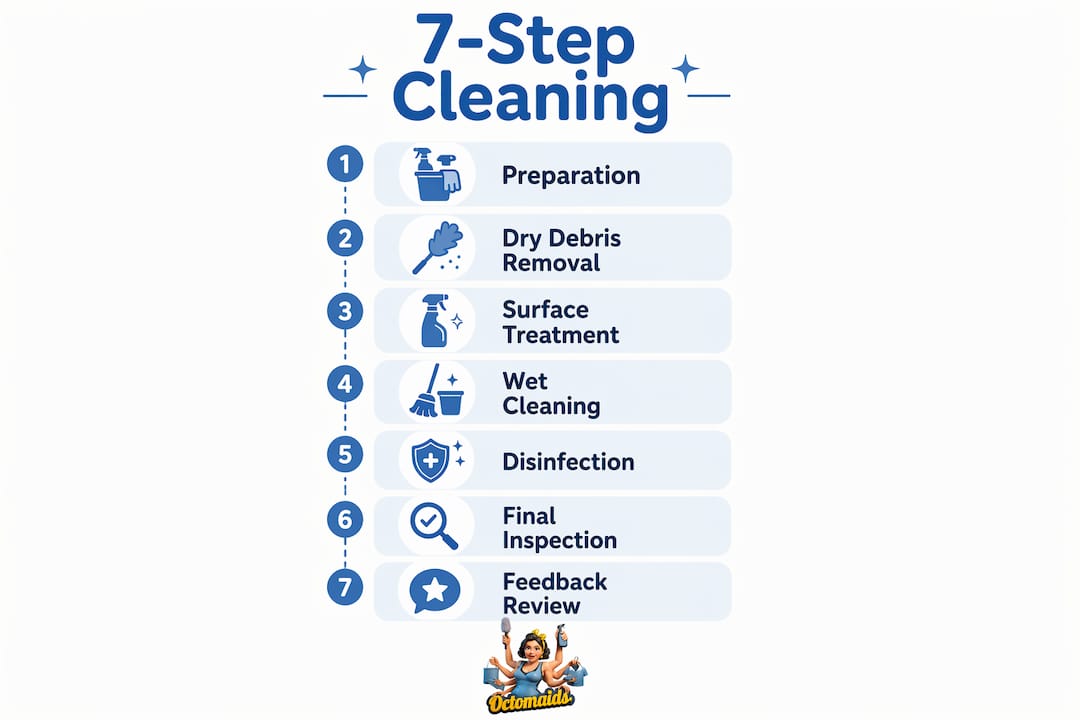
Professional cleaners follow a structured 7-step process that eliminates guesswork and prevents missed areas. The steps are preparation, inspection, dry debris removal, scrubbing, sanitizing and disinfecting, final inspection, and completion. Each step builds on the previous one, and skipping any step reduces the quality of the result.
The order matters more than most people realize. Removing dry debris before applying any liquid prevents a muddy sludge from forming on surfaces. That sludge is one of the most common reasons a surface looks clean but still feels tacky or attracts new dirt within days. Professionals call this “wet-on-dry” contamination, and avoiding it is a fundamental part of how they achieve results that last.
The numbered steps work like a checklist built into muscle memory:
- Preparation — gather supplies, protect furnishings, ventilate the space
- Inspection — identify soil types, stains, and high-touch points before touching anything
- Dry debris removal — vacuum, dust, and sweep before any liquid is applied
- Scrubbing — mechanical agitation to break down bonded soils
- Sanitizing and disinfecting — apply the correct product and allow full dwell time
- Final inspection — visual audit against a checklist to catch missed areas
- Completion — remove supplies, restore the space, and confirm client satisfaction
Pro Tip: Ask your cleaning service whether they perform a final walkthrough inspection. Teams that do, like Octomaids, catch the 10–15% of surfaces that are easy to overlook during the main clean.
Standardization is what separates a good clean from a consistent clean. When every visit follows the same sequence, results are repeatable and errors are rare. That consistency is one of the clearest benefits of hiring cleaners who operate with a defined system rather than working from habit.
How do professional cleaning tools differ from what you own?
The tools professionals carry into your home are not upgraded versions of what you find at a grocery store. They are purpose-built for different performance standards. The difference in cleaning methods starts before a single surface is touched.
Key equipment differences include:
- HEPA-filter vacuums: These capture 99.97% of particulates down to 0.3 microns. Standard household vacuums often recirculate fine dust and allergen fragments back into the air. For families with asthma or allergies, this distinction alone justifies professional service.
- Color-coded microfiber cloths: Each color is assigned to a specific zone, such as bathrooms, kitchens, or general surfaces. This prevents cross-contamination between rooms. A cloth used on a toilet never touches a countertop.
- Commercial-grade dispensers and scrubbers: These apply products at consistent dilutions and with controlled pressure, reducing both waste and the risk of surface damage from over-application.
- Extension tools and angled brushes: Professionals reach vents, ceiling fans, and behind appliances without repositioning furniture repeatedly, saving time and covering areas most homeowners skip.
Microfiber technology deserves specific attention. Microfiber cloths carry a positive electrostatic charge that attracts negatively charged dust and bacteria. A standard cotton cloth pushes debris around. A microfiber cloth lifts and traps it. When combined with the color-coded rotation system, this technology reduces bacterial spread in a way that no household sponge or paper towel can replicate.
What product knowledge and techniques set professionals apart?
The essential difference between professional and home cleaning is applying chemistry and order, not just more effort. Professionals match products to soil types by pH, selecting acidic cleaners for mineral deposits and alkaline cleaners for grease. Using an all-purpose product on the wrong soil type leaves a residue that actually attracts new dirt faster.
Professional cleaning techniques include four practices that most homeowners overlook:
- pH-matched product selection: Lime scale requires an acid. Grease requires an alkali. Using the wrong product does not just underperform. It can leave a film that makes surfaces re-soil within days.
- Dwell time discipline: Disinfectants must remain wet on a surface for their full recommended contact time to neutralize pathogens. Wiping disinfectants prematurely reduces their efficacy significantly. Most homeowners wipe within seconds. Professionals wait.
- Mechanical agitation: Applying a product and wiping is not enough for bonded soils. Agitation, whether by scrubbing pad, brush, or microfiber, breaks the physical bond between the soil and the surface before the product is removed.
- One surface, one cloth side: The “one surface, one cloth side” technique means each wipe uses a clean section of cloth. This prevents bacterial transfer from one surface to the next, a step that is almost never practiced in home cleaning.
Pro Tip: When disinfecting a kitchen counter, apply the product, set a timer for the manufacturer’s recommended contact time (usually 2–4 minutes), then wipe. This single habit closes most of the gap between home cleaning and professional results.
Technique, including dry removal before wet application, is as important as product strength. A powerful disinfectant applied over a dusty surface is less effective than a moderate disinfectant applied correctly to a pre-cleaned one. Sequence and technique multiply the power of any product.
Which overlooked areas do professionals clean that homeowners miss?
Standard professional cleanings prioritize high-touch points, kitchens, and bathrooms. Deep cleans go further, addressing surfaces that accumulate soil invisibly over months. These are the areas that drive allergen buildup and microbial reservoirs in most homes.
Commonly missed surfaces that professionals address:
- Vents and return air grilles (dust accumulates and recirculates through HVAC systems)
- Baseboards and door frames (collect settled dust and pet dander)
- Light switch plates and door handles (among the highest microbial load surfaces in any home)
- Cabinet fronts and drawer pulls (grease and fingerprint buildup, especially in kitchens)
- Appliance exteriors including the tops of refrigerators and the sides of ovens
- Behind toilets and under sink pipes (moisture-driven mold and mildew growth)
| Surface | Why homeowners miss it | Why professionals address it |
|---|---|---|
| Vents and grilles | Out of sight, requires tools | Recirculates allergens through HVAC |
| Switch plates | Overlooked as “not dirty” | High microbial transfer point |
| Behind toilets | Awkward access | Moisture and bacteria accumulate fast |
| Cabinet fronts | Appears clean visually | Grease film attracts new soil quickly |
| Baseboards | Requires bending down | Major settled dust and dander reservoir |
Addressing these surfaces is not about perfectionism. It is about reducing the microbial and allergen load in the spaces where your family spends the most time. A room-by-room deep clean that covers these areas produces a measurably healthier environment, not just a visually cleaner one.
What are the real benefits of professional cleaning for your home?
Professional cleaning reduces allergens, microbial contamination, and extends the life of surfaces by matching the right products and techniques to each material. These are not abstract benefits. They show up as fewer respiratory symptoms, longer-lasting grout, and floors that stay cleaner between visits.
The practical advantages include:
- Slower re-soiling: Correct product use leaves no residue film, so surfaces repel new dirt longer after a professional clean than after a home clean.
- Surface protection: Using the wrong cleaner on stone, hardwood, or stainless steel causes micro-damage over time. Professionals select products that clean without degrading the material.
- Reduced allergen load: HEPA vacuuming and microfiber capture remove particulates that standard cleaning redistributes into the air.
- Accountability and consistency: Professional teams use visual audits and checklists to maintain standards across every visit. This mental discipline prevents the gradual drift in quality that happens with home cleaning routines.
Time savings are real but secondary. The deeper value is that a professionally cleaned home stays cleaner longer, protects your surfaces, and creates a healthier environment for everyone who lives there.
Key takeaways
Professional cleaners deliver superior results because they combine a structured sequence, purpose-built tools, and chemistry-matched products that most homeowners do not have access to or training in.
| Point | Details |
|---|---|
| Systematic 7-step process | Preparation through final inspection prevents missed areas and ensures consistent results every visit. |
| HEPA vacuums and microfiber tools | Purpose-built equipment captures 99.97% of fine particulates and prevents cross-contamination between rooms. |
| Dwell time and pH matching | Disinfectants must stay wet to work; products must match soil chemistry to avoid residue buildup. |
| Overlooked surfaces matter | Vents, switch plates, and cabinet fronts are microbial reservoirs that professionals address on every deep clean. |
| Lasting cleanliness | Correct technique and product selection slow re-soiling and protect surfaces from long-term damage. |
Why the system matters more than the scrubbing
After nearly two decades of working in professional cleaning, the single most common misconception I hear from homeowners is that professionals just clean harder. They do not. They clean in the right order, with the right tools, and they wait.
The dwell time habit is the clearest example. I have watched homeowners spray a disinfectant and wipe it off in three seconds. The product never had a chance to work. That surface was visually clean and microbiologically unchanged. Professionals are trained to set the product down and walk away. That pause is where the actual sanitization happens.
The final inspection step is the other discipline that separates consistent teams from inconsistent ones. Visual audits and checklists force a second look at every room before the job is called complete. Without that step, the same corners get missed on every visit, and the client never knows why the clean never quite feels thorough. At Octomaids, our team treats the final walkthrough as non-negotiable, not optional.
What I tell every new client is this: the process is the product. The mop and the spray bottle are just delivery mechanisms. The real value is the trained sequence behind them.
— Steven
Professional cleaning services in Vancouver, WA and Portland, OR
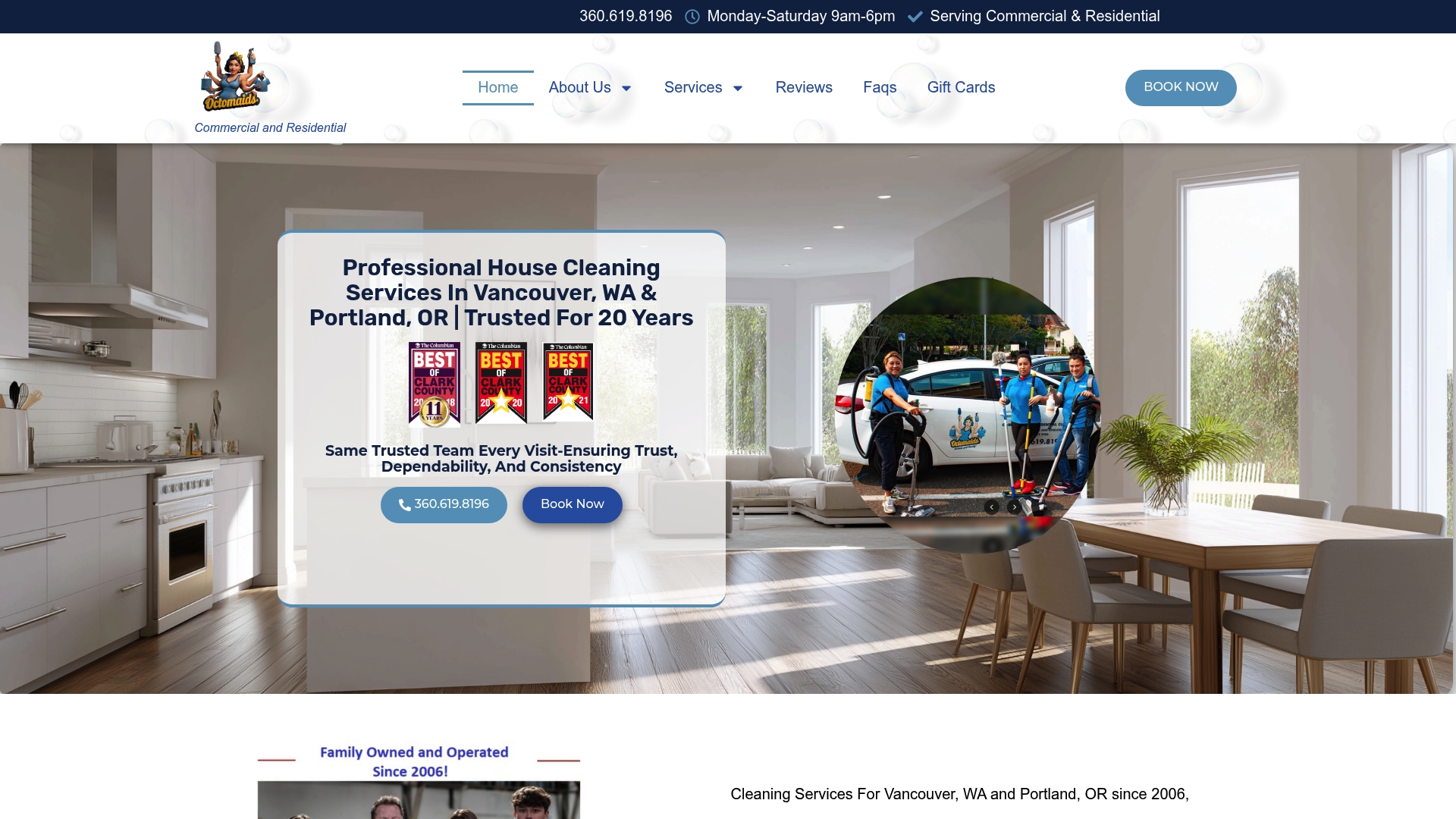
Octomaids has served homeowners and businesses in Clark County, WA and the Portland Metro area since 2006. Our family-owned team brings the same trained cleaners to every visit, so you get consistent results without reintroducing a stranger to your home each time.
Whether you need a one-time deep clean, a recurring weekly or bi-weekly service, or specialized help with a move-in or move-out, our team applies the same systematic process and professional-grade tools described in this article. Every service comes with a satisfaction guarantee and a final walkthrough inspection. You can view all residential and commercial cleaning options on our services page, or call us directly to talk through what your home needs.
FAQ
What does a professional cleaner do that I can’t do myself?
Professionals apply a structured 7-step process, use HEPA-filter vacuums, and match cleaning products to specific soil types by pH. These methods produce deeper, longer-lasting results than standard home cleaning routines.
How long should disinfectant sit before wiping?
Most disinfectants require 2–4 minutes of wet contact time to neutralize pathogens effectively. Wiping the surface before that time is up significantly reduces the product’s ability to kill bacteria and viruses.
What areas do professional cleaners focus on that homeowners miss?
Professionals regularly clean vents, baseboards, switch plates, cabinet fronts, behind toilets, and appliance exteriors. These surfaces accumulate allergens and bacteria but are rarely addressed in routine home cleaning.
What should I expect from a professional cleaning visit?
Expect a structured process that begins with inspection and dry debris removal before any wet products are applied. A thorough visit ends with a final walkthrough to confirm all surfaces and high-touch points have been addressed.
Why does my home re-soil faster after I clean it myself?
Using all-purpose products on the wrong soil type leaves a residue film that attracts new dirt. Professional cleaners select pH-matched products that remove soil completely, which is why surfaces stay cleaner longer after a professional clean.

