
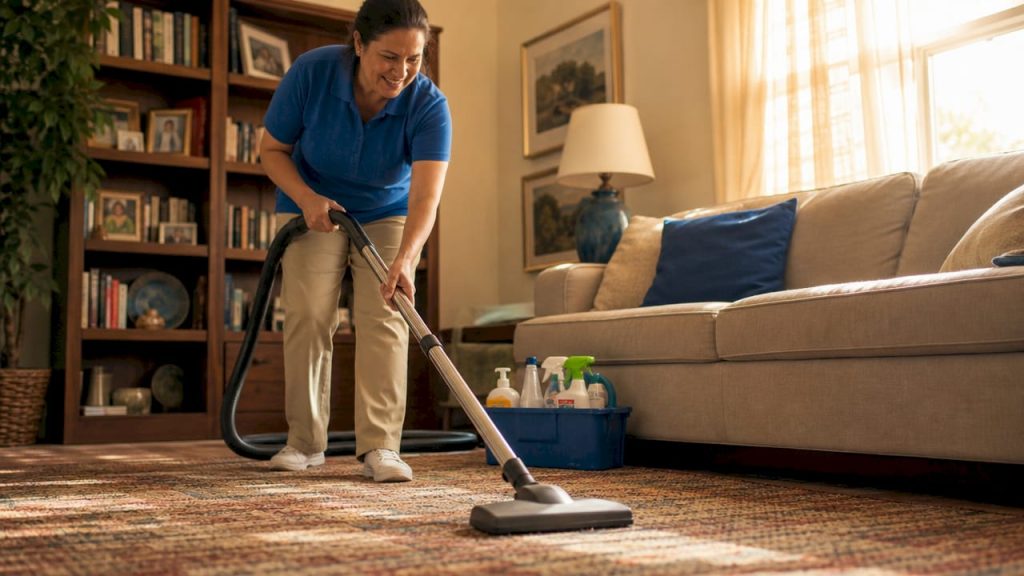


Senior home cleaning is defined as a set of routine light housekeeping tasks designed to keep an older adult’s living space safe, hygienic, and comfortable without the intensity of deep or commercial cleaning. The industry term for this service is light housekeeping, and understanding exactly what it covers helps caregivers and families set realistic expectations before hiring any provider. According to Village Caregiving and Inspire Home Care, these services include dusting furniture, vacuuming, mopping floors, bathroom cleaning, laundry, and kitchen tidying. The scope is deliberately limited, focused on daily maintenance rather than heavy-duty restoration. Knowing that boundary upfront saves families from frustration and helps seniors get the right level of support.
What is included in senior home cleaning?
Light housekeeping for seniors covers a specific set of tasks, and knowing each one helps you evaluate any provider’s service agreement with confidence. Inspire Home Care emphasizes that these tasks are chosen specifically to reduce health and safety risks, including fall prevention and allergen control, not just to keep things looking tidy.
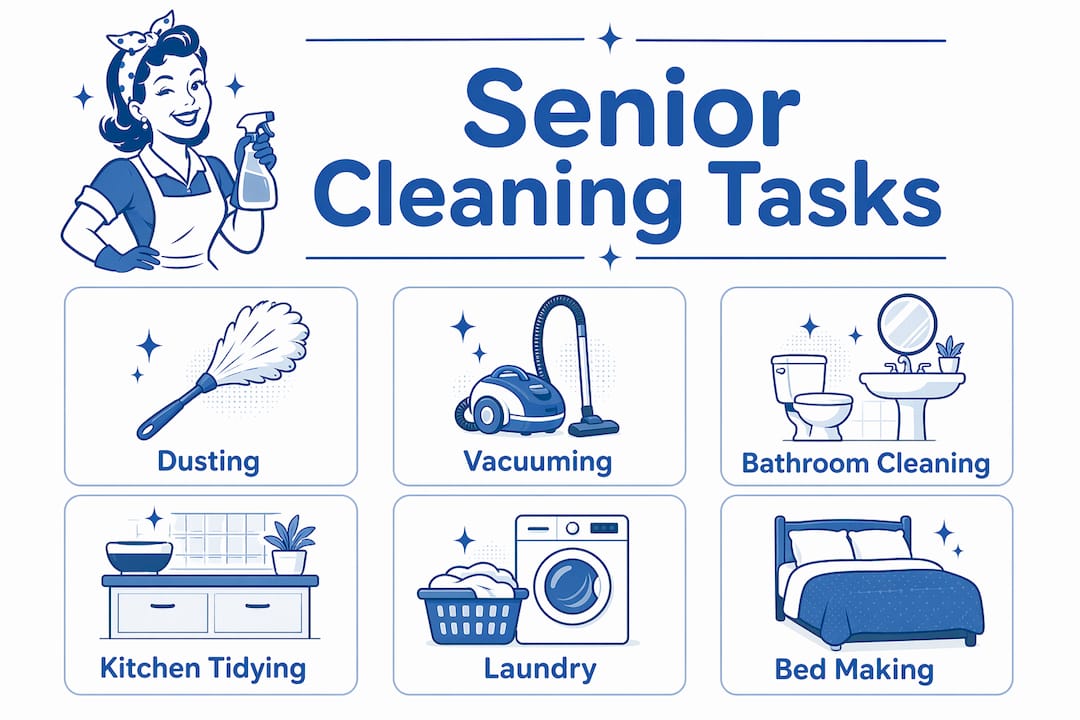
Here is what a standard senior cleaning checklist typically covers:
Kitchen tasks:
- Wiping down countertops and cabinet fronts
- Loading and unloading the dishwasher
- Cleaning the inside of the microwave
- Taking out trash and replacing bin liners
- Light surface cleaning of the stovetop
Bathroom tasks:
- Scrubbing toilets and sinks
- Wiping down shower and tub surfaces
- Replacing used towels with fresh ones
- Emptying small waste bins
Living and bedroom tasks:
- Dusting furniture, shelves, and ceiling fans within reach
- Vacuuming carpets and rugs
- Sweeping and mopping hard floors
- Making beds and changing linens
- Washing, drying, and folding laundry
General home maintenance:
- Removing clutter from walkways and common areas
- Watering indoor plants
- Changing accessible light bulbs
- Organizing frequently used items for easy reach
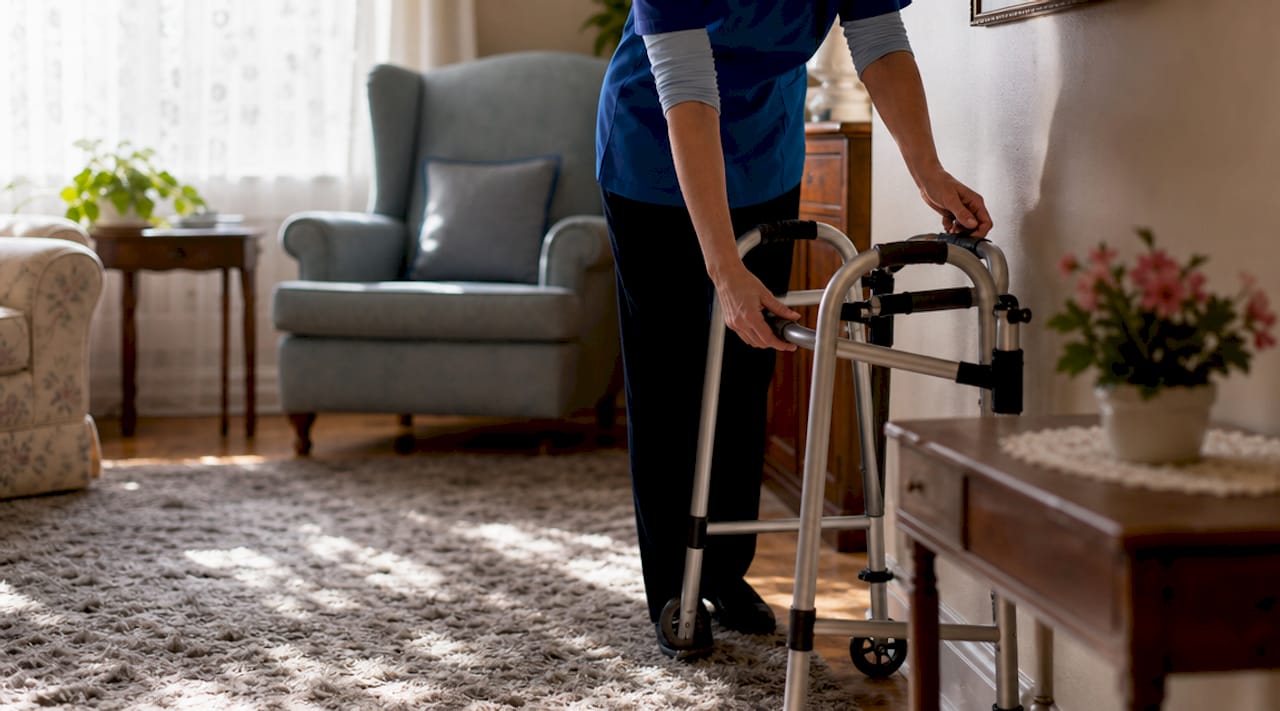
Caregivers also maintain clear walkways and keep mobility aids accessible, which directly reduces fall risk. That tidying function is not cosmetic. It is preventative care built into the cleaning routine.
Pro Tip: Ask any provider to give you a written task list before the first visit. If a task is not on the list, assume it is not included. This one step prevents most of the misunderstandings families encounter.
What tasks are excluded from senior home cleaning?
Light housekeeping has clear boundaries, and those limits exist for good reasons. Care Sphere and Inspire Home Care both stress that exclusions protect clients and caregivers from physical risk and liability.
Tasks that fall outside standard senior cleaning services include:
- Carpet shampooing or steam cleaning
- Scrubbing grout, washing walls, or stripping floors
- Exterior window washing or any task requiring a ladder
- Moving heavy furniture
- Pest control or mold remediation
- Garage or attic organization
“Light housekeeping is focused on sustaining a clean, safe environment rather than deep cleaning the entire house.” — Inspire Home Care
These exclusions are not arbitrary. Ladder work creates fall risk for the worker. Moving furniture can cause back injuries. Carpet steam cleaning requires specialized equipment and training that most caregiving staff do not carry. When families expect these services and do not receive them, the result is friction that could have been avoided with a clear written agreement from the start.
If your loved one needs deeper work, the solution is to arrange a separate service. A room-by-room deep clean from a professional cleaning company handles what light housekeeping cannot, and the two services complement each other well when scheduled appropriately.
How do caregiving services and cleaning companies differ?
This distinction matters more than most families realize, and confusing the two leads to unmet expectations on both sides. Visiting Angels makes clear that in-home caregiver services offering light housekeeping are not deep or commercial cleaning. Cleaning is one component of a broader support package that also includes personal care, companionship, and medication reminders.
| Feature | Caregiving agency | Professional cleaning company |
|---|---|---|
| Primary focus | Personal care and daily living support | Thorough cleaning of the home |
| Cleaning scope | Light housekeeping only | Routine, deep, or specialty cleaning |
| Staff training | Caregiving and safety protocols | Cleaning techniques and equipment use |
| Scheduling | Often daily or several times per week | Weekly, biweekly, or one-time visits |
| Additional services | Medication reminders, companionship | Move-in/out, post-construction cleaning |
ASI Home Care’s chore program illustrates how tiered cleaning works in practice. Their short-term chore service covers up to 48 hours of work, while their heavy-duty tier allows up to 60 hours and is designed for post-illness recovery or hoarding situations. These tiers sit well above what a standard caregiving agency provides, and families dealing with significant home disorganization need to know that option exists.
The practical takeaway is this: if your parent needs someone to wipe down the kitchen and fold laundry three times a week, a caregiving agency handles that well. If the home needs a thorough top-to-bottom reset before regular maintenance begins, a professional cleaning company is the right first call.
Pro Tip: Combining both services produces the best outcome. Use a professional cleaning company for the initial deep reset, then hand off ongoing light housekeeping to a caregiver. The caregiver maintains what the cleaner established.
Practical tips for managing senior home cleaning services
Getting the most from any housekeeping for elderly care arrangement comes down to clear communication, documented agreements, and smart scheduling. These steps are straightforward, but most families skip at least one of them.
-
Put the task list in writing. Care Sphere advises that explicit written agreements protect both the client and the caregiver from scope creep. Before services begin, request a written list of every included task and confirm it matches your expectations.
-
Schedule tasks by frequency. Not every task needs to happen every visit. A practical framework: daily tasks include trash removal and kitchen wipe-downs; weekly tasks include vacuuming, mopping, and laundry; monthly tasks include changing linens and dusting ceiling fans. Mapping this out prevents both over-servicing and gaps.
-
Request deep cleaning add-ons separately. When the home needs carpet cleaning or wall washing, contact a dedicated cleaning company rather than asking the caregiver to stretch beyond their scope. This protects the caregiver and gets the job done properly.
-
Prioritize fall-risk areas. Bathrooms, hallways, and kitchen floors deserve the most attention in every visit. Wet floors, loose rugs, and cluttered walkways are the leading contributors to falls in senior homes. Make these areas non-negotiable on the task list.
-
Keep a simple quality checklist. After each visit, walk through the home with a short checklist of expected tasks. This is not about distrust. It is about maintaining a standard over time and catching any drift in service quality before it becomes a pattern.
Pro Tip: Review the task list with your provider every three to six months. A senior’s needs change, and the cleaning plan should reflect that. What worked at move-in may not be sufficient after a health change.
Learning more about why outsourcing house cleaning benefits seniors and their families can also help you make the case to a loved one who is hesitant about accepting help.
Key takeaways
Senior home cleaning is defined as light housekeeping, a specific set of routine maintenance tasks that reduce fall risk, control allergens, and maintain daily comfort without crossing into deep or heavy-duty cleaning territory.
| Point | Details |
|---|---|
| Core task scope | Light housekeeping covers dusting, vacuuming, bathroom cleaning, laundry, kitchen tidying, and clutter removal. |
| Clear exclusions | Carpet steam cleaning, ladder work, wall scrubbing, and heavy lifting fall outside standard senior cleaning services. |
| Provider differences | Caregiving agencies handle light maintenance; professional cleaning companies handle deeper or specialty work. |
| Written agreements matter | Documenting the exact task list protects both families and caregivers from scope misunderstandings. |
| Safety is the priority | Maintaining clear walkways and accessible mobility aids is as important as surface cleaning in senior homes. |
What I’ve learned from years of senior home cleaning conversations
The most common mistake I see families make is assuming that “cleaning service” means the same thing regardless of who provides it. It does not. A caregiver wiping down the kitchen three times a week and a professional cleaning team doing a full deep clean are performing fundamentally different work, and treating them as interchangeable creates real problems.
The frustration usually surfaces about six weeks in. A family member visits, notices the grout in the bathroom is still discolored, and assumes the caregiver has been doing a poor job. In reality, grout scrubbing was never part of the agreement. The caregiver did exactly what was asked. The gap was in the initial conversation, not the service delivery.
What I find works best is a two-phase approach. Start with a professional deep clean to establish a baseline. Then bring in light housekeeping to maintain that standard. When both providers understand their role, the senior gets a genuinely clean, safe home without anyone being asked to do work outside their training or insurance coverage.
The health stakes are real. Light housekeeping is critical preventative care because it minimizes fall risk, respiratory allergens, and infection vectors. That framing changes how families think about it. This is not a luxury or a convenience. It is part of keeping your loved one healthy and independent at home.
— Steven
How Octomaids can support your senior home cleaning needs
Octomaids has served homeowners across Vancouver, WA and Portland, OR since 2006, and our team understands that seniors and their families need cleaning services they can count on. Whether you need a one-time deep clean to establish a fresh baseline before a caregiver takes over routine maintenance, or recurring visits to keep the home consistently safe and comfortable, Octomaids delivers the same trusted cleaners every time. Our cleaning services are fully customizable, so you can build a plan that fits your loved one’s specific needs without paying for work that is not relevant. Explore our home cleaning best practices to see how we approach every home with care and consistency.
FAQ
What does light housekeeping for seniors include?
Light housekeeping for seniors includes dusting, vacuuming, mopping, bathroom cleaning, kitchen tidying, laundry, bed making, trash removal, and clutter control. These tasks are designed to maintain a safe and hygienic home environment without heavy or deep cleaning work.
How often should a senior’s home be professionally cleaned?
Most seniors benefit from light housekeeping two to three times per week for daily maintenance tasks, with a professional deep clean scheduled every one to three months depending on the home’s condition and the senior’s health needs.
What is the difference between light housekeeping and deep cleaning?
Light housekeeping covers routine surface maintenance to keep a home tidy and safe. Deep cleaning addresses built-up grime, grout, carpets, and areas not touched in regular cleaning, and it requires specialized equipment and more time than standard senior cleaning services provide.
Can a caregiver do deep cleaning tasks?
Caregivers are trained for light housekeeping, not deep or heavy-duty cleaning. Tasks like carpet steam cleaning, exterior window washing, or moving furniture fall outside their scope and are best handled by a professional cleaning company to protect both the caregiver and the client.
How do I know if a senior cleaning service is doing a good job?
Keep a written checklist of agreed tasks and walk through the home after each visit to confirm completion. Review the task list with your provider every few months to adjust for any changes in the senior’s needs or home condition.