
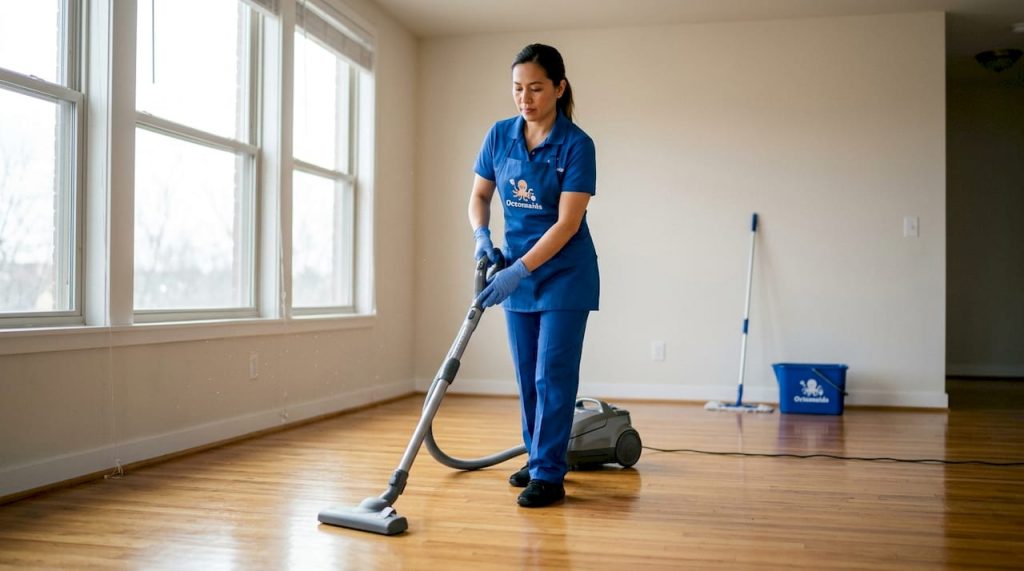


A move-out cleaning service is a professional deep clean performed on a vacant property to restore it to move-in condition before a new tenant or buyer takes possession. Unlike routine maintenance cleaning, this service covers every interior surface, including appliance interiors, grout lines, baseboards, cabinet interiors, and window tracks. Whether you are a renter trying to recover your security deposit or a landlord preparing to list a unit, understanding what this service includes and how it works will save you time, money, and conflict.
What does a move-out cleaning service include?
A move-out clean, also called a turnover clean or vacancy clean in the property management industry, goes far beyond what a standard weekly or biweekly cleaning covers. The goal is to reset every surface as if the unit were newly presented, which means tackling areas that accumulate years of buildup during a tenancy.
Core tasks in every move-out cleaning service include:
- Kitchen: Cleaning inside the oven, refrigerator, dishwasher, and microwave; degreasing range hood filters; wiping cabinet interiors and exteriors; scrubbing countertops and backsplashes
- Bathrooms: Scrubbing grout and tile, descaling faucets and showerheads, sanitizing toilets, cleaning inside medicine cabinets and vanity drawers
- Living areas and bedrooms: Dusting ceiling fans and light fixtures, wiping baseboards, cleaning window sills and tracks, vacuuming and mopping all floors
- Secondary spaces: Laundry room interiors, garage sweeping, storage closet shelving, and utility room surfaces
Carpet care deserves special attention. Carpet extraction and deodorizing are standard components of a thorough move-out clean because vacuuming alone cannot remove embedded stains or pet odors. Professionals use truck-mounted or portable extraction equipment combined with enzymatic deodorizers to restore carpets to a condition close to their original state.
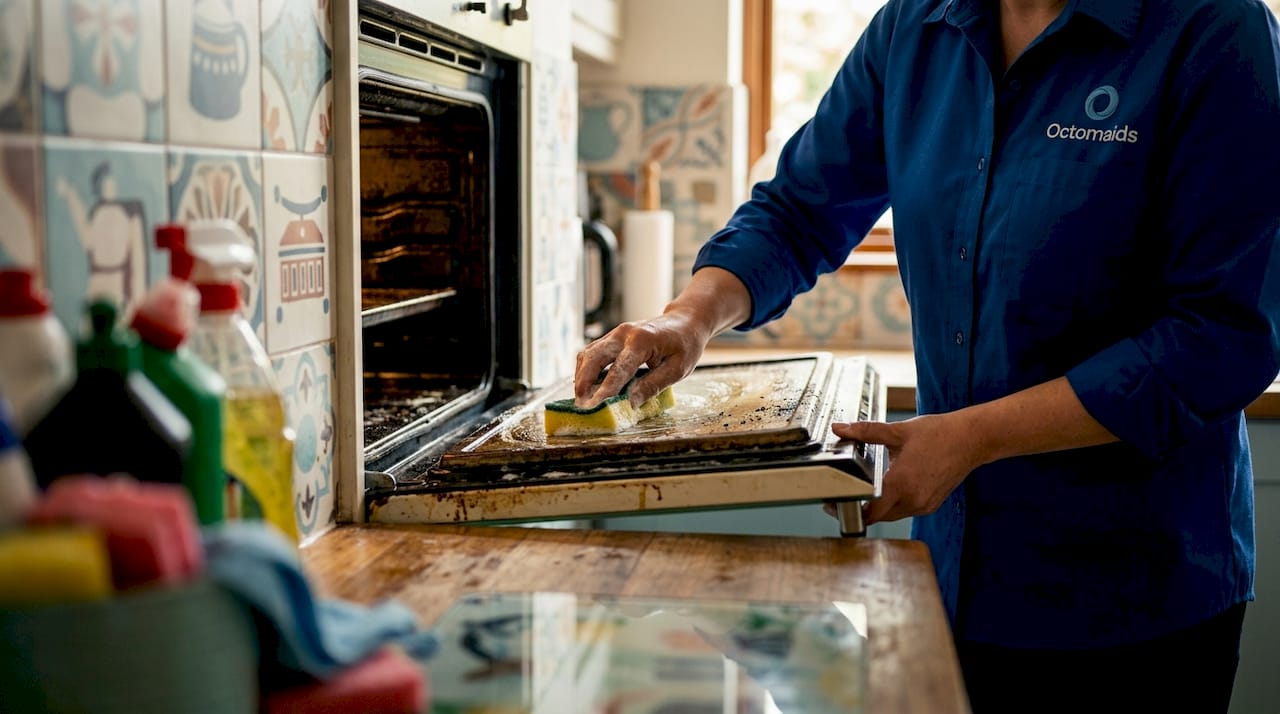
One detail that surprises many clients: oven cleaning alone can take professional cleaners two to three hours using commercial-grade degreasers. This is a task that regular maintenance cleaning skips entirely, yet it is one of the most scrutinized items during a landlord inspection.
Pro Tip: Book the move-out cleaning only after all furniture and personal belongings have been removed. Empty rooms allow cleaners to reach every corner, baseboard, and floor edge without obstruction, which directly affects the quality of the final result.
How does move-out cleaning differ from regular cleaning?
Regular maintenance cleaning and a move-out clean serve completely different purposes, even though both involve the same rooms. Understanding the difference helps you avoid the costly mistake of substituting one for the other.
Regular cleaning maintains a livable space. It covers visible surfaces, floors, countertops, and bathroom fixtures on a recurring schedule. It does not include appliance interiors, cabinet interiors, grout scrubbing, or window track cleaning. A standard maintenance visit typically takes 1.5 to 2.5 hours for an average home.
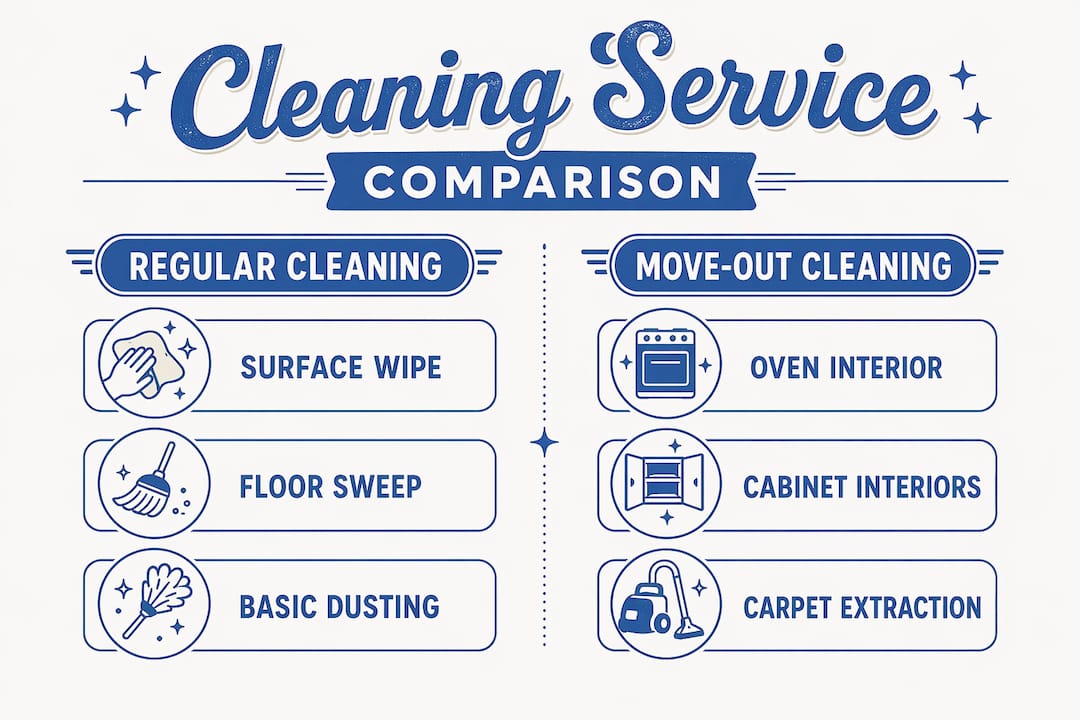
A move-out clean, by contrast, is a full deep restoration that can take 6 to 8 hours for a standard home. The table below illustrates the key differences:
| Task | Regular cleaning | Move-out cleaning |
|---|---|---|
| Oven interior | No | Yes |
| Cabinet interiors | No | Yes |
| Grout scrubbing | No | Yes |
| Baseboards and window tracks | Rarely | Yes |
| Carpet extraction | No | Yes |
| Duration (average home) | 1.5 to 2.5 hours | 6 to 8 hours |
| Relative cost | Baseline | 1.75x to 2.5x higher |
The cost difference is significant. Move-out cleaning pricing runs 1.75 to 2.5 times higher than a standard cleaning visit, reflecting the labor intensity, one-time urgency, and the unfamiliarity of the property for the cleaning crew. Most move-out cleans are booked within one to seven days of vacancy, which adds a scheduling premium as well.
A pre-move-in deep clean, sometimes called a move-in clean, is functionally identical to a move-out clean. The difference is timing and who orders it. A landlord ordering a clean after a tenant leaves is requesting a move-out clean. A new tenant requesting a clean before they move in is requesting a pre-move-in deep clean. Both require the same scope and effort.
Pro Tip: Never ask a regular cleaning crew to perform a move-out clean without confirming they offer turnover services. Standard maintenance crews are not equipped with the tools, time allocation, or protocols required for a full vacancy clean.
How do move-out cleaning timelines and inspections work?
For landlords, the sequence of events between a tenant vacating and a new tenant moving in is where most deposit disputes and delays originate. Getting the order right protects everyone involved.
The recommended sequence for a clean between tenant move-outs follows this structure:
- Pre-move-out inspection. Schedule a walkthrough with the tenant before their move-out date. Some states legally require landlords to offer this opportunity. The inspection identifies damage, missing fixtures, and areas needing repair before the tenant leaves.
- Tenant vacates and removes all belongings. The unit must be fully empty before professional cleaning begins. Cleaners cannot properly address floors, closets, or cabinets when personal items remain.
- Repairs and maintenance. Address any damage identified during the pre-move-out inspection, such as patching nail holes, replacing broken fixtures, or repainting scuffed walls. Cleaning after repairs prevents dust and debris from contaminating freshly cleaned surfaces.
- Professional move-out cleaning. Schedule the cleaning service after repairs are complete. A professional turnover clean typically takes 3 to 6 hours, though larger or heavily soiled units may take longer.
- Post-clean documentation. Photograph every room, appliance interior, and surface immediately after cleaning. This creates a defensible baseline for the move-in inspection and any deposit adjudication.
- Move-in inspection with new tenant. Walk through the unit with the incoming tenant, noting its condition on a signed checklist. This document protects both parties for the duration of the new tenancy.
Photo and video documentation at each stage is the single most effective way to prevent deposit disputes. A timestamped photo of a clean oven interior taken immediately after the cleaning service is far more persuasive in a dispute than a verbal claim.
Pro Tip: Request that your cleaning vendor provide a post-clean completion checklist with photos. Reputable move-out cleaning services include this as standard practice, and it gives you a professional record that holds up in small claims court if needed.
What are the practical benefits of hiring professional move-out cleaning services?
Hiring a professional service rather than attempting a DIY clean delivers measurable advantages for both renters and landlords. The benefits of professional move-out cleaning go beyond a cleaner space.
- Deposit recovery for renters. Landlords cite cleaning as one of the most common reasons for deposit deductions. A professional clean that meets or exceeds lease standards removes that justification entirely.
- Faster unit turnover for landlords. A professionally cleaned unit can be photographed, listed, and shown within 24 to 48 hours of the cleaning appointment. Every day a unit sits vacant is lost rental income.
- Lease and contract compliance. Most residential leases require tenants to return the unit in a clean condition. Many sales contracts include similar language. Professional cleaning creates documented proof of compliance.
- Post-clean verification. Vendors experienced in property management note pre-existing damage and deliver checklists and photos to clients after cleaning, giving landlords a clear record that separates cleaning responsibility from damage responsibility.
- Odor elimination. Cooking odors, pet smells, and cigarette residue require specialized treatments that go beyond surface wiping. Professional cleaners use enzyme-based products and HEPA-filtered vacuums to address odors at the source.
The concept of “broom clean condition,” which many leases reference, means removing all possessions and sweeping floors but does not require professional deep cleaning unless the lease specifically states otherwise. Renters who go beyond broom clean and hire a professional service consistently face fewer deductions and disputes.
How to prepare for a move-out cleaning service
Preparation directly affects the quality of the clean and the final cost. Arriving at the appointment with a fully cleared and accessible space allows cleaners to work at full efficiency.
Steps to take before the cleaning crew arrives:
- Remove all furniture, clothing, food, and personal items from every room, including closets, cabinets, and the garage
- Dispose of all trash and recycling
- Defrost the freezer at least 24 hours in advance so cleaners can wipe the interior without standing water
- Notify the cleaning service of any known issues, such as heavy grease buildup, pet hair accumulation, or water stains, so they can allocate the right tools and time
- Confirm that utilities, including electricity and water, remain active through the cleaning appointment
For landlords coordinating a clean between tenant move-outs, clear communication with the cleaning vendor about the unit’s condition and your inspection timeline prevents scheduling conflicts. Share the deposit checklist with your cleaning vendor so both parties align on the standard expected.
Pro Tip: Schedule the cleaning appointment for the morning after the tenant’s final move-out day. This gives you a full day for the clean, post-clean documentation, and any touch-up repairs before the next tenant’s move-in date.
Key takeaways
A move-out cleaning service is a full-scope, deep restoration clean that protects deposit returns, speeds unit turnover, and creates documented proof of property condition for both renters and landlords.
| Point | Details |
|---|---|
| Scope exceeds regular cleaning | Move-out cleans include appliance interiors, grout, baseboards, and carpet extraction that standard visits skip. |
| Cost reflects labor intensity | Expect to pay 1.75 to 2.5 times more than a regular clean due to depth, urgency, and one-time effort. |
| Sequence matters for landlords | Inspect first, repair second, clean third, then document before the new tenant moves in. |
| Documentation prevents disputes | Post-clean photos and checklists from your vendor create a defensible record for deposit adjudication. |
| Preparation improves results | Empty the unit fully and keep utilities active so cleaners can access every surface without interruption. |
Why I think most people underestimate what a move-out clean actually involves
After years of working in residential cleaning across Vancouver, WA and Portland, OR, I have seen the same pattern repeat itself. Renters assume a thorough scrub-down over a weekend will satisfy their lease obligations. Landlords assume a quick turnaround clean is equivalent to a proper vacancy restoration. Both assumptions cost people money.
The reality is that an empty unit reveals every flaw that furniture and daily life concealed. Grease has migrated behind the stove. The refrigerator coils are coated in dust. The grout between bathroom tiles has darkened over three years of use. These are not problems a mop and a spray bottle solve. They require time, the right chemistry, and experience with what landlords and property managers actually inspect.
The landlords I respect most treat turnover cleaning as a non-negotiable line item in their property management budget, not an afterthought. They know that a professionally cleaned unit photographs better, rents faster, and attracts tenants who take better care of the space. The cost of a proper move-out clean is almost always less than one additional week of vacancy.
For renters, the calculus is equally clear. A professional clean costs a fraction of the deposit deductions it prevents. Spending $200 to $400 on a professional service to protect a $1,500 deposit is not an expense. It is risk management.
— Steven
Ready to schedule your move-out cleaning with Octomaids?
Octomaids has served homeowners and landlords throughout Clark County, WA and the Portland Metro area since 2006. Our family-owned team specializes in move-in and move-out cleaning with the thoroughness that landlord inspections demand and the reliability that tight move timelines require.
Every move-out clean we perform includes a detailed post-clean checklist to support your inspection and deposit documentation. Whether you need a single vacancy clean or recurring turnover service across multiple rental units, our trusted cleaners show up prepared and on schedule. Use our renter’s move-out checklist to align your expectations before booking, or contact us directly to discuss your timeline and property needs.
FAQ
What is a move-out clean?
A move-out clean is a professional deep cleaning of a vacant property that covers appliance interiors, cabinet interiors, grout, baseboards, window tracks, and carpets. It goes significantly further than regular maintenance cleaning and is designed to restore the unit to move-in condition.
How long does a move-out cleaning service take?
A professional move-out clean typically takes 3 to 6 hours for an average home, and up to 8 hours for larger or heavily soiled properties. This is two to three times longer than a standard maintenance cleaning visit.
Does a move-out clean differ from a pre-move-in deep clean?
The scope is identical. The difference is timing and who orders it. A landlord cleaning after a tenant leaves is performing a move-out clean; a new tenant cleaning before moving in is requesting a pre-move-in deep clean.
How does move-out cleaning inspection work for landlords?
Landlords should inspect the unit before the tenant vacates, complete repairs, then schedule the professional clean. Immediately after cleaning, photograph every room and surface to create a timestamped record that supports deposit adjudication if disputes arise.
Is a move-out cleaning service required by law?
No law requires hiring a professional service, but most leases require tenants to return the unit in a clean condition. Some states require landlords to offer a pre-move-out inspection. Professional cleaning creates documented proof of compliance and significantly reduces the risk of deposit deductions.