



A light housekeeping service is defined as a routine, non-medical home maintenance program that keeps living spaces tidy, safe, and functional through everyday upkeep tasks. It covers dusting, sweeping, mopping, vacuuming, wiping surfaces, doing laundry, and removing trash. It does not include deep cleaning, heavy lifting, or specialized equipment. For seniors, caregivers, and anyone managing a busy household, understanding this distinction matters because it shapes what you can realistically expect from a scheduled visit.
What is a light housekeeping service, exactly?
Light housekeeping is a routine, non-medical service focused on keeping a home tidy, functional, and safe through everyday maintenance tasks. The industry term you will see in home care plans and caregiver contracts is “non-medical in-home support,” and light housekeeping sits squarely within that category. Think of it as the difference between keeping a kitchen clean day to day versus scrubbing it down to the grout lines every few months.
The scope is deliberately limited. A light housekeeping visit is designed to fit within a normal care schedule without requiring specialized tools or significant physical exertion. That boundary is what makes it repeatable, affordable, and safe for both the caregiver and the client.
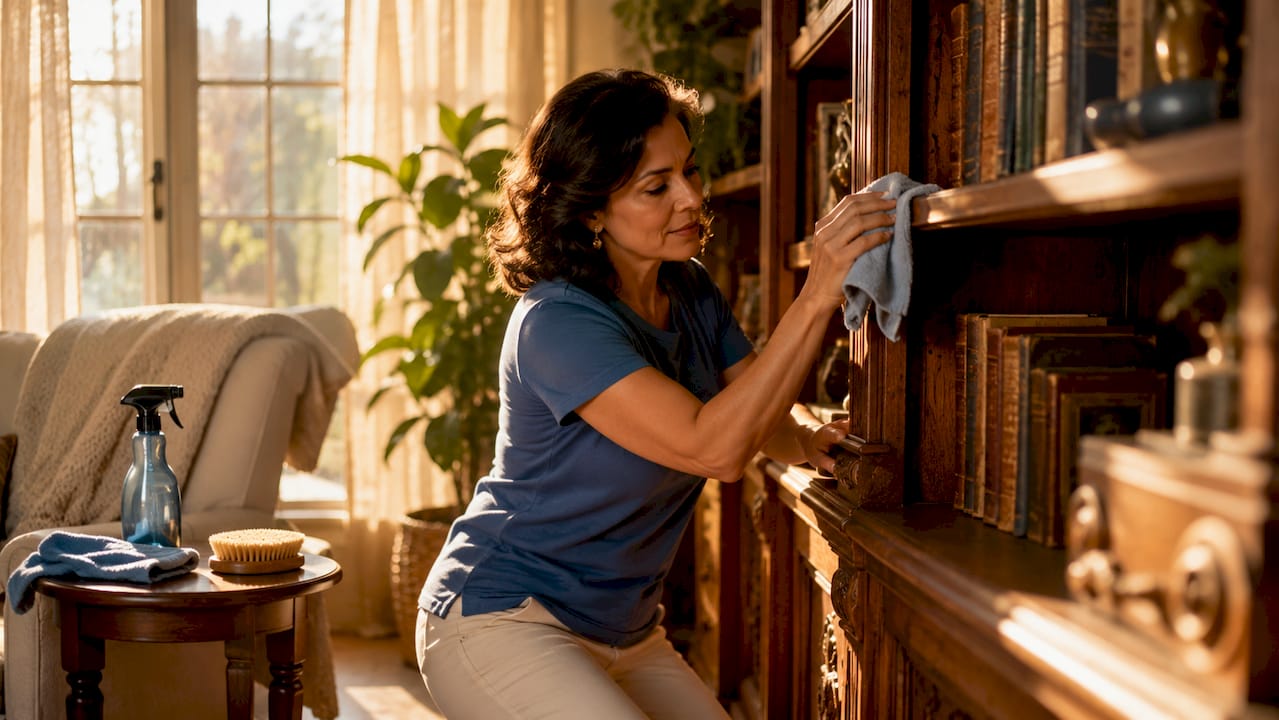
This service is not the same as a full house cleaning or a deep clean. Confusing the two leads to mismatched expectations, which is one of the most common friction points in home care arrangements. Getting the definition right from the start saves everyone time and frustration.
What do light housekeeping services include?
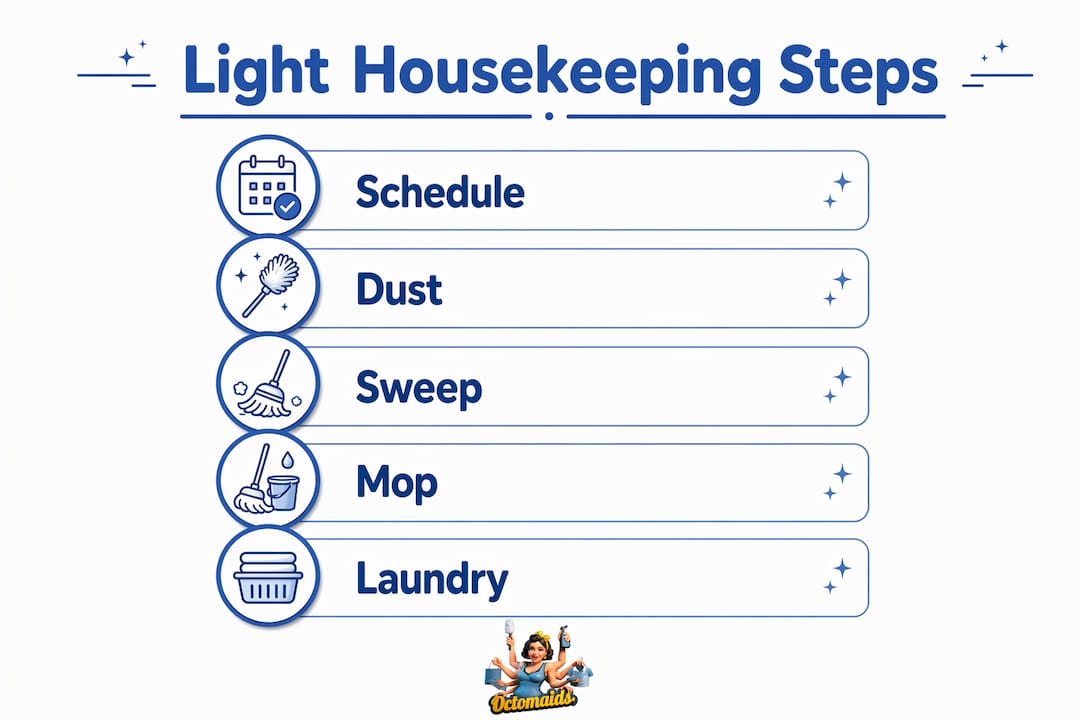
Light housekeeping commonly includes sweeping, mopping, vacuuming, wiping surfaces, doing laundry, washing dishes, and tidying living spaces. These tasks are completed during normal care visits without specialized equipment. Here is a clear breakdown of what falls within scope:
- Dusting accessible surfaces such as shelves, tables, ceiling fan blades within reach, and window sills
- Sweeping and mopping kitchen and bathroom floors, as well as other small areas
- Vacuuming rugs and carpets around furniture without moving heavy pieces
- Wiping down counters in the kitchen and bathroom, including appliance exteriors
- Washing dishes and putting them away, or loading and unloading the dishwasher
- Making beds and changing bed linens on a scheduled rotation
- Laundry duties including washing, drying, folding, and light ironing
- Taking out trash and replacing bin liners throughout the home
- Tidying common areas such as living rooms and hallways to reduce clutter
What falls outside this scope is equally clear. Light housekeeping does not include deep cleaning, moving heavy furniture, ladder-based window washing, or cleaning areas not used by the client. Physical risk limits also exclude extended kneeling on hard floors or lifting beyond safe thresholds.
A useful reference for structuring your own checklist is this living room cleaning guide, which breaks down surface-by-surface tasks that align well with light housekeeping visits.
Pro Tip: Schedule light housekeeping visits on a consistent day each week. Regularity prevents buildup and keeps each visit genuinely light in workload, which protects both the caregiver and the quality of the result.
How does light housekeeping differ from deep cleaning?
Light housekeeping is maintenance work that keeps the home from getting worse and maintains basic hygiene. Deep cleaning is a thorough reset that addresses buildup in hard-to-reach areas and is done far less frequently. Understanding this difference helps you set realistic expectations and avoid paying for the wrong service.
Deep cleaning tasks include scrubbing inside the oven, cleaning behind the refrigerator, shampooing carpets, washing baseboards, descaling faucets, and cleaning inside cabinets. These jobs require more time, more physical effort, and often specialized products or equipment. They are not part of a standard light housekeeping visit.
The table below shows the key differences at a glance.
| Category | Light Housekeeping | Deep Cleaning |
|---|---|---|
| Typical tasks | Dusting, sweeping, mopping, laundry, dishes | Oven interiors, baseboards, carpet shampooing, inside cabinets |
| Frequency | Weekly or biweekly | Every 6–12 months |
| Physical intensity | Low to moderate, no heavy lifting | High, may require specialized equipment |
| Equipment needed | Standard household supplies | Commercial-grade products, steam cleaners |
| Primary goal | Prevent buildup, maintain hygiene | Reset and restore heavily soiled areas |
For a room-by-room breakdown of what deep cleaning actually covers, the Octomaids guide on what deep cleaning includes is a practical reference.
Pro Tip: If you have not had a deep clean in over six months, schedule one before starting a regular light housekeeping plan. Starting from a clean baseline makes every subsequent visit faster and more effective.
Who benefits most from light housekeeping services?
Seniors aging in place represent the clearest use case for light cleaning services. Organizing and cleaning frequently used areas reduces confusion and prevents hazards like mold, pests, and clutter-related falls. A tidy home is a safer home, and for someone with reduced mobility, that connection is direct and measurable.
The benefits of light housekeeping extend well beyond seniors, though. Here are the groups who gain the most from this type of support:
- Seniors and aging-in-place individuals who need help maintaining hygiene and reducing fall hazards without requiring medical intervention
- People with disabilities or limited mobility who find sustained physical cleaning tasks difficult or unsafe
- Caregivers managing home care plans who use light housekeeping as one component of a broader daily living support structure
- Busy families and working adults who want consistent upkeep without committing to a full house cleaning service
- Post-surgery or recovering patients who need temporary support while they regain full mobility
The importance of light housekeeping for seniors is well documented in home care literature. A cluttered walkway is a fall waiting to happen. A bathroom that goes uncleaned for weeks becomes a hygiene risk. Regular, light upkeep addresses both problems without disrupting the client’s routine or dignity.
For families exploring how these services fit into elder care, the Octomaids resource on senior home cleaning explains the specific tasks and considerations involved.
Light housekeeping enables independence by maintaining cleanliness and safety without aiming for perfection. That framing matters. The goal is not a showroom-ready home. The goal is a safe, comfortable, functional space where someone can live with confidence.
How to plan and schedule light housekeeping effectively
Effective scheduling starts with a clear scope agreement. A major source of confusion in care plans is the underdefinition of light housekeeping. Specifying which rooms are included, which surfaces are covered, and which tasks are explicitly excluded prevents mismatched expectations before they become problems.
Follow these steps to build a schedule that works:
- Define the client-used areas. List every room the client regularly uses and limit housekeeping tasks to those spaces. Unused guest rooms and storage areas are outside scope unless specifically agreed upon.
- Set a recurring schedule. Regular scheduling, weekly or biweekly, keeps light housekeeping truly light by preventing the kind of buildup that eventually requires a deep clean.
- Prioritize high-traffic and high-risk areas first. High-touch, high-trip areas like walkways, kitchen counters, and bathroom surfaces should be addressed at the start of every visit, before time runs short.
- Coordinate with other home services. Caregivers balance housekeeping with personal care and meal prep during shifts, so task timing matters. Build the housekeeping tasks around, not against, the care schedule.
- Document tasks and track frequency. Use a printed checklist or a simple app to log what was completed each visit. This creates accountability and makes it easy to spot gaps before they become problems.
- Review and adjust quarterly. Needs change. A task that was manageable in January may need to be added or removed by spring. Build in a short review conversation every few months.
For practical guidance on keeping your home in good shape between professional visits, the Octomaids article on maintaining a clean home offers straightforward strategies that complement a light housekeeping schedule.
Pro Tip: Create a one-page task sheet for each visit and post it somewhere visible. It removes ambiguity, speeds up the visit, and gives everyone a shared reference point.
Key takeaways
Light housekeeping is a defined, repeatable maintenance service that keeps homes safe and functional, and its value depends entirely on clear scope, consistent scheduling, and realistic expectations.
| Point | Details |
|---|---|
| Clear definition matters | Light housekeeping covers routine upkeep tasks and excludes deep cleaning, heavy lifting, and specialized equipment. |
| Scope must be documented | Specifying client-used areas and excluded tasks prevents mismatched expectations in care plans. |
| Frequency drives effectiveness | Weekly or biweekly visits prevent buildup and keep each session manageable without escalating to deep cleaning. |
| Seniors benefit most | Regular upkeep reduces fall hazards, maintains hygiene, and supports independence for aging-in-place individuals. |
| Prioritize high-risk areas | Address walkways, kitchen counters, and bathroom surfaces first to maximize safety within each visit. |
Light housekeeping is about maintenance, not perfection
I have seen a lot of home care arrangements go sideways because of one simple problem: nobody defined what “light housekeeping” actually meant before the first visit. The caregiver assumed it meant a quick tidy. The client assumed it meant a full clean. Neither was wrong based on their experience. Both were frustrated by the outcome.
The word “light” does a lot of heavy lifting in this phrase, and that is exactly where confusion lives. In my experience, the most successful arrangements are the ones where someone sat down before the first visit and wrote out a specific list. Not a vague description. An actual list with rooms, surfaces, and tasks. That single step eliminates 90% of the friction I see in these situations.
The other misconception worth addressing is the idea that light housekeeping is a lesser service. It is not. Consistent, routine upkeep is genuinely harder to maintain than an occasional deep clean, because it requires discipline and regularity rather than a single burst of effort. A home that gets light housekeeping every week is almost always in better condition than one that gets a deep clean twice a year and nothing in between.
If you are setting up a care plan for a family member, or simply trying to understand what you are paying for, start with the scope document. Get specific. Then schedule consistently. Those two steps will do more for the quality of the outcome than any product or technique.
— Steven
How Octomaids can support your light housekeeping needs
If you are ready to put a consistent home maintenance plan in place, Octomaids has been helping homeowners and families in Vancouver, WA and Portland, OR do exactly that since 2006. Our family-owned team brings the same trusted cleaners to every visit, so there is no guessing about who is coming or what they know about your home.
Whether you need weekly upkeep, a one-time reset, or a plan that fits around an elder care schedule, Octomaids builds the service around your specific needs. Start with our guide on home cleaning best practices to see what a well-structured maintenance routine looks like in practice. Then reach out to our team to talk through what makes sense for your home. We make it straightforward.
FAQ
What is the definition of light housekeeping?
Light housekeeping is a routine, non-medical service that maintains a home’s cleanliness and safety through everyday tasks like dusting, sweeping, mopping, laundry, and trash removal. It excludes deep cleaning, heavy lifting, and specialized equipment use.
What tasks are not included in light housekeeping?
Light housekeeping does not include cleaning inside ovens, scrubbing baseboards, shampooing carpets, washing windows from ladders, or cleaning rooms the client does not regularly use. Any task requiring significant physical exertion or specialized tools falls outside its scope.
How often should light housekeeping services be scheduled?
Weekly or biweekly visits are the standard recommendation. That frequency prevents buildup and keeps each session manageable, which is what makes the service sustainable and cost-effective over time.
Is light housekeeping the same as a maid service?
Not exactly. A maid service typically covers the whole home and may include deeper cleaning tasks. Light housekeeping is scoped to client-used areas and focuses on maintenance rather than a thorough clean, making it a better fit for ongoing home care support.
Can light housekeeping be combined with other home care services?
Yes, and it often is. Caregivers frequently balance light housekeeping with personal care, meal preparation, and companionship during the same visit. Coordinating these tasks within a single schedule is standard practice in non-medical home care settings.