


A cleaning service agreement is a legally enforceable contract between a client and a cleaning provider that specifies the exact scope of work, payment terms, schedule, and responsibilities before any cleaning begins. Most property owners sign one without fully reading it. That gap creates real problems. Understanding what is a cleaning service agreement, and what each clause actually means, puts you in control before you hand over a key or write a check. This guide breaks down every component you need to know, from scope definitions to termination rights, so you can hire with confidence.
What are the essential components of a cleaning service agreement?
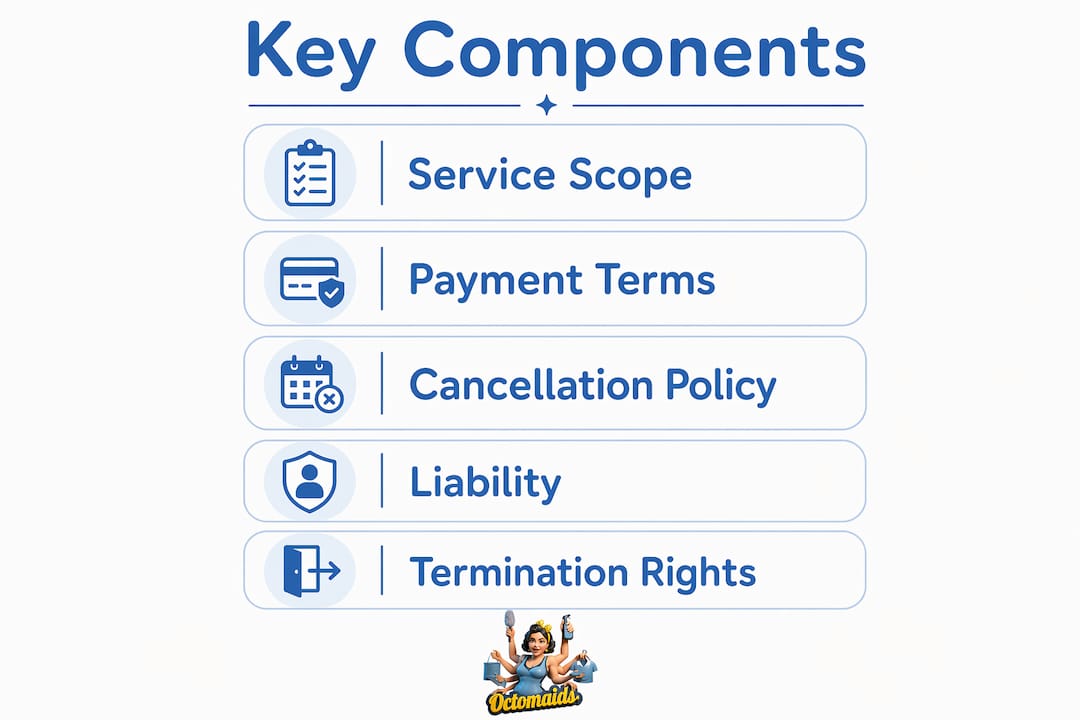
A legally binding cleaning contract specifies service scope, pricing, schedule, and liability, and must be signed before work starts to avoid disputes common in verbal arrangements. Each of these elements carries real weight, and a missing clause is where most problems begin.
Scope of services
The scope section defines exactly which rooms get cleaned, which tasks are included, and how often. A well-written scope names specific areas, such as kitchen counters, bathroom fixtures, and bedroom floors, rather than using vague language like “general cleaning.” Industry standard practice requires defining scope by rooms and tasks, payment terms, and cancellation policies, along with an “out-of-scope” section that lists what is explicitly excluded. That out-of-scope section is the most underrated clause in any cleaning contract. Without it, clients often assume services like inside-oven cleaning or window washing are included, which leads to frustration on both sides.

Payment terms
Payment terms cover the rate, billing schedule, accepted payment methods, late fees, and any required deposit. A contract that says “payment due after service” without specifying a date or late fee leaves you with no leverage if a dispute arises. Service agreements include clauses for late fees, cancellation charges, and liability limits, all customized to the cleaning context.
Cancellation and rescheduling policies
Cancellation terms protect both parties from last-minute disruptions. Most professional agreements require 24–48 hours notice for cancellations or rescheduling to avoid a fee. Knowing this upfront prevents surprise charges when your schedule changes.
Liability and insurance provisions
The liability clause defines who is responsible if property is damaged during a cleaning visit. A reputable provider carries general liability insurance, and the contract should state that clearly. Without this clause, a broken item becomes a verbal dispute with no clear resolution path.
Termination rights
Service agreements clarify termination rights, giving both parties the flexibility to end the relationship under defined conditions. This is distinct from a general contract because it governs ongoing work performance, not a one-time transaction.
Pro Tip: Ask your cleaning provider to walk you through the out-of-scope section line by line before signing. That five-minute conversation prevents 90% of post-service disagreements.
How does a cleaning service agreement differ from invoices and proposals?
Property owners often confuse three separate documents: the proposal, the service agreement, and the invoice. Each one serves a different purpose at a different stage of the relationship.
| Document | Purpose | Timing |
|---|---|---|
| Proposal or bid | Outlines what the provider offers and at what price | Before the client commits |
| Service agreement | Defines the legal terms of the ongoing relationship | Signed before work begins |
| Invoice | Requests payment for completed work | After each service visit |
A cleaning service agreement governs the ongoing relationship after the bid is accepted, clarifying scope, billing, quality assurance, and property access. It is distinct from a competitive bid, which is simply an offer. The invoice comes last and references the terms already agreed upon in the contract.
Verbal agreements may be legally enforceable in some states, but they are difficult to prove. A written contract provides solid evidence and eliminates “he said, she said” disputes. Signing before work starts is the critical step that transforms a conversation into a protected agreement.
Pro Tip: Never allow cleaning to begin without a signed agreement in hand. A proposal is not a contract. An invoice is not a contract. Only the signed service agreement gives you legal standing.
What are common pitfalls in cleaning service agreements?
Most disputes arise from scope creep, payment timing, and liability. A well-drafted agreement prevents these problems by setting clear expectations upfront, but only if you know what to look for before signing.
The most common pitfalls include:
- Vague scope language. Phrases like “clean the home” without room-by-room detail invite disagreement. Always confirm that specific tasks are listed.
- Missing out-of-scope exclusions. The out-of-scope section is the most critical insider detail in cleaning agreements. It prevents clients from misunderstanding what is included and avoids the most common disputes.
- No independent contractor clause. This clause confirms that the cleaning provider is not your employee. Including an independent contractor clause protects property owners from becoming unintended employers, which carries significant tax and workers’ compensation implications. Without it, you could face unexpected legal liability.
- Unclear cancellation fees. If the contract does not specify a fee for late cancellations, you have no basis to dispute a charge or expect a refund.
- No issue reporting path. A good contract names a specific contact and process for reporting problems. Without this, complaints fall into a void and go unresolved.
The primary purpose of a cleaning service agreement is preventative, not punitive. Well-drafted agreements avoid disputes by clarifying scope and payment upfront, long before any legal action becomes necessary. Think of the contract less as a legal weapon and more as a shared rulebook that both sides agreed to follow.
Understanding what tasks are typically included in a professional visit, such as those outlined in a senior home cleaning guide, helps you write a more specific scope section from the start.
How to draft or review a cleaning service agreement effectively
Reviewing a cleaning contract does not require a law degree. It requires knowing which questions to ask and which clauses to verify before you sign.
Follow these steps when evaluating any cleaning service contract:
- Confirm the scope is specific. Every room and task should be named. If the contract says “common areas,” ask for a written list of what that includes.
- Check the payment schedule. Know exactly when payment is due, what methods are accepted, and what the late fee is.
- Read the cancellation policy. Confirm the notice period required and whether a fee applies. Treat the agreement as a living document that includes schedule-change and cancellation notice periods, typically 24–48 hours, to avoid unnecessary charges.
- Verify insurance coverage. Ask for a certificate of insurance before the first visit. The contract should reference the provider’s liability coverage.
- Find the independent contractor clause. If it is missing, ask why. This clause protects you from unintended employer liability under tax and workers’ compensation law.
- Identify the termination clause. Know how much notice either party must give to end the agreement and under what conditions.
- Locate the dispute resolution process. A good contract names a specific escalation path, such as written notice to a manager, before any legal action.
Pro Tip: Review your agreement every six months. Cleaning needs change, and a contract that matched your needs at move-in may not reflect your current schedule or service expectations. Update it in writing and get both parties to sign the revision.
Knowing how to prepare your home before a cleaning visit also helps you align your expectations with what the contract actually covers, reducing friction on service day.
Key takeaways
A cleaning service agreement is the single most effective tool for preventing disputes, protecting your property, and setting clear expectations before any cleaning work begins.
| Point | Details |
|---|---|
| Definition matters | A cleaning service agreement is a legally binding contract, not a verbal promise or a proposal. |
| Scope must be specific | Every room, task, and exclusion should be named in writing to prevent scope creep. |
| Independent contractor clause | This clause protects property owners from unintended employer liability under tax law. |
| Agreements differ from invoices | Sign the agreement before work starts; the invoice comes after each completed visit. |
| Treat it as a living document | Review and update the contract regularly as your cleaning needs change. |
What I’ve learned from years of cleaning agreements
After nearly two decades working with homeowners and property managers in Vancouver, WA and Portland, OR, I’ve seen the same pattern repeat itself. The clients who never have disputes are not the ones with the most expensive contracts. They are the ones who read every clause before signing and asked one simple question: “What is not included?”
The out-of-scope section is where most agreements fall short. Providers often leave it blank or use generic language, and clients assume that silence means everything is covered. It does not. A blank exclusions section is an open invitation for a billing dispute three months into the relationship.
I also want to be direct about the independent contractor clause. Property owners often skip past it because it sounds like legal boilerplate. It is not. If a cleaning provider is injured in your home and there is no contractor clause in the agreement, you could face a workers’ compensation claim. That is a real risk, and a single clause eliminates it.
The best agreements I have seen treat the contract as a communication tool, not a legal threat. They get updated when schedules change, when new rooms are added, and when a client’s needs shift. That ongoing conversation, documented in writing, is what keeps a professional cleaning relationship healthy for years.
— Steven
Octomaids makes the terms clear before we ever clean your home
Octomaids has served homeowners and businesses across Clark County, WA and the Portland Metro area since 2006. Every service, from recurring weekly cleaning to one-time deep cleans and move-in/move-out visits, comes with clear, written terms that define exactly what is included, what the schedule looks like, and how issues get resolved.
Our family-owned team sends the same trusted cleaners to your home every visit, so the relationship you build is consistent. If you want to see the full range of residential and commercial services we offer, along with the transparent terms that come with each one, that is the right place to start. You deserve to know exactly what you are agreeing to before anyone walks through your door.
FAQ
What is a cleaning service agreement?
A cleaning service agreement is a legally binding contract between a property owner and a cleaning provider that defines the scope of work, payment terms, schedule, and liability before any cleaning begins. It is distinct from a verbal agreement, a proposal, or an invoice.
Is a verbal cleaning agreement legally valid?
Verbal agreements may be legally enforceable in some states, but they are difficult to prove in a dispute. A written, signed contract provides clear evidence and eliminates ambiguity about what was promised.
What should a cleaning service scope of work include?
The scope of work should name specific rooms, tasks, and frequency, along with an out-of-scope section listing what is excluded. Vague language like “general cleaning” creates the conditions for disagreement.
Why does an independent contractor clause matter?
The independent contractor clause confirms that the cleaning provider is not your employee. Without it, property owners risk unintended liability for tax obligations and workers’ compensation claims.
How often should I update my cleaning service contract?
Review and update your cleaning contract at least every six months, or whenever your schedule, service needs, or property changes. Both parties should sign any written revision to make it enforceable.