


Regular cleaning is defined as a critical preventive practice that protects your home’s structural integrity, extends the life of its systems, and reduces the risk of costly emergency repairs. Most homeowners treat cleaning as a chore. The reality is that it functions as ongoing maintenance, the same way an oil change protects an engine. The American Cleaning Institute frames this directly: effective home cleaning focuses on prevention, not just appearance. When you understand the role of cleaning in home maintenance, you stop reacting to problems and start preventing them.
How does regular cleaning prevent costly home repairs?
Cleaning is preventive maintenance. Every time you remove moisture, dust, or debris, you are protecting a surface, system, or structure from accelerated wear. Skip those tasks long enough, and you pay for it in repair bills.

The numbers make this concrete. Emergency repairs cost 2–3 times more than scheduled maintenance. That gap exists because neglect compounds. A clogged gutter does not just overflow. It directs water toward your foundation, and foundation damage from neglected gutters can exceed $10,000. A dirty HVAC filter does not just reduce airflow. It forces the motor to work harder until it fails prematurely.
Three areas deserve your attention above all others:
- Gutters: Clean them at least twice a year, in spring and fall. Blockages cause water to pool against your roofline and foundation.
- HVAC filters and vents: Dust buildup forces your system to work harder, shortens its lifespan, and degrades air quality throughout the home.
- Bathrooms: Moisture left on grout, caulk, and tile feeds mold. Mold spreads behind walls before you see it, making remediation expensive.
Daily cleaning also acts as pest control by removing the food sources and shelter that attract insects and rodents. Washing dishes, wiping counters, and sweeping floors each evening eliminates attractants more effectively than reactive pest management ever will.
Pro Tip: Prioritize gutter cleaning, HVAC filter replacement, and bathroom moisture control. These three tasks deliver the highest return on your cleaning time when it comes to avoiding expensive repairs.
What does an effective cleaning schedule look like?
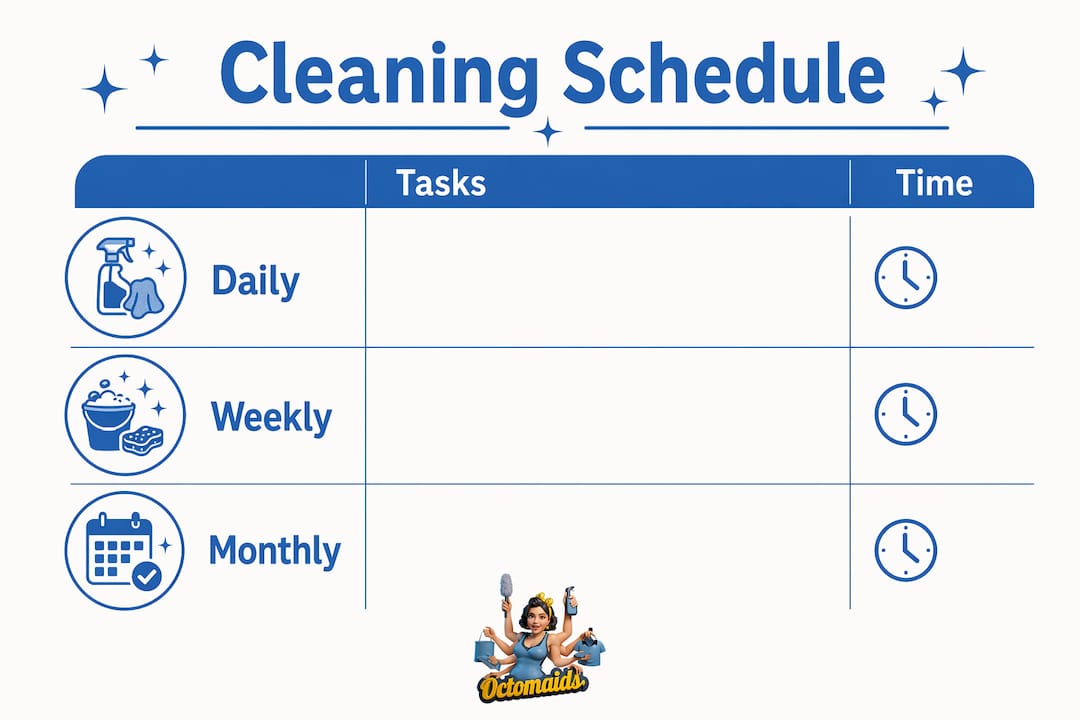
A science-backed cleaning regimen breaks into three tiers: daily sessions of 10–15 minutes, weekly sessions of 45–60 minutes, and monthly deep cleans of approximately 2 hours. Each tier serves a different maintenance function. Together, they keep your home in stable condition without requiring marathon cleaning sessions.
| Frequency | Time commitment | Primary focus |
|---|---|---|
| Daily | 10–15 minutes | Hygiene, pest prevention, clutter control |
| Weekly | 45–60 minutes | Allergen reduction, main living areas |
| Monthly | ~2 hours | Deep cleaning, overlooked surfaces |
Daily tasks: hygiene and prevention
Daily tasks are short but high-impact. Washing dishes removes food residue that attracts pests. Wiping kitchen surfaces stops bacteria from building up on contact areas. Tidying entryways reduces the dirt tracked through the rest of the home. Think of these as the minimum viable maintenance that keeps your home functional between deeper cleans.
Weekly tasks: allergen control and reset
Weekly cleaning targets the surfaces and textiles that accumulate allergens fastest. Vacuuming floors and laundering bedding provide the greatest protective return when your time is limited. Dust mites, pet dander, and pollen settle into carpets and pillowcases within days. A weekly vacuum and a fresh set of sheets address the bulk of indoor allergen load efficiently.
Monthly tasks: the overlooked areas
Monthly deep cleans reach the spots that daily and weekly routines miss. Cleaning behind appliances, scrubbing grout, descaling faucets, and wiping down baseboards all fall into this category. These tasks prevent the slow buildup that eventually damages surfaces or creates hygiene problems. A room-by-room deep clean checklist helps you work through these systematically without missing anything.
Pro Tip: When your week is packed, focus only on vacuuming and laundering bedding. These two tasks address allergen accumulation most effectively and keep your home healthy until you have more time.
Does a clean home actually improve your mental health?
The connection between a clean home and mental wellbeing is well-documented. Maintaining a clean home improves mood, reduces stress, and provides a sense of control over your personal environment. That sense of agency matters. When your space feels ordered, your mind tends to follow.
“A clean home functions as a tool for mental health, providing mood benefits and a sense of agency over one’s personal environment. Clutter creates subconscious visual noise that competes for your attention, even when you are not consciously aware of it.”
Clutter is not just an aesthetic problem. Visual disorder signals to your brain that tasks are unfinished, which sustains low-level stress throughout the day. Clearing surfaces and organizing spaces reduces that cognitive load. Many homeowners report that a tidy living room makes it easier to relax in the evening, not because the room looks better, but because the brain stops registering it as a problem.
Cleaning also functions as a self-care practice. The physical act of cleaning, wiping a counter, vacuuming a room, scrubbing a sink, provides a clear start and end point. That sense of completion triggers a small but real mood lift. For people managing anxiety or low motivation, cleaning as a mental health tool offers a concrete way to feel more in control when other areas of life feel uncertain.
Psychology research shows that difficulty maintaining cleaning routines is often linked to stress, burnout, or executive dysfunction, not laziness. Recognizing this removes the shame spiral that makes the problem worse. If cleaning feels impossible, the answer is not to push harder. It is to make the task smaller.
Breaking cleaning into five-minute segments works. Clean one counter. Wash one sink. Fold one pile of laundry. Each completed micro-task reduces the visual clutter and builds momentum for the next one. Perceiving cleaning as overwhelming often signals mental overload, and breaking tasks down is the most direct way to avoid paralysis.
Practical cleaning tips for renters and homeowners
Your cleaning priorities shift depending on whether you own or rent. Both groups benefit from consistent routines, but the stakes and focus areas differ.
For renters
Renters carry a financial incentive that homeowners do not: the security deposit. Damage caused by neglect, mold on bathroom caulk, grease buildup on appliances, stained carpets, typically comes out of that deposit. A consistent cleaning habit protects your money. Before moving out, a move-out cleaning checklist covers every area landlords inspect and gives you the best chance of a full refund.
Key habits for renters:
- Wipe appliance surfaces weekly to prevent grease and residue buildup.
- Ventilate bathrooms after every shower to stop mold from forming on grout and caulk.
- Report maintenance issues promptly. A slow drain you ignore becomes a plumbing problem that gets attributed to you.
- Clean rental appliances thoroughly, including oven interiors and refrigerator coils, before move-out.
For homeowners
Homeowners carry responsibility for structural systems that renters do not. HVAC maintenance, gutter cleaning, and moisture control in basements and crawl spaces all fall to you. The importance of home cleaning extends beyond surfaces to the systems that keep your home functional year-round.
Key habits for homeowners:
- Schedule gutter cleaning every spring and fall, or after heavy storms.
- Replace HVAC filters every 1–3 months depending on household size and pet ownership.
- Inspect caulking around tubs, showers, and windows annually and reseal where needed.
- Prepare your home before a professional cleaning service visits by decluttering surfaces so cleaners can focus on deep sanitation rather than tidying.
Between professional visits, maintaining cleanliness is straightforward when you build simple daily habits around high-traffic areas. Kitchens and bathrooms need the most attention. Everything else follows naturally when those two rooms stay clean.
Key Takeaways
Regular cleaning is the single most cost-effective form of home maintenance, preventing emergency repairs, protecting occupant health, and supporting mental wellbeing through consistent, structured routines.
| Point | Details |
|---|---|
| Cleaning prevents expensive repairs | Emergency repairs cost 2–3 times more than routine maintenance; gutters, HVAC, and bathrooms are the highest-priority areas. |
| Structure your schedule in three tiers | Daily 10–15 minutes, weekly 45–60 minutes, and monthly 2-hour deep cleans cover all maintenance needs. |
| Vacuuming and bedding are your weekly minimum | These two tasks address allergen accumulation most effectively when time is short. |
| Clean homes support mental health | Regular cleaning reduces stress, improves mood, and provides a sense of control over your environment. |
| Renters and homeowners have different priorities | Renters focus on deposit protection; homeowners focus on structural systems and long-term upkeep. |
What I have learned from years of watching homes get cleaned
Cleaning routines that last share one quality: they are built around reality, not aspiration. I have seen homeowners set up elaborate weekly schedules that collapse within a month because the time commitment was unrealistic. The routines that stick are the ones that fit into an actual Tuesday evening, not an imaginary one with two free hours.
The mental health angle surprises people. Most homeowners think about cleaning in terms of appearance. What I have observed is that the mood shift happens before the room looks finished. The act of starting, picking up a cloth and wiping a surface, changes how you feel about the space. You stop seeing it as a problem and start seeing it as something you are managing. That shift in perspective is worth more than a spotless countertop.
Procrastination around cleaning is almost never about laziness. It is usually about the gap between where the home is and where you think it should be. That gap feels too large to close, so you do not start. The fix is to stop measuring against the ideal and start measuring against yesterday. Is this room slightly better than it was this morning? That is enough.
Cleaning is also one of the few home maintenance tasks where the benefit compounds visibly. A gutter you clean this fall prevents a foundation crack you would have paid to fix next spring. A bathroom you scrub weekly never develops the mold that costs hundreds to remediate. The investment is small. The protection is real.
— Steven
How Octomaids supports your home maintenance routine
Octomaids has served homeowners and renters across Vancouver, WA and Portland, OR since 2006. Our family-owned team brings the same trusted cleaners to every visit, whether you need a recurring maintenance clean, a one-time deep clean, or a move-in or move-out service.
Professional cleaning works best as a complement to your own routine, not a replacement for it. When Octomaids handles the deep sanitation, you maintain the daily and weekly habits that keep your home in good shape between visits. Explore our home cleaning best practices for a full picture of what effective upkeep looks like, or browse our cleaning services to find the right fit for your home and schedule.
FAQ
What is the role of cleaning in home maintenance?
Cleaning is preventive maintenance that protects your home’s surfaces, systems, and structural integrity. Regular cleaning prevents mold, pest infestations, HVAC failure, and foundation damage caused by clogged gutters.
How often should homeowners clean their homes?
Experts recommend daily sessions of 10–15 minutes, weekly sessions of 45–60 minutes, and monthly deep cleans of approximately 2 hours to maintain healthy home conditions.
Does cleaning really affect mental health?
Research confirms that maintaining a clean home improves mood, reduces stress, and provides a sense of control over your personal environment, making it an effective self-care practice.
What are the most important cleaning tasks for preventing expensive repairs?
Gutter cleaning, HVAC filter replacement, and bathroom moisture control deliver the highest return. Neglecting these areas leads to emergency repairs that cost 2–3 times more than routine upkeep.
What should renters prioritize when cleaning?
Renters should focus on preventing mold in bathrooms, keeping appliances clean, and maintaining surfaces to protect their security deposit. A thorough move-out clean is the most financially important single cleaning task a renter will perform.