



Hiring a professional move-in or move-out cleaner substantially reduces moving stress by removing the most time-consuming, physically draining tasks from your plate at the worst possible moment. The role of professional cleaning in moving stress is more than logistical convenience: it’s a cognitive load intervention that frees your attention for the decisions that actually require you. When a trained crew handles the deep oven scrub, the baseboard scrubbing, and the bathroom sanitization, you reclaim hours you’d otherwise spend on your knees with a sponge while simultaneously managing movers, utility transfers, and a hundred small crises.
The clearest benefits, at a glance:
- Time reallocation: Pros handle the most labor-intensive tasks so you can focus on logistics.
- Deposit and walkthrough protection: A thorough move-out clean directly reduces the risk of deductions and inspection disputes.
- Clean baseline at the new home: Moving into a professionally cleaned space reduces immediate cleaning demands after an already exhausting day.
- Reduced physical exhaustion: Deep cleaning a vacated home is a full-body workout most people underestimate until they’re already depleted.
- Psychological reset: A clean, ordered environment lowers ambient anxiety in a way a half-finished scrub simply cannot.
Pro Tip: Book your move-out clean for the day after movers empty the property and before your final walkthrough or key handover. That empty-house window is when professionals do their best work.
Table of Contents
- Why does moving day feel so overwhelming?
- How professional cleaning reduces moving stress
- What does a move-in/move-out clean actually include?
- What do professional cleaners do differently?
- When should you schedule your move-out or move-in clean?
- How do you hire the right move-in/move-out cleaner?
- Key Takeaways
- Octomaids makes move-out and move-in cleaning straightforward
- FAQ
Why does moving day feel so overwhelming?
Moving consistently ranks among the most stressful life events a person experiences. The reason isn’t any single task; it’s the collision of dozens of parallel demands inside a fixed, unforgiving timeline. You’re coordinating movers, managing utility transfers, handling paperwork, keeping children or pets calm, and making dozens of small decisions per hour, all while your home is in a state of controlled chaos.
There’s a specific cognitive mechanism worth naming here: visual stress, sometimes called subconscious visual noise, as explained in ways to refresh your space without renovation headaches. Clutter and grime in your environment create a persistent low-level drain on your brain’s attention resources, even when you’re not consciously focused on the mess. Research on professional cleaning and mental wellness confirms that dirty or disordered spaces contribute meaningfully to burnout and fatigue, and that a deep-cleaned environment functions as a genuine wellness intervention. During a move, when your cognitive bandwidth is already stretched thin, that ambient drain compounds quickly.
Tight timelines make everything worse. Final walkthroughs, lease handover deadlines, and closing dates don’t flex. Cleaning is frequently treated as an afterthought, pushed to the end of the task list, which is exactly when your energy and decision-making capacity are lowest. That’s the trap most movers fall into.
How professional cleaning reduces moving stress
The stress-reduction effect works through several distinct mechanisms, not just time savings.
- Task offload: Professional move-in/move-out cleaning removes the most time-consuming cleaning tasks from your schedule entirely.
- Decision fatigue reduction: Fewer tasks on your list means fewer micro-decisions, which preserves mental clarity for higher-stakes choices.
- Improved sense of control: Knowing a professional crew is handling the clean gives you a concrete, reliable item you can cross off your list with confidence.
- Visual calm: A professionally cleaned space, whether you’re leaving it or arriving in it, produces a measurable reduction in ambient anxiety.
- Indoor air quality: HEPA vacuums and commercial-grade equipment capture fine dust and allergens that standard vacuums leave behind, which matters especially when moving into a sealed home.
- Walkthrough readiness: A well-executed move-out clean reduces inspector dispute points and protects your security deposit, giving the clean a direct dollar value.
Before hiring professionals, a typical homeowner’s move-out cleaning list might include scrubbing the oven, cleaning inside cabinets, sanitizing bathrooms, washing baseboards, wiping vents, and cleaning behind appliances — all while managing boxes and movers. After hiring pros, that entire list transfers to the crew. Your job becomes coordination and logistics, which is where your attention genuinely belongs.
What does a move-in/move-out clean actually include?
A move-specific deep clean is a total reset targeting deep buildup — grease on backsplashes, soap scum in tile grout, dust inside cabinetry — that standard recurring cleans routinely skip. Here’s what a thorough service covers, room by room:
| Area | Tasks Included |
|---|---|
| Kitchen | Oven interior, stovetop, hood/vent, inside cabinets and drawers, backsplash, countertops, sink |
| Bathrooms | Toilet (inside and out), tub/shower scrub, tile grout, mirrors, vanity, inside medicine cabinet |
| Living areas | Baseboards, window sills and tracks, light switches, ceiling fan blades, vents/air returns |
| Bedrooms | Closet interiors, baseboards, window frames, ceiling fans |
| Appliances | Refrigerator interior, dishwasher interior, microwave |
| Floors | Vacuuming, mopping, carpet cleaning (often an add-on) |
Commonly overlooked by DIY cleaners: inside drawer tracks, behind and beneath appliances, window tracks, air-return grills, the tops of door frames, and the interior of the dishwasher filter. These are exactly the spots inspectors check and tenants notice on move-in day.
Pro Tip: When requesting a quote, ask specifically whether appliance interiors, carpet steam cleaning, and window tracks are included or priced as add-ons. Scope clarity upfront prevents surprises on the day.
For a detailed checklist you can copy directly into a quote request, the deposit-focused cleaning checklist covers every area landlords and inspectors typically evaluate.
What do professional cleaners do differently?
A move-specific deep clean is not a faster version of your regular housekeeping. It’s a fundamentally different service scope, and hiring the wrong type is one of the most common mistakes movers make.
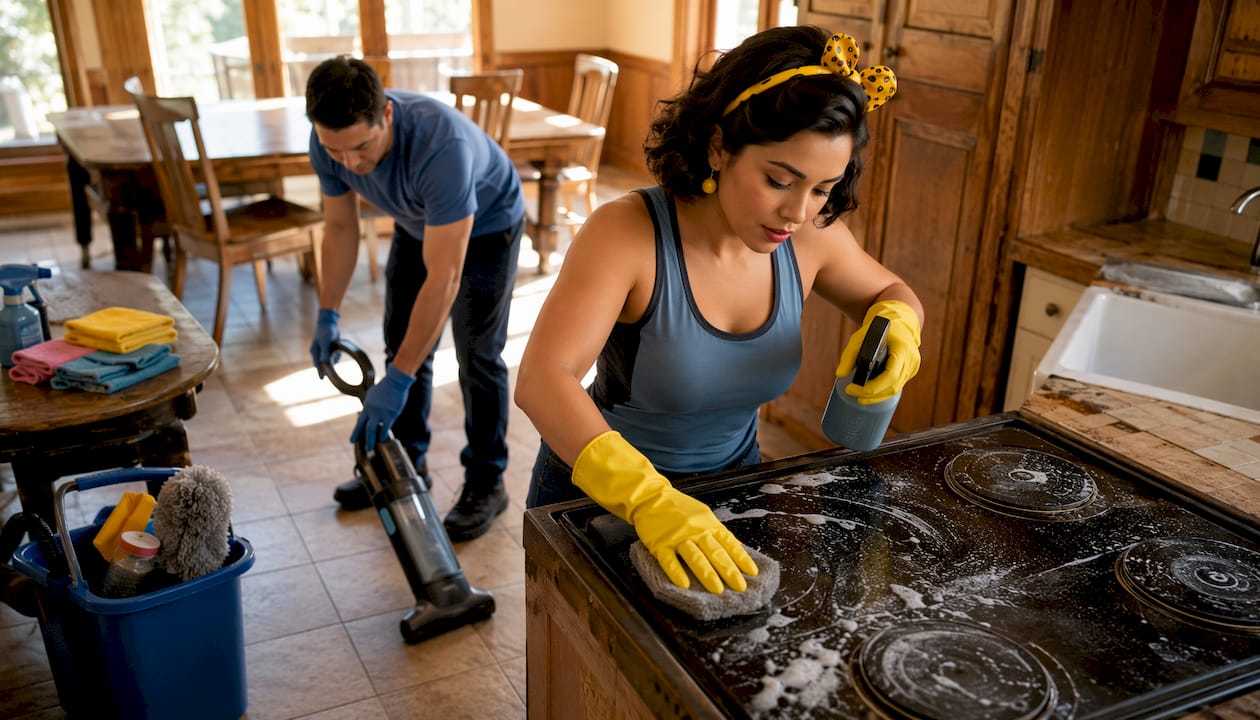
Equipment and supplies matter. Professional crews bring HEPA-filter vacuums, commercial degreasers, long-reach dusting tools, and sanitizing agents that aren’t available in most grocery stores. These tools reach places and remove buildup that consumer products can’t match, particularly in kitchens and bathrooms with years of accumulated grime.
Quality control is built in. Reputable services use room-by-room checklists, and many include a supervisor walk-through or a re-clean guarantee if something is missed. That accountability layer is something a solo DIY effort simply can’t replicate.
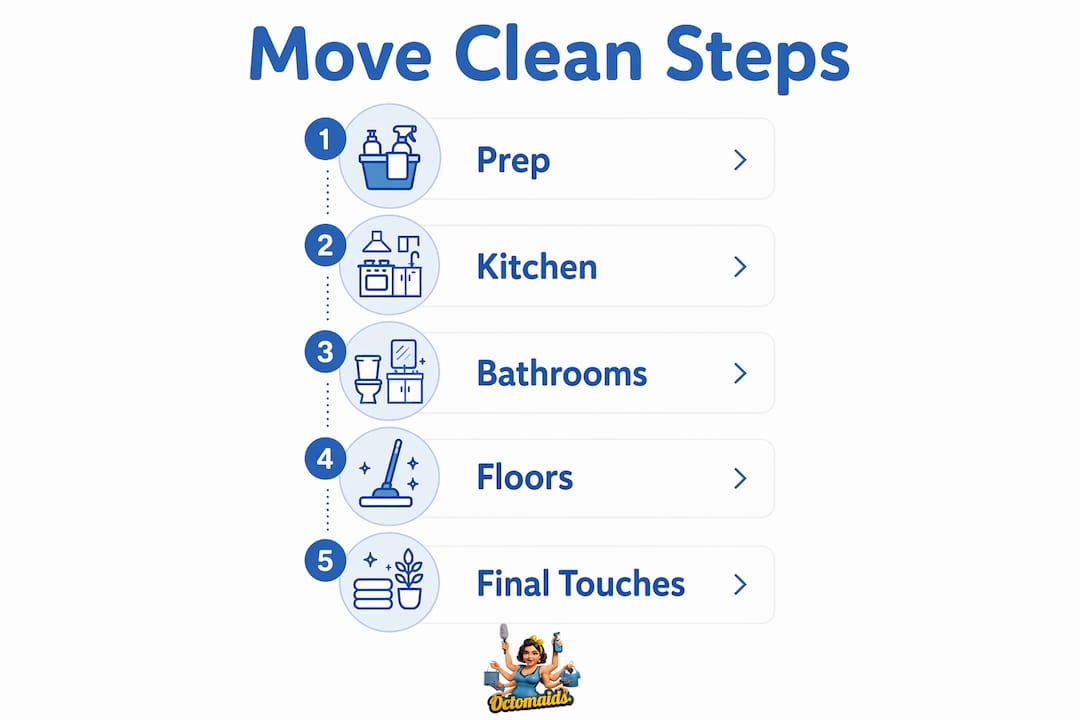
A typical professional move clean follows this sequence:
- Pre-clean walkthrough to note special requests and confirm scope.
- Top-to-bottom dusting (ceiling fans, vents, door frames) before any wet work.
- Kitchen deep clean: oven interior, hood, inside cabinets, appliance exteriors.
- Bathroom sanitization: grout scrubbing, toilet, tub/shower, fixtures.
- All rooms: baseboards, window sills and tracks, light switches, closet interiors.
- Floor care: vacuuming, mopping, and carpet treatment if included.
- Final walk-through against the checklist before the crew leaves.
Background-checked staff and liability insurance are non-negotiable trust signals. If a service can’t confirm both, keep looking. For a clear breakdown of what separates a move-specific deep clean from a recurring service, the deep clean vs. regular clean guide explains the distinction in practical terms.
Pro Tip: Two-person crews typically complete a move clean in half the time of a solo cleaner. When you’re working against a lease deadline or closing date, that speed difference is significant.
When should you schedule your move-out or move-in clean?
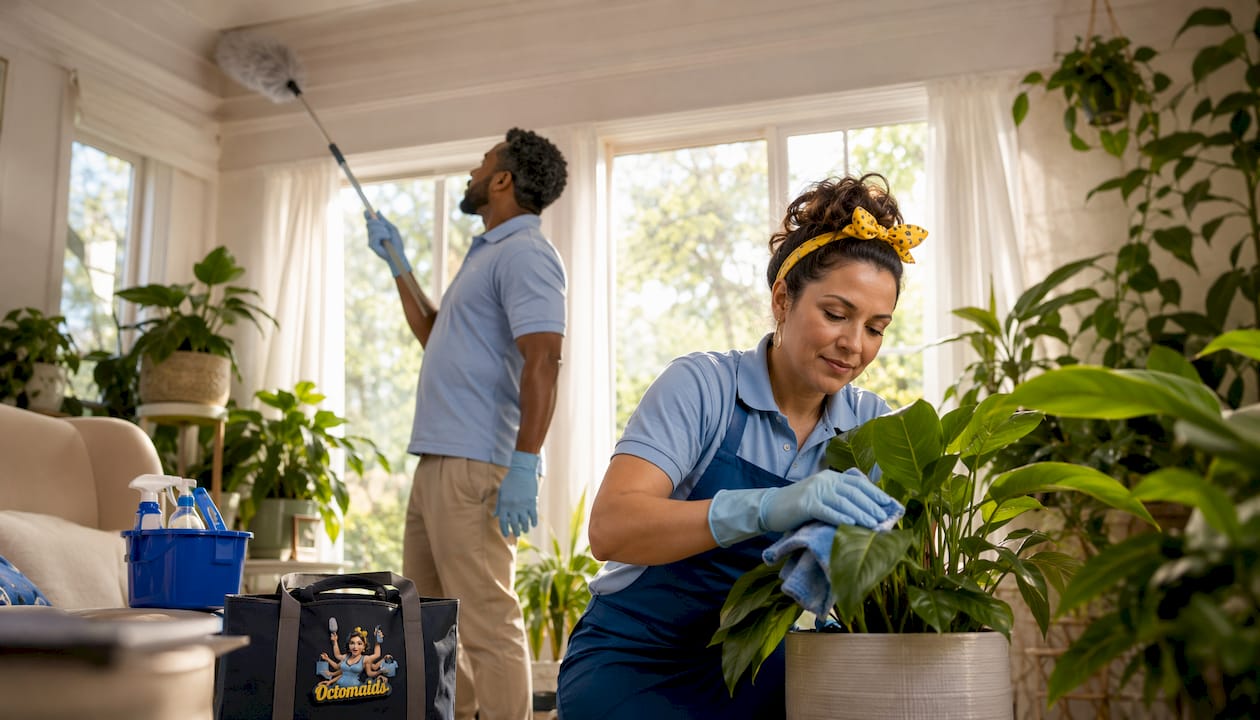
Timing is the single most critical variable in getting full value from a professional clean. The optimal move-out window is after the home is completely empty and before the final inspection or key handover. For move-in, schedule the clean the day before furniture arrives. Cleaning around furniture wastes labor, limits access to floors and baseboards, and produces inferior results.
Integrating cleaning into your moving strategy early, rather than treating it as a final task, preserves both physical energy and emotional stability when you need them most.
Most people delay cleaning until after most moving tasks are done, which is the exact moment their energy is lowest and their timeline is tightest. Here’s a scheduling framework that works:
- Book the cleaner 1–2 weeks before your move date. Popular windows fill quickly, especially at month-end.
- Schedule movers to finish the day before the clean. This guarantees the empty-house window.
- Schedule the clean the morning of your final walkthrough or key handover. Inspectors see the property at its best.
- For move-in, book the clean for the day before your furniture delivery. Every surface is accessible.
- Add carpet steam cleaning and odor removal at booking, not as an afterthought. These add-ons require equipment the crew brings only if pre-arranged.
If your move date shifts, call the service immediately. Most reputable cleaners can reschedule within 24–48 hours when given early notice, but last-minute changes during peak moving season (May through August) carry real risk of losing your slot. Decluttering or hiring a cleanout service before the clean also reduces cleaning time and cost, since crews can focus on surfaces rather than working around remaining items.
Pro Tip: If your closing date or lease handover gets pushed, ask your cleaning service about a flexible reschedule policy before you book. It’s a simple question that can save significant stress later.
How do you hire the right move-in/move-out cleaner?
Start with three written quotes using an identical scope. Verbal estimates create ambiguity; written scopes protect you if something is missed.
Questions to ask every service before booking:
- What’s included in the move clean, and what costs extra?
- Do you clean appliance interiors (oven, fridge, dishwasher)?
- Are carpet steam cleaning and window tracks included or add-ons?
- How large is the crew, and how long will the job take?
- Are your staff background-checked and insured?
- What’s your re-clean or satisfaction policy if something is missed?
- Can you provide references or reviews from move-specific cleans?
Price drivers to understand: Square footage is the primary factor, but the number of bathrooms, the level of buildup, and add-ons (carpet cleaning, oven degreasing, fridge interior) all affect the final price. A home that hasn’t had a deep clean in years will take longer than one that’s been regularly maintained.
- Confirm scope in writing before the appointment.
- Walk through the property with the crew lead at the start.
- Be available by phone during the clean for quick questions.
- Do a final walk-through with the crew before they leave.
- Document any areas that need attention with photos.
Pro Tip: Ask whether the service has experience with move-specific cleans specifically, not just general house cleaning. Move cleans require a different checklist and mindset than a recurring visit, and experienced crews know the difference.
For a full breakdown of which cleaning tasks are worth outsourcing during a move, the cleaning tasks worth hiring out guide helps you prioritize where professional help delivers the most value.
Key Takeaways
Hiring a professional move-in or move-out cleaner reduces moving stress by offloading the most physically and cognitively demanding tasks during the window when your energy and attention are most depleted.
| Point | Details |
|---|---|
| Book in the empty-house window | Schedule move-out cleans after movers finish and before the final walkthrough for best results. |
| Prioritize deposit-critical areas | Oven interiors, grout, baseboards, and appliance interiors are the spots inspectors flag most often. |
| Get written scope and guarantees | Confirm inclusions, add-ons, and re-clean policies in writing before the appointment. |
| Treat it as a cognitive intervention | Offloading cleaning reduces decision fatigue and visual stress, not just physical labor. |
| Octomaids for local moves | Octomaids has provided move-in/move-out cleaning in Vancouver, WA and Portland, OR since 2006, with background-checked teams and a satisfaction guarantee. |
A professionally cleaned home at the start or end of a move isn’t a luxury. It’s one of the highest-return decisions you can make during a high-stakes transition.
A note from Steven on what actually matters here
There’s a tendency to treat move-out cleaning as the last item on a long list, something you’ll get to after everything else is done. In my experience working with homeowners and renters in the Vancouver, WA and Portland, OR area, that approach almost always backfires. By the time the last box is loaded, most people are running on empty, and the cleaning that follows is rushed, incomplete, and stressful in its own right.
What I’ve observed consistently is that the people who come out of a move feeling most in control are the ones who treated cleaning as a scheduled, non-negotiable step rather than an afterthought. They booked early, confirmed the empty-house window, and handed the task to a crew they trusted. The result wasn’t just a cleaner home. It was a calmer, more organized transition, with fewer last-minute surprises and a final walkthrough they felt genuinely prepared for.
The science supports this, too. Reducing visual clutter and grime isn’t cosmetic; it measurably lowers cognitive load during a period when your brain is already managing more than it comfortably can. That’s the real role of professional cleaning in moving stress, and it’s worth taking seriously.
Octomaids makes move-out and move-in cleaning straightforward
Moving in the Vancouver, WA or Portland, OR area? Octomaids has been handling move-in and move-out cleans for homeowners and renters throughout Clark County and the Portland Metro since 2006. The difference from a generic cleaning service is in the specifics: transparent scopes confirmed in writing, background-checked and insured teams, scheduling designed around the empty-house window, and a satisfaction guarantee that means the job gets done right.
Every move clean covers the areas that matter most for deposit returns and final walkthroughs: oven interiors, bathroom grout, baseboards, inside cabinets, appliance surfaces, and all the spots DIY cleaners routinely miss. Add-ons like carpet steam cleaning and odor removal are available at booking. The same trusted cleaners show up every time, which means no surprises on a day when you have enough to manage already.
To get a written quote for your move-in or move-out cleaning service, visit the Octomaids booking page and select your service type, square footage, and preferred date. Quotes are transparent, scopes are confirmed before the appointment, and the team is ready to work around your moving timeline.
Useful sources and further reading
- Move-In/Move-Out Cleaning Services — Octomaids: Primary service page for booking and scope details.
- Benefits of Professional Move-Out Cleaning for Renters — Octomaids: Deposit recovery and walkthrough readiness for renters.
- Areas to Clean Before Moving Out: Deposit Checklist — Octomaids: Room-by-room checklist for deposit-focused move-out cleans.
- What Is a Move-Out Cleaning Service? — Octomaids: Full explainer on service scope and expectations.
- Deep Clean vs. Regular Clean — Octomaids: Explains why a move clean requires a different scope than recurring service.
- Professional Cleaning, Wellness, and Work Environments: Research on how clean environments reduce cognitive load and burnout.
- Moving Into a Cleaner Start — Jack Cooper: Practitioner perspective on integrating cleaning into moving strategy.
- The Stress-Free Transition — Immaculate Clean: Timing guidance for move-out and move-in cleaning windows.
FAQ
How does cleaning help reduce stress during a move?
A clean environment reduces visual stress, the low-level cognitive drain caused by clutter and grime, which frees mental bandwidth for the logistics that actually require your attention. Offloading the physical cleaning tasks to professionals also reduces decision fatigue and physical exhaustion at the most demanding point of the move.
What does a professional move-out cleaner actually do?
A professional move-out cleaner performs a deep reset of the entire property, covering oven interiors, bathroom grout, baseboards, inside cabinets, appliance surfaces, window tracks, and air vents — areas that standard recurring cleans skip. The goal is to meet or exceed the cleanliness standard required for final walkthroughs and deposit returns.
How clean does a house need to be when you move out?
Most landlords and property managers expect the home returned in the same condition it was received, which typically means a thorough deep clean of all surfaces, appliances, and fixtures. A professional move-out cleaning service is specifically scoped to meet those expectations and protect your security deposit.
When is the best time to schedule a move-out clean?
The optimal window is the day after movers empty the property and before the final inspection or key handover. Cleaning an empty home gives the crew full access to floors, baseboards, and behind appliances, producing better results in less time.
Is hiring a professional cleaner for a move worth the cost?
A well-executed move-out clean can directly protect your security deposit by reducing inspector dispute points, which gives it a measurable financial return beyond the time and energy it saves. For most homeowners and renters, the combination of deposit protection, reduced physical labor, and lower stress makes it one of the more practical decisions in the entire moving process.