



To remove cooking odors from your house, start with airflow, then find what is holding the smell. Run a range hood that vents outdoors before, during and after cooking, open a window across the room to pull fresh air through, and clean the places where grease and food particles collect: the hood filter, the sink drain, the microwave, the refrigerator and soft surfaces nearby. Scented sprays and candles only cover the problem. Below is the order we recommend, why each step works, and what to do for the stubborn cases like bacon, fish and curry.
TL;DR
- Turn the range hood on before you start cooking and leave it running for 10 to 20 minutes afterward, but only if it vents outdoors.
- Create a cross-breeze: crack a window across the room, or set a box fan in a window blowing outward.
- A smell that lasts for days usually has a source: a greasy filter, a drain, a microwave, a fridge, or fabric that absorbed the vapor.
- Simmering vinegar, activated carbon air cleaners and baking soda each help in specific situations. Sprays that perfume the air do not remove anything.
- When the smell is in the grease layers behind and above the stove, a deep clean is the fastest reset.
Table of Contents
- Why cooking smells linger in the first place
- Step 1: Ventilate at the source
- Step 2: Clean the surfaces that hold the smell
- Step 3: Check the hidden sources
- Step 4: Treat the air that is still holding the smell
- Stubborn smells: bacon, fish, curry and fried food
- When the smell has soaked into the house
- A weekly routine that prevents the problem
- Our perspective: odor is a cleaning problem, not a fragrance problem
- When to bring in a professional
- Let us reset your kitchen
- FAQ
- Sources
Why cooking smells linger in the first place
A cooking odor is a cloud of tiny airborne molecules, plus grease and moisture that carry them. Hot oil, browning meat and boiling stock all release vapor that rises, cools and settles. Some of it lands on the countertop, cabinet fronts and walls. Some soaks into curtains, upholstery and dish towels. A little ends up inside the hood filter, the oven, the microwave and the drain.
That settling is why a smell can seem to vanish after an hour and then return the next morning. The air is clear, but the surfaces are slowly releasing what they absorbed. Think of it as a kind of background noise: you stop noticing it in your own home, while a guest notices it at the door. If you read our guide on what professional cleaners notice first, smell is near the top of the list, and it is the one homeowners are most likely to miss.
So the job has two parts. First, move the airborne odor out of the house. Second, remove whatever is still giving it off.
Step 1: Ventilate at the source
The EPA’s guidance on improving indoor air quality while cooking puts an outdoor-venting range hood first. It recommends turning it on before you cook and leaving it on for 10 to 20 minutes after you finish. Starting early matters because the hood captures vapor as it rises, before it spreads through the room.
If you have no hood that vents outdoors, the same EPA page says to open doors or windows when safe and when weather and air quality allow, and to use kitchen or window fans to exhaust air outside.
Build a cross-breeze
Opening one window helps a little. Opening two, on opposite sides of the kitchen or house, helps a lot, because air has somewhere to enter and somewhere to leave. Serious Eats found in a test of fried-food smell fixes that running the hood while cracking a window across the room creates real airflow. If your hood is weak, put a box fan in the window facing outward.
In the Portland and Vancouver area, wet and cold weather makes people keep windows shut from October through spring. Even five minutes of cross-ventilation after dinner is worth the heat you lose. Close the window once the smell is gone.
Know which kind of hood you have
Many hoods do not vent outside. A recirculating hood pulls air through a filter and pushes it back into the room. A cleaning-industry guide notes that a saturated recirculating filter can turn the hood into little more than an expensive fan. If yours recirculates, replace the charcoal filter on the maker’s schedule and wash the metal grease filter regularly. Check your manual for the right interval.
Even a hood that vents outdoors does a poor job when its grease filter is coated. The EPA advises routinely cleaning the hood’s grease filter along with surfaces and appliances. Most metal filters can be soaked in hot water with dish soap, but follow your manufacturer’s instructions.
Step 2: Clean the surfaces that hold the smell
Once the air is moving, go after the film of grease that coats a kitchen after weeks of cooking. A quick sequence:
- Wipe the stovetop, backsplash and the cabinet fronts closest to the stove with warm water and a degreasing dish soap.
- Wash the hood filter and wipe the underside of the hood.
- Wipe the microwave interior and the handles you touch while cooking.
- Wash or swap dish towels, oven mitts and any cloth that hangs near the stove.
- Mop the floor within a few feet of the stove, where droplets land.
The EPA also lists routine cleaning of surfaces and appliances as part of keeping cooking pollutants down. A degreasing pass every week or two costs far less than a month of lingering smell.
Step 3: Check the hidden sources
If you cleaned the visible surfaces and the kitchen still smells, look at the places people forget. Consumer Reports notes in its guide to household odors that a persistent odor may come from spoiled food in the refrigerator or from a microwave whose filter has absorbed the smell.
| Source | What to look for | What to do |
|---|---|---|
| Refrigerator | Forgotten produce, spills, dirty door gaskets, drip pan | Empty it, wash shelves and gaskets, clean the drip pan. Wirecutter says deep cleaning these hidden spots is often necessary. |
| Sink drain and disposal | Trapped food and bacterial growth | Clean with baking soda, vinegar and hot water, as this kitchen troubleshooting guide suggests. |
| Microwave | Splatter, an odor-holding filter | Wipe the interior and check whether your model has a filter to clean or replace. |
| Toaster oven, air fryer | Crumbs and grease | Empty the crumb tray and wash the interior regularly. |
| Trash and recycling | Food residue in the can | Take bags out the same night, then wash the can. |
A simple drain refresh
The first-ranking kitchen odor guides all describe the same routine. Pour boiling water down the drain, add half a cup of baking soda, follow with a cup of white vinegar, and let it fizz for 5 to 10 minutes before flushing with hot water. Use it for ordinary food buildup. A drain that smells strongly of sewage, or that is slow or gurgling, points to a plumbing issue that a plumber should look at.
Step 4: Treat the air that is still holding the smell
After ventilating and cleaning, some odor may remain in the air. These are the tools worth using.
Simmering vinegar
Serious Eats’ test describes boiling a cup of white vinegar with a cup of water for 15 minutes to neutralize lingering odors, since acetic acid binds with some odor-causing compounds. Keep the pot on low, stay in the kitchen and add water if it drops. Expect a sharp vinegar smell for an hour or so, and open a window to help it clear. A bowl of vinegar left on the counter overnight is a gentler option that readers swear by for mild smells.
Air cleaners with activated carbon
Wirecutter reports that portable air cleaners with activated carbon filters can reduce gas-phase cooking odors, as long as the unit is sized for the whole space and the filter is replaced regularly. For heavy odors such as fish or curry, CleanAirCritic says the carbon bed has to be dense and heavy, because thin carbon pre-filters are not enough. If you shop for one, look at how much carbon the filter holds, not just the airflow rating.
Skip the scented sprays
Consumer Reports and the experts it consulted advise against relying on scented sprays, because they mostly mask the smell and may add fragrance you did not want. Air that smells like pine over fried onions is not clean air. Remove the odor first. If you want a pleasant note afterward, a pot of water with citrus peel and a cinnamon stick on low heat is simple.
Stubborn smells: bacon, fish, curry and fried food
The worst offenders share one trait: they are greasy or sulfurous, so they travel far and stick to fabric.
Bacon
Bacon grease spatters widely and the smoke settles on everything. Run the hood on high before the pan heats. Consider baking bacon in the oven on a lined sheet, which keeps splatter contained to one surface. Afterward, wipe the stove and nearby cabinets with a degreaser, wash the hood filter, and toss the used pan liner out of the house right away. Pour cooled grease into a sealed container, not down the drain.
Fish
A seafood retailer’s guide, Fulton Fish Market’s advice on fish smell, points to the compound TMA as the source of fishy odor. It suggests rinsing fish in tap water or soaking it in milk for about 20 minutes before cooking, choosing a method that keeps smell contained, storing leftovers in a tightly sealed container, taking out the trash and opening windows. Fresh fish smells less than fish that has sat in the fridge, so cook it soon after you buy it.
Curry, garlic and onions
Spice-heavy dishes release odor over a long cooking time. Ventilate for the full cook, and keep the lid on when simmering. Garlic on your hands is a separate problem: rubbing them on stainless steel under running water is a common kitchen fix.
Fried food
Oil droplets carry smell and settle on every nearby surface. Ventilate the whole time, use a splatter screen, and wipe down the surroundings within a day, before the grease hardens into a film that is harder to cut.
When the smell has soaked into the house
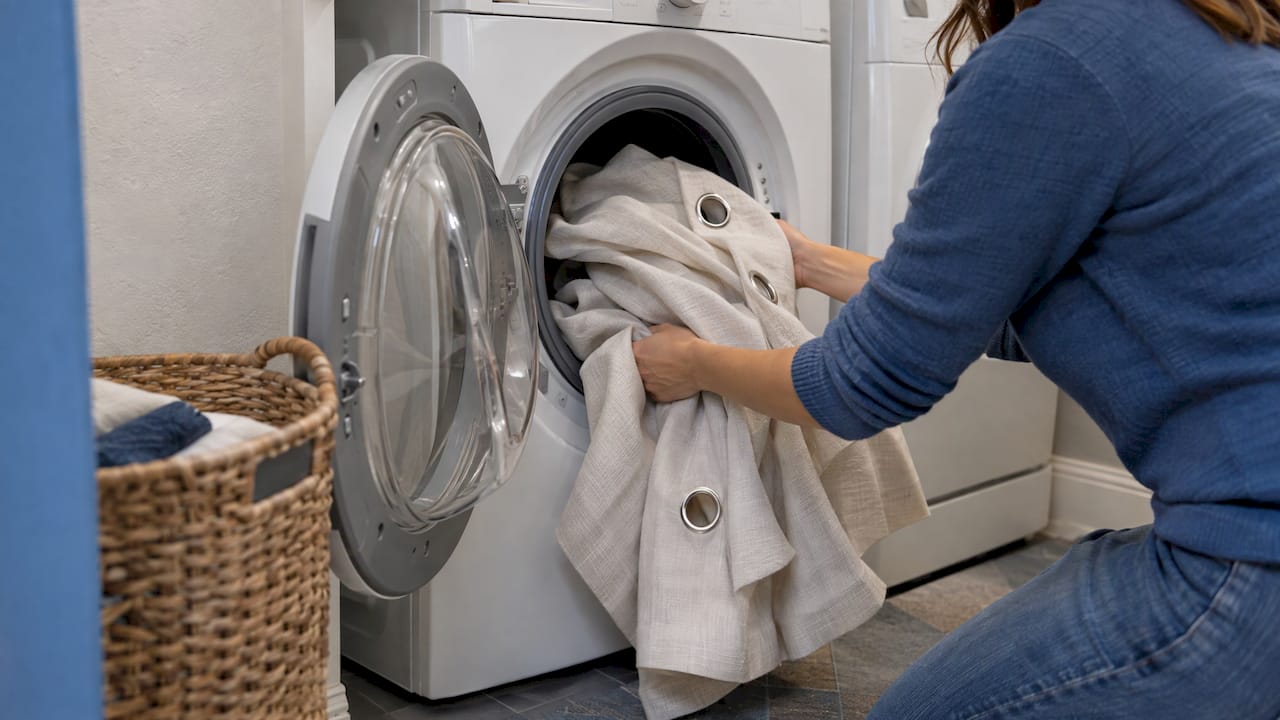
Sometimes the culprit is not the kitchen. If a smell follows you into the living room and bedrooms, check fabrics. Wash curtains and throw blankets, vacuum upholstery and rugs slowly, and open the windows in the rooms that hold the most cloth. A baking soda sprinkle on a carpet, left for a few hours and vacuumed, takes off mild odor. Heavy smoke or grease may need professional equipment and repeated passes.
The same applies to a rental or a home you are about to sell or leave. Cooking residue behind the stove, inside the oven and in the range hood is something we regularly see at move-out. Our clean oven move-out checklist and our guide to what appliance cleaning includes during move-out walk through the appliance side of it.
A weekly routine that prevents the problem
Prevention is cheaper than rescue. A routine that takes about 15 minutes after most dinners:
- Hood on before the pan is hot, off 10 to 20 minutes after.
- Wipe the stovetop and counters with warm soapy water while still slightly warm.
- Run the dishwasher or wash pots the same night.
- Take out food-scrap trash overnight.
- Once a week: wipe the microwave, run hot water and a little baking soda down the drain.
- Once a month: wash the hood filter and empty the toaster oven or air fryer crumb tray.
- Every few months: clean the fridge shelves, gaskets and drip pan.
If you want a rhythm to fit this around work and family, our home cleaning frequency guide and guide to maintaining a clean home between visits lay out what to do daily, weekly and seasonally.
Our perspective: odor is a cleaning problem, not a fragrance problem
In our years of cleaning kitchens across Vancouver and Portland, the pattern is consistent. A home that smells of last night’s dinner almost always has a layer of old grease somewhere the household stopped seeing: the top of the cabinets, the hood, the wall behind the stove, the inside of the oven door. Fresh air helps, but it cannot remove a film that is still releasing vapor.
That is why we work from the source outward. We degrease surfaces, clean appliance interiors, and check the places people skip, instead of covering the smell with a scented product. Because we send the same dedicated team to your home each visit, they learn where your kitchen builds up grease and get to it before it becomes a smell. A team that knows your home catches things a rotating crew would not.
If you cook often, or you love fish and bacon, you do not need to give up what you cook. A regular cleaning rhythm plus a good deep clean now and then keeps the kitchen smelling like a kitchen, not like last week.
Steven
When to bring in a professional
Do-it-yourself steps handle most cooking odors. A professional deep clean makes sense when the smell has outlasted your best effort, when grease has built up for months behind appliances, or when you are short on time. Our list of cleaning tasks worth hiring out explains which jobs give you the most time back, and our guide on what deep cleaning includes shows what we cover in a kitchen.
Let us reset your kitchen
If the smell is still there after you have tried the steps above, a one-time deep clean is the quickest way to start fresh. Our team cleans kitchen surfaces, appliance exteriors and the places where grease collects, and all our staff are background-checked, trained and insured. We have served Vancouver, WA and Portland, OR since 2006, and our service is satisfaction guaranteed.
To keep it fresh, our recurring home cleaning puts the same team in your home weekly, bi-weekly or monthly. For a single reset, book a one-time deep cleaning. Prefer to see everything we offer first? Our services page lists it all.
FAQ
Does boiling vinegar really get rid of cooking smells?
It can help. Serious Eats’ test describes simmering equal parts white vinegar and water for about 15 minutes, because acetic acid binds with some odor-causing compounds. It works best for light to moderate lingering smells. Heavy grease needs cleaning, not just simmering.
How long should I run the range hood after cooking?
The EPA recommends turning it on before you cook and leaving it running for 10 to 20 minutes afterward. This only works well when the hood vents outdoors, and when its grease filter is clean.
Why does my house smell like fish days after cooking?
Fishy odor travels in vapor and lands on surfaces, fabric and trash. Ventilate during and after cooking, seal leftovers tightly, take the trash out the same night, and wipe nearby surfaces. If the smell still hangs on, check the drain, the fridge and the hood filter.
Do air purifiers remove cooking odors?
Units with activated carbon filters can reduce gas-phase cooking odors, according to Wirecutter, but they must be sized for the room and the filter replaced regularly. For strong smells like curry or fish, look for a unit with a thick, heavy carbon bed.
Why does the kitchen still smell after I cleaned?
Look for a hidden source. Common culprits are a spoiled item in the fridge, a dirty door gasket, a drain or disposal, a microwave filter, and a grease-coated hood filter.
Sources
- EPA: Strategies for Improving Indoor Air Quality While Cooking
- Serious Eats: Getting rid of fried food smell
- Cleaning Guides: Getting cooking smells out of a kitchen
- Consumer Reports: Eliminating household odors
- Wirecutter: Fixing stinky home smells
- CleanAirCritic: Best air purifiers for cooking odors
- Kitchen Solving: Kitchen odor that won’t go away
- Fulton Fish Market: Fish smell after cooking
Recommended
- How to Deodorize a Room and Keep It Fresh for Good
- Clean Oven Move-Out Checklist: Get Your Deposit Back
- What Appliance Cleaning Includes During Moveout
About Octomaids
Octomaids is a locally operated professional cleaning company serving Vancouver, Clark County, and the surrounding Portland metro area. Since 2006, our cleaning teams have helped homeowners, renters, property managers, and businesses with recurring cleaning, deep cleaning, move-in/move-out cleaning, and commercial cleaning.
Our cleaning articles are reviewed to ensure the information reflects our real-world experience and professional cleaning practices.