


For most homeowners, a local cleaning agency is the safest and most reliable route to hire professional help. Agencies handle background checks, carry liability insurance, and assign consistent cleaners, which removes the vetting burden from you entirely. If you need a one-time clean quickly, online marketplaces like Thumbtack or Care.com connect you with vetted independent professionals in your area. Direct hire costs less upfront but shifts legal and insurance responsibilities to you as the homeowner.
For recurring service in the Vancouver, WA and Portland, OR metro areas, Octomaids is our recommended local option. Background-checked teams, flat-rate pricing, and assigned cleaners on every visit make it the kind of service you book once and stop worrying about.

Table of Contents
- How do you choose the right maid or maid service?
- Where can you find maids for hire?
- What does it typically cost to hire a maid?
- What service types are available, and how often should you book?
- What trust signals should you demand before booking?
- How do you hire a maid directly, without an agency?
- Key Takeaways
- Why local agencies consistently outperform the alternatives for recurring work
- Octomaids serves Vancouver, WA and Portland with trusted recurring cleaning
- Useful sources and further reading
- FAQ
How do you choose the right maid or maid service?
The decision comes down to four priorities, in this order: safety, scope clarity, pricing model, and scheduling fit. Work through them before you call a single provider.
Safety first. Ask every candidate or service whether staff are background-checked and whether the company carries general liability insurance and workers’ compensation. These are not optional. If a provider hesitates or cannot produce proof, move on.

Scope clarity. A written scope of work (SOW) protects both sides. Before booking, confirm exactly which rooms and tasks are included, who supplies the cleaning products and equipment, and what happens if something is missed or damaged.
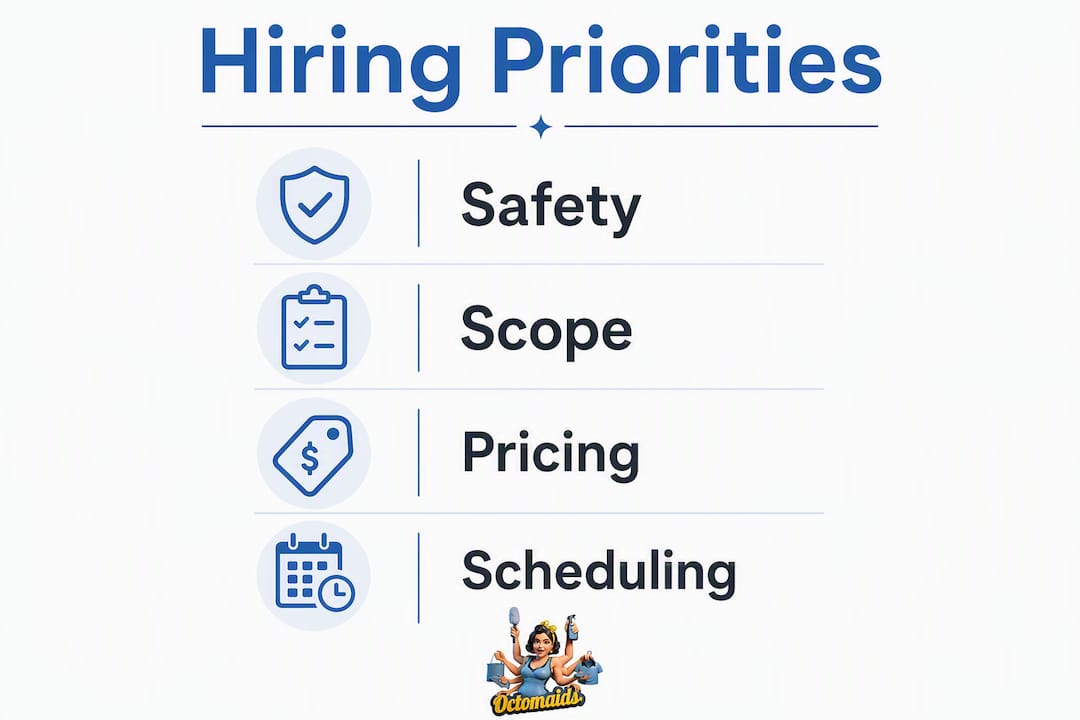
Pricing model. Flat-rate quotes reduce billing surprises. Hourly pricing can create pressure on the cleaner to rush, which rarely ends well. Get the quote in writing before the first visit.
Scheduling fit. Recurring service (weekly or bi-weekly) costs less per visit over time and keeps your home at a consistent baseline. One-time and move-out cleans are priced differently, so clarify upfront.
Questions to ask every provider before booking
- Are your cleaners background-checked? Can you show proof?
- Does the company carry general liability insurance and workers’ compensation?
- What does a standard clean include, and what costs extra?
- Do you provide supplies and equipment, or should I supply them?
- What is your cancellation and rescheduling policy?
- Will I get the same cleaner each visit?
- What is your satisfaction guarantee or re-clean policy?
Pro Tip: Ask for the policy number on their liability insurance and verify it with a quick call to the insurer. Legitimate providers will not hesitate.
Red flags that should stop the hire
- No verifiable references or online reviews
- Cannot produce proof of insurance when asked
- Vague or verbal-only scope of work
- Pressure to pay cash only with no receipt
- No written cancellation policy
For recurring work, weight safety and continuity most heavily. For a one-off deep clean or move-out, pricing and availability matter more. For move-in and move-out situations specifically, a detailed move-out cleaning checklist helps you confirm the scope before signing anything.
Where can you find maids for hire?
Three main channels exist for finding professional cleaning help, and each suits a different situation.
| Channel | Price model | Vetting / background checks | Insurance / bonding | Services offered | Availability | Booking process |
|---|---|---|---|---|---|---|
| Local cleaning agency | Flat-rate or hourly; consistent | Agency screens all staff | Agency carries liability + workers’ comp | Standard, deep, move-out, office, STR | Recurring and one-time | Phone, online form, or app |
| Online marketplace (Thumbtack, Care.com) | Hourly; varies by pro | Platform-level screening; varies | Pro’s own policy; verify before booking | Broad; depends on individual pro | Flexible; often same-week | App or website |
| Direct / independent hire | Negotiated; often lower | Homeowner’s responsibility | Homeowner must verify | Flexible; depends on individual | Flexible | Direct contact |
Local cleaning agencies (including franchise chains and referral agencies) are the strongest option for recurring service. Franchise companies typically employ cleaners directly and standardize training. Referral agencies vet and match independent cleaners, making it easier to request the same person each visit. The practical difference matters: a franchise gives you standardized processes; a referral agency gives you more personalization. Both models handle insurance and background checks so you do not have to.
Online marketplaces shine for speed and flexibility. You can post a job on Thumbtack or browse Care.com profiles and have someone booked within hours. The trade-off is variability. Platform-level screening exists, but the depth of background checks and insurance coverage differs by provider. Always verify independently before handing over a key.
Direct independent hire is the most cost-effective route, but it is also the most work. You become responsible for vetting, reference checks, insurance verification, and, in some states, workers’ compensation exposure. The agency vs. independent hire comparison in the domestic staffing world applies directly here: agencies cost more per visit but absorb the administrative and legal burden that direct hire places on you.
What does it typically cost to hire a maid?
Pricing for house cleaning services in the U.S. varies by service type, home size, and region. Thumbtack’s national data shows one-time cleaning visits commonly ranging from about $150 to $290 depending on job scope, though rates in high-cost metros run higher and rural markets run lower. Getting multiple local quotes is the only reliable way to calibrate for your area.
Factors that move the price up or down
- Service type — A standard recurring clean costs less per visit than a deep clean or move-out clean, which require significantly more time and detail work.
Tipping and payment norms
Tipping is not required but is widely appreciated, particularly for recurring cleaners who know your home well. A common range is $10–$20 per visit for a regular clean, or 15–20% for a deep clean or move-out service. Cash is traditional, but many services now accept card or digital payment. If you pay by card through an agency, confirm that the tip reaches the cleaner directly.
Flat-rate pricing is worth requesting whenever possible. Hourly billing can create an uncomfortable dynamic where the cleaner feels pressure to rush, and you feel uncertain about the final invoice. A flat rate agreed in writing before the visit removes that friction entirely.
What service types are available, and how often should you book?
Professional cleaning services fall into a few distinct categories, and knowing which one you need prevents you from overpaying or underbooking.
Standard recurring cleaning covers the tasks that keep a maintained home tidy: vacuuming, mopping, surface wiping, bathroom and kitchen cleaning, and trash removal. This is the service most households book weekly or bi-weekly.
Deep cleaning goes further, addressing baseboards, inside appliances, grout, ceiling fans, and areas that standard visits skip. Most practitioners recommend starting any new recurring relationship with an initial deep clean to establish a baseline, which makes every maintenance visit faster and more effective.
Move-in/move-out cleaning is the most thorough service type, designed to bring a property to rental or sale condition. It typically includes inside cabinets, inside the oven, window tracks, and all surfaces. Rental property owners can find a detailed breakdown of what this covers in this move-in cleaning guide.
Short-term rental (STR) turnover cleaning is a specialized subset of move-out cleaning, timed to guest check-out and check-in windows. Speed and consistency matter here more than in residential work because a missed item shows up in a review within hours.
Live-in housekeeping is a separate employment category involving a resident domestic worker. This arrangement carries distinct legal obligations around wages, housing, and employment law, and falls outside the scope of what most cleaning agencies offer.
Specialty services (carpet cleaning, window washing, post-construction cleanup) are usually priced separately and require specific equipment.
Frequency recommendations by household type
- Short-term rental hosts: — turnover clean after every guest stay, deep clean monthly or between seasons
The difference between a deep clean and a regular clean is worth understanding before you book, especially if you are setting up recurring service for the first time.
What trust signals should you demand before booking?
This is where most hiring mistakes happen. Homeowners focus on price and availability, then discover after the fact that a cleaner was uninsured or a service had no re-clean policy. Requiring the right documentation upfront takes five minutes and prevents much larger problems.
The non-negotiable trust signals
- Background-checked staff. Ask specifically whether the check includes criminal history and identity verification. “We screen our cleaners” is not the same as a documented background check.
- General liability insurance. This covers damage to your property. Ask for the policy number and the insurer’s name, then verify it with a quick call or online lookup.
- Workers’ compensation. If a cleaner is injured in your home and the company does not carry workers’ comp, you may face liability as the property owner. This is not a hypothetical risk.
- Bonding. A surety bond protects against theft. Not every agency carries one, but it is a meaningful signal of professionalism.
- Satisfaction guarantee. Reputable services offer a re-clean within 24–48 hours if you are not satisfied, or a partial refund. Get the exact terms in writing.
- Assigned or consistent cleaner. Continuity matters for recurring service. A cleaner who knows your home works faster and catches things a rotating stranger would miss.
Agencies that combine flat-rate pricing with assigned cleaners tend to generate stronger long-term client relationships. The referral model used by agencies that screen heavily and match clients with specific cleaners can produce high rebooking rates because clients know what to expect on every visit.
How to verify what you are told
Request proof of insurance in writing before the first visit. Check Google, Yelp, or the Better Business Bureau for reviews that mention reliability, damage handling, and communication. Ask for two references from current clients, not former ones, and actually call them. A good reference check goes beyond “were they reliable?” and asks about how the cleaner handled a problem when one arose. The reference-checking questions used in domestic staffing translate directly to cleaning hires and give you a useful template.
How do you hire a maid directly, without an agency?
Direct hire is a legitimate path, but it requires you to do the work an agency normally handles. Here is a reliable process.
- Source candidates — Post on neighborhood platforms (Nextdoor, local Facebook groups), ask for referrals from neighbors, or browse marketplace profiles on Thumbtack or Care.com. Referrals from people you trust are the highest-quality leads.
Pro Tip: Pay by check or card for every visit, never cash only. A payment trail protects you if a dispute arises and helps establish the employment relationship correctly for tax purposes.
Minimum contract items for a direct hire
- Scope of work (rooms, tasks, exclusions)
- Rate, payment method, and payment timing
- Frequency and scheduling terms
- Cancellation and rescheduling policy (notice required, fees)
- Liability acknowledgment and insurance status
- Trial period terms (how long, how performance is evaluated)
- Confidentiality and access instructions (keys, alarm codes, pets)
Hiring without an agency shifts legal responsibilities to you as the homeowner. In some states, if you hire someone regularly and direct their work, they may be classified as a household employee rather than an independent contractor, which triggers payroll tax and workers’ compensation obligations. The IRS Publication 926 (Household Employer’s Tax Guide) is the primary reference for U.S. homeowners navigating this. Consult a tax professional if you are unsure about your obligations.
This article provides general information, not legal or tax advice. Confirm current rules with a qualified professional or the relevant government agency.
Key Takeaways
Hiring a local cleaning agency with background-checked staff, flat-rate pricing, and assigned cleaners is the most reliable route for recurring house cleaning in the U.S.
| Point | Details |
|---|---|
| Choose your channel first | Agencies suit recurring service; marketplaces work for one-off speed; direct hire fits cost-conscious owners willing to vet. |
| Demand three documents | Proof of liability insurance, workers’ compensation coverage, and a written scope of work before any first visit. |
| Start with a deep clean | Beginning a recurring relationship with an initial deep clean sets a baseline that makes every maintenance visit faster. |
| Use flat-rate pricing | Flat-rate quotes protect you from surprise invoices and remove performance pressure from hourly billing. |
| Octomaids for local recurring service | Octomaids serves Vancouver, WA and Portland, OR with background-checked teams, assigned cleaners, and flat-rate options for recurring, deep, move-out, and STR cleaning. |
Why local agencies consistently outperform the alternatives for recurring work
There is a version of this conversation that goes: “Just find someone on a marketplace, save money, and move on.” I understand the appeal. But the homeowners who call us after a bad experience with an unvetted independent cleaner almost always describe the same sequence: a low price, a missed scope item, a damaged surface, and then the discovery that the cleaner carried no insurance and had no re-clean policy.
The economics of recurring cleaning favor the agency model more than most people realize. When you factor in the time spent vetting, the risk of turnover (finding a new cleaner every few months is not unusual with independent hires), and the absence of a guarantee, the price gap between a marketplace hire and a local agency narrows considerably. What you are paying for with an agency is not just the clean. You are paying for the system behind it: the background check, the training standard, the insurance, and the accountability structure that exists when something goes wrong.
What I find most underappreciated is the value of continuity. A cleaner who has visited your home twelve times knows where you keep the extra trash bags, which surfaces scratch easily, and that the dog needs to be in the backyard before they start. That institutional knowledge does not transfer when you rotate through different cleaners, and it cannot be replicated by a checklist alone.
Octomaids has operated in the Vancouver, WA and Portland metro area since 2006. The recurring service model, with dedicated teams and consistent scheduling, reflects exactly the kind of continuity that produces reliable results over time. For homeowners who want a clean home without managing a cleaning relationship, that structure is what makes the difference between a service you trust and one you monitor.
Octomaids serves Vancouver, WA and Portland with trusted recurring cleaning
Octomaids has been cleaning homes and businesses in Clark County, WA and the Portland metro area since 2006. The service covers recurring house cleaning, one-time deep cleans, move-in/move-out cleaning, office cleaning, short-term rental turnover, post-construction cleanup, and janitorial services, all delivered by the same background-checked team on every visit.
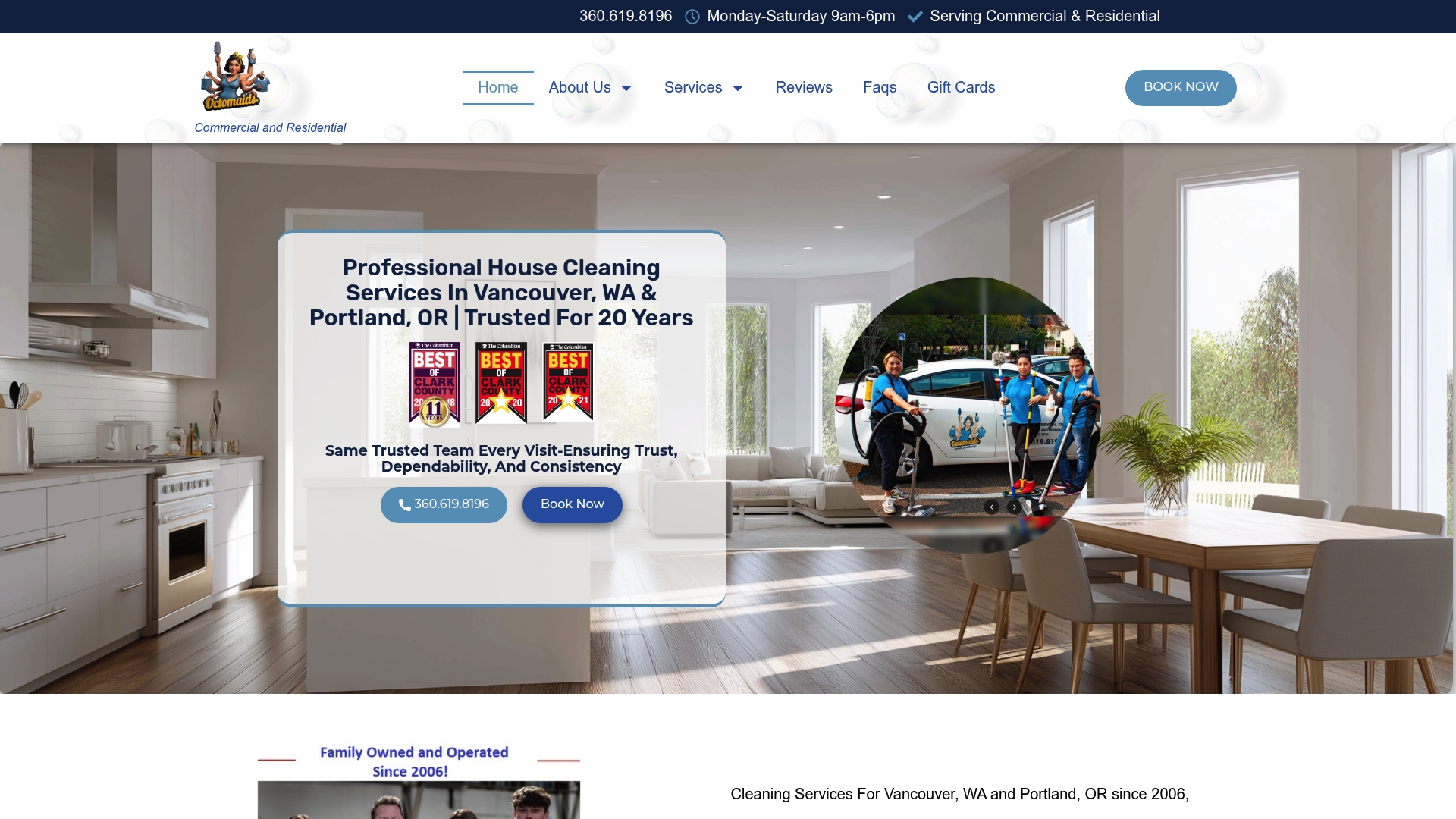
What sets Octomaids apart from marketplace alternatives is the combination of assigned cleaners, flat-rate pricing options, and a satisfaction policy that means you are not left managing a problem on your own. Rental property owners can find specific guidance on short-term rental turnover cleaning and move-out services. Homeowners setting up recurring service for the first time can explore all available services and request a quote directly.
To get started, visit the Octomaids services page, select the service type that fits your situation, and request a quote or schedule a walkthrough. The team covers Vancouver, WA and the Portland, OR metro area, and recurring clients receive priority scheduling.
Useful sources and further reading
The following resources support the claims and recommendations in this article and are worth bookmarking for your own verification process.
- Thumbtack: Maid Services Near Me — national pricing ranges, local pro profiles, and practical guidance on what to ask before booking
- Octomaids: All Cleaning Services — full list of residential and commercial services available in Vancouver, WA and Portland, OR
- Octomaids: Deep Clean vs. Regular Clean — explains scope differences and helps you decide which service type to book first
- Octomaids: How to Hire a House Cleaner for the First Time — practical vetting steps and conversation starters for first-time hirers
- Octomaids: Move-In/Move-Out Cleaning Services — details on move-related cleaning for renters, buyers, and landlords
- Octomaids: What Does Deep Cleaning Include? — room-by-room breakdown of what a professional deep clean covers
- Octomaids: How to Prepare Your Home for a Cleaning Service — preparation checklist before a first visit or trial clean
FAQ
How much does it cost to hire a maid?
One-time cleaning visits in the U.S. commonly range from about $150 to $290 per visit depending on job scope, home size, and location, according to Thumbtack’s national data. Recurring visits are typically priced lower per visit than one-time cleans. Regional rates vary, so getting multiple local quotes is the most reliable way to calibrate cost for your area.
Can I hire a maid without an agency?
Yes, homeowners can legally hire cleaning help directly, but doing so shifts the vetting, background check, insurance verification, and potential workers’ compensation responsibilities to you. An agency absorbs those obligations; a direct hire does not.
How much do you pay a maid per day?
National data from Thumbtack shows one-time cleaning visits commonly ranging from about $150 to $290 depending on job scope, home size, and included services. Rates vary by region, with recurring visits typically priced lower per visit than one-time cleans. Getting multiple local quotes is the most reliable way to calibrate cost for your area.
Does Octomaids offer recurring cleaning in Portland and Vancouver, WA?
Yes. Octomaids provides weekly, bi-weekly, and monthly recurring cleaning service throughout Clark County, WA and the Portland metro area, with the same background-checked team assigned to each client’s home.