
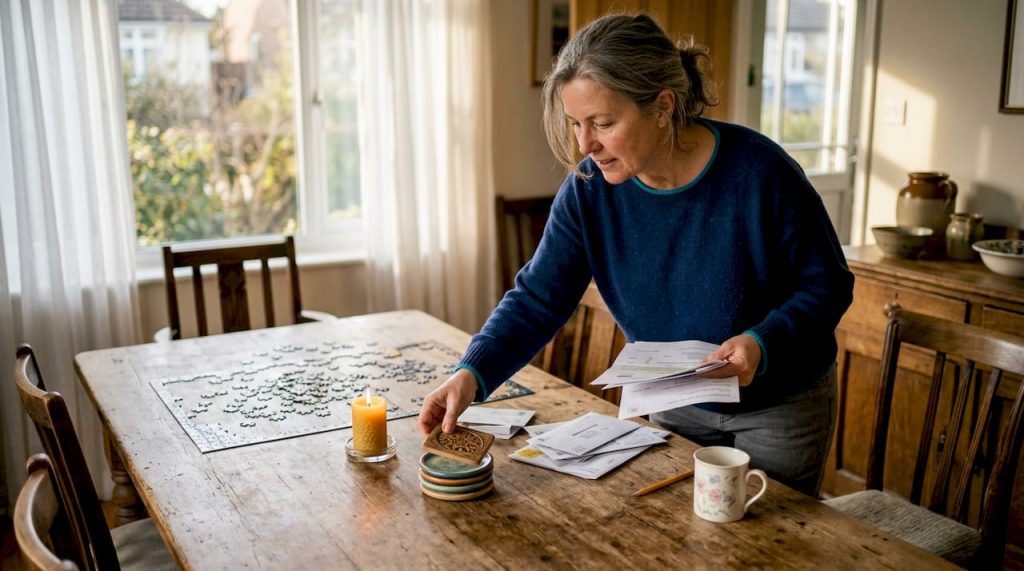
Preparing your home for a cleaning service means decluttering and organizing your space, not pre-cleaning it. That distinction matters more than most people realize. When you know how to prepare home for cleaning service visits correctly, your cleaners spend their time scrubbing grout and sanitizing surfaces instead of moving piles of laundry off the bathroom floor. The professional term for this process is “pre-service preparation,” and it covers everything from clearing countertops to securing pets and communicating special instructions. Done right, it takes 20 to 30 minutes and dramatically improves what your cleaning team can accomplish.
How to prepare your home for a cleaning service visit
The core principle here is simple: your job is to organize, not to clean. Cleaning professionals advise that clients skip the hours of pre-cleaning and focus instead on decluttering. Think of it the way a surgeon’s assistant preps an operating room. The surgeon does not expect a sterile field to already exist. They expect clear access and organized tools so they can do their best work. Your cleaners operate the same way.
Clearing clutter from floors and surfaces allows your cleaning team to reach every inch of a countertop or floor rather than working around obstacles. A kitchen counter buried under mail, appliances, and coffee mugs cannot be properly wiped down. A bedroom floor covered in clothes cannot be vacuumed thoroughly. The prep you do in advance directly determines the depth of clean you receive.
Here is what to do before your cleaner arrives:
- Clear countertops and tables. Move personal items, mail, and small appliances off kitchen counters and bathroom vanities. You do not need to store them permanently. Just relocate them so surfaces are accessible.
- Pick up items from the floor. Clothes, toys, shoes, packages, and pet items on the floor prevent vacuuming and mopping. A quick pass through each room makes a significant difference.
- Address the sink. Put away clean dishes and move dirty ones to one side. Cleaners are not typically hired to wash dishes unless that is specifically arranged in advance.
- Secure valuables and sensitive documents. Put away jewelry, cash, passports, and financial paperwork. This protects your belongings and removes any ambiguity.
- Set out fresh linens. If you want bed linens or towels changed, leave the fresh set on the bed or in a visible spot. Do not assume your cleaner knows where you store extras.
Pro Tip: A quick 15-minute tidy the night before your cleaning appointment is all most homes need. Treat it like setting the table before a meal, not cooking the entire dinner yourself.
Professional cleaners optimize their time when they find clear paths and decluttered surfaces rather than a home that has been half-cleaned. You are not paying for someone to move your belongings. You are paying for a deep, thorough clean of the surfaces themselves.
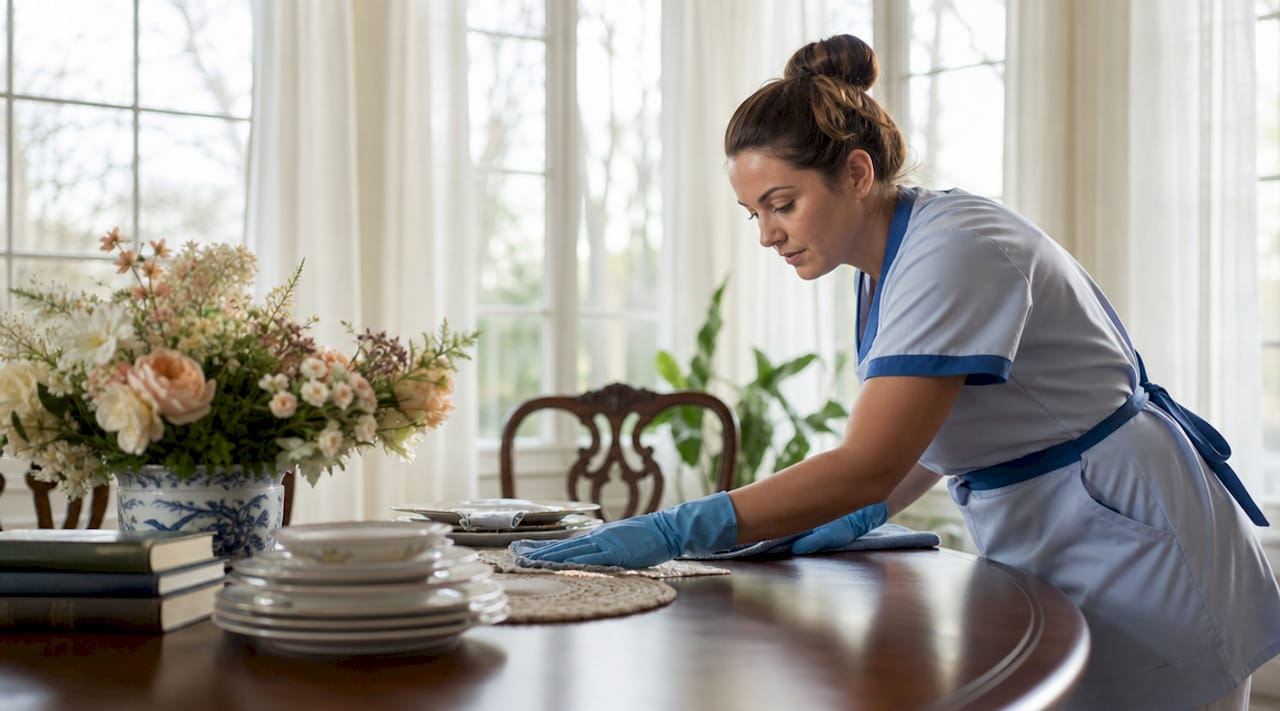
How to handle pets and home access before cleaners arrive
Pets and access logistics are two of the most overlooked parts of preparing for an in-home cleaning visit. Getting both right prevents delays, safety issues, and awkward surprises on cleaning day.
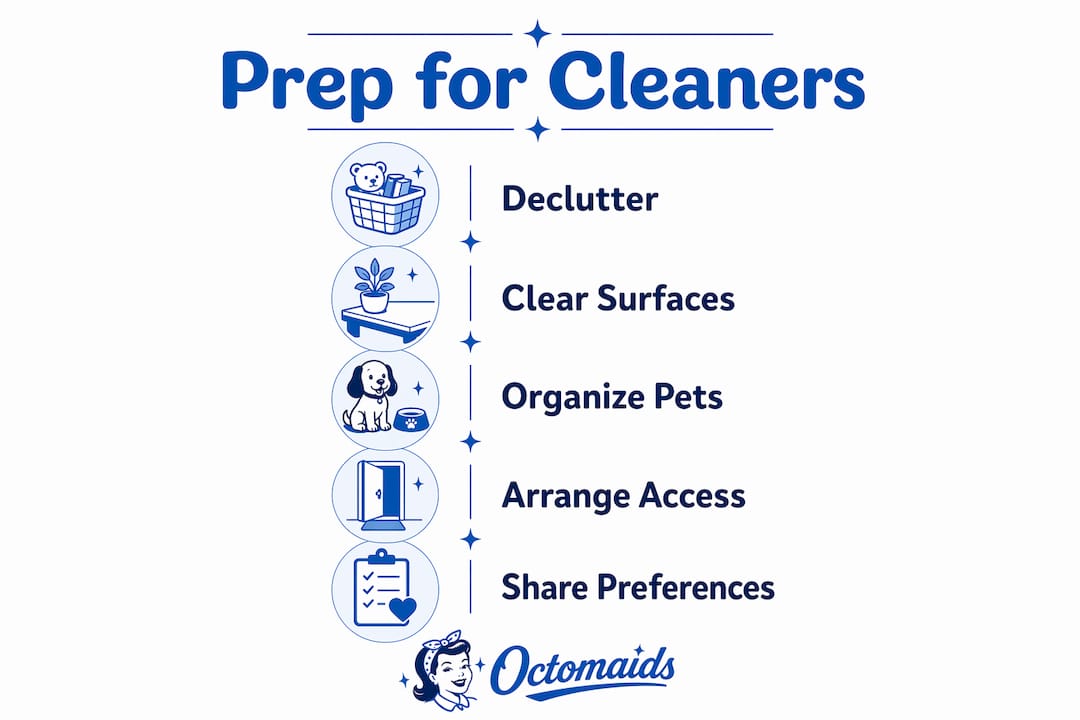
Securing pets in a safe, separated area during cleaning is the standard recommendation from professional cleaning teams. A dog that follows cleaners from room to room slows the process considerably. A cat that darts out an open door creates a stressful situation for everyone. The goal is not to punish your pet. It is to give your cleaner uninterrupted access to every room.
Practical options for pet management include:
- Crating dogs in a bedroom or laundry room with water and a familiar toy
- Placing cats in a bathroom or spare room with their litter box
- Arranging for pets to be walked or taken to a neighbor’s home during the appointment
- Using a secure outdoor space if weather and fencing allow
Being out of the home yourself during cleaning is worth considering too. Cleaners work faster and more freely when they are not navigating around residents. If you work from home, plan to be in a room that will be cleaned last, or step out for a coffee.
Pro Tip: Tell your cleaning service about your pets when you book, not on the day of the appointment. Some cleaners have allergies or specific protocols for homes with animals, and advance notice lets them prepare accordingly.
For home access, a clear access plan prevents wasted cleaning time and missed appointments. Options include leaving a key with a trusted neighbor, installing a lockbox with a code you share in advance, or providing a garage or door code directly to your cleaning team. Whatever method you choose, confirm it the day before. Do not assume a code you shared three months ago is still saved in someone’s phone.
What tasks should you skip because cleaners will handle them?
One of the most common mistakes homeowners make is pre-cleaning before their cleaning service arrives. This feels logical but wastes your time and, in some cases, actually interferes with professional results. Understanding what your cleaners will handle helps you focus your prep energy correctly.
Pre-cleaning is unnecessary and cleaning professionals do not expect it. You do not need to scrub your toilet before someone else scrubs your toilet. You do not need to wipe down your stovetop before a professional degrease. These are exactly the tasks your service is hired to perform.
What cleaners typically handle without any prep from you:
- Scrubbing and disinfecting bathrooms, including toilets, tubs, showers, and sinks
- Wiping down kitchen appliances, counters, and cabinet fronts
- Vacuuming and mopping all floor surfaces
- Dusting furniture, shelves, ceiling fans, and baseboards
- Cleaning mirrors and interior glass surfaces
There are genuine limits, though. House cleaners do not handle biohazard materials such as blood, mold, or pet waste. If your home has any of these, address them before the appointment. Similarly, heavy clutter removal, moving furniture, and washing dishes are outside the standard scope unless specifically arranged. Knowing this boundary helps you set realistic expectations and avoid frustration on both sides.
Clients should not feel embarrassed about their home’s condition before a cleaning visit. Professionals are trained to handle varied mess levels without judgment. The only preparation that genuinely helps is the organizational kind, not the cosmetic kind.
How to communicate with your cleaning service for better results
Clear communication is the single most underused tool in getting a great clean. Clients who clearly express preferences, allergies, and priorities receive better, more tailored cleaning results. This is not about micromanaging your cleaner. It is about giving them the information they need to do their best work.
Before your appointment, cover these communication points:
- Allergies and product preferences. If someone in your home has sensitivities to fragrances, bleach, or specific chemicals, say so. Many services offer eco-friendly cleaning options or can bring unscented products on request.
- Priority rooms or areas. If your kitchen needs extra attention this visit or your guest bathroom has not been touched in a month, mention it. Cleaners can adjust their time allocation when they know what matters most to you.
- Off-limit areas. A home office with sensitive documents, a child’s room with a specific organization system, or a display shelf with fragile items should be flagged clearly.
- Recent changes. Renovations, new guests, a new pet, or a recent illness all affect what your cleaner needs to know. A quick heads-up prevents surprises.
Providing detailed written notes about specific priorities or off-limit areas reduces miscommunication during service. If you will not be home, leave a note on the kitchen counter or send a message through your booking platform the evening before. A few sentences of context can change the entire outcome of a visit.
Good client-cleaner relationships often result in cleaning teams going above and beyond. When your cleaner knows you, trusts the access arrangements, and understands your preferences, they work with more confidence and attention to detail. That relationship is built through consistent, respectful communication over time. You can read more about maintaining a clean home between visits to complement what your cleaning team does each appointment.
Key takeaways
Preparing your home for a cleaning service requires decluttering and organizing, clear pet and access arrangements, and direct communication about preferences. These three steps deliver better cleaning results than any amount of pre-scrubbing.
| Point | Details |
|---|---|
| Declutter, don’t pre-clean | Clear surfaces and floors so cleaners can access and clean them thoroughly. |
| Secure pets in advance | Place pets in a designated room or arrange outside care to keep cleaners safe and efficient. |
| Plan home access clearly | Share keys, lockbox codes, or door codes before the appointment to prevent delays. |
| Communicate priorities | Tell your cleaner which rooms need focus, what products to avoid, and any off-limit areas. |
| Skip the scrubbing | Cleaners handle toilets, stovetops, and floors. Your prep time is better spent organizing. |
What I’ve learned after years of watching homeowners prep for cleaners
Steven here. After nearly two decades working with homeowners across Vancouver, WA and Portland, OR, I have watched the same pattern repeat itself. Clients spend 90 minutes scrubbing their bathroom before our team arrives, then feel frustrated when the visit does not feel “worth it.” The bathroom was already clean. The baseboards, ceiling fans, and refrigerator coils were not.
The honest truth is that over-preparation is just as common as under-preparation, and it costs you just as much. When you pre-clean, you are essentially paying twice for the same result. You do your own version of the job, then pay professionals to do it again. That is not a good use of your time or your money.
What actually moves the needle is the five-minute walkthrough. Before your cleaner arrives, walk each room and ask one question: “Can a cleaner reach every surface in here?” If the answer is no, spend two minutes fixing that. If the answer is yes, you are done. Trust the process. Trust the people you hired.
The clients who get the most from professional cleaning are not the ones with the tidiest homes. They are the ones who communicate clearly, organize without over-thinking it, and treat their cleaning team as the skilled professionals they are. That partnership, built on mutual respect and clear expectations, is what turns a good clean into a great one. You can explore what professional house cleaning actually includes to set your expectations before your first visit.
— Steven
Ready to book a cleaning that works around your life?
Octomaids has served homeowners and renters across Vancouver, WA and Portland, OR since 2006. Our family-owned team brings the same trusted cleaners to your home every visit, so you build a relationship with people who already know your space and your preferences.
Whether you need a one-time deep clean, recurring cleaning services, or move-in and move-out service, we make scheduling straightforward and communication easy. Tell us your priorities, your preferences, and your access details. We handle the rest. Visit our cleaning services page to see all available options and book a visit that fits your schedule.
FAQ
What should I do the night before my cleaning service arrives?
Do a quick 15-minute tidy: clear countertops, pick up items from floors, and put away dishes. You do not need to scrub anything. Organizing your space is all that is needed.
Do I need to be home when the cleaners arrive?
No. Many clients provide a key, lockbox code, or door code in advance. Confirming access details the day before prevents delays and missed appointments.
Should I clean my bathroom before the cleaning service comes?
No. Scrubbing surfaces before your cleaner arrives is unnecessary and wastes your time. Cleaning professionals are trained to handle bathrooms, kitchens, and all standard messes without any pre-cleaning from you.
How do I tell my cleaner about allergies or product preferences?
Contact your cleaning service when you book or the day before your appointment. Mention specific allergies, fragrance sensitivities, or preferred products so your team can prepare the right supplies.
What do professional cleaners not handle?
Cleaners do not handle biohazard materials such as blood, mold, or pet waste. Heavy clutter removal and dish washing are also outside standard service unless specifically arranged in advance.

