



Hiring a house cleaner for the first time means selecting a trustworthy professional to maintain your home’s cleanliness on your terms, from a single deep clean to a recurring schedule. Professional house cleaning rates typically range from $45 to $55 per hour, though membership platforms like Homeaglow can bring that cost down significantly. Platforms like JaniJobs and Taskrabbit connect you with vetted cleaners who carry verified reviews and background checks. This guide walks you through every step: defining your needs, finding candidates, asking the right questions, and evaluating the first clean so you hire with confidence and zero regret.
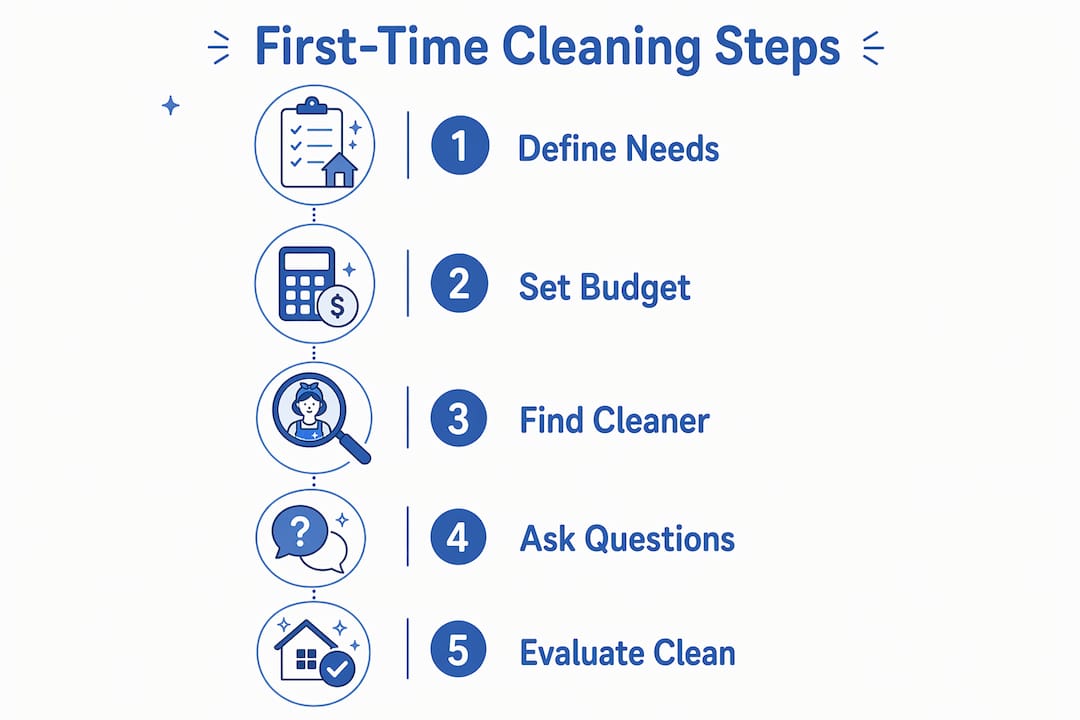
How to hire a house cleaner for the first time: define your needs and budget
Before you search for a single name or read one cleaning service review, you need to know exactly what you are hiring for. The type of cleaning you need shapes everything: the price, the time required, and the kind of professional you should look for.
Routine clean vs. deep clean vs. move-in/out
A routine clean covers the surfaces you see every day: vacuuming, mopping, wiping counters, cleaning bathrooms, and tidying kitchens. A deep cleaning goes further, addressing baseboards, inside appliances, window sills, and areas that accumulate grime over months. A move-in or move-out clean is the most thorough of all, designed to restore a home to a rental-ready or sale-ready condition. Knowing which category fits your situation tells you immediately whether you need a specialist or a general cleaner.
Deciding on frequency
Frequency affects your total cost of house cleaning more than almost any other variable. Consider these common schedules:
- Weekly: Best for households with children, pets, or high foot traffic. Keeps allergens and mess from compounding.
- Biweekly: The most popular choice for working adults. Balances cost and cleanliness effectively.
- Monthly: Works for minimalist households or as a supplement to your own regular tidying.
- One-time: Ideal for post-renovation cleanup, seasonal resets, or before hosting a large event.
Understanding what you will pay
Standard hourly rates sit between $45 and $55 per hour for most professional cleaners in the United States. That means a two-bedroom apartment might run $90 to $165 for a standard clean, depending on your location and the cleaner’s experience. Membership models change that math considerably. Homeaglow’s ForeverClean plan, for example, charges around $59 per month and unlocks hourly rates as low as $19, which makes recurring service far more affordable for budget-conscious renters and first-time homeowners.
Pro Tip: Request a flat-rate quote for your first clean rather than an open-ended hourly rate. It protects you from bill shock and gives you a clear benchmark to compare across candidates.
Where to find trustworthy cleaners you can actually rely on
Finding a cleaner is easy. Finding one you trust with your home, your belongings, and sometimes your keys is a different challenge entirely. The source you use to find a cleaner is the single biggest predictor of how that relationship will go.

Personal referrals are the gold standard. A neighbor who has used the same cleaner for three years is giving you something no algorithm can replicate: lived experience with that specific person in a home like yours. Ask friends, coworkers, and neighbors before you open any app. The quality of that signal is unmatched.
When referrals are not available, vetted platforms are your next best option. JaniJobs and Taskrabbit both screen cleaning professionals, collect verified reviews, and provide background check documentation. This structure gives you a layer of accountability that a random classified ad simply cannot. Nextdoor and local Facebook groups occupy a middle ground: recommendations are community-sourced and often genuine, but the vetting is informal. Treat those leads as warm referrals that still require your own follow-up questions.
Avoid unverified sources like Craigslist for this type of hire. The absence of a screening process means you carry all the risk, and there is no recourse if something goes wrong.
Pro Tip: When reading cleaning service reviews on any platform, filter for reviewers who mention specific details: punctuality, how the cleaner handled a fragile item, or whether they followed up after a concern. Vague five-star reviews tell you almost nothing.
What questions to ask before you hire a cleaner
Interviewing a prospective cleaner is not an interrogation. Think of it as a professional conversation where you are gathering the information you need to make a confident decision. Asking about insurance, background checks, and references is standard practice and any reputable cleaner will expect it.
Here are the questions that matter most:
- Are you insured and bonded? This protects you if something is damaged or stolen. A professional cleaner carries liability insurance as a baseline. If they cannot provide proof, that is a firm red flag.
- Do you conduct background checks? Professional cleaning companies typically handle this internally. Solo independent cleaners may require you to run checks personally, which is worth knowing upfront.
- Can you provide references from current clients? A cleaner with long-term clients is a cleaner who has earned trust over time. Ask for two or three contacts and actually call them.
- Do you bring your own supplies and equipment? Some cleaners bring everything; others expect you to supply products. Clarify this before the first visit to avoid confusion.
- What is your cancellation and rescheduling policy? Life happens. Knowing the policy in advance prevents friction later.
- How do you handle pricing for add-on tasks? Ask whether tasks like cleaning inside the oven or washing windows carry an extra charge.
The cleaners who answer these questions clearly and without hesitation are almost always the ones worth hiring. Vague answers, reluctance to share references, or requests for large upfront cash payments are warning signs you should not overlook.
Red flags to watch for include: no proof of insurance, unwillingness to discuss references, pressure to pay entirely in cash before the work begins, and poor communication during the initial inquiry. A cleaner who does not respond promptly or clearly before you hire them will not suddenly become more communicative once they are in your home. You can find more guidance on vetting cleaning professionals to sharpen your interview approach.
How to prepare for and evaluate your first cleaning session
The first cleaning session is a trial, and how you handle it determines whether you end up with a long-term relationship or a frustrating one-off. Being present for the first visit is strongly recommended by cleaning professionals and experienced clients alike. You do not need to hover, but being available allows you to walk the cleaner through your home in person.
Here is how to set that first session up for success:
- Conduct a walkthrough before they start. Point out priority areas, fragile items, surfaces that need special products, and any rooms that are off-limits. Do not assume the cleaner will guess your preferences.
- Define the scope clearly. For a first clean, consider limiting the session to your main living areas rather than the entire home. This gives you a focused result to evaluate and prevents the cleaner from being spread too thin.
- Leave written notes. A short list of your top priorities, left on the counter, reinforces what you discussed and gives the cleaner a reference if they have a question while you are in another room.
- Discuss logistics before they arrive. Clarify parking, key access, alarm codes, and supply locations ahead of time. These small details prevent wasted time and awkward moments at the door.
- Give specific feedback afterward. A trial cleaning session only works if you close the loop. Tell the cleaner what they did well and what you would like adjusted. This is how a good working relationship is built.
Pro Tip: Take a quick photo of two or three areas before the cleaner arrives. Comparing before and after gives you an objective measure of quality rather than relying on a general impression.
The most common first-clean mistake is expecting perfection from a cleaner who has never been in your home before. Give them one session to learn your space, then evaluate based on their responsiveness to your feedback. Trust, as the research confirms, builds over time through consistent visits with the same person.
Key takeaways
Hiring a house cleaner for the first time succeeds when you define your cleaning type, vet candidates through referrals or screened platforms, ask direct questions about insurance and references, and treat the first session as a structured trial with clear feedback.
| Point | Details |
|---|---|
| Define your cleaning type | Decide between routine, deep, or move-in/out cleaning before contacting any provider. |
| Budget with real numbers | Standard rates run $45 to $55 per hour; membership plans can reduce that to $19 per hour. |
| Source from trusted channels | Personal referrals and vetted platforms like JaniJobs outperform unscreened classifieds. |
| Ask the non-negotiable questions | Always confirm insurance, bonding, references, and cancellation policy before hiring. |
| Treat the first clean as a trial | Be present, give a walkthrough, and provide specific feedback to build a lasting relationship. |
What I have learned from years of watching first-time clients hire cleaners
The clients who struggle most with their first cleaning hire share one common pattern: they skip the vetting step because they feel awkward asking direct questions. They worry about seeming distrustful or demanding. What I have seen, consistently, is that the cleaners worth hiring are never put off by those questions. They welcome them. A professional who carries insurance, has long-term clients, and takes pride in their work will answer every question on your list without hesitation.
The other lesson I would share is about consistency. Many first-time clients rotate between different cleaners or services, chasing the lowest price each time. The result is a home that never quite reaches the standard they want, because every cleaner starts from scratch with no knowledge of the home’s quirks, the owner’s preferences, or the fragile lamp in the corner of the living room. Hiring the same cleaner repeatedly, even at a slightly higher rate, produces better results and far less stress. The value of familiarity is real and it compounds over time.
One more thing: do not wait until your home is in crisis mode to hire help. The clients who get the most out of professional cleaning are the ones who set up a recurring schedule before things get overwhelming. A biweekly clean is far easier to maintain than a monthly rescue mission.
— Steven
Ready to skip the guesswork? Octomaids makes your first clean easy
Octomaids has served homeowners and renters across Vancouver, WA and Portland, OR since 2006, and our family-owned team knows exactly what first-time clients need: clear communication, consistent cleaners, and results you can actually see.
Whether you need a one-time deep clean to reset your space or a recurring schedule that keeps your home in top shape, we match you with the same trusted cleaner every visit. Our team arrives prepared, follows a thorough checklist, and welcomes your feedback after every session. Explore our home cleaning best practices to see the standard we hold ourselves to, then reach out to schedule your first clean with zero pressure.
FAQ
How much does a first-time house cleaning cost?
Most professional cleaners charge between $45 and $55 per hour for a standard clean. Membership platforms like Homeaglow can reduce that to around $19 per hour, making recurring service more affordable for first-time clients.
What questions should I ask before hiring a cleaner?
Ask about insurance, bonding, background checks, client references, supply policies, and cancellation terms. Any reputable cleaner will answer these questions directly and without hesitation.
Should I be home for the first cleaning session?
Yes. Being present for the first visit allows you to walk the cleaner through your home, highlight priorities, and address any questions in real time, which significantly improves the outcome of that first session.
Is it better to hire an independent cleaner or a cleaning company?
Independent cleaners often offer lower rates and more flexibility, while companies provide built-in insurance, backup coverage, and structured vetting. The right choice depends on your budget and how much accountability structure you want built into the arrangement.
How do I know if a cleaning service is trustworthy?
Look for verified reviews with specific details, confirmed insurance and bonding, willingness to provide references, and clear pricing. Platforms like JaniJobs and Taskrabbit add a layer of screening that unverified sources cannot match.