


After-hours office cleaning is defined as professional janitorial service performed outside standard business hours, typically between 6:00 PM and 6:00 AM, to maintain a clean workspace without disrupting staff. Handling this process well requires three things working together: airtight security protocols, a realistic schedule, and clear communication between you and your cleaning crew. Overnight cleaning reduces labor time by 30–40% because crews work without foot traffic, furniture rearrangements, or interruptions. That efficiency gain is real, but only if you invest the setup time upfront. This guide walks you through every step, from vetting cleaners to troubleshooting missed rooms.
What are the key security and access protocols for after-hours cleaning?
Security is the foundation of any after-hours cleaning program. Without it, you risk false alarms, unauthorized access, and liability gaps that cost far more than the cleaning itself.
Background checks, bonding, and insurance
Every cleaning professional who enters your office after hours must pass a documented background check. Building security requires verified background checks, bonding, and documented alarm procedures before any crew member receives access. Bonding protects you if property goes missing. General liability insurance protects you if a cleaner is injured on your premises. Ask for certificates of insurance before signing any contract, and verify they are current.
Alarm system coordination
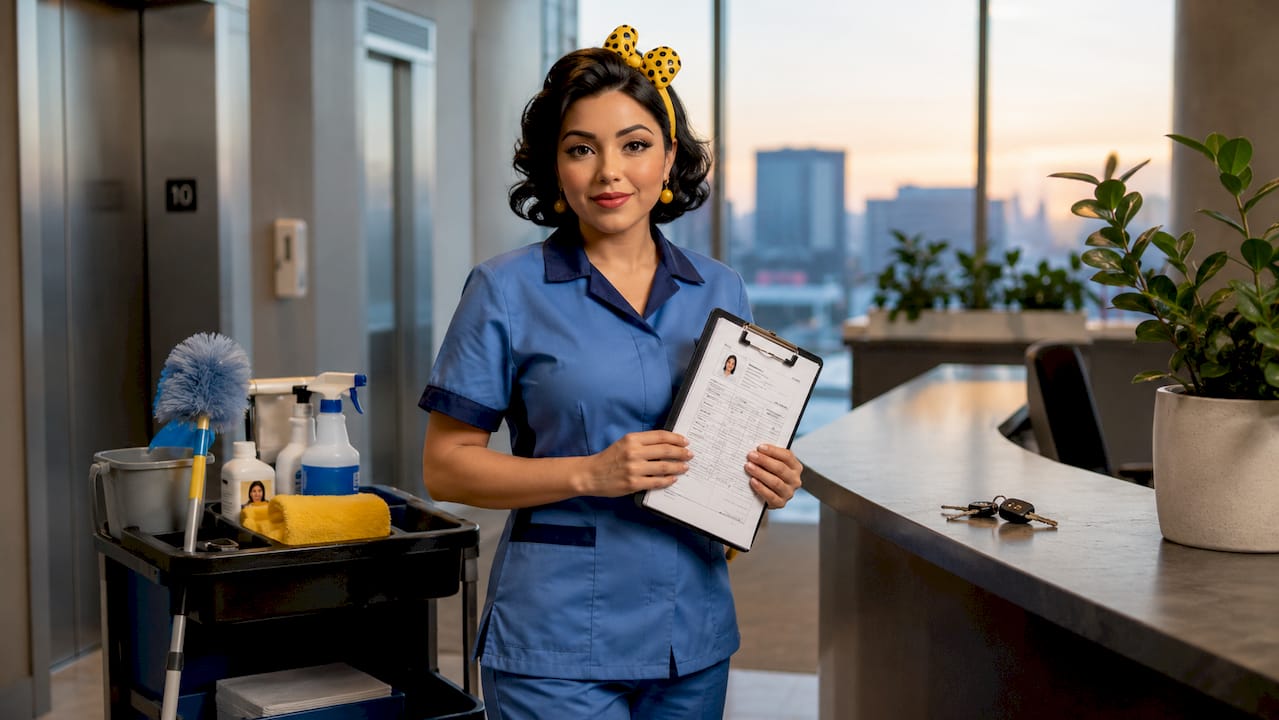
Your alarm system needs its own protocol for after-hours cleaning crews. The safest approach is to assign user-specific alarm codes to your cleaning service rather than sharing your master code. Document the arm and disarm sequence in writing, and include the names and phone numbers of two contacts at your alarm company. Alarm procedures must be detailed and understood to avoid false alarms or police dispatch fees, which can run into hundreds of dollars per incident. Review the procedure with your cleaning supervisor before the first visit.
Key management
Key management is where many office managers lose control of the process. Key management protocols include sign-in logs, secure key storage, and immediate lost key notification. Every key issued to a cleaning crew should be logged with the recipient’s name, date issued, and a copy of their ID. Store a duplicate set in a locked box on-site. If a key goes missing, your protocol should require immediate notification and rekeying within 24 hours. You can find more detail on how professional services handle documented safe access procedures in office settings.
Pro Tip: Designate a single internal contact person to manage all access approvals, alarm code changes, and key handoffs. A single clear contact person prevents communication gaps that cause missed cleanings and security breaches.
How to schedule after-hours office cleaning for maximum efficiency
Scheduling is where you turn the efficiency potential of after-hours cleaning into actual results. A poorly timed schedule wastes the biggest advantage you have: an empty building.
The industry standard window for after-hours cleaning is 6:00 PM to 6:00 AM, with most crews working between 6:00 PM and midnight. That early evening window is the most productive because crews arrive while the building is still warm, lighting is familiar, and any day-shift issues can be flagged immediately. Scheduling deep cleaning tasks like carpet extraction or floor stripping during this window gives moisture-intensive surfaces the full overnight period to dry, which reduces slip hazards and odors by morning.
After-hours cleaning costs 5–15% more than daytime service due to coordination premiums. That premium is worth it for most offices because the labor time savings and zero disruption to staff more than offset the cost difference. Typical pricing runs from $200 to $600 per visit depending on office size and scope.
A hybrid model is the most practical approach for high-traffic offices. A hybrid cleaning model pairs a day porter for visible maintenance with an after-hours deep cleaning crew. The day porter handles spills, restroom restocking, and lobby tidying during business hours. The after-hours crew handles floors, surfaces, glass, and deep sanitation. This model ensures continuous cleanliness without forcing you to choose between daytime access and thorough cleaning.
Pro Tip: Batch intensive floor care, carpet extraction, and window cleaning into after-hours slots. Crews work 30–40% faster without obstacles, so you get more done per visit at a lower effective cost per task.
How to set up an after-hours cleaning program step by step
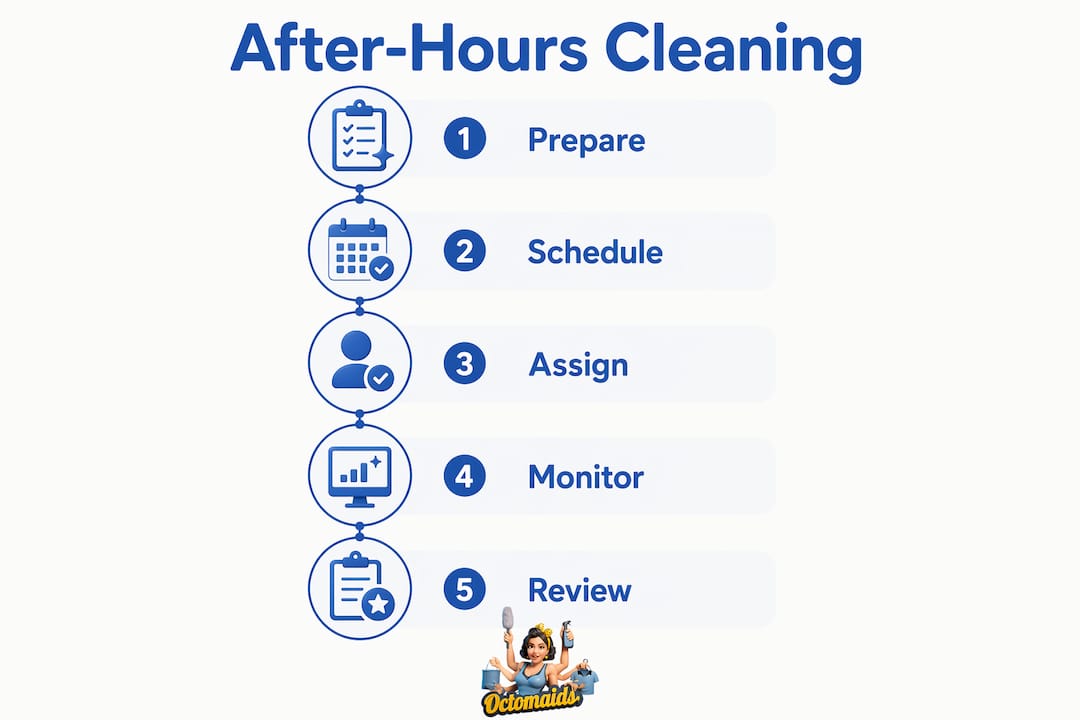
Setting up a reliable after-hours cleaning program takes about two weeks of preparation. Rushing this phase creates the problems you will spend months fixing.
-
Write a site-specific cleaning checklist. A written site-specific cleaning checklist prevents scope creep and gives your crew clear, measurable standards. Break it down by room type: private offices, open workstations, conference rooms, restrooms, kitchen, and common areas. Assign a frequency to each task, daily, weekly, or monthly, so nothing gets skipped or over-serviced.
-
Coordinate with your alarm company. Call your alarm provider before your cleaning contract starts. Set up a user-specific code for the cleaning crew, define the arm and disarm window, and confirm the procedure for accidental triggers. Get everything in writing.
-
Vet and select your cleaning service provider. Request proof of background checks for every crew member who will enter your building. Confirm bonding and liability insurance. Ask for references from other commercial clients with similar office sizes. Review your commercial janitorial options carefully before committing to a contract.
-
Provide written access and lockup instructions. Give your cleaning supervisor a one-page document covering: building entry procedure, alarm code and sequence, rooms that require special access, lockup steps, and who to call if something goes wrong. Do not rely on verbal instructions.
-
Set communication protocols. Require a completion confirmation after every visit. A text message or digital log entry works well. Operational feedback loops via digital or SMS reporting maintain cleaning quality and accountability without requiring you to be on-site.
-
Conduct a walkthrough after the first three visits. Inspect against your checklist. Note any missed areas, quality gaps, or access problems. Address them in writing with your cleaning supervisor before the fourth visit.
| Setup phase | Key action | Common mistake to avoid |
|---|---|---|
| Checklist creation | Define tasks by room and frequency | Leaving scope vague or open-ended |
| Alarm coordination | Assign crew-specific codes | Sharing master codes with cleaning staff |
| Provider vetting | Verify background checks and insurance | Skipping reference checks for commercial clients |
| Access documentation | Provide written lockup instructions | Relying on verbal walkthroughs only |
| Communication setup | Require digital completion confirmations | Assuming no news means everything went fine |
What are common challenges in after-hours cleaning and how do you fix them?
Even a well-planned after-hours program runs into problems. Knowing what to expect makes the difference between a quick fix and a recurring headache.
-
Missed rooms due to occupancy or locked doors. Employees working late or locked conference rooms are the most common cause of incomplete cleaning. Require your cleaning crew to notify you if areas were inaccessible rather than skipping silently. A simple text message with the room number and reason is enough. You can then reschedule that area for the next visit.
-
Alarm misfires. False alarms happen most often during the first two weeks of a new cleaning contract. The crew is still learning the building layout and timing. Review the arm and disarm procedure again after any false alarm. If misfires continue past the third week, the issue is likely a motion sensor placement problem, not a training problem. Contact your alarm company.
-
Quality drift and scope creep. Without regular oversight, cleaning quality tends to slip after the first month. Tasks get shortened, low-visibility areas get skipped, and the scope quietly narrows. Monthly walkthroughs with your checklist in hand catch this before it becomes a pattern. Consistency in after-hours cleaning is a major factor in long-term asset protection and professional appearance.
-
No feedback on issues. A cleaning crew that says nothing when they find a leak, a broken fixture, or a security concern is a liability. Build issue reporting into your communication protocol from day one. Require a brief note in their completion confirmation if anything unusual was observed.
“The biggest mistake office managers make is treating after-hours cleaning as a set-it-and-forget-it service. It requires the same active management as any other vendor relationship.” — Facilities management best practice
Key takeaways
Efficient after-hours office cleaning depends on security protocols, structured scheduling, and consistent communication working together from the start.
| Point | Details |
|---|---|
| Security comes first | Require background checks, bonding, and user-specific alarm codes before any crew enters. |
| Schedule for efficiency | Use the 6:00 PM to midnight window and batch intensive tasks to maximize crew productivity. |
| Write everything down | A site-specific checklist and written access instructions prevent most quality and access problems. |
| Use a hybrid model | Pair a day porter with an after-hours crew for continuous cleanliness in high-traffic offices. |
| Build in feedback loops | Require digital completion confirmations and issue reports after every visit. |
What I’ve learned from years of managing after-hours office cleaning
The offices that get the most out of after-hours cleaning are not the ones with the biggest budgets. They are the ones that treat the setup phase seriously.
I have seen office managers hand a key to a cleaning crew on a Monday and wonder why quality is inconsistent by Friday. The problem is almost never the crew. It is the absence of a written checklist, a clear alarm procedure, or a single point of contact. When those three things are in place, the relationship runs smoothly for years.
The hybrid model is genuinely underused. Most offices default to a purely after-hours approach and then complain that the lobby looks neglected by 3:00 PM. A day porter costs less than you think and solves the visible cleanliness problem that after-hours crews simply cannot address. The two models are not competing options. They are complementary layers.
Technology for reporting has changed this space more than any equipment upgrade. A simple digital log or SMS confirmation after each visit creates accountability without requiring you to be present. When issues get reported in real time, small problems get fixed before they become expensive ones. That feedback loop is the single most underrated tool in facilities management.
— Steven
How Octomaids can support your after-hours cleaning program
Octomaids has served businesses in Vancouver, WA and Portland, OR since 2006, and after-hours office cleaning is a core part of what we do.
Every Octomaids crew member passes a documented background check, and we carry full liability insurance on every job. We work with your alarm system, provide written completion confirmations after each visit, and build a cleaning scope tailored to your office size and traffic patterns. Whether you need a recurring after-hours office cleaning service or a one-time deep clean before a big event, our team delivers consistent results without disrupting your staff. Explore our full range of commercial and residential cleaning services to find the right fit for your workspace.
FAQ
What is the standard window for after-hours office cleaning?
The industry standard window is 6:00 PM to 6:00 AM, with most crews working between 6:00 PM and midnight. Early evening slots are preferred because they allow moisture-intensive tasks to dry fully before staff arrive.
How much does after-hours office cleaning cost?
Typical pricing runs from $200 to $600 per visit depending on office size and scope. After-hours service costs 5–15% more than daytime cleaning due to coordination premiums.
How do I prevent false alarms during after-hours cleaning?
Assign a user-specific alarm code to your cleaning crew and provide written arm and disarm instructions. Review the procedure after any false alarm, and contact your alarm company if misfires continue past the first two weeks.
What should a cleaning checklist for offices include?
A site-specific checklist should cover private offices, open workstations, conference rooms, restrooms, the kitchen, and common areas, with a frequency assigned to each task. A frequency-based cleaning checklist controls costs and maintains consistent standards.
Why is after-hours office cleaning preferred over daytime cleaning?
After-hours cleaning eliminates foot traffic interruptions, allowing crews to work 30–40% faster and complete moisture-intensive tasks like floor stripping without creating slip hazards for staff. It also improves indoor air quality and productivity by allowing deep sanitation without disrupting the workday.